
Installing, repairing, and maintaining fire protection sprinkler systems in buildings are part of the specialized craft known as sprinkler fitting. It is a required field that helps prevent fire hazards from endangering people’s lives and property. Before pursuing a career in sprinkler fitting, consider asking yourself these critical questions. Let’s look at five essential questions to see if this career is a good fit for you. Sprinkler fitting classes or committing to a training program, take an honest look at whether you have — or are willing to develop — the following core competencies.
Sprinkler fitting classes require a unique set of skills and aptitudes. Therefore, before pursuing a job in this field, you should ascertain whether you possess the necessary credentials. Several fundamental skills and capabilities are required for sprinkler fitting, including:
Sprinkler fitters deal with intricate systems; therefore, they must be familiar with mechanical concepts. In addition, they must be proficient in plumbing and pipefitting and be able to read and understand technical drawings and specifications.
Finding and fixing fire protection system problems is common in pipefitter jobs. This necessitates the ability to think critically, solve problems, and make quick decisions.
Sprinkler fitting work requires precision because even seemingly insignificant errors might have detrimental effects. For piping systems to be installed and maintained correctly, close attention to detail and exact adherence to specifications are required.
Due to the physical demands of working in cramped locations, lifting large equipment, and standing for long periods, work of sprinkler fitters can be physically taxing. Therefore, one needs to be physically fit and strong for the tasks required in this area.
You need proper education and training to pursue steamfitter career in this industry. This can entail finishing an steamfitter apprenticeship program for sprinkler fitting or earning the necessary credentials. Proper education and training are the backbone of a successful career in sprinkler fitting. A reputable pipefitter trade school or training programThink about the following:
A formal steamfitter apprenticeship program often combines classroom teaching and on-the-job training and is a prerequisite for many sprinkler-fitting and pipefitter jobs. Apprenticeships offer a thorough sprinkler fitting education and can last several years.
Certifications like the National Institute for Accreditation in Engineering Technologies (NICET) accreditation may be necessary for some sprinkler fitting jobs. These credentials from a pipefitter trade school can improve your work opportunities and show that you are competent in particular sprinkler fitting areas.

Being current with the most recent developments in science, law, and best practices is essential in sprinkler fitting work, which is constantly changing. If you want to stay current in your field, ask yourself if you are prepared to dedicate yourself to continual professional development and continuing education.Enroll in our sprinkler fitting classes today and take the first step toward a career that truly makes a difference.
Because handling pressurized piping systems and working at heights are required in the sprinkler fitting sector, safety is of the utmost importance. At any reputable pipefitter training center, students are trained to follow strict safety rules including confined space entry procedures, hazard communication, and lockout/tagout protocols. Therefore, sprinkler installers must adhere to strict safety guidelines and put on personal protective equipment (PPE) to reduce the possibility of injuries. This could entail employing fall protection equipment when working at heights and using hard hats, safety goggles, gloves, and steel-toed boots.
You must also know and follow all safety rules at the pipefitter training classes It includes restricted space entrance, hazard communication, and lockout procedures. Consider whether you are accustomed to working in potentially dangerous conditions and are dedicated to adhering to safety procedures to safeguard others and yourself while at work.
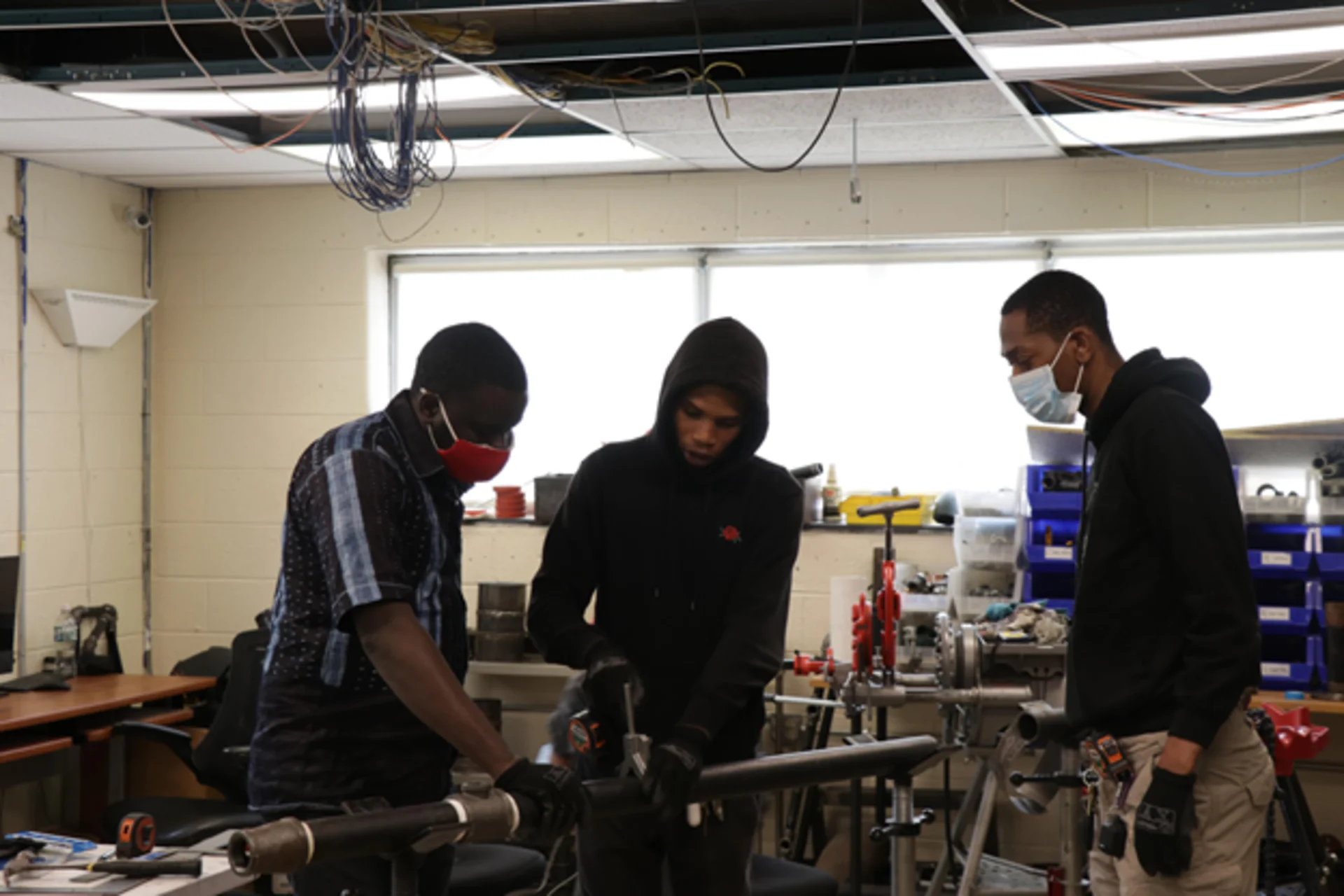
Sprinkler installation can be physically demanding and require strength, endurance, and stamina. You might need to execute jobs that include bending, kneeling, crawling, working in confined places, and lifting large materials like pipes and equipment. In addition, because sprinkler systems are placed indoors and outside in various structures, including commercial, residential, and industrial ones, the task may also require you to work out, occasionally in unfavorable weather. Before committing to sprinkler fitting classes, consider whether you enjoy hands-on, physically active work.
Think about if you are physically capable of handling responsibilities at a pipefitter school. For example, sprinkler fitting classes may be a good fit if you like working outside and are accustomed to physically demanding work.
When building fire prevention systems, sprinkler fitters often collaborate with other experts, including architects, engineers, and contractors. Strong communication and teamwork skills are developed from the very beginning in quality sprinkler fitting classes. To integrate sprinkler systems with other building systems, you will also collaborate with other trained tradespeople, such as skilled plumbers and electricians. Enhance your communication abilities and teamwork while training at the pipefitter training center .
As a result, developing a career in sprinkler fitting requires a sincere interest in plumbing and mechanical systems, problem-solving skills, proficiency with tools and equipment, a willingness to learn and stay up to date on codes and regulations, and the physical stamina to handle the demands of the position. Considering these questions, you may determine your suitability for a career in sprinkler fitting classes and make an informed decision about choosing this steamfitter career path.
Read More: