
With salary discrepancies across the US for trade technicians, welding technicians are no exception. Which state a welder works in matters a lot; some states pay nearly double what others do for the exact same job. That’s not an exaggeration—it’s reality for welding technicians trying to figure out where to build a career. This guide lays out a welding technician’s salary by state, across all 50 states of the US.
The welder salary spectrum runs through a wide range, depending on various factors. However, raw numbers on how much welders make don’t tell you much. You will need to look at union rules, specialization opportunities, living costs, and industry presence before making big decisions about where to work.
The national numbers give a starting point. Welders across America pull in a median average welder salary of $51,000 yearly, or $24.52 hourly according to Bureau of Labor Statistics tracking for May 2024. But medians hide everything interesting. Nobody earns the median exactly—they earn more or less depending on dozens of factors.
Entry-level welders start somewhere between $35,000 and $42,000 while they’re still figuring out how to run consistent beads and pass inspections. Give them three to five years, and most bump up to the average welder salary of $45,000-$60,000 range. Welders who stick with it and develop real expertise hit $65,000 to $100,000. For your query on ‘how much do welders make‘ you’ll be shocked to know that the top tenth of earners clear $72,970, and some specialized folks make way more than that.
The welding industry expects 2% growth from 2023 to 2033. That translates to thousands of job openings every year. Why? Infrastructure work needs welders. Manufacturing coming back from overseas needs welders. And a whole generation of current welders is retiring. The American Welding Society talks about a shortage of qualified welders. That’s not good for companies trying to hire, but it’s fantastic for anyone learning to weld right now.
The average welder salary by state data for the highest paying states looks like this:
| State | Average Annual Salary | Hourly Rate | What Drives Wages |
| Massachusetts | $53,090 | $25.52 | Shipbuilding, strong unions |
| New Jersey | $50,543 | $24.30 | Refineries, proximity to cities |
| Alaska | $49,549 | $23.82 | Oil fields, pipeline work, brutal conditions |
| Delaware | $49,500 | $23.80 | Chemical plants, refineries |
| Wyoming | $48,842 | $23.48 | Energy sector, mining operations |
| Connecticut | $48,073 | $23.11 | Defense work, remaining factories |
| Maine | $47,753 | $22.96 | Bath Iron Works, paper mills |
| Rhode Island | $47,640 | $22.90 | Naval facilities, old industrial towns |
| Maryland | $46,542 | $22.38 | Shipyards, defense contracts |
| Vermont | $46,496 | $22.35 | Agriculture equipment, specialty shops |
| New York | $45,824 | $22.03 | Construction never stops |
| Washington | $44,917 | $21.60 | Boeing, shipyards, tech buildings |
| New Hampshire | $44,265 | $21.28 | Small manufacturing operations |
| California | $44,031 | $21.17 | Everything—aerospace to entertainment |
| Louisiana | $43,943 | $21.13 | Petrochemical plants, shipyards |
[Source- https://www.zippia.com/advice/]
Join a reputed welder training program to become a high earning welder in these top states.
The middle-tier average welder salary by state data includes many states where welders make decent livings, without the extremes of Massachusetts or Alaska. These states typically pay between $36,000 and $44,000 yearly.
| State | Average Annual Salary | Hourly Rate | Main Industries |
| Nevada | $43,643 | $20.98 | Construction explosion in Vegas and Reno |
| Oregon | $43,411 | $20.87 | Manufacturing base, green tech |
| Pennsylvania | $42,878 | $20.61 | Steel history, bridge work |
| North Dakota | $42,656 | $20.51 | Oil boom faded but work remains |
| New Mexico | $42,594 | $20.48 | Oil and gas, mining |
| Arizona | $42,066 | $20.22 | Construction, copper mining |
| Virginia | $41,616 | $20.01 | Newport News Shipbuilding dominates |
| Wisconsin | $41,112 | $19.76 | Manufacturing base, John Deere presence |
| Colorado | $40,994 | $19.71 | Construction boom, energy work |
| West Virginia | $40,569 | $19.50 | Coal fading, some manufacturing |
| Minnesota | $39,960 | $19.21 | Farm equipment manufacturing |
| South Carolina | $38,314 | $18.42 | BMW plant, Boeing facility |
| Texas | $38,153 | $18.34 | Oil, construction—huge but competitive |
| Utah | $38,098 | $18.32 | Construction, mining operations |
| Mississippi | $37,679 | $18.12 | Shipyards, limited manufacturing |
| Hawaii | $37,678 | $18.11 | Military shipyards, island isolation |
| North Carolina | $37,440 | $18.00 | Furniture declining, construction growing |
[Source- https://www.zippia.com/advice/]
These states typically pay below the national median, usually landing between an average welder salary of $33,461 and $37,000 yearly. But before dismissing them, someone needs to look at living costs.
| State | Average Annual Salary | Hourly Rate | Industries Present |
| Illinois | $37,438 | $18.00 | Manufacturing heartland, Chicago premium |
| Michigan | $37,290 | $17.93 | Auto industry, still significant |
| Oklahoma | $37,279 | $17.92 | Energy sector, manufacturing |
| Indiana | $37,186 | $17.88 | Auto plants, RV manufacturing capital |
| Ohio | $36,920 | $17.75 | Automotive, steel plants, infrastructure |
| Missouri | $36,345 | $17.47 | Varied manufacturing base |
| Tennessee | $36,339 | $17.47 | Auto manufacturing, varied industry |
| Iowa | $36,252 | $17.43 | Agriculture equipment, food processing |
| Alabama | $35,546 | $17.09 | Auto plants, shipbuilding in Mobile |
| Idaho | $35,431 | $17.03 | Small manufacturing, agriculture |
| Kansas | $35,265 | $16.95 | Farm equipment, aircraft factories |
| South Dakota | $35,068 | $16.86 | Equipment manufacturing, mining |
| Montana | $35,056 | $16.85 | Mining, ranching equipment |
| Florida | $34,810 | $16.74 | Construction cycles, marine work |
| Kentucky | $34,707 | $16.69 | Auto plants, bourbon barrels |
| Georgia | $34,681 | $16.67 | Auto plants, construction |
| Nebraska | $34,569 | $16.62 | Farm equipment manufacturing |
| Arkansas | $33,461 | $16.09 | Manufacturing, equipment building |
[Source- https://www.zippia.com/advice/]

Breaking down the average welder salary per hour helps welders evaluate job offers, calculate the value of overtime, and compare positions across different compensation structures.
| Experience Level | Hourly Pay Range |
| Entry-Level (0-2 years) | $17.71-$20.56 |
| Apprentice (2-3 years) | $20-$24 |
| Journeyman (4-7 years) | $24-$30 |
| Experienced (8-15 years) | $30-$38 |
Looking at average welder salary per month helps with practical budgeting and comparing jobs that structure pay differently—especially pipeline work, shutdowns, or seasonal projects.
| Experience Level | Monthly Income |
| Entry-Level | $2,900-$3,500 |
| Journeyman | $4,000-$5,200 |
| Experienced | $5,200-$6,500 |
| Specialized/Traveling | $6,500-$10,000+ |
Weldeing technician’s salary by state varies, however, specialization matters even more than location. A welder who develops expertise in difficult processes or demanding industries earns dramatically more than general production welders.
For instance, Pipeline Welders bring in $65,000 to $120,000 yearly, depending on experience and certifications. Specifically,pipeline work demands 6G pipe certification, proving someone can weld pipe joints in any position—flat, horizontal, vertical,or overhead. As a result, projects send welders to remote spots in Alaska, North Dakota, Texas, and Wyoming for months. Welders work outside in whatever weather shows up. Meanwhile, summer heat, winter cold, spring mud—doesn’t matter, the pipeline needs welding. Because of this, companies pay well since conditions are harsh and mistakes cause disasters.
At the extreme end, underwater welders sit at the absolute top. Earnings run from $54,000 for inland, shallow-water work up to $300,000 for saturation divers on offshore platforms. On average, the median salary for an underwater welder is around $66,380. Additionally, this work requires commercial diving certification on top of welding skills. It combines exceptional danger—drowning, decompression sickness, hypothermia, sharks—with exceptional technical difficulty. Therefore, the premium pay reflects both the danger and the scarcity of people willing and able to do it.
TIG Welders earn $45,000 to $75,000, focusing on precision work. TIG welding (Tungsten Inert Gas) produces the cleanest, most controlled welds for aerospace components, medical device manufacturing, food processing equipment, and exotic materials like titanium or stainless. The work demands incredible hand steadiness, sharp vision, and obsessive focus on quality. Most TIG positions happen indoors in climate-controlled shops. Less physical punishment than structural work, but lower pay ceiling than pipeline or underwater.
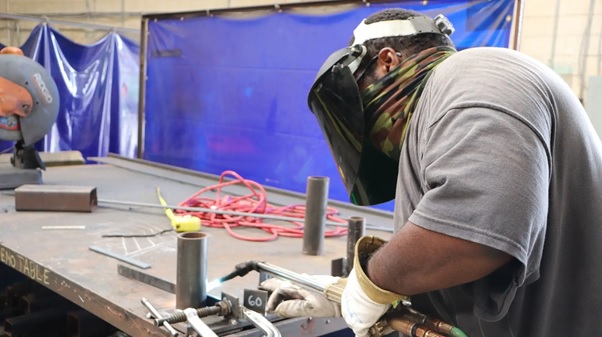
The union welding technician’s salary question dramatically affects lifetime earnings Union welders earn 25% to 40% more than non-union folks on average, but the comparison involves more than just the hourly rate.
Union Benefits:
Union strength clusters in specific areas:
Specific Industries: Shipbuilding, refineries, and power plants stay unionized regardless of location
Non-Union Advantages:
Plenty of welders start non-union to build skills fast, then join unions once they qualify as journeymen. Others stay non-union their whole careers, valuing freedom and flexibility over higher wages and benefits. The right choice depends on what someone prioritizes—security and benefits versus independence and mobility.
Strategic moves can double someone’s welding salary by state within five to seven years:
Get Certified: AWS certifications prove competency and typically add 10% to 25% to wages. Pursue plate and pipe certifications in multiple processes—SMAW, GMAW, GTAW, FCAW.
Specialize: General production welders plateau around $50,000. Pipe welders, TIG specialists, and underwater welders earn $70,000 to $150,000+. Pick a lucrative specialty and get genuinely good at it.
Go Union: In union-strong states, complete apprenticeship and join United Association or the relevant craft union. That 30% to 40% wage premium plus real benefits justifies the effort and time investment.
Travel: Pipeline welders and shutdown specialists sacrifice normal home life but earn six figures. Even just a few years of intensive travel builds substantial savings and can pay off houses.
Become an Inspector: Certified Welding Inspectors earn $70,000 to $110,000 without welding anymore. This career shift suits older welders whose bodies get tired of physical demands.
Start a Business: Mobile welding, custom fabrication, and repair services can generate $75,000 to $200,000+ for entrepreneurial welders willing to handle sales, accounting, and customer hassles.

The welding technician’s salary by state data has geographic differences, coupled with smart choices about specialization, certification, and union membership, which help welders maximize what they actually take home over a career.
With 2% projected growth from 2023 to 2033, thousands of annual openings, and ongoing workforce shortages, this career offers exceptional security and earning potential without drowning in college debt.
Quality training programs prepare people for entry-level welder salary positions in six to eighteen months, putting them on track toward journeyman status and $60,000+ yearly income within five years of starting.
According to the Bureau of Labor Statistics (BLS), welders across America earn a median annual salary of $51,000, or $24.52 per hour as of May 2024. However, salaries vary significantly based on experience and location. The lowest 10 percent of welders earned less than $36,830, while the highest 10 percent earned more than $72,970. Entry-level welders typically start between $35,000 and $42,000, while experienced and specialized welders can earn $65,000 to $100,000 or more annually.
Massachusetts pays the highest average welder salary at $53,090 annually ($25.52 per hour), followed by New Jersey at $50,543 ($24.30/hour) and Alaska at $49,549 ($23.82/hour). These high-paying states benefit from strong union presence, shipbuilding industries, refineries, and challenging work conditions that command premium wages. However, welders should also consider the cost of living when evaluating state-by-state salary differences.
The Bureau of Labor Statistics projects 2% employment growth for welders from 2023 to 2033, which translates to approximately 9,900 job openings annually. Despite the modest growth rate, there are 457,300 welders currently employed in the United States, and the industry faces significant workforce shortages as experienced welders retire. This creates excellent job security and opportunities for new welders entering the field.
Union welders typically earn 25% to 40% more than non-union welders, with average union salaries reaching $74,896 per year. Union hourly rates range from $28 to $45, compared to $20 to $32 for non-union positions. Beyond higher wages, union welders receive comprehensive health insurance, pension plans, paid apprenticeships, overtime protections, and stronger safety standards. Union presence is strongest in the Northeast, Midwest manufacturing states, West Coast, and industries like shipbuilding, refineries, and power plants.
Disclaimer– Certain statistics and information referenced in this article are obtained from third-party sources. While efforts have been made to ensure accuracy, we make no warranties regarding completeness or reliability. All trademarks, data, and content remain the property of their respective owners. Users are advised to consult the original sources for authoritative information.
Read More-