
3D construction printing is the high-tech heartbeat of a modern building revolution. When one thinks about the construction industry, it’s safe to assume that images of dusty plans, large sledgehammers, and months of labor come to mind. However today, in 2026, one can imagine a massive inkjet printer similar to the one we use at home; that would be the construction future.
You have entered the era of 3-D printing in the construction training and industry.
Infrastructure expenditure in the Philadelphia metro area is quickly moving toward new inventions. We aren’t just talking about “business as usual.” In fact, we’re talking about additive manufacturing in construction, which is a high-tech way of construction that is making the job site into a tech lab.
Consequently, this is the “Next Big Thing” for anyone who wants to go to trade school. You can trade your shovel for a robotic controller and join a workforce where your hands-on abilities are in high demand.
People from techies to site foremen are talking about this because 3D building Printing tackles the three largest problems in the construction industry: not enough workers, too much waste, and less time.
Let’s be honest: the old method of doing things is tiring, and fewer people are joining up for that kind of work. Therefore, this is where trade education really needs to change. We can automate the “grunt work” of building by employing additive manufacturing in construction.
Furthermore, this doesn’t mean that jobs are going away; it means that they are changing. We need someone who can understand robots, fix software problems, and run complicated systems.
At typical sites, we’ve all seen the big dumpsters full of wood and concrete that are just going to trash. In contrast, the future of construction will be far less wasteful. There is essentially no waste because a 3D printer simply puts material where the digital file tells it to. In addition to being efficient, it’s building with care that is good for the environment and the wallet.
There was a time when a tape measure was your best tool. Nowadays, trade education is starting to look a lot like an internship in Silicon Valley, but with more substance.
You need to start in the digital world to learn how to do 3D construction printing. Students are now learning:
Don’t worry if this sounds like a lot to take in. Specifically, the Philadelphia Technician Training Institute (PTTI) and similar programs will take you from “clueless” to “certified” by teaching you the technical abilities that businesses are looking for. Via our programs, we connect “I like tech” with “I have a job that pays well.”
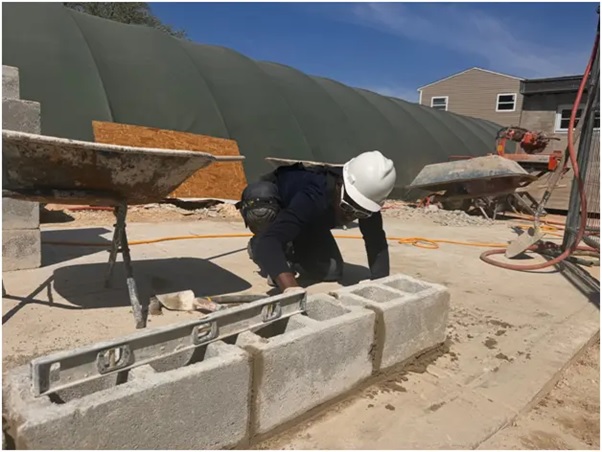
Ever seen a house go up in 48 hours? It sounds like a magic trick, but in reality, it’s simply a normal working day with 3D construction printing.
In the construction industry, time is money. Traditional builds might take months and be delayed by bad weather or mistakes made by people. On the other hand, a 3D printer doesn’t get weary or require a lunch break (but the person who runs it does), and it can create complicated, curved geometries that would be hard to make by hand. As a result, this level of efficiency is causing huge growth in construction markets all around the world.
The UAE wants to 3D-print 25% of its structures, a target by 2030. Similarly, in our own country, additive manufacturing in construction is being used to help solve the problem of cheap housing. This isn’t a “maybe” anymore; it’s really occurring.

“More than ever” is the short answer for this. However, you need to choose the correct type of trade education. The “hybrid” worker is the future of construction. They know how to operate on a building site and can also use a computer with ease.
By and large, you aren’t simply gaining a career by entering into 3D construction printing now; you’re also making sure your future is safe. The perks of working in the sector are evident, whether you want to be a 3D design expert or a robotic system technician: better compensation, fewer physical stress, and the fun factor of building the world with a gigantic robot.

3D construction printing is the future of the construction industry, which is currently experiencing a tipping point. Clearly, better than the previous techniques, it’s faster, cleaner, and, to be honest, a whole lot more awesome. I
To sum up, it’s time to really think about the future of construction if you want to start a career that won’t be out of date in ten years.
The tools are getting better, the materials are changing, and there are a lot of chances. The only thing left to do is to ask if you’re ready to run the printer.
A: Of course. These buildings must follow the same (or harsher) building codes as regular dwellings. Moreover, the reinforced concrete utilized in 3D construction printing is often stronger against bad weather like hurricanes or fires.
A: Not always! You will need to know some basic geometry and logic, but the software does most of the work for you. Nevertheless, a good trade education program will teach you the arithmetic you need to know in a way that doesn’t make you feel like you’re back in a dreary high school calculus class.
A: Because it’s a specialized area of the construction industry, the pay is usually higher than for entry-level manual work. Additionally, as the market grows, there will be a strong demand for people who know how to use these machines.
A: Find vocational programs that let you work with additive manufacturing in real life. PTTI and other schools like it are wonderful places to find a way to reach your goals and get into the industry quickly.
Read more: