
A criminal record closes some doors. It does not close all of them. That distinction matters, because many people stop looking after the first few rejections. They conclude the whole labor market is shut. It isn’t.
The skilled trades remain one of the most realistic paths forward. Trades hire on demonstrated ability. Employers watch you make a weld, diagnose a fault, or set a form. Then they decide. That test-based culture works in your favor when your résumé has a gap.
This guide covers the real landscape of trade jobs for felons in Philadelphia. It explains which trades open first, how the law protects you here, how to handle disclosure, what funding exists, and what the pay actually looks like. No promises. Just an accurate map and a plan.
⚖️ Philadelphia law changed in 2026. Employers cannot ask about your record until after a conditional job offer.
🔧 Trades hire on skill. Welding, pipefitting, construction, and manufacturing judge you on what you produce.
📋 Pennsylvania ended blanket bans. Act 53 requires an individualized review, not automatic rejection.
💰 Real funding exists. The Federal Bonding Program and WOTC remove employer risk at no cost to you.
🗣️ Disclosure is a strategy. Timing and framing change outcomes more than the record itself.
🏥 Be realistic by sector. Healthcare-adjacent roles screen hardest; industrial and construction screen least.
🎓 A record rarely blocks training. You can generally start a trade program while sorting out the rest.
Direct answer: the trades hire on proven skill, not on paperwork. A hiring manager needs someone who can pass a weld test, read a print, and work safely. That evidence outweighs a background gap. Meanwhile, Philadelphia faces steady demand for skilled workers, so employers cannot afford to reject capable people.
Philadelphia keeps building and repairing. Bridges age. Water and gas lines need replacement. Ships need repair. Hospitals and commercial projects keep breaking ground. Manufacturers still fabricate metal daily.
That demand creates leverage. When employers struggle to fill roles, they weigh skill more heavily. They ask a practical question: can this person do the work safely and well?
According to the U.S. Bureau of Labor Statistics, many trade occupations see steady annual openings driven by retirements. Those seats open every year regardless of the economy. Someone fills them. It can be you.
Office hiring runs on impressions. Trade hiring runs on tests. You either laid a sound bead or you didn’t. An inspector can measure it.
This objectivity is the quiet advantage. Your work speaks before your history does. Once you can perform, you become a candidate an employer wants to argue for.
That is why hands-on training in Philadelphia matters so much for people rebuilding. Real lab time on real equipment builds the only credential that outranks a background check: competence.
Direct answer: welding, pipefitting, construction trades, and manufacturing hire most readily. These roles emphasize skill tests, safety discipline, and output. Automotive repair also hires steadily. Healthcare-adjacent roles like sterile processing screen more strictly, though many people still enter. Openness varies by employer, not just by trade.
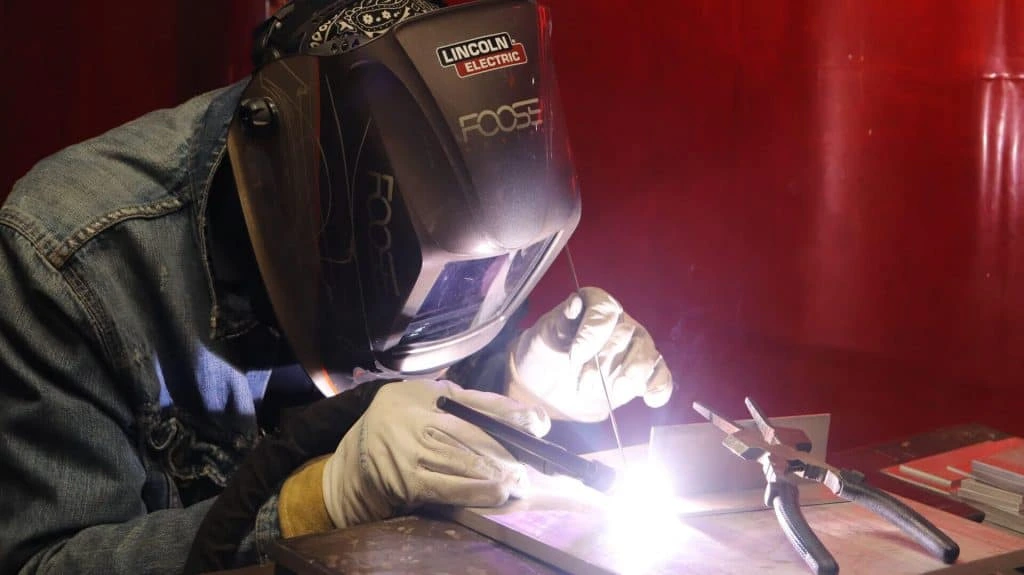
Some fields consistently give people a fair look. They share three traits: measurable skills, strong demand, and hiring managers who came up through the trade themselves.
If you are weighing which field fits, PTTI’s Welding Technology program and its Steam, Sprinkler & Pipe Fitting program both lead into sectors that hire on tested ability.
Honesty serves you better than optimism here. Some settings screen harder. Healthcare facilities, hospitals, and surgical centers run background checks as standard practice. Roles inside those buildings face more scrutiny.
That does not mean the door is locked. It means you should ask early and plan accordingly. Many employers still hire based on the offense, its age, and your record since.
Similarly, some job sites require security clearance or specific licensing. Defense contractors and certain federal projects apply stricter rules. Knowing this upfront saves you months.
Direct answer: industrial and construction trades tend to be most second-chance friendly. Welding, pipefitting, masonry, framing, and manufacturing rank highest. They hire on skill tests, face labor shortages, and often involve small employers who make judgment calls personally rather than through automated screening.
Smaller employers matter more than people expect. A shop owner can look at your work and decide. A large corporate system may run every applicant through the same filter.
So target your search accordingly. Fabrication shops, mechanical contractors, and independent auto shops across North Philadelphia, Mantua, and the Woodland Avenue corridor often hire this way. Camden and Pennsauken employers across the river operate similarly.
Direct answer: yes, in most cases. A criminal record does not usually prevent enrollment in a trade program. Training is separate from licensing and hiring. Pennsylvania also lets you check licensing barriers before you enroll, so you can invest your time with clear expectations rather than guesswork.
People often assume schools reject applicants with records. Usually they do not. Trade schools enroll adults from many backgrounds, including career changers, veterans, and people restarting after incarceration.
The honest questions come later, at hiring and licensing. So the smart move is to check those in advance, then train with confidence.
PTTI treats these conversations as normal. You can reach admissions directly and discuss your situation privately before you apply. Nothing about that conversation is unusual for the staff.
Pennsylvania built a tool for exactly this problem. Under Act 53 of 2020, you may request a preliminary determination from a licensing board. The board tells you whether your specific conviction blocks a license.
Crucially, you can do this before enrolling. The Pennsylvania Department of State’s Act 53 guidance explains the process and publishes which offenses each board treats as directly related.
Act 53 also ended vague rejections. Boards can no longer deny you on broad “moral character” grounds. They must connect a conviction directly to the occupation and assess you individually.
The shift is meaningful for anyone considering a trade school with a felony. Before, uncertainty stopped people from starting. Now you can get an answer first.
Most PTTI programs lead to certifications and employer testing rather than state licensure. That distinction often works in your favor. Still, checking first costs you nothing but time.
Direct answer: Philadelphia’s Fair Criminal Record Screening Standards Ordinance limits how employers use your record. Amendments took effect January 6, 2026. Employers cannot ask about convictions until after a conditional offer. They must assess you individually and give you a chance to respond before rejecting you.
Philadelphia strengthened its Fair Chance law, and the amendments took effect on January 6, 2026. Most private employers in the city must follow it.
Here is what the current framework means for you.
| Protection | What It Means for You |
| No pre-offer questions | Employers cannot ask about convictions until after a conditional offer |
| Felony lookback | Generally limited to convictions within the past seven years |
| Misdemeanor lookback | Reduced from seven years to four years |
| Summary offenses | Employers may not consider them at all |
| Individualized assessment | Employers must weigh your specific situation, not apply a blanket rule |
| Right to respond | You get time to correct errors and present evidence of rehabilitation |
Time spent incarcerated does not count toward the lookback window. That detail helps many people more than they realize.
These rules shift the order of events. You now get evaluated on your skills first. The record comes up later, after an employer already wants you.
That sequence is a gift. Use it. Walk into interviews prepared to demonstrate ability, not to apologize.
Also note the right to respond. If an employer moves to reject you, they must tell you and give you a window. You can supply evidence of rehabilitation, training, and certifications. A completed program and a passed certification exam are exactly that kind of evidence.
Direct answer: disclose after a conditional offer, not before. Keep it brief and factual. State what happened, take responsibility without over-explaining, then pivot quickly to your training, certifications, and current reliability. Rehearse it. Employers respond to composure and evidence far more than to lengthy explanations.
Do not volunteer your record on an application. Philadelphia employers should not be asking there anyway. Let your skills carry the early rounds.
When the question comes, answer directly. Evasion damages you more than the record does. Hiring managers forgive history. They rarely forgive surprises.
Prepare a short statement. Sixty seconds is plenty. Practice it out loud until it sounds calm.
That third step is where trade training pays off. “I completed a hands-on program, passed my certification, and never missed a day” is a concrete answer. It moves the conversation from your past to your capability.
Employers also value soft signals heavily in the trades. Punctuality, teamwork, and safety discipline matter as much as technique. PTTI’s approach to career readiness and job opportunities reflects what hiring managers actually screen for.
Here is a move most candidates miss. Employers hesitate over risk, not morality. So hand them a risk answer.
Mention the Federal Bonding Program. Mention the tax credit. You are not asking for charity. You are reducing their exposure. That reframes the whole conversation.
Direct answer: yes. The Federal Bonding Program provides free fidelity bonds covering an employer’s first six months. The Work Opportunity Tax Credit gives employers a federal tax credit for hiring eligible people. Financial aid and grants may also help fund training. These programs cost you nothing.

Two federal programs do real work here. Both exist to make hiring you easier.
Say these names out loud in interviews. Most small employers have never heard of them. You become the candidate who solved their problem.
Training costs money, and that stops people. Explore your options before assuming you cannot afford it.
PTTI publishes its financial aid information openly, including how to apply and program-specific details. Veterans should ask about veterans’ benefits specifically.
Ask for the all-in number: tuition, tools, fees, and PPE. Then ask what aid applies to you. A good school gives you that in writing without pressure.
This work is not new to PTTI. The school partners with the juvenile justice system on workforce pathways, documented in its collaboration with the Juvenile Justice Department.
That history matters when you call. You are not explaining your situation to people who have never heard it before.
Direct answer: entry-level trade wages in the Philadelphia area typically start in the high teens to low twenties per hour, depending on the trade and employer. Pay rises meaningfully with certifications and experience. Overtime is common. Specialized skills like pipe welding command premiums over time.
Any school promising a specific salary is selling you something. Real pay depends on your trade, certifications, employer, shift, and overtime.
What holds true across the trades is the shape of the curve. You start modest. You climb faster than most fields once you stack credentials.
| Stage | What Drives Your Pay |
| Entry | Completing training, passing certification, showing up reliably |
| Building | Adding certifications, taking harder positions, gaining speed |
| Established | Specialization, complex work, supervisory responsibility |
Certifications are portable proof. They travel between employers and across state lines. For someone with a record, that portability is strategic.
Each credential you add gives an employer another reason to say yes. It also gives you evidence of rehabilitation, which Philadelphia’s individualized assessment explicitly allows you to present.
PTTI’s Manufacturing & Automation program and Automotive Training & Repair program both build toward employer-recognized credentials rather than a completion slip alone.
Direct answer: online courses and self-teaching cannot give you booth time, shop time, or certification readiness. Employers test your hands. A structured, hands-on program builds tested skill fast, prepares you for certification, and connects you to hiring employers. That combination matters more when you need evidence, not just interest.
A four-year degree takes years and heavy debt. Earning waits until the end. For someone rebuilding, that timeline rarely works.
Online-only training has a harder limit. You cannot learn to weld through a screen. Employers know this, so those certificates carry little weight.
Self-teaching builds curiosity but not credentials. It fails the moment you sit for a certification exam or a weld test.
That last point matters. Read how PTTI staff support students from enrollment to employment. For someone navigating disclosure, having people in your corner changes outcomes.

Direct answer: check licensing barriers, pick a trade that hires on skill, enroll in hands-on training, earn certifications, prepare your disclosure statement, and target employers who hire on ability. Talk to admissions confidentially first. Each step is small. Together they rebuild a career.
Target employers who make hiring decisions personally. Fabrication shops, mechanical contractors, small manufacturers, and independent auto shops fit that profile.
Geography helps too. Opportunities span North and West Philadelphia, the Broad Street and Woodland Avenue corridors, and out toward Darby, Lansdowne, and Yeadon. Across the river, Camden, Pennsauken, and Cherry Hill draw from the same regional labor pool.
Because certifications travel, training centrally in Philadelphia opens work in any of those directions.
A record is a fact about your past. Your skill is a fact about your future. Employers in the Philadelphia trades care about both, but they hire for the second one.
The law now gives you room. Philadelphia’s Fair Chance rules delay the question until after an offer. Act 53 ended blanket licensing bans. Federal programs remove employer risk. None of that guarantees anything. All of it means the door is further open than most people believe.
What you supply is the skill. That part is learnable, and it is learnable faster than most people expect.
If you are ready to talk it through, contact PTTI admissions confidentially. Ask hard questions. Bring your situation. Then decide with real information instead of assumptions.
Welding, pipefitting, concrete and masonry, framing, manufacturing, and automotive repair hire most readily. These trades test your skills directly and face steady demand. PTTI trains for all of them using hands-on labs and industry-standard equipment.
Usually, yes. A record rarely prevents enrollment in hands-on training. Licensing and hiring are separate questions you can check in advance. PTTI’s admissions team discusses these situations confidentially before you apply.
Industrial and construction trades rank highest. Welding, pipefitting, masonry, and manufacturing hire on tested ability and often involve smaller employers who decide personally. Healthcare-adjacent roles, including sterile processing, screen more strictly.
Yes. The Federal Bonding Program provides free fidelity bonds covering an employer’s first six months. The Work Opportunity Tax Credit offers employers a federal tax credit. Financial aid may also help fund training, and PTTI publishes its aid options openly.
Wait until after a conditional offer. Philadelphia employers generally cannot ask sooner. Keep your answer brief and factual, then pivot to your training and certifications — the evidence of rehabilitation the law lets you present.