
Every year, leaders across hospitals and surgery centers look for safer, faster ways to protect patients from infection. They already rely on sterile processing teams to clean, assemble, and track complex instrument sets with extreme care. Now, artificial intelligence steps into that world and quietly reshapes how the sterile processing industry plans work, monitors quality, and prepares people for new expectations.
Teams that once depended mainly on memory and paper logs now see dashboards, alerts, and data patterns on screens beside their washers and sterilizers. Managers who once guessed at bottlenecks now receive specific signals about where trays stall and where staff need support. As AI tools spread, every central service technician faces new systems, new skills, and new chances to grow in this hidden but essential part of healthcare.
On a typical day, technicians move instruments through decontamination, assembly, sterilization, storage, and case delivery. They track countless steps and follow strict instructions to avoid even one contaminated item going to an operating room. When AI supports that process, software can read scanner data, compare cycles, and highlight patterns humans might miss during busy shifts.
Instead of checking paper logs line by line, supervisors glance at visual reports that show which washers, sterilizers, or workstations fall behind. AI tools flag trays that fail biological indicators more often or sets that return from surgery with missing pieces. Because of this, a central sterile technician can correct issues earlier and avoid repeated breakdowns in the same place.
At the same time, instrument tracking systems increasingly use AI to predict when high‑value tools will require maintenance or replacement. That insight helps supply leaders order parts sooner, reduce emergency shortages, and keep surgeons confident that critical devices stay ready.
AI’s Strategic Role In The Sterile Processing Industry
Across healthcare, decision makers treat sterile processing as a core safety function, not just a support room behind the operating suites. When they add AI to that function, they aim to support human judgment rather than replace it. Software reviews sensor data, equipment logs, and instrument histories at a scale that people cannot match during a hectic day.
As a result, AI highlights trends such as rising tray turnaround times after certain cases, frequent late deliveries to specific operating rooms, or recurring repairs on certain device brands. Leaders then adjust staffing, scheduling, or purchasing decisions based on clear evidence instead of guesswork. In this way, the sterile processing industry moves from reactive problem-solving toward more proactive risk prevention supported by reliable data.
These shifts raise expectations for anyone considering a sterile processing technician certificate program. Future technicians need not only manual skills but also comfort working alongside digital systems that record, analyze, and display performance in real time.
Modern sterile processing technician training looks different from programs of the past. In addition to learning about microbiology, standards, and instrument names, learners often interact with digital simulators and case‑based software that mirrors real‑world scenarios. These tools present realistic workloads, sudden equipment alarms, or missing instruments, then ask students to choose the next best action.
Because AI can adjust difficulty and content on the fly, each learner receives targeted practice on weak areas. One person might need more exposure to loaner sets, while another needs deeper reinforcement on low‑temperature sterilization cycles. Structured sterile processing technician training that uses such tools can shorten the time it takes for graduates to perform confidently on complex trays once they reach a real department.
Moreover, many programs now explain how tracking systems, analytics dashboards, and smart washers support compliance. When a sterile processing technician certificate program introduces those concepts early, graduates arrive on the job ready to read on‑screen metrics and respond quickly to alerts instead of ignoring them.
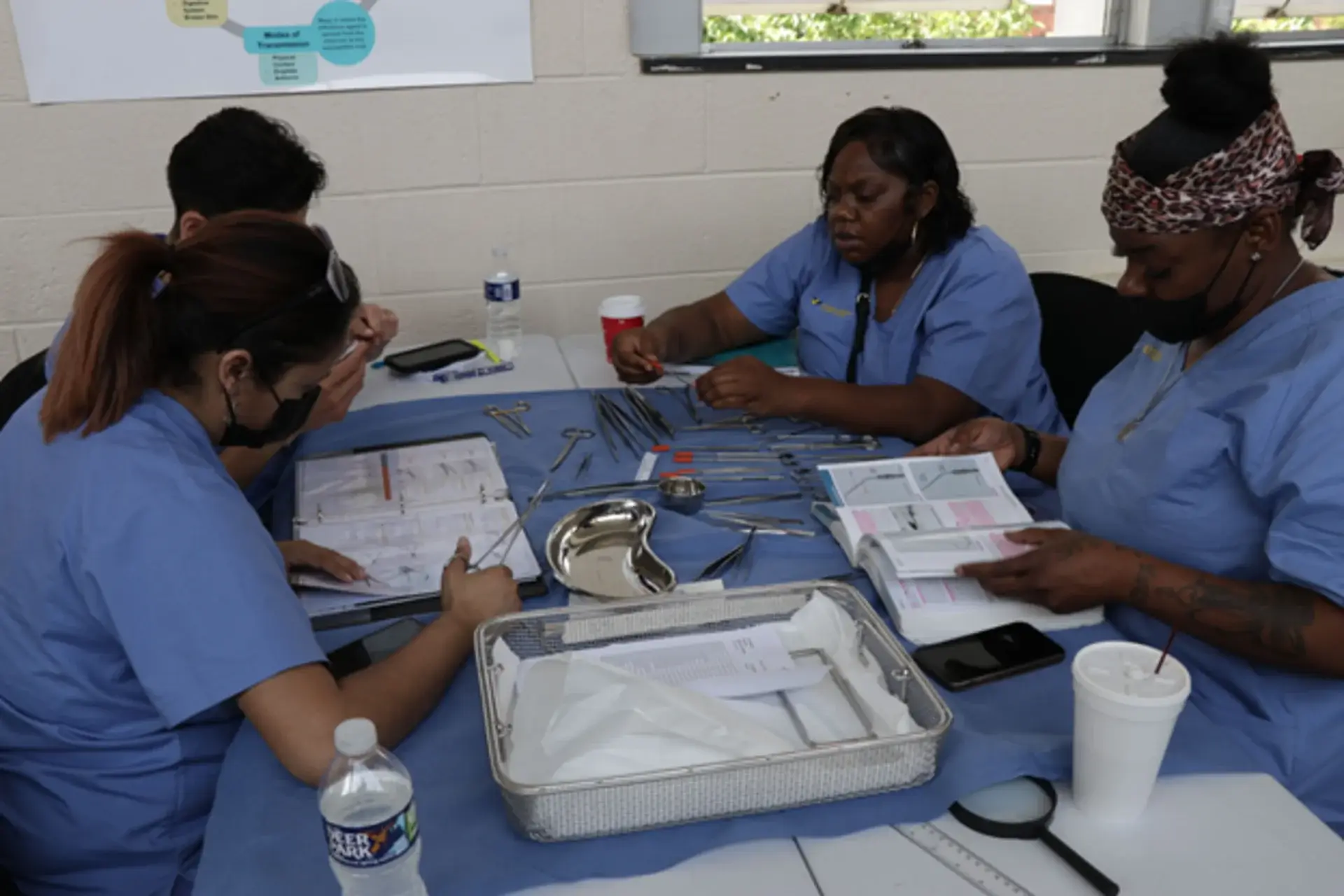
New Expectations For The Central Service Technician
Supervisors increasingly see the central service technician as a data‑aware professional rather than only a back‑room worker. Technicians scan instruments, document repairs, and log cycle details in systems that AI later analyzes at scale. Because of that connection, their accuracy directly shapes the quality of reports that leaders use to improve safety.
AI also pushes documentation expectations higher. Systems may prompt a central sterile technician to record why a tray was left decontamination late or why an item required reprocessing. Over time, those small entries build a dataset that reveals weak points in staffing, training, or vendor support. When technicians understand that link, they treat careful scanning and note‑taking as part of patient protection, not just extra paperwork.
In addition, AI‑driven dashboards can support real‑time coaching. If metrics show that one workstation lags behind others, a lead technician might pair an experienced staff member with that station for part of the shift and watch whether numbers improve.
Healthcare organizations face strong external pressure to document how they protect patients from instrument‑related infections. AI helps gather, organize, and present that evidence more clearly. Systems collect cycle data, test results, and traceability records over many months, then generate reports that support audits and accreditation visits.
When an event occurs, leaders can use AI‑supported searches to trace a specific instrument back through multiple cycles and cases. That speed shortens investigations and helps teams identify root causes rather than guess. It also reassures surgeons and infection prevention leaders that the sterile processing industry continues to raise its standards as tools improve.
However, none of this matters without skilled people to interpret the data and adjust processes. That reality explains why forward‑looking sterile processing technician certificate programs now emphasize critical thinking and situational awareness alongside technical steps.
National employment and wage data for medical equipment preparers, a group that includes many sterile processing roles, underscores the scale of this workforce. Recent federal wage estimates show about 66,790 people employed in these positions nationwide, with a mean annual wage of 47,410 dollars and a median annual wage of 45,280 dollars.
As AI tools spread, employers will likely favor technicians who understand both hands‑on workflows and digital systems. Workers who grow from entry‑level positions into informal technology champions or data resources for their teams may see stronger advancement paths within departments that rely more heavily on analytics.
For many students, the journey begins in a classroom or lab environment that still smells faintly of disinfectant and warm metal. Instructors demonstrate traditional cleaning steps, then show how AI‑enabled washers log cycle parameters and send data to monitoring systems. Learners clearly see that reliable instrument care now combines mechanical skill with comfort when using screens, scanners, and alerts.
Those who envision long‑term careers in this field often view AI not as a threat but as a lever. By embracing new tools, they position themselves for roles that blend education, quality management, and operational leadership. Many future educators, managers, and consultants will likely come from today’s cohort of central sterile technicians who actively engage with technology and help peers adapt to it.
At the same time, departments must invest in staff support. Clear explanations, gradual rollouts, and opportunities to ask questions help experienced technicians feel respected rather than replaced. When leaders frame AI as an assistant that handles data volume while people make final decisions, trust grows more quickly.

Moving Forward With AI In Sterile Processing
Looking ahead, AI will probably continue to influence scheduling, inventory planning, and even instrument design. Software may recommend optimal case cart builds, predict which sets will require back‑up inventory, or suggest maintenance windows that reduce downtime. The sterile processing industry will still rely on human hands to clean, inspect, assemble, and release instruments, yet those hands will work inside a more connected and informed environment.
Technicians who stay curious, ask how new systems work, and pursue continuing education will stand out as valuable partners in this change. Programs that blend traditional skills with exposure to analytics and smart equipment will help them respond confidently to new demands. In that way, AI becomes one more tool that supports the craft of sterile processing rather than overshadowing it, and professionals across this quiet but vital department can shape how technology improves patient safety from the inside out.
Read More: