
A drywall installation and repair career offers steady demand and clear growth. At PTTI, we believe every builder deserves a chance to learn, grow, and thrive. This guide breaks down exactly how you can become a drywall technician, get certified, and build a career that lasts.
Drywall installers hang wallboard and install ceiling tiles inside buildings. They measure, cut, lift heavy panels, secure them properly, and tape or finish seams so painters can apply final surfaces.
Workers often start by helping experienced installers: carrying materials, cleaning up sites, and gradually learning to cut, hang, and finish panels. Because of that entry path, people sometimes enter this trade with no formal credentials. Still, many contractors especially like candidates who show commitment by completing a training or certification program.

You may ask — if you can learn on the job, why join a program? First, structured training speeds up learning curves and ensures you master safety protocols, correct measuring, cutting, and finishing skills. Second, certification signals professionalism. Contractors and employers often prefer trained workers with documented skills.
Moreover, training often improves starting pay. According to the BLS, the median annual wage for drywall and ceiling tile installers stood around $58,800 in May 2024, or roughly $28.27 per hour. Many professionals begin with informal job-site training; however, structured training and certification drastically improve job prospects and earning potential.
At PTTI, we offer a drywall installation training program that covers all fundamentals: measuring, framing, hanging, finishing, safety, and job-site practices. This program suits new entrants and those who want a formal backbone before entering a job site.
Alternatively, if your interest leans toward maintenance, renovation, or home repair work, our drywall repair training program gives you skills in patching, finishing, matching textures, and handling common repair scenarios. That path especially helps technicians who aim to specialize in restoration, remodeling, or independent contracting.
Either route helps build a solid base — and sometimes you can combine both for broader scope: installation, finishing, repair, renovation, or maintenance.
After finishing training — whether installation or repair — you can seek certification or join apprenticeship/union programs. While the BLS reports no formal educational credential required for entry, many employers value documented training or union credentials.
Certification helps you stand out. It proves that you know safe lifting practices, correct panel installation, finishing techniques, and building-code awareness. It also shows professionalism to clients, especially for residential projects or remodeling, where homeowners care about quality and liability.
By combining formal training with hands-on experience, you position yourself not just as a laborer, but as a skilled technician who can carry out quality work — and possibly supervise others down the line.

As mentioned, BLS reports median pay around $58,800/year for drywall and ceiling tile installers in 2024. That figure reflects a broad range of experience and job contexts. When you start, expect entry-level wages lower than median. With experience, certifications, union affiliation or specialization (e.g. taping, finishing, repair), you can exceed median and significantly more with overtime.
Industry sources highlight that demand remains strong. Remodels, renovations, new construction — all need drywall work. Furthermore, trade-skill shortages have pushed many contractors to prefer trained and certified workers over untrained labor — so investing in certification may give you a leg up.
Completing a drywall installation training program or drywall repair training program often opens doors to entry-level jobs. But your growth doesn’t stop there. As you gain experience:
At PTTI, we encourage all graduates to build broadly: mastering installation, repair, finishing, safety — to remain versatile and in demand.
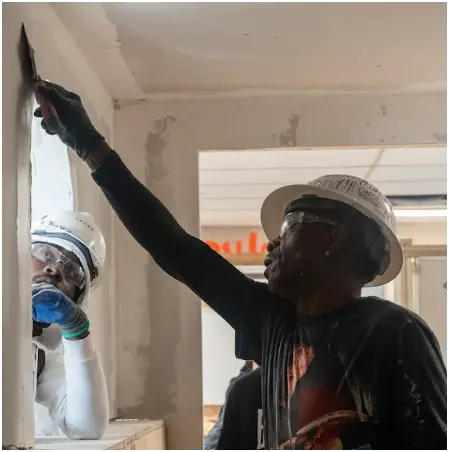
The path of drywall installation and repair offers unique advantages compared to many trades. First, entry barriers remain manageable — you often don’t need a college degree, just training and willingness to learn. Second, demand stays consistent. New construction, renovations, repairs, and housing turnover — all drive need for skilled drywall work. Even remodeling older structures requires repair and finishing know-how.
Third, the flexibility appeals: you may work residential jobs, commercial sites, or take on small repair projects. As you build experience, you may choose stable employment or freelancing.
Finally, with certification and experience, you may progress within construction — even into supervisory or adjacent trades like finishing, insulation, painting — giving you long-term career stability.
Final Thoughts — Build More Than Walls
Choosing to enroll in a drywall installation training program or drywall repair training program means more than learning a trade. It means stepping into a stable career path with real income potential, tangible skills, and room to grow.
At PTTI, we commit to equipping you with not just technical skills, but work-site confidence, safety awareness, and career guidance. We see every student as a future craftsman, potential contractor, or skilled technician who can shape homes and communities.
If you want hands-on skills, steady demand, and a chance to build something real, you may find that a drywall installation and repair career offers the right mix of stability, growth, and craftsmanship. We encourage you to explore our program, apply, and start building your tomorrow. Join PTTI today, and ace your drywall installation and repair career.
Read More-