
Let’s talk about status and what’s the real flex? A bachelor’s degree, we’ve been led to believe for decades, is the pinnacle of achievement. Since it presumably ensures a comfortable salary. But let’s be real for a minute: Trade programs. Who do you actually contact when your neighborhood’s power goes out on the coldest night of the year or when a pipe bursts in your home? Are you calling the person with a theoretical degree, or are you desperately searching for the expert who completed a practical trade program?
The answer is obvious. You want a person with mastery or deep specialization.
The thing is, in black communities, traditional academic paths have often seemed less assured and more of a crapshoot due to racism hurdles. This is why this conversation must happen today. Fortunately, we’re witnessing a powerful shift: the new status symbol isn’t about the size of your paycheck; it’s about your power, dignity, and respect as the undisputed “go-to” person.
Now, let’s dig into it more!
Think about the unique history and structure of black communities. When banks have historically denied loans, when essential services are unreliable, and when institutional access is rigged, what becomes our most reliable resource? Each other.
This is where the power of the go-to person comes into play. They aren’t just earning a living; they are acting as a pillar of community stability.

Let’s address the psychology of status. Respect isn’t bought; it’s earned through utility.
The data support this as well. According to Federal predictions, there are hundreds of thousands of new trade-related jobs that open every year. They will be paid more than in many white-collar jobs. This demand demonstrates that careers in skilled professions are not a financial sacrifice, but rather a strategic choice with genuine economic value that may be made for the future.
When you are absolutely indispensable to the smooth functioning of people’s lives, your status is organically elevated.
The mastery gained in a career in trades provides an indisputable competence. You might face prejudice walking in the door, but when the job is done perfectly—the AC is fixed, the furnace is roaring, the wiring is safe, your expertise silences every doubt.
Therefore, the question becomes: how can we achieve the type of respect and make the most of it?
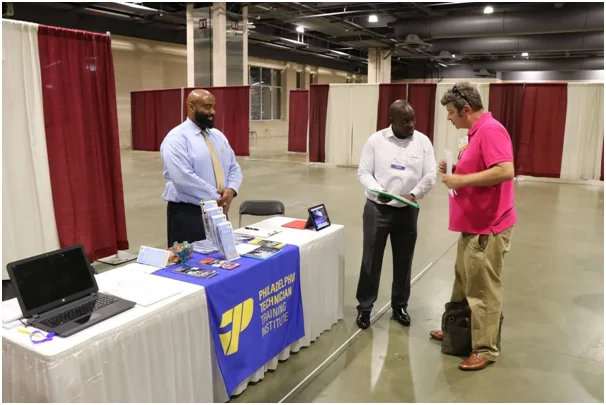
If you are an aspiring individual ready to step into a high-status, high-demand skilled trades career, you need a direct path to mastery. That’s precisely the value of focused trade programs. Organizations like Philadelphia Technician Training Institute (PTTI) understand that the goal is not just to hand you a certificate; it’s to forge you into an expert who will be the next go-to person in your community.
PTTI’s mission is to help black people get jobs by giving them the practical experience in trades that are in great demand, such as HVAC, welding, and electrical work. Those are the trade programs that prepare students for well-paying, well-respected jobs at the end of the day!

This shift in status demands a change in how we advise the next generation. We must stop presenting the four-year degree as the only path to success.
Consequently, it is crucial to support a trade school for black students. In spite of enabling individuals economically, it also strengthens the community and respects their dignity.
So, where do you want your status to come from? A piece of paper that might or might not get you an interview, or the absolute, undeniable, essential skill that makes you the first person your community calls when everything goes wrong?
The new status symbol is clear: it’s mastery. It’s the power you hold in your hands to solve real problems. When you are actually necessary, you earn dignity.
Achieving proficiency in the trade programs is a calculated step towards a future where one can choose one’s own destiny. It is the path to becoming the kind of person who commands respect simply by walking into a room, because everyone knows you are the go-to person who can get it done.
Are you ready to claim your new status? Would you like us to find the top five high-demand skilled trades careers that offer the fastest path to mastery?
Read more: