
In today’s world of smart manufacturing, the industrial automation technician is the most important person on the factory floor. We may address these experts as “Robot Doctors.” They are the heroes who keep the world’s assembly lines running. Furthermore, almost everything we use, from the automobiles we drive to the cellphones we carry, is made by complicated robotic systems. When those systems break down, the whole global supply chain can feel it.
Consequently, the job market has changed a lot because of the growth of automation. As corporations race to combine AI and mechanical precision, there is a huge rise in the number of robotics technician careers. Specifically, this sector is a great mix of physical work and high-level computer problem-solving for people who like to work with their hands and solve puzzles.
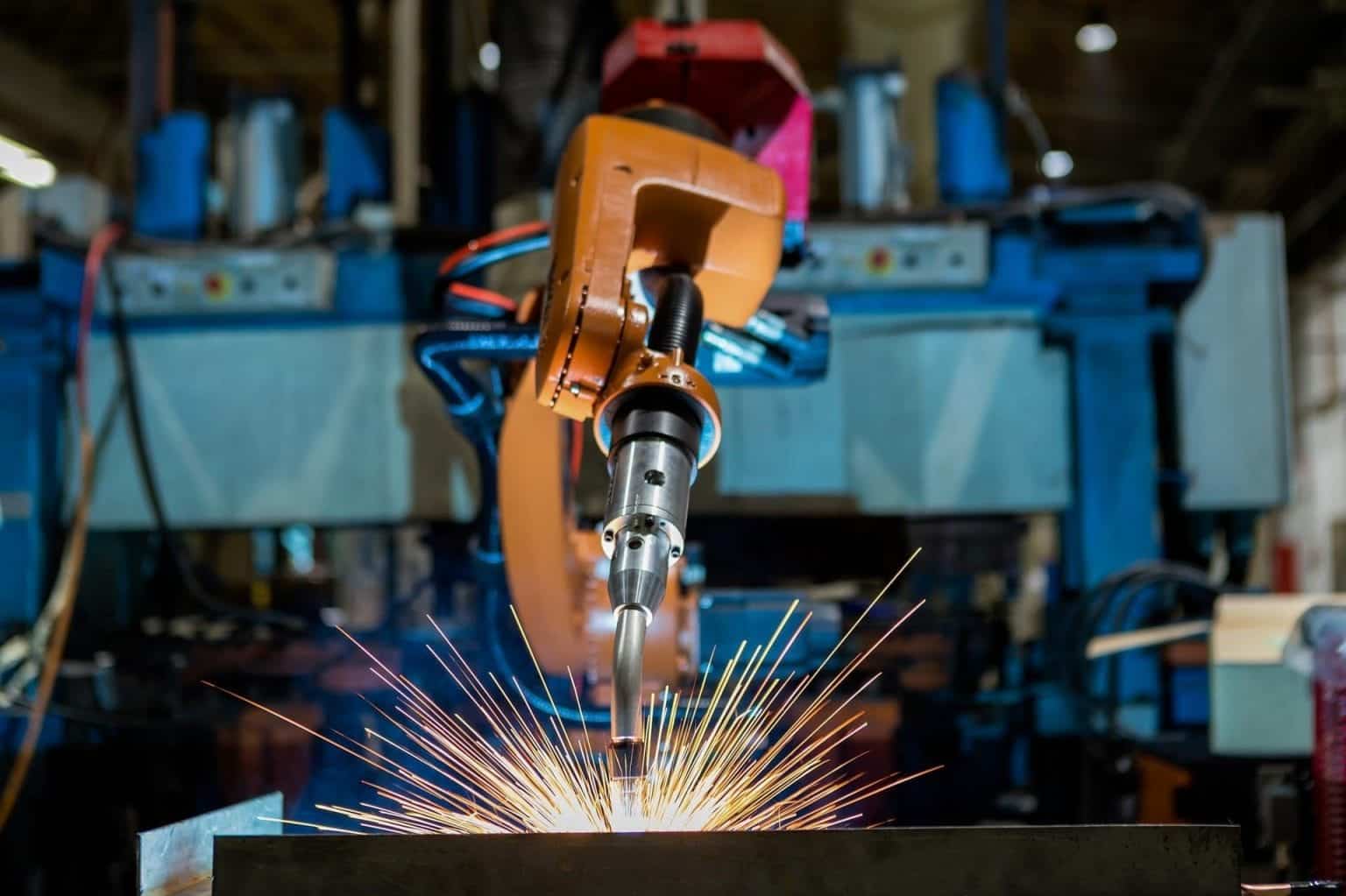
Essentially, an industrial automation technician is basically a mechanic who works with computers. These “doctors” work on complex machinery from companies like FANUC, KUKA, and ABB, as opposed to a regular mechanic who might only work on internal combustion engines. For instance, these robots can do very precise operations like arc welding, moving heavy things, and putting together complex electronics.
In addition to factory-based roles, a lot of people who work in this sector are field service engineers. This means they don’t just stay in one factory. Instead, they go to other places to get production lines moving again. In the industrial world, they are the first people to respond. Whenever a sensor breaks or a servo motor loses its calibration, the field service engineer comes with a set of diagnostic equipment to do “emergency surgery.”
Why Robotics Technician Careers Are Growing So Quickly in 2026
The reason this job is growing is simple: it makes things easier. Moreover, factories may cut their production costs by 30% to 50% with smart manufacturing. However, a robot is only as good as the person who takes care of it. Even the best AI can’t replace a blown fuse or adjust a mechanical gear.
Undoubtedly, this path is one of the highest-paying trade jobs, which is one of the best things about it. Entry-level jobs are a good place to start, with $55K+ to 70K+ a year, but specialist technicians in the aerospace or automotive industries can even make more.
Most importantly, these jobs offer long-term financial security. As more businesses use automated solutions, the need for skilled industrial automation technicians is far higher than the number of people who are currently available. As a result, this makes it a “seller’s market” for workers, which means that qualified technicians can get high pay and great perks.
To move into this field, you need a certain set of talents. You need the “brawn” to move big machines and the “brains” to figure out complicated code. Reminder: Most people who are successful in their careers start by going to a trade school program.
A trade school program or curriculum is different from a four-year theoretical degree since it focuses on hands-on work. You learn about:
In this regard, the Philadelphia Technician Training Institute has a full manufacturing and automation program that simulates real-world factory and manufacturing settings. This is a great method to get into this field rapidly. Not only are the classes meant to turn beginners into professionals who are ready to work, but many of the students get jobs as industrial automation technicians right after they graduate.

What does a “Robot Doctor” do on a normal day? Typically, repetition doesn’t happen very often. One hour you might be doing “preventive care,” and then the next you might be in the middle of a high-stakes repair.
To keep things from breaking down, an industrial automation technician sticks to rigorous routines. This includes, for example:
Every minute a robot is down costs the company thousands of dollars. Therefore, the field service engineer needs to move quickly. They use multimeters to examine how well electricity is flowing and tablets to read the robot’s CPU fault codes.
Although a worn-out end-effector (the robot’s “hand”) is often the cause, diagnosing that problem takes skilled diagnostic abilities and a deep understanding of the system’s logic. They have that.
To be a good robotics technician, you need to keep learning throughout your life. Smart manufacturing technology changes quickly.
Becoming an industrial automation technician is more than just a job; it’s a career path with a lot of room for growth. Initially, a lot of them start out as junior technicians but soon move up to more specialized positions.
Because this is one of the highest-paying trade jobs, the money you spend on your schooling usually pays off quite well. In fact, a trade school program is usually much less expensive than a college degree and lets you start working years sooner.
The Fourth Industrial Revolution is happening right now. Consequently, smart manufacturing is no longer just a nice thing to have; it’s a must for businesses that want to compete globally. You are at the forefront of this shift as an industrial automation technician. You are the link between human creativity and mechanical strength.
As robots move into new areas like food preparation, healthcare, and pharmaceutical distribution, the field service engineer’s job will only get more important. Clearly, every time a new robot is put in place, it means that a technician will have a job in the future.
The term talks about an important person who makes sure that our modern world keeps going. Overall, as an industrial automation technician, you can find work that is safe, pays well, and keeps your mind active.
Ultimately, a robotics technician career is a clear road to success, whether you’re just finishing high school or looking to change careers in the middle of your career. Finally, you may learn the skills you need to get one of the highest-paying trade jobs by locating the correct trade school program. The machines are ready; they only need someone to take care of them.
A: Generally, most entry-level technicians make between $55,000 and $120,000 annually. However, people who work as field service engineers or have skills in specific industries can make a 6-figure year easily.
A: Not always. While people prefer an Associate Degree, many employers respect a certificate from a well-known trade school program. In this sector, real-world experience is sometimes more important than a typical four-year degree.
A: Yes, definitely. Because these jobs involve a lot of technical skill and are very important, automation and robotics jobs are always at the top of the pay scale for trade jobs.
A: Typically, a technician usually works at a certain factory on-site. In contrast, a field service engineer usually works for the company that makes robots and goes to multiple customer sites to do complicated repairs and installations. Both jobs need the skills of an industrial automation technician.
Read more: