
The job market in 2026 feels very different from even a few years ago. Degrees are more expensive, salaries in many “office” roles feel stagnant, and people are rethinking what a promising career actually looks like. In that context, why choose skilled trades is not just a catchy phrase; it is a serious option for anyone who wants real work, real pay, and real stability.
According to the U.S. Bureau of Labor Statistics, construction and extraction occupations are projected to grow 5.2 percent from 2024 to 2034, adding roughly 394,100 new positions over that decade. Installation, maintenance, and repair jobs are expected to grow 4.6 percent, with about 301,400 additional roles opening up in that same period. Those numbers show that these fields are not going away; they are quietly expanding behind the headlines.
Demand is being driven by a simple problem: there are more projects than people who can do the work. Construction alone is expected to require hundreds of thousands of new workers to cover retirements, new builds, and ongoing maintenance. That shortage doesn’t just mean “more jobs”; it means more leverage for people who actually have skills.
Another factor is the age profile of the current workforce. A large share of experienced electricians, plumbers, and other tradespeople are approaching retirement. As they leave, they take decades of knowledge with them. Employers know that, so they are willing to invest in training new people through apprenticeships and structured programs instead of expecting them to show up already fully trained.
Electricians, for instance, are projected to see employment grow by 9 percent through 2034, with an average of tens of thousands of openings each year when you factor in both new jobs and replacement needs. HVAC mechanics and installers are projected to grow 8 percent over the same period, while plumbers, pipefitters, and steamfitters are expected to grow 4 percent. Those are healthy, long-term outlooks that make skilled trades as a career more than just a fall-back plan.
Money is a major part of the picture. A traditional four-year degree can easily cost the equivalent of a down payment on a house. Many graduates leave with heavy loan balances and then start in entry-level positions that barely cover expenses. By contrast, trade careers without college usually involve paid apprenticeships, shorter programs, and far lower upfront costs.
BLS data shows that electricians earned a median annual wage of about $61,590 in May 2023, while plumbers, pipefitters, and steamfitters earned around $61,550. These are solid, middle-income wages that people can reach without taking on large student loans. As they gain experience, specialize, or move into supervisory roles, earnings often climb well above the median.
That difference in timing matters. Someone who trains in a trade can be earning, saving, and possibly buying a home while many of their college-bound peers are still in classrooms. Instead of sending a big chunk of monthly income toward loan payments, a tradesperson has room to invest, build a safety net, or even start a small business. For many families, this is one of the most practical benefits of skilled trades careers.
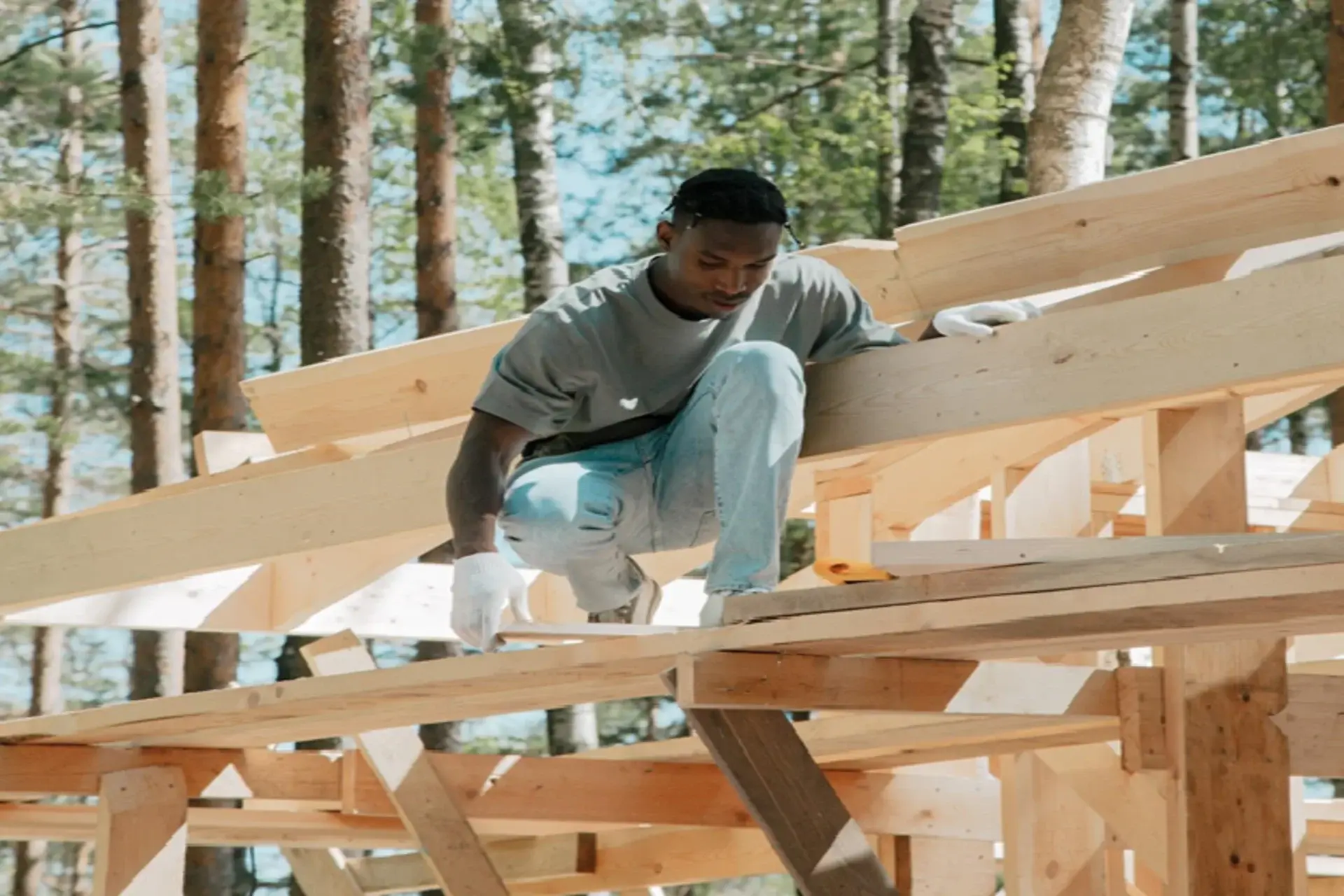
Job security is another reason people are rethinking where they want to be. Office jobs can look glamorous from the outside, but they are also vulnerable to sudden layoffs, mergers, and automation. Trades work, on the other hand, is tied to basic human needs: safe buildings, working power, heat and cooling, water, and sanitation.
Even as technology advances, it is hard to automate tasks like diagnosing an electrical fault in a specific building, fitting pipes in a tight space, or installing a complex HVAC system. These tasks require judgment, coordination, and problem-solving on-site. While software can support the work, it cannot fully replace it. That reality gives people in skilled trades as a career a kind of built-in protection from some of the volatility that hits purely desk-based roles.
This stability also extends across regions. Skilled tradespeople can find work in small towns, growing suburbs, and large cities. If someone needs to relocate for family reasons or lifestyle, there is a good chance they can take their trade with them rather than starting over in a new field.
The future of skilled trades is much broader than the old image of just “construction” or “repair.” As buildings, energy systems, and technologies evolve, new specializations keep emerging. Electricians can move into solar installations, smart-home systems, or industrial automation. HVAC technicians may focus on large commercial systems or high-efficiency retrofits. Plumbers may move into medical gas systems or complex fire-safety installations.
Green energy is a good example. BLS projections show extremely fast growth rates for solar photovoltaic installers and wind turbine service technicians over the coming decade, reflecting policy support and market demand for renewable power. These roles sit at the intersection of sustainability and technical work, showing how the benefits of skilled trades careers now include contributing directly to climate and energy goals.
Over time, many people in the trades also step into new roles. After years on the tools, a worker might become a site supervisor, estimator, project manager, inspector, or safety trainer. Others open their own firms, hire apprentices, and build businesses that can employ people from their communities. Those paths offer both financial upside and a sense of ownership.
Not everyone enjoys spending their days behind a screen. For many, a good day’s work involves moving, making, fixing, and seeing real-world change. Trades roles deliver that in a very direct way. An empty shell of a building becomes usable space with power, plumbing, and climate control. A family with a broken boiler has heat again by the evening. A business gets back up and running because a technician found and fixed a fault.
That kind of tangible outcome makes it easier to feel that the work matters. Problem-solving is built into daily tasks; every job is a bit different, and every fix requires thinking through options. Instead of abstract reports, people see the results in front of them. Over time, that hands-on impact is one of the quiet but powerful benefits of skilled trades careers.
Another side effect is the way tradespeople build relationships. They often work directly with customers, answer questions, calm worries, and earn trust. A reputation for quality and reliability brings repeat work and word-of-mouth referrals, which is especially valuable for anyone who eventually wants to run their own operation.
People sometimes assume that getting into the trades is complicated, but the routes are usually clear. Many start through apprenticeships offered via unions, employers, or community colleges. These programs combine classroom learning with paid on-the-job training, so learners earn while they build skills instead of paying full-time tuition.
BLS data highlights that many openings in these occupations come from replacement needs as older workers retire or move into other roles. That constant churn means new entrants are not fighting for a tiny number of slots; they are filling real gaps. For someone unsure about a four-year degree, this is where trade careers without college become especially appealing.
Across the country, industry groups and local partnerships are working to connect young people and career changers with training. Outreach in schools, veteran transition programs, and community initiatives all help people understand what the work looks like and what support is available.
Technology is changing the trades, but in a way that tends to enhance rather than erase the work. Electricians dealing with smart systems, HVAC techs using advanced diagnostic tools, and plumbers working with sensor-based leak detection all rely on digital tools as part of their kit. Tablets, apps, and software help with planning, documenting jobs, and communicating with clients.
Far from being “low tech,” the future of skilled trades looks increasingly integrated with data, controls, and energy management. That makes the work more interesting for people who like both practical tasks and problem-solving with modern tools. It also creates room for ongoing learning and specialization over a whole career.
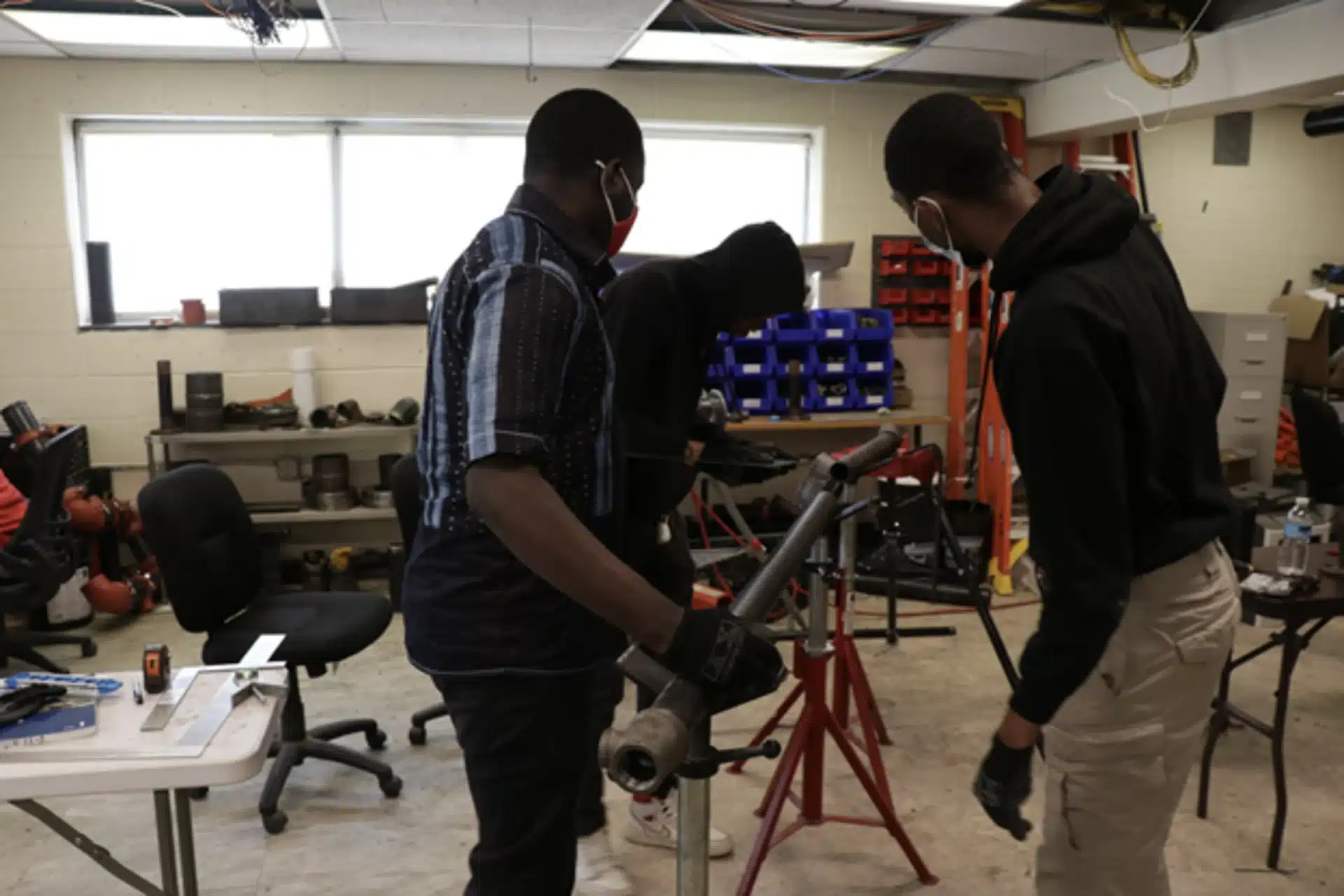
Looking at the bigger picture, BLS expects overall employment in the U.S. to grow 3.1 percent from 2024 to 2034, adding about 5.2 million jobs. Construction alone is expected to grow 4.4 percent, adding more than 360,000 jobs in that period. Those broad trends support the idea that skilled trades as a career will remain relevant well beyond 2026.
Population growth, aging infrastructure, and the shift toward energy-efficient and sustainable buildings all point in the same direction: more work that requires real-world technical ability. Homes will still need to be built and maintained, public facilities will still need upgrades, and businesses will still rely on specialists to keep complex systems running.
In the end, the decision comes down to fit. People who enjoy moving, solving practical problems, and seeing visible results from their efforts are often well suited to the trades. Those who want to avoid large student loans, start earning earlier, and keep options open for self-employment later also find strong reasons to look closely at these paths.
At the same time, it is important to be realistic. The work can be physically demanding, sometimes dirty, and occasionally involves early mornings or odd hours. Anyone considering this direction should think about health, lifestyle, and personal priorities before jumping in.
For many, though, understanding why choose skilled trades changes how they see the whole idea of a “good career.” Instead of chasing titles, they focus on reliable income, useful skills, and the ability to build a life on solid ground. In that sense, the future of skilled trades looks less like a backup plan and more like a smart, forward-looking choice for 2026 and beyond.
Read more-