
Picture a factory floor that never sleeps, never makes a mistake, and can even tell when it’s about to break down before it happens. Actually, in 2026, the smart manufacturing trend will start addressing this for businesses everywhere.
The “digital revolution” is no longer just a slogan for business owners in Philadelphia and big companies around the world. In fact, it is the most basic thing you need to live upto now. To put it simply, you are losing money every hour if your machines don’t communicate and aren’t connected to each other.
Essentially, smart manufacturing combines traditional production tools with “brains” such as AI, sensors, and cloud data. It makes a piece of hardware an active part of your business.
In the future of smart factories, every drill, press, and conveyor belt will provide a steady stream of information to a central system. As a result, this lets the factory learn from its own mistakes and get better on its own.
To understand where we are going, we need to look at what is causing this change. Three major themes will shape the future of smart factories: connectivity, intelligence, and flexibility.
Following a set of strict rules is how traditional automation works. For instance, the line stops if something breaks. However, autonomous manufacturing systems are different. They employ “machine learning” to figure things out as they go.
Imagine a fabrication shop in Philadelphia. In the past, a technician would check the oil and heat levels by hand. Today, however, autonomous manufacturing systems keep an eye on these things every millisecond. For example, the device automatically slows down the motor if a bearing gets too hot to prevent a fire.
This list looks at how the smart manufacturing trend is changing this year. To help you keep up, we have made the most complicated ideas easy to understand for people who are just starting to change how they do things digitally.
This is the “brain” of the business. Specifically, AI doesn’t just do what it’s told; it makes decisions. It checks the production schedule and figures out the quickest approach to do the task.
This is like a big chat room for machines. The “Cutter” will tell the “Loader” exactly when it is ready in the future of smart factories. They “talk” over the internet, so no one has to wait.
With the help of this technology, we can fix things before they break rather than after. This is a huge smart manufacturing trend that cuts “downtime” costs by millions.
Think of “Digital Twin” as just a video game version of our factories. This lets you see what your real factory looks like in a digital form. Crucially, you play the “game” first before moving a big machine or changing a procedure. Then, you do it in real life if it works there. This stops costly mistakes from happening.
In most cases, data processing takes place on a distant “cloud” server. But with edge computing, the “brain” is close to the device.
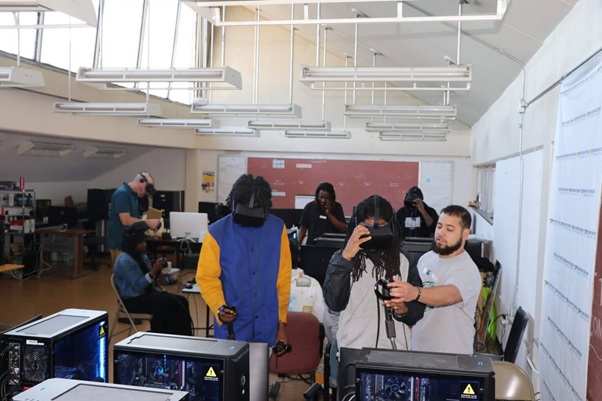
In 2026, being “green” isn’t just about the environment; it’s also about making money. Sustainable manufacturing solutions aim to use less energy and create less scrap metal.
This allows:
One of the most frustrating things for any management is not knowing where their raw resources are. Fortunately, supply chain transparency fixes this by letting you see your parts from a “God’s eye view.”
Many people are worried that machines that can work on their own will take over jobs. In truth, they are transforming the kinds of occupations that are out there. There is a huge need for “Robot Doctors,” or experts who can fix and program these smart machines.
For those looking to adapt, the Philadelphia Technician Training Institute and other similar trade school programs offer hands-on vocational training for people. The programs focus on the practical side of these technologies to make sure that the workforce in Philly stays competitive. Ultimately, this kind of workforce upskilling is the bridge between old-school labor and the future of smart factories.

You don’t need to alter everything at once. To get started on your digital transformation in manufacturing, follow these simple steps:
Initially, implementing a smart manufacturing trend can seem like it costs a lot. But nevertheless, many studies reveal that most factories get their money back within 12 to 24 months.
| Benefit | Impact |
| Efficiency in Operations | Output can go up by 15% to 30%. |
| Savings on costs | Less energy and waste by up to 20% |
| Time off | 45% fewer machine stoppages |
Of course, there are always problems with every new smart manufacturing trend. Many stores in Philadelphia work with legacy Systems, which are outdated equipment that don’t work with the internet.
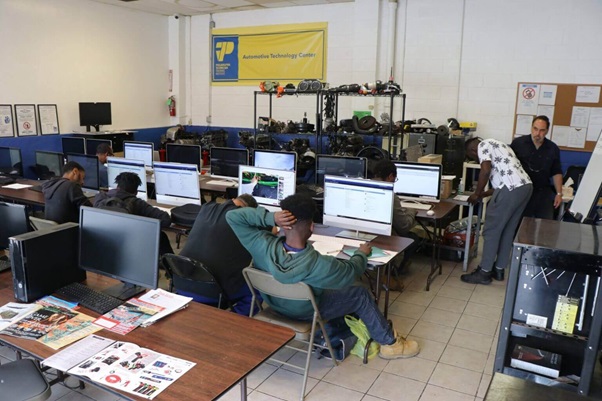
Overall, intelligence is the defining characteristic of the smart manufacturing trend that will prevail in 2026. The idea is to work smarter, not harder, whether that means using eco-friendly manufacturing methods or setting up systems that run themselves.
One of the first things a business owner should do is identify a “blind spot” in their production process. If you work, you should look into upskilling to ensure you have a job in the future of smart factories.
Check out the Philadelphia Technician Training Institute’s specialized trade programs to learn the skills you need for this new era. Don’t wait for the future to come to you; make it happen.
Q: Will all factory workers be replaced by autonomous robots?
A: No. Instead, people still need to do complicated problem-solving and creative design, while the robots do the “dull, dirty, and dangerous” work.
Q: Is the trend of smart manufacturing too expensive for small businesses?
A: Not anymore. A lot of sensors and software-as-a-service (SaaS) models let small firms “pay as they grow.”
Q: How does being open about the supply chain help me in a crisis?
A: It lets you discover delays early so you can change suppliers or change your production schedule before you run out of parts.
Q: What is the first thing you need to do to improve your skills at work?
A: Look for a local partner, like PTTI, to help you master the basics of industrial electronics and automation
Read more: