
Most people think trade school ends when you finish your last class. But this is not the case if you enroll in trusted institutes. You get your certificate, and land up in bussies owners job site. And then you’re on your own.
Here’s what most people don’t know. What actually gets you hired is what happens after the training ends. And PTTI has built a whole system around making sure graduates don’t just finish programs, they land real jobs. Let’s break down exactly how that works.
Explore PTTI Admission and career guidance
A students spend months learning a real skill. Then pass the certification exam, which he or she has done with dedication and hard work. Finally ready to work in the industry you worked hard for. Therefore, the correct support matter allot. But then you have no idea how to write a resume for a trade job. You might be wondering how to get the support, overall, that companies are hiring.
That gap between being trained and being employed is where a lot of people get stuck.Career services in trade schools actively match graduates with companies the day they qualify. These aren’t job boards they’re job bridges. Here PTTI support that students from practical learning to employment so that each studnet become financially independent at an early stage.
A real job placement system doesn’t point you to a website and wish you luck. It walks you through the process and puts you in front of employers directly.The job placement support motivates student and build self confidence , which later help inputting placed with companies.
PTTI doesn’t wait until you graduate to start thinking about your career. The process starts in while you’re still in the skilled trade program. Due to PTTI’s job placement programs, many students begin earning even before they complete their graduation. That is the real goal we have. That’s what happens when a school has real employer relationships and a real system in place.
Here’s exactly what PTTI’s trade school career services Philadelphia support includes:
Resume Writing: You learn how to write a trade-focused resume that hiring managers actually respond to. Not a generic template, a document built specifically for the field you trained in.That resume is updated with current market demands.
Interview Coaching You practice real interview questions. Alumni also supports this as tehy have faced the session recently.
Career Identification PTTI helps you figure out which specific roles and employers are the best fit for your skills, your location, and your goals. This is typically based on your interest as well. Like the program you opted for and the location where you want to relocate.
Financial Management Basics Once you start earning, you should how to manage it. PTTI covers this too because getting hired is step one, and keeping your financial life together is step two.
Direct Employer Connections. The significant involvement of employers is a key benefit, as companies actively participate in training new workers. PTTI has built relationships with hiring managers across Philadelphia hospitals, construction firms, automotive shops, and manufacturing plants. Those relationships open doors that a job board never could.
The numbers matters just because this is the main motivation for student who want to get hired. For its Sterile Processing / Central Services program, PTTI claims a job placement rate of 90% among those who complete.
That’s the PTTI job placement rate, and 90% is not a number most schools can claim. It’s a number that comes from years of building real employer partnerships and treating career services as a core part of the program, not an afterthought.
Here’s how that stacks up:
| Job Placement Metric | Philadelphia Trade Schools | PTTI |
| Average placement rate (industry) | 70–80% within 6 months | 92% (Sterile Processing program) |
| Career services start time | After graduation | During training (~700 hours) |
| Employer partnerships | Varies | Active partnerships across Philly |
| Resume + interview prep | Sometimes included | Always included |
| Job offers before graduation | Rare | Common |
That middle column is what separates PTTI from a lot of other programs in the city.
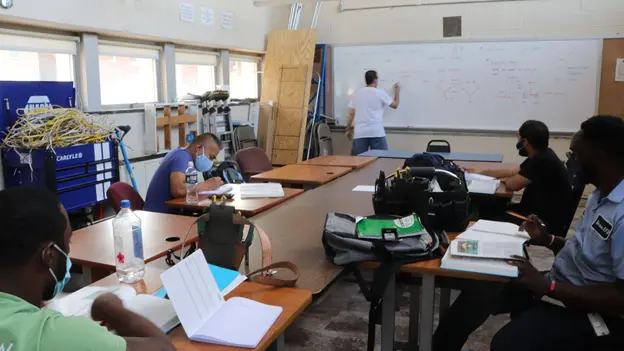
Philadelphia isn’t just any city. It’s a city of dreams with a serious and growing need for skilled workers. Greater Philadelphia outperforms other states in terms of estimated growth in trade jobs, with a projected increase of more than 15%.
That growth means employers are actively looking for trained workers. They need pipefitters, welders, HVAC techs, automotive technicians, and sterile processing specialists right now, not in four years.
Philadelphia mirrors a national trend of a critically short supply of electricians, welders, and health technicians. This shortage pushes employers to partner directly with trade schools to recruit trained talent.When employers come to the school to find workers, you don’t have to chase jobs. The jobs come to you if you train at the right place.
PTTI doesn’t offer 30 different programs. It offers focused one,which are in-demand programs that match exactly what Philadelphia employers are hiring for right now.
Here’s a look at what’s available and where graduates typically land:

| PTTI Program | Training Length | Where Graduates Work |
| Sterile Processing & Central Services | 8 months | Hospitals, surgical centers, outpatient clinics |
| Welding Technology | 8 months | Manufacturing plants, construction firms |
| HVAC Technology | 12 months | Commercial buildings, residential service companies |
| Automotive Technology & Repair | 12 months | Dealerships, independent shops, fleet services |
| Steam, Sprinkler & PipeFitting | 6 months | Industrial facilities, commercial construction |
| Manufacturing & Automation | 12 months | Factories, industrial plants |
Every single one of these programs feeds directly into skilled trades hiring Philadelphia sectors where the demand is real and the jobs are waiting.
Entry-level wages for welding, electrical, and plumbing jobs can range from $45,000 to $65,000 annually. Within 5 years, some trades surpass the $90K mark much faster than college graduates.
This is the question a lot of young people in Philly are asking. And the honest answer might surprise you.
| Factor | Trade School (PTTI) | Traditional 4-Year College |
| Time to get hired | 6–12 months | 4–6 years |
| Average student debt | ~$18,200 total | $43,000+ average |
| Career services support | Built into the program | Hit or miss |
| Job placement rate | 92% (PTTI) | Varies widely |
| Starting salary | $45,000 – $65,000 | $40,000 – $55,000 |
| Employer connections | Direct partnerships | On your own |
Entry-level skilled trade workers earn between $45K and $60K annually, with growth potential and benefits. That’s more than many liberal arts graduates and without the crushing student debt.
The trade school vs college job outcomes comparison isn’t even close when you factor in time, debt, and placement support. Trade school graduates enter the workforce years earlier. They start earning sooner. And at PTTI, they have a team behind them pushing them toward the best opportunities available.
This is the part most people don’t realize until they’re already enrolled.PTTI’s Career Services team doesn’t wait until you’re done. Once students reach approximately 700 hours of training, the professional development classes begin. You start working on your resume, your interview skills, and your career plan while you’re still in the program.
That timing is intentional. By the time you finish your last class, you’ve already got:
Philadelphia high school graduates in skilled trades can earn as much as $100,000 within five years, starting at $50,000. UltimatelyThat trajectory starts at graduation or sometimes even before.
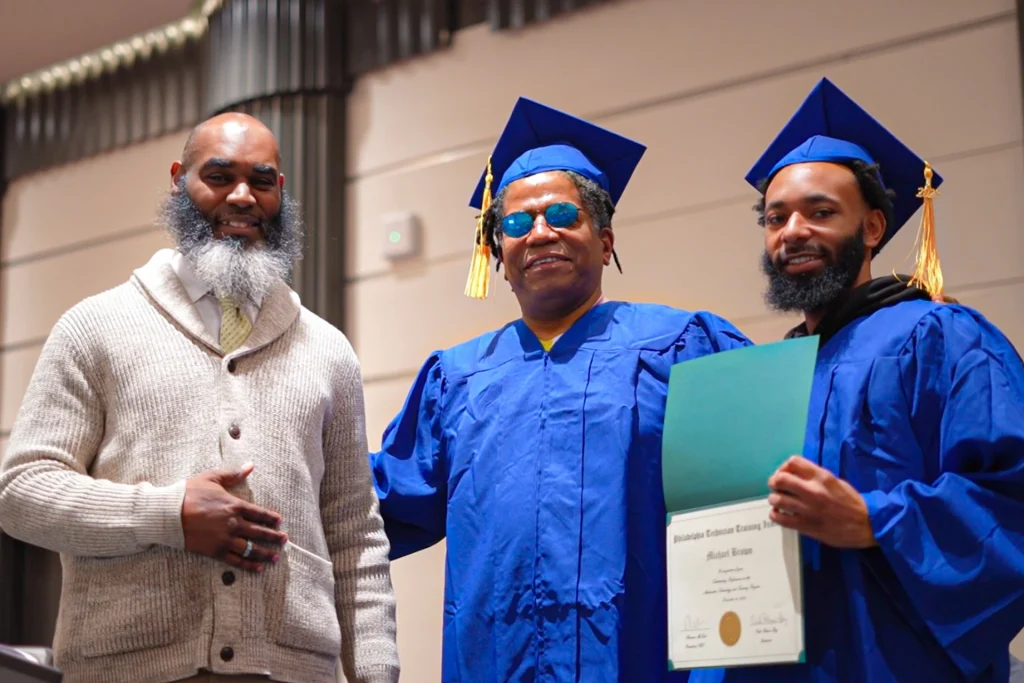
Worried about the cost? That’s fair. But here’s the reality.
Students who might have delayed training decide to act instead. In PTTI’s approach, the financial aid office meets each prospective student. They walk through federal grants, institutional scholarships, and payment plans.
PTTI accepts FAFSA (school code: 042213). Grants, federal loans, institutional financing, and veterans’ education benefits are all available. The cost to complete a trade school program in Philadelphia ranges from $8,000 to $20,000, with financial aid and payment plans available.
Compare that to four years of college costs, and the math becomes very clear very fast.
A lot of schools in Philly will train you. Not all of them will help you get hired.
Philadelphia trade schools with job placement support — specifically PTTI — understand that training without placement is half a job. The whole point is to get you working. Earning. Building a career that lasts.
PTTI’s trade school career services Philadelphia system, 92% placement rate, and direct employer partnerships make it one of the strongest options in the city for anyone who’s serious
Q1. Do Philadelphia trade schools actually help you find a job after graduation?
Yes — and the best ones make job placement a core part of the program, not an add-on. PTTI starts career services while you’re still in training. Once students hit around 700 hours, they begin working on resumes, interview prep, and employer connections. PTTI’s Sterile Processing program has a 92% job placement rate — one of the strongest in Philadelphia. Many graduates receive job offers before they even finish their program.
Q2. What is PTTI’s job placement rate?
PTTI’s job placement rate for its Sterile Processing and Central Services program is approximately 92%. That’s significantly above the Philadelphia trade school average of 70–80% within six months of graduation. This rate is driven by PTTI’s active employer partnerships, structured career services, and the consistent local demand for skilled technicians in healthcare, construction, automotive, and manufacturing sectors.
Q3. What career support does PTTI offer besides training?
PTTI’s Career Services department provides resume writing tailored to trade jobs, interview coaching, career identification, financial management education, and direct introductions to employers hiring in Philadelphia. Students don’t just graduate with a certificate — they graduate with a polished professional profile and a support team actively working to connect them with open positions.
Q4. How does PTTI compare to a four-year college for job placement?
Trade school graduates at PTTI enter the workforce in 6–12 months, while college graduates typically wait 4–6 years. PTTI’s 92% placement rate beats many college career center outcomes, and graduates start with salaries ranging from $45,000 to $65,000 — comparable to or above many four-year degree starting salaries — with far less student debt. The total cost of a PTTI program is around $18,200, compared to $43,000+ in average college debt.
Q5. Is financial aid available to help cover PTTI’s tuition?
Yes. PTTI accepts FAFSA (school code: 042213), and federal grants, loans, institutional financing, and veterans’ education benefits are all available to qualifying students. PTTI’s financial aid office works one-on-one with each student to identify the best options for their situation — because the goal is to remove every barrier between you and a real career.
Read more blogs