
So you want to become a pipefitter, that’s really a good choice. Also wanted to know which path brings more financial stability.
Plumbing is one of the most solid career paths out there. Good money. Consistent work. Nobody’s shipping your job overseas. But once you decide to get into it, a real question comes up fast: Both paths make real money. Both have their pros and their headaches. The difference is how you get paid, what comes with it, and where you want to go long-term.
Let’s break it all the way downt the real numbers and what they mean for you.
A union plumber works under a collective bargaining agreement. That means your wages, benefits, and raises are all negotiated by the union on your behalf. Union plumbers typically work for larger contractors that bid on commercial and industrial projects.
An independent plumber (also called a non-union or self-employed plumber) sets their own schedule, picks their own clients, and keeps their own profits, but also handles their own insurance, taxes, and dry spells.
Let’s talk about finances as that is the main motivation for student when he or she enrolls for any certification program .Ultimately this os the most demandable point needs attention. Because that’s really what you need to know.
Union journeymen average $35–$50 per hour. Non-union journeymen in the same markets typically run $25–$38 per hour. Total compensation — including benefits and pension — is 25–40% higher for union members.Here’s a straight salary breakdown:
| Career Stage | Union Plumber | Independent / Non-Union Plumber |
| Apprentice (Year 1) | $42,000 – $46,000 | $38,000 – $44,000 |
| Journeyman | $73,000 – $100,000+ | $65,000 – $85,000 |
| Master Plumber | $85,000 – $120,000+ | $80,000 – $140,000 |
| Self-Employed / Business Owner | N/A | $94,000 – $250,000+ |
Based on this information, it’s likely that union plumbers’ salaries are higher than those of independent plumbers, as union plumbers have more opportunities to work with the firm. However, Union pays more consistently. But independent plumbing has a higher advantage.
When people look at a union plumber’s salary and benefits, they often only count the hourly rate. The real value is in the full package.
Union plumbers can see their total compensation package increase substantially beyond base wages. Employer-paid benefits like healthcare and pensions can add $15–$30 per hour in value pushing total compensation well above hourly pay alone. A non-union plumber making $35 per hour, handling their own insurance and retirement, might actually take home less than a union plumber making $45 per hour with everything covered.
Here’s what union membership typically includes:
UA union plumbers typically receive defined-benefit pension contributions of 7–15% of wages paid by the local employer, comprehensive family health insurance at little or no cost, vacation pay accrual, and structured wage progression with predictable raises. Especially when you compare it to figuring all of that out on your own.
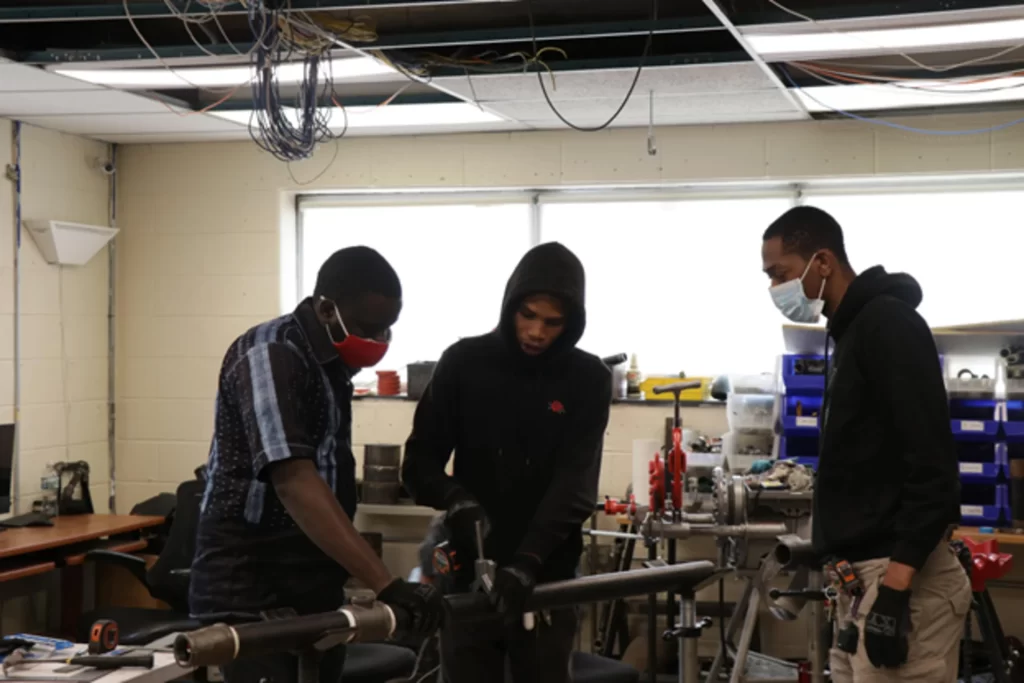
Going independent sounds great. No one is telling you what jobs to take. You set your own rates.
And honestly? The independent plumber’s income potential is real but it comes with things you’ve got to be ready for.
A solo self-employed plumber typically grosses $80,000 to $150,000 per year. After an overhead rate of 30 to 40 percent, net income ranges from $60,000 to $110,000. Pipefitters who specialize in residential service or commercial work often reach the top of that range. They are more connected to various local employers and business owners.
Here’s the honest breakdown of what independent plumbers deal with:
The Wins:
The Real Costs:
Here’s a clear side-by-side so you can see what you’re choosing between:
| Factor | Union Plumber | Independent Plumber |
| Hourly Rate | $35 – $50/hr | $25 – $75/hr |
| Annual Salary | $73K – $120K+ | $60K – $250K+ |
| Healthcare | Employer-covered | Self-paid |
| Pension | Defined-benefit | Self-funded (401k) |
| Job Security | High (union hall) | Variable |
| Raises | Contract-guaranteed | Based on clients/business |
| Path to Business | More friction | More direct |
| Best For | Stability + benefits | Entrepreneurship + scale |
Here’s something most people skip and failed to undersand. Whether you go union or independent, certain things move your pay up fast.
License level is very important in Pipefitter training. Salary starts around $42,000–$46,000, which is quiet sufficient for financial stability at an early age. But later on, it increases to $67000. Master plumbers who average $80,053. That’s a $34,000 jump over a career path that typically takes 8–10 years.
Some plumbing training program specializations command a significant premium. Medical gas plumbing, high-purity piping for pharmaceutical manufacturing, and fire sprinkler installation all require additional certifications and degrees that pay above general commercial plumbing rates.
Remember this strategic formula that will help you in long run if you want achieve something Specialized skills = less competition + higher rates.
Location is one of the biggest pay factors. Illinois plumbers earn a median of $96,200. West Virginia plumbers earn $49,630 nearly half as much as plumbers in other states for the same work.
Plumbers on commercial and industrial jobs regularly log 50–60 hours per week during peak construction seasons. Or else, sometimes they work on a contractual basis with a few real estate agents and are later contacted by agents for residential plumbing or drainage issues.
Additionally Here’s the thing whether you go union or independent, you need the same foundation: real skills and a real license. That’s exactly what PTTI’s Pipefitting and Plumbing programs deliver.
PTTI’s Steam, Sprinkler, and PipeFitting Program teaches you:
The program runs just 26 weeks. That’s six months to go from zero to job-ready. The overall placement rate at our institute currently stands at approximately 92%. Students have access to job counseling and career assistance from alumni and mentors. They are trained so they don’t face any difficulties during their certification program, supervised by industry specialists.
That kind of support matters whether you’re applying to a union local or lining up your first independent clients. Moreover, once you’ve got your training and your license, the plumbing career path after trade school is wide open.
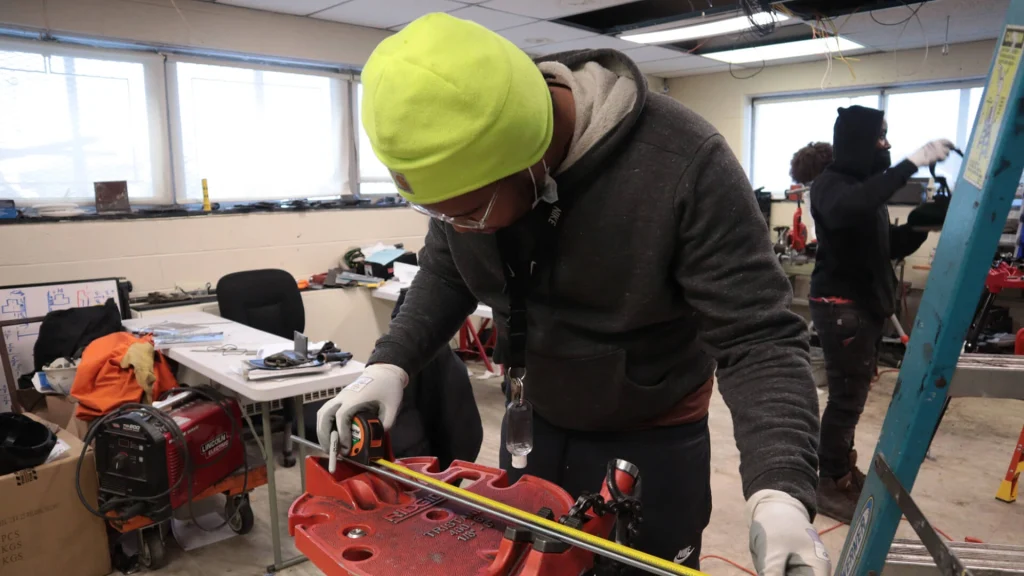
The real answer: it depends on your goals, but based on an analysis of finances and career opportunities, the Union plumbing career path is considered more beneficial. Moreover, you can still look at this.
If you want financial stability, a future with full benefits, and consistent work, the union path is the way to go. Specifically, union pipefitters negotiate for higher wages. Ultimately, they are tied up with various local employers from which they get so many job opportunities, frequently 20–30% more in base pay, along with stronger benefits packages and job security that give their members a real edge over non-union plumbers.
If you want business ownership and unlimited earning potential, the independent path offers a higher ceiling. A plumbing business owner clearing $130K–$250K a year isn’t rare. It takes time to build, but it’s achievable. The business is in your control. You drive those opportunities for yourself.
Either way, the union plumber vs independent plumber decision doesn’t happen at the start of your career. It happens after you’ve got your training, your license, and real experience behind you.
Q1. Does a union plumber actually earn more than an independent plumber?
In base hourly pay and total compensation, union plumbers typically come out ahead — especially in strong union markets like Illinois, New York, and New Jersey. Union journeymen average $35–$50 per hour, compared to $25–$38 for non-union in the same market.
Q2. What are the biggest perks of going union as a plumber?
Union plumbers in Philadelphia get a defined-benefit wage, local employers cover family healthcare,the structured raises locked in by contract, and steady job placement through union hiring halls. These benefits add $15–$30 per hour in real value on top of your base wage.
Q3. How do I become a licensed plumber through PTTI?
PTTI’s Steam, Sprinkler, and PipeFitting Program runs for 26 weeks and covers everything from industrial plumbing fundamentals to blueprint reading, valve installation, pipe fabrication, and safety. After completing the program, you pursue your journeyman or master plumber license through your state. PTTI’s career services team supports you with resume help, interview prep, and job placement — with an overall placement rate of approximately 92%.
Q4. Can I go independent after starting with a union?
Yes but it’s not always seamless. Many plumbers spend their first 5–10 years in union work, build experience and savings, earn their master plumber license, and then transition to starting their own business. Some union locals may have rules that complicate the move, so it’s worth understanding your specific local’s contract. For plumbers whose long-term goal is business ownership, starting non-union can provide a more direct path — though you’ll miss the early-career benefits the union provides.
Q5. Is financial aid available for PTTI’s plumbing program?
Yes. PTTI accepts federal financial aid through FAFSA (school code: 042213), and grants, federal loans, and institutional financing plans are available for qualifying students. Veterans’ education benefits are also accepted. Since the program is only 26 weeks, most students graduate and start earning long before a traditional college student even completes their first year.
Read More Blog: