
Drywall taper and finisher work is one of the most dependable ways to build a skilled-trades career without a four-year degree. Every apartment, hospital, office, and home built or renovated across the Philadelphia region needs someone to tape seams, coat joints, and hand over smooth, paint-ready walls. As a drywall finisher, you turn rough hung board into the clean surfaces people actually see and touch, and that skill keeps you working through nearly every construction cycle. This guide explains what drywall tapers and finishers do in 2026, what they earn locally and nationally, the skills that separate beginners from professionals, and the realistic drywall finisher career path that runs from apprentice to foreman or business owner. Whether you are a high school graduate, a career changer, a veteran, or an adult learner weighing hands-on drywall, framing, and finishing training in Philadelphia, you will find a clear, practical picture of the trade and how to enter it this year.
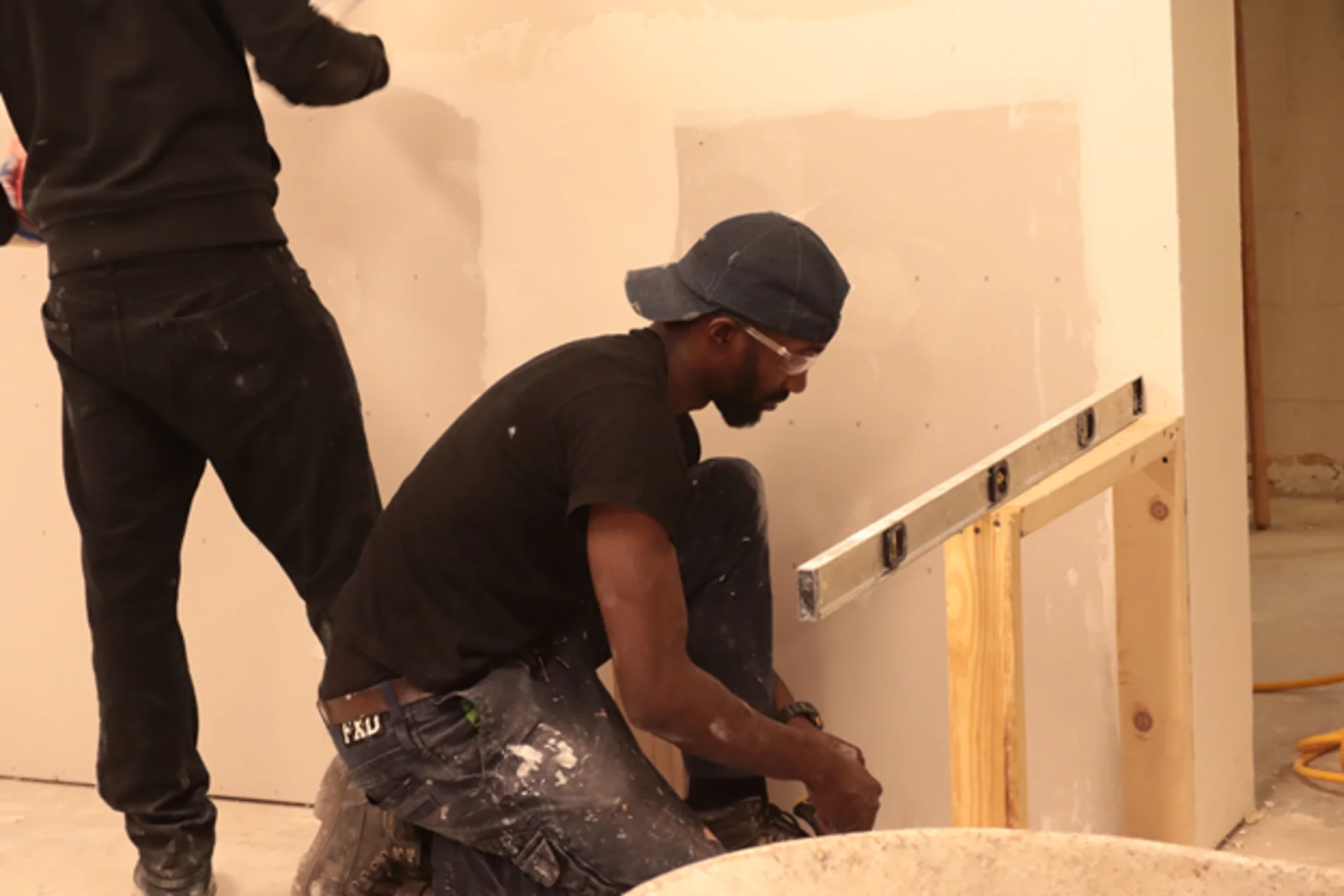
A drywall taper and finisher prepares hung wallboard for paint by taping the joints, applying successive coats of joint compound, and sanding everything smooth. The taper embeds tape over seams and inside corners; the finisher builds and feathers the compound so walls and ceilings look seamless. In practice, many workers do both jobs.The work is detailed and physical. On a normal day, a drywall finisher mixes and applies compound, coats screw and nail heads, feathers joints so they disappear under light, sands between coats, and checks the surface with a work light before a painter ever arrives. Finishers often work on stilts or benches for ceiling and upper-wall access, and they coordinate closely with hangers, painters, and other trades so the schedule keeps moving.
These titles overlap, which confuses newcomers. A drywall installer (or hanger) measures, cuts, and fastens the board to the framing. A drywall taper focuses on taping and the first compound coats. A finisher carries the surface through its final smooth coats and sanding. Some contractors separate these roles; others expect one person to hang, tape, and finish. Understanding the difference between tapping versus full finishing helps you decide which lane fits your strengths and which pays best in your local market.
The drywall finisher salary is competitive for a trade you can enter without a degree.Once you enroll for drywall training in Philadelphia According to the U.S. Bureau of Labor Statistics, the median annual wage for drywall and ceiling tile installers was about $58,140 in May 2024, while tapers earned a median of roughly $64,700. Pay rises with speed, quality, specialization, and union membership, and top earners in the occupation have historically exceeded $100,000.
Earnings vary by experience, employer, location, and specialization, so treat these as ranges rather than promises. Here is a realistic 2026 snapshot for the Philadelphia area and nationally:
| Stage / Role | Approximate Annual Pay (2026) |
| Entry-level finisher (Philadelphia area) | $36,000 – $46,000 |
| Experienced finisher / taper (Philadelphia) | $55,000 – $68,000 |
| National taper median (BLS, May 2024) | ~$64,700 |
| Drywall foreman / lead | $80,000 – $98,000 |
| Drywall estimator | $85,000 – $90,000+ |
Philadelphia pays competitively within Pennsylvania. Regional survey data in 2026 places the average drywall taper in Philadelphia around $60,000 or more, with senior tapers reaching the high $60,000s. If you want to see how drywall pay compares across states and specialties, PTTI’s state-by-state drywall salary guide breaks the numbers down in detail. The bottom line: a drywall finisher salary grows meaningfully as your surface quality and speed improve.
Drywall finishers need precise hand skills, surface judgment, and jobsite discipline. The essentials are taping straight and tight, coating and feathering joints, sanding to a flat finish, controlling tools, reading a room for lighting and layout, and working safely and cleanly alongside other trades.
Employers care far more about your walls than your résumé. The skills that get you hired and promoted include: consistent taping and corner work; smooth, feathered compound coats; efficient sanding with minimal dust and rework; comfort on stilts and benches; basic blueprint and layout reading; patching and repair; and the reliability to show up and finish punch lists. PTTI’s overview of the core skills new drywall technicians need is a useful checklist if you are just starting out. Strong drywall finishing is ultimately about producing a wall that looks flawless under a painter’s light.
Finish quality is standardized into levels, and knowing them is part of the craft. Levels run from 0 (no finishing) up to 5 (the highest smooth finish, often required for critical lighting or high-gloss paint). Most residential work lands at Level 4, while premium commercial and high-visibility surfaces call for Level 5. Being able to deliver the five levels of drywall finish on demand is exactly what separates a helper from a trusted drywall finisher, and it directly affects the jobs and pay you can command.
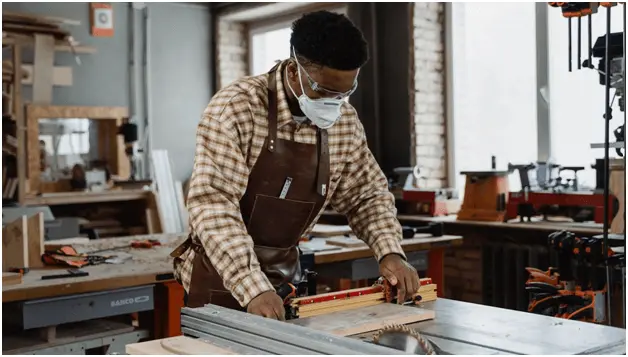
You can become a job-ready drywall finisher in a matter of months rather than years. Drywall finishing is skill-based, so once you can tape cleanly and produce smooth, feathered coats consistently, you are employable. Many workers learn on the job over roughly a year, but focused training compresses that timeline significantly.
The reason the entry is fast is that finishing rewards deliberate, repeated practice more than classroom theory. Structured, hands-on programs concentrate your time on the exact motions employers test for, so you build muscle memory quickly. If you want a clear picture of the timeline, PTTI explains how long it takes to become a drywall finisher based on real program pacing. From there, the drywall finisher career path is a matter of stacking speed, finish quality, and leadership over time.
Moving up as a drywall finisher means trading raw hours for higher-value skills: leading crews, estimating jobs, and eventually running your own work. The trade has a clear ladder, and each rung pays more because it adds responsibility and business value on top of hand skill.
Here is what the drywall finisher career path typically looks like:
| Stage | Typical Role | What Changes |
| Entry | Apprentice / helper | Learning tools, taping basics, jobsite habits |
| Skilled | Finisher / taper | Independent Level 4–5 finishes, speed and quality |
| Lead | Lead finisher / foreman | Crew leadership, scheduling, quality control |
| Management | Superintendent / estimator | Bidding, project oversight, client coordination |
| Owner | Subcontractor / business owner | Running your own drywall finishing business |
The most common first jump is from skilled finisher to lead or foreman, where pay climbs sharply. PTTI’s look at how workers move from finisher to foreman shows how supervision, reliability, and quality control drive that promotion. Beyond the foreman level, estimating and project management open six-figure potential, and many experienced finishers eventually launch their own drywall businesses. None of these outcomes are guaranteed, but the path is real and well-traveled for people who keep improving.
Drywall finishing is a stable, in-demand career in 2026. The U.S. Bureau of Labor Statistics projects employment of drywall installers, ceiling tile installers, and tapers to grow about 4% from 2024 to 2034, roughly as fast as the average for all occupations, with approximately 8,800 openings each year driven largely by workers who retire or change fields.
That steady demand has a simple cause: drywall goes into houses, apartments, offices, hospitals, schools, and warehouses, so any new build or remodel needs someone to tape and finish it. The work is also hard to automate, because feathering a joint and judging a surface under a work light still require a skilled human hand. PTTI’s take on why skilled finishers stay in demand explains how interior finish work holds up even when other parts of construction slow down. For anyone weighing the trade, the demand signals point clearly toward long-term drywall finishing opportunity.
Philadelphia is a strong market for drywall tapers and finishers. Ongoing residential, healthcare, and commercial construction across the city keeps interior finish crews busy, and the surrounding region multiplies those opportunities.
Work extends well beyond city limits. Drywall finishers trained in Philadelphia find jobs across neighborhoods from North and South Philadelphia to West Philadelphia, Mantua, and Powelton Village, and throughout nearby Pennsylvania communities such as Yeadon, Lansdowne, Darby, Drexel Hill, and Ardmore. Across the river, South Jersey towns including Camden, Pennsauken, Collingswood, Cherry Hill, Maple Shade, and Cinnaminson add even more demand. Because finishing skills transfer directly, drywall training in Philadelphia positions you to take work in whichever direction the best opportunity appears, including into Delaware and the wider tri-state market.
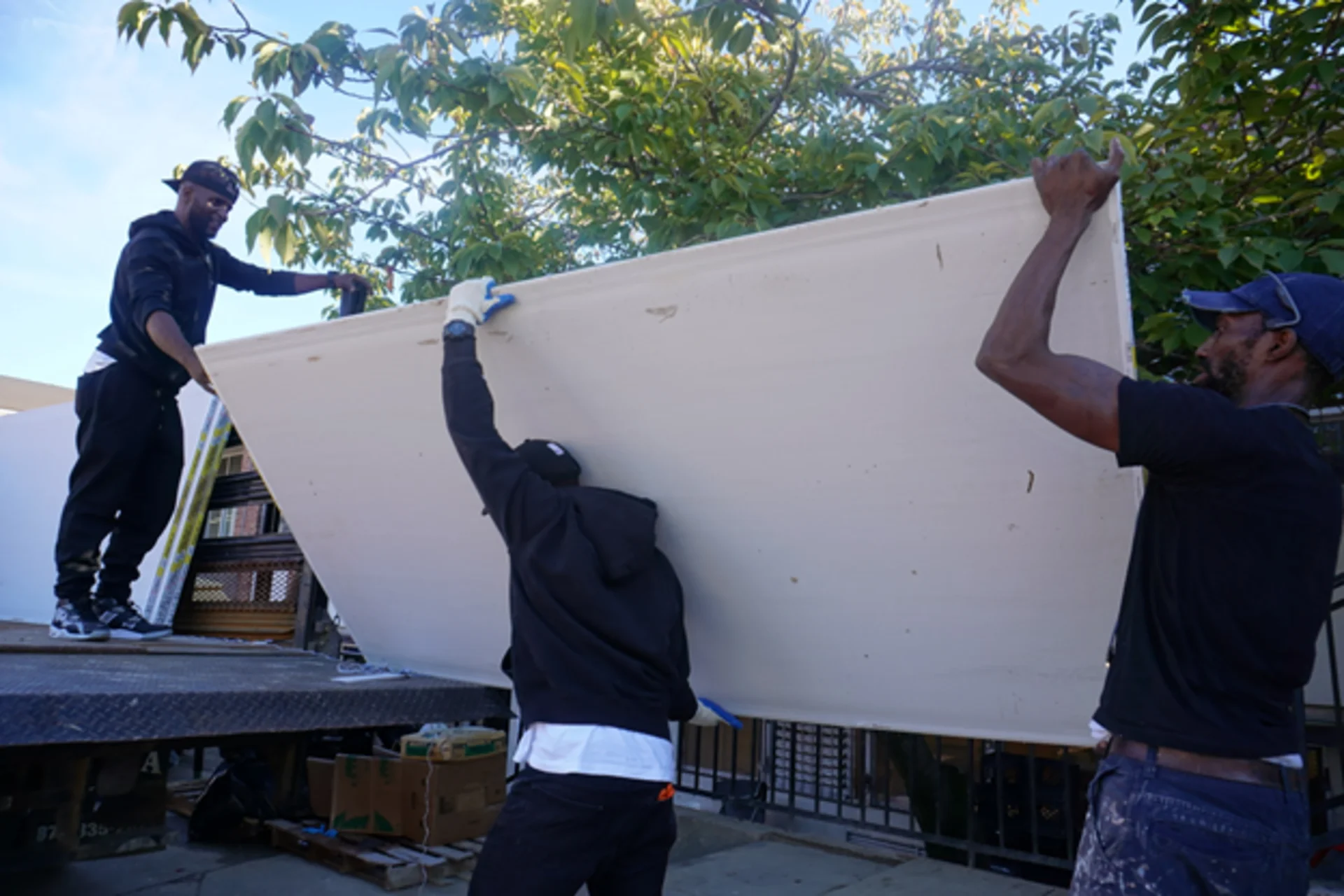
Getting started as a drywall finisher is straightforward. You generally need to be at least 18 with a high school diploma or GED, though the trade values ability over academics. From there, the fastest, most reliable route is structured, hands-on training that puts real tools in your hands and coaches your technique.
A quality program teaches taping, coating, sanding, framing basics, safety, and the full range of finish levels using real materials and jobsite-style practice. Learning at PTTI’s drywall, framing, and finishing campus gives you supervised repetition on industry-standard tools, which is exactly how finishing skill is built. After training, entry-level roles with drywall and finishing contractors let you keep sharpening speed and quality while you earn, and the drywall finisher career path opens from there.
Drywall taper and finisher careers reward people who like working with their hands, seeing a finished result, and building real skill that pays. The trade offers a competitive drywall finisher salary, steady 2026 demand, and a clear ladder from finisher to foreman, estimator, and beyond. Best of all, you can enter it quickly, without a four-year degree or heavy debt, by learning the craft the right way from the start. If you are ready to build that skill, schedule a visit to PTTI’s Philadelphia campus to see the drywall labs, or connect with PTTI admissions to talk through your options and next steps.
A drywall finisher salary in the Philadelphia area generally runs from the mid-$40,000s for entry-level workers to the high $60,000s for experienced finishers and tapers, with regional survey data placing average Philadelphia tapers around $60,000 in 2026. Foremen and estimators can earn considerably more. Pay varies by experience, employer, and specialization.
A drywall taper focuses on embedding tape over seams and applying the first coats of compound, while a drywall finisher carries the surface through its final smooth coats and sanding. Many workers do both, and employers often use the titles interchangeably for someone who tapes and finishes.
You can become job-ready in a matter of months. Because drywall finishing is skill-based, focused hands-on training can prepare you far faster than learning entirely on the job, which often takes about a year. What matters is producing clean, smooth, paint-ready surfaces consistently.
Drywall finishing generally does not require a state license, and the BLS lists no formal educational credential to enter the field. That said, safety credentials like OSHA training and completing a recognized drywall program strengthen your résumé and can help you qualify for better jobs and apprenticeships.
Yes. With projected 4% job growth through 2034, about 8,800 annual openings, steady construction demand, and work that resists automation, drywall finishing offers dependable, hands-on employment and a clear path toward higher-paying lead and management roles.