
Automation is rewriting the job market, and a lot of people are asking a practical question: which work will still be here in ten years? If you are weighing that, the most reassuring answer sits in the skilled trades. The clearest examples of jobs AI can’t replace are the ones that require a trained person to physically solve problems in unpredictable, real-world conditions — a welder joining steel on a bridge, a technician diagnosing a car, an HVAC pro fixing a system in a cramped mechanical room.
This guide breaks down why hands-on work resists automation, which specific careers stay human, what they pay in the Philadelphia region, how fast you can train for them, and how to get started. It is written for high school students, graduates, career changers, veterans, and adult learners who want stable, well-paying work that a machine cannot simply absorb. You will see why a focused trade school in Philadelphia can open the door to high paying trade jobs faster than you might expect — not hype, but a clear-eyed look at where the durable opportunities are and the trades that back them up.
🤖 Physical + unpredictable = safe: The strongest jobs AI can’t replace involve hands-on problem-solving in changing, real-world conditions that automation struggles 1to handle.
🔧 Trades stay human: Welding, HVAC, automotive repair, pipefitting, and construction trades rely on judgment and dexterity machines can’t fully reproduce.
💰 Pay is competitive: Many high paying trade jobs in the Philadelphia area reach 55,000–80,000+ with experience, certifications, and overtime.
⏱️ Fast to enter: Most hands-on careers require months of focused training, not a four-year degree or heavy student debt.
📜 Credentials matter: Industry certifications signal verified skill to employers and raise earning potential across the skilled trades.
🏙️ Local demand is real: Philadelphia’s infrastructure, manufacturing, healthcare, and construction sectors keep hiring skilled, hands-on workers.
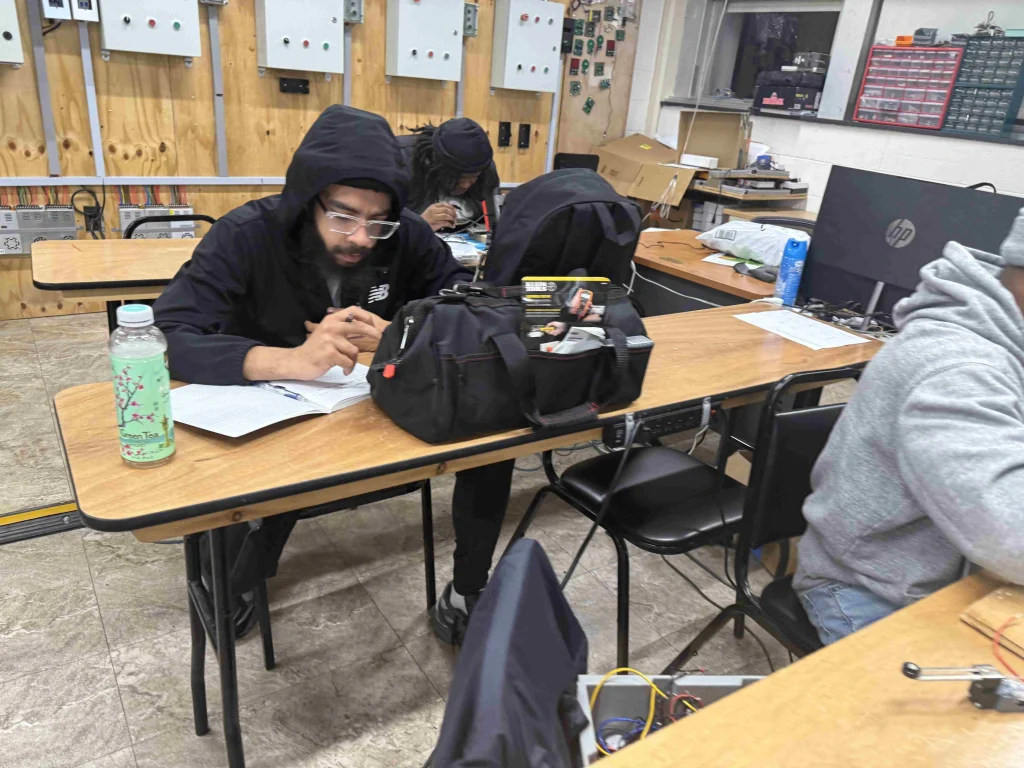
AI can’t replace skilled trades jobs because the work happens in the physical world, under conditions that change constantly and demand human judgment, dexterity, and real-time problem-solving. Software can generate text and analyze data, but it cannot crawl under a sink, read a failing weld, or safely repair a live system on an unpredictable job site.
This is the core reason so many hands-on careers remain durable. Automation thrives on repetition in controlled environments. The trades are the opposite: every building, vehicle, and mechanical system is a little different, and problems rarely present themselves the same way twice. A technician constantly adapts, improvises, and makes safety-critical decisions that carry real consequences. Career experts and labor analysts increasingly point to the skilled trades as among the most resilient paths precisely because of this blend of physical skill and situational judgment. In short, the most durable jobs AI can’t replace are the ones that put a trained person at the center of a physical, constantly changing task.
There is also a workforce reality working in favor of anyone entering now. According to the U.S. Bureau of Labor Statistics, the skilled-trades workforce is aging, and large numbers of experienced workers are retiring, creating tens of thousands of openings each year across welding, construction, and mechanical trades. When you combine steady replacement demand with work that machines cannot easily take over, you get careers with genuine staying power. Exploring the full range of hands-on technical programs is a practical first step toward one of them.
Not every trade is identical, but they share the same automation-resistant DNA. Below are the hands-on careers with the strongest long-term outlook, each tied to real demand in the Philadelphia region and across Pennsylvania, New Jersey, and Delaware.
Welders join and repair metal for bridges, buildings, ships, and manufacturing equipment, often in awkward positions and field conditions that automation cannot replicate. Welding is one of the clearest examples of the jobs AI can’t replace, and it ranks among the high paying trade jobs in the region for certified professionals. Training for this field through a focused welding technology program can prepare you for entry-level work in well under a year.
HVAC technicians install, maintain, and repair heating and cooling systems in homes, hospitals, and commercial buildings. Because every system and every service call is different, the work demands diagnosis and adaptation that machines simply cannot deliver. Demand is steady year-round in a climate like Philadelphia’s, making HVAC one of the more dependable hands-on careers available.
Modern vehicles are rolling computers, yet they still break in physical, unpredictable ways that require a trained human to diagnose and fix. Automotive technicians blend electronics, mechanical skill, and judgment — a combination that keeps the role firmly on the list of jobs AI can’t replace. Students who pursue automotive repair training learn both traditional systems and modern diagnostics.
Pipefitters and steamfitters install and maintain the piping systems that move water, steam, and gas through buildings and industrial facilities. This is skilled, safety-critical work tied directly to commercial construction and infrastructure. It is also a common gateway into high-paying union positions, which is why demand for trained pipefitters stays strong across the region.
It may sound counterintuitive, but automation creates demand for people who can build, program, and maintain automated systems. Manufacturing and automation technicians keep smart factories running — and when a robotic line goes down, a human has to fix it. This field is a strong example of how technology and skilled labor grow together rather than replace each other.
Construction trades like concreting, masonry, and framing build the physical structures we live and work in. The work is hands-on, site-specific, and resistant to automation because no two job sites are the same. These roles anchor the broader construction economy and offer clear paths to advancement and self-employment.
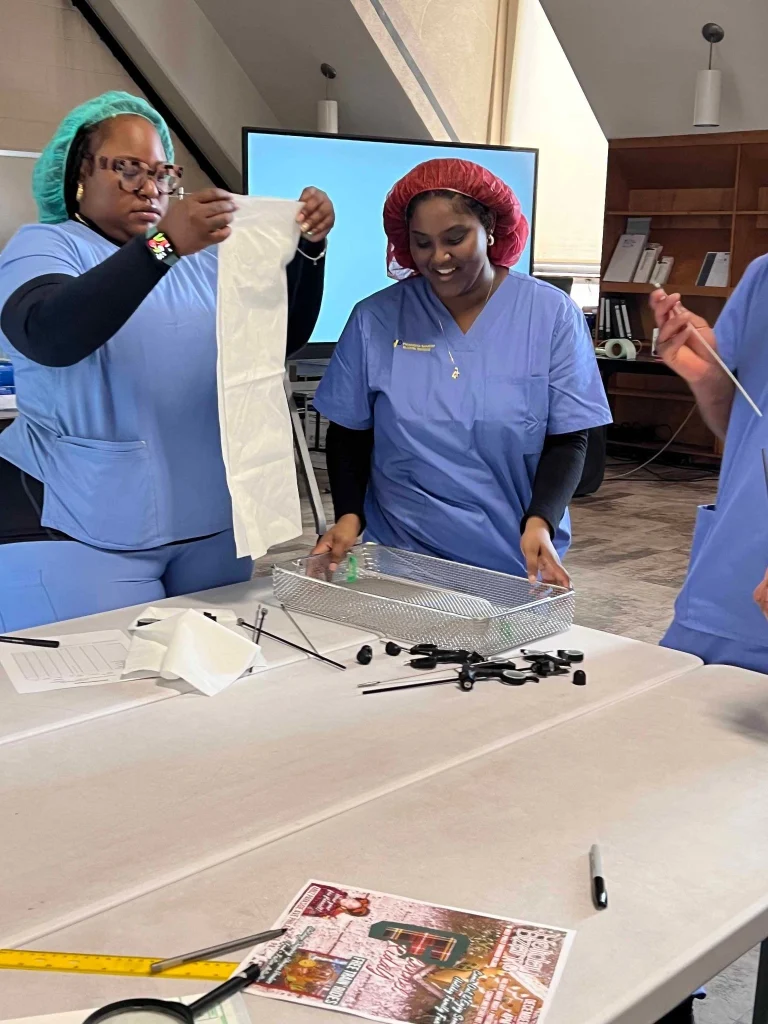
A sterile processing technician decontaminates, inspects, and sterilizes the surgical instruments hospitals depend on — exacting, compliance-driven work in a healthcare setting. As a career changer or new graduate, you can enter this growing field quickly, and healthcare’s steady expansion keeps demand for sterile processing technicians consistent.
Drywall and finishing specialists turn bare structures into finished interiors, applying skills — hanging, taping, texturing, and finishing — that require a practiced human hand. It is a practical entry point into the construction trades with ongoing demand across residential and commercial projects.
Pay for AI-proof careers in the Philadelphia area generally ranges from the mid-$40,000s at entry level to 70,000–80,000+ for experienced, certified, or union workers. Earnings vary by trade, certification, specialization, overtime, and employer, but the skilled trades consistently offer strong income without a four-year degree.
The table below shows representative annual ranges for several hands-on careers in the region. These are general estimates drawn from labor-market and regional compensation data; actual pay depends on experience, credentials, and local demand.
| Hands-On Career | Representative Annual Range (Philadelphia Area) |
| Welder | $45,000 – $80,000+ |
| HVAC Technician | $45,000 – $75,000+ |
| Automotive Technician | $40,000 – $70,000+ |
| Pipefitter / Steamfitter | $50,000 – $85,000+ |
| Manufacturing / Automation Technician | $45,000 – $75,000+ |
| Sterile Processing Technician | $40,000 – $60,000+ |
| Masonry / Concrete / Framing | $42,000 – $70,000+ |
A few patterns hold across almost all of these high paying trade jobs. Certifications raise pay. Overtime is common and can add meaningfully to annual income. Specialized skills — pipe welding, advanced diagnostics, union-level qualifications — command premiums. And because most of these credentials are portable, your earning power travels with you across Pennsylvania, New Jersey, and Delaware. That mix of durability and income is what makes these AI-proof careers worth serious attention. For anyone weighing cost versus payoff, reviewing financial aid options alongside expected earnings gives a realistic picture of the return.
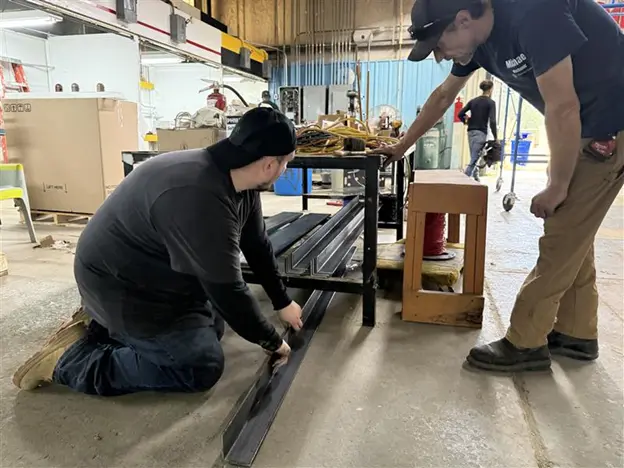
Most hands-on careers require only months of focused training rather than years. Depending on the trade, a dedicated program can prepare you for entry-level work in roughly six months to a year — a fraction of the time and cost of a traditional four-year degree, and a major reason the trades appeal to career changers and adults.
The reason training is so efficient is that the skilled trades are performance-based. Employers care whether you can actually do the work: lay a sound weld, diagnose a system, sterilize instruments to standard, or finish drywall cleanly. A quality program concentrates your time on building those exact abilities through real lab work on industry-standard equipment, then preparing you for the certifications employers recognize.
That focus matters because readiness, not seat time, is what gets you hired. Because these are the jobs AI can’t replace, employers value demonstrated ability over credentials on paper, and programs that emphasize practical, hands-on technician training tend to produce graduates who can step onto a job site and contribute quickly. For many students, that speed-to-earning is the deciding factor between trade school and a longer academic path.
For many people, the real decision is whether a trade path beats the traditional college route. For automation-resistant work, the trades hold up well. The comparison below lays out the practical trade-offs.
| Factor | Skilled Trades Path | Four-Year College |
| Time to earn | Months to about a year | About four years |
| Cost | Lower, focused tuition | Often significant debt |
| Automation exposure | Low for hands-on roles | Varies widely by field |
| Hands-on training | Core of the program | Often limited |
| Path to income | Start earning quickly | Earning typically delayed |
College remains the right choice for some careers. But if your goal is durable, hands-on work that AI can’t easily take, a focused trade program gets you there faster and with less financial risk. Comparing specific trade school programs in Philadelphia against your own goals is the most useful next step.
These AI-proof careers fit a wide range of people, and a Philadelphia trade school opens them to students from very different starting points:
If you like solving real problems with your hands and want skills that stay valuable as technology advances, the skilled trades deserve serious consideration.
The future of work will reward people who can do what machines cannot. The clearest examples of jobs AI can’t replace are hands-on careers that depend on human skill, judgment, and adaptability — exactly the kind of work the skilled trades are built on. Add in the high paying trade jobs these fields offer, fast training, portable certifications, and steady regional demand, and they become some of the most dependable paths available to anyone starting out or starting over.
If you are ready to build a career that stays human, connect with PTTI’s admissions team to explore the hands-on program at this Philadelphia trade school that fits your goals.
The jobs AI can’t replace are generally hands-on roles that require physical skill, judgment, and adaptation in unpredictable settings — welders, HVAC technicians, automotive technicians, pipefitters, electricians, and construction trades. These careers combine dexterity and real-time problem-solving that automation cannot reproduce.
Skilled trades are considered AI-proof careers because the work happens in the physical world under changing conditions. Each job site, system, and repair is different, so a trained human must adapt and make safety-critical decisions — something software and robots cannot reliably do.
Among high paying trade jobs, pipefitting, welding, and HVAC often lead in the Philadelphia region, with experienced and union workers earning 70,000–85,000 or more. Pay rises with certifications, specialization, and overtime across nearly all skilled trades careers.
Most hands-on careers require months of focused training rather than years. Depending on the trade, a dedicated program can prepare you for entry-level work in roughly six months to a year, far faster than a four-year degree.
Yes. With an aging workforce creating steady openings, strong regional demand, and work that resists automation, the skilled trades remain a stable, in-demand choice in 2026 — especially for people seeking durable careers without heavy student debt.