
People planning a future in welding always wonder where the jobs actually sit. Welding technicians join metal in factories, construction sites, shipyards, and fabrication shops scattered across the country, yet work does not spread evenly at all. Some states pack in tens of thousands of these positions, while others barely show a few hundred.
Heavy manufacturing, oil and gas, automotive plants, and construction activity all drive where welding jobs land. Knowing which places hire the most can help someone pick the right kind of welding training program, decide whether to move, or figure out if their hometown even supports a long-term welding career in the USA.
Someone living far from major industrial zones will search harder for steady jobs than someone in the middle of a fabrication hub. In busy welding areas, workers can often choose between shifts, employers, and project types. That difference affects pay, benefits, and how secure the work feels year after year.
Welding also clusters near raw materials, shipping routes, and places where suppliers already operate. When a big plant opens, smaller shops follow to provide parts, repairs, and specialty work. Those clusters grow over time and become natural homes for strong welding tech training programs that feed local demand.
For anyone weighing an automation trade school or focused welding course, understanding these employment hot spots makes it easier to see which skills and credentials will actually matter in the job market.
Before diving into states and cities, the big picture helps. The Occupational Outlook Handbook for Welders, Cutters, Solderers, and Brazers projects 2 percent employment growth from 2024 to 2034, which counts as slower than average. Even with modest growth, the same profile shows about 45,600 openings each year on average over that decade, driven mostly by retirements and people switching careers. It also reports a median annual wage of 51,000 dollars in May 2024.
Those numbers tell welding technicians that demand stays steady nationally, with plenty of room for people who finish solid training and stick around.
A few states hold far more welding positions than the rest. Texas and California lead the pack, each employing over 28,000 welders. Texas owes much of that total to oil and gas infrastructure, petrochemical plants, and heavy construction across Houston, Dallas, and smaller industrial cities. California’s size alone means more opportunities, spread across shipyards, aerospace, entertainment rigging, and general fabrication.
Ohio comes in third with 19,750 welding jobs, driven by automotive suppliers, machinery production, and metal fabrication shops. Pennsylvania follows with over 17,000 positions, while Illinois and Wisconsin both show strong numbers as well. Each of these states hosts a mix of large manufacturers and smaller shops that keep welders busy year-round.
For someone mapping a welding career in the USA, these states give the widest choice of employers and the fastest route from finishing welding tech training to getting hired[Bureau of Labour Statistics].
Beyond whole states, certain cities pack in the most jobs. Houston-The Woodlands-Sugar Land alone employs over 14,000 welders, making it one of the biggest single markets in the country. Oil refineries, chemical plants, pipeline work, and fabrication shops all feed that demand. Los Angeles-Long Beach-Anaheim ranks second with more than 8,000 positions, supported by ports, aerospace, entertainment, and construction.
Dallas-Fort Worth-Arlington, Atlanta-Sandy Springs-Roswell, and Chicago-Naperville-Elgin all show thousands of welding jobs as well. Each metro area brings its own mix of industries, from automotive and food processing to commercial construction and repair services.
Smaller cities can still offer strong work when local industry runs deep. Places like Baton Rouge, Louisiana, show heavy concentrations of welding jobs tied to petrochemical facilities and refineries. For someone willing to live in a smaller town, those spots can deliver stable work without big-city costs.
Metro-level details help welders see not just where jobs exist, but also where competition might be lighter and housing more affordable.
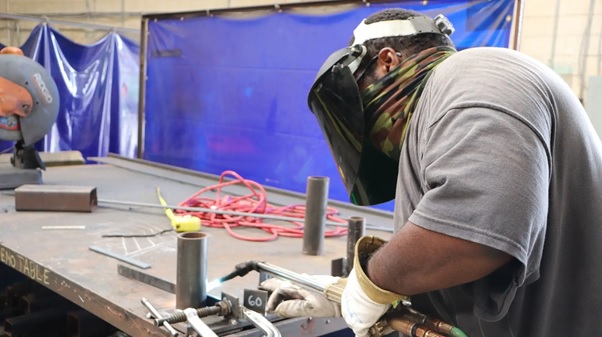
Looking at job density instead of raw numbers, some states punch above their weight. Wyoming, Louisiana, Wisconsin, and North Dakota all show high location quotients, meaning welding jobs make up a bigger share of total employment than the national average. Wyoming’s energy sector, Louisiana’s petrochemical coast, Wisconsin’s manufacturing base, and North Dakota’s oil fields all create that density.
For a welding technician who values job security and wants to live where the trade truly dominates, these high-concentration states offer strong prospects. Staying competitive through focused hands-on welding training becomes especially important in areas where local employers know the skill level they expect.
Looking at sectors instead of geography, motor vehicle manufacturing consistently employs large numbers of welders. Assembly plants, parts suppliers, and body shops all need people who can handle MIG, spot welding, and aluminum work. Foundation, structure, and building exterior contractors also hire heavily, as do manufacturers of fabricated metal products.
Oil and gas extraction, pipeline construction, and petrochemical plants create steady demand in states like Texas, Louisiana, and Oklahoma. Shipyards along the coast need skilled welders for hull work, pipefitting, and repairs. Each sector has its own pace, safety rules, and material preferences, yet all value people who read blueprints, follow procedures, and produce clean welds consistently.
Places with heavy welding activity often build strong training options nearby. Community colleges, trade schools, and employer-sponsored programs cluster near major plants and fabrication hubs. That closeness creates a loop where welding training program content stays matched to real equipment and actual openings.
Someone weighing a welding training program should check whether the school connects directly to local employers. Programs near high-employment areas often offer internships, job placement help, and machines that match what students will see on the floor. Graduates from strong programs can also travel to these job-heavy areas even if they trained elsewhere, especially when they bring solid credentials and hands-on welding training experience.
An overview of welding career opportunities and why the trade keeps booming shows how training, certifications, and regional demand all connect.
The best training choice often depends partly on local industry. Someone in Texas might lean into pipe welding, pressure vessel work, and stick processes used in refineries. A person in Michigan might focus more on MIG, aluminum, and automotive systems. Both fit under welding, yet the specific skills differ quite a bit.
Before enrolling, checking job ads in the target area makes sense. Which processes show up again and again? Do postings mention specific certifications, pipe schedules, or material types? That homework helps pick a program that actually lines up with where someone wants to work.
For those willing to move, hands-on welding training that covers broad fundamentals plus one or two specialties usually prepares people for the widest range of openings. A program built that way gives more options later, whether someone stays local or chases work in another state.
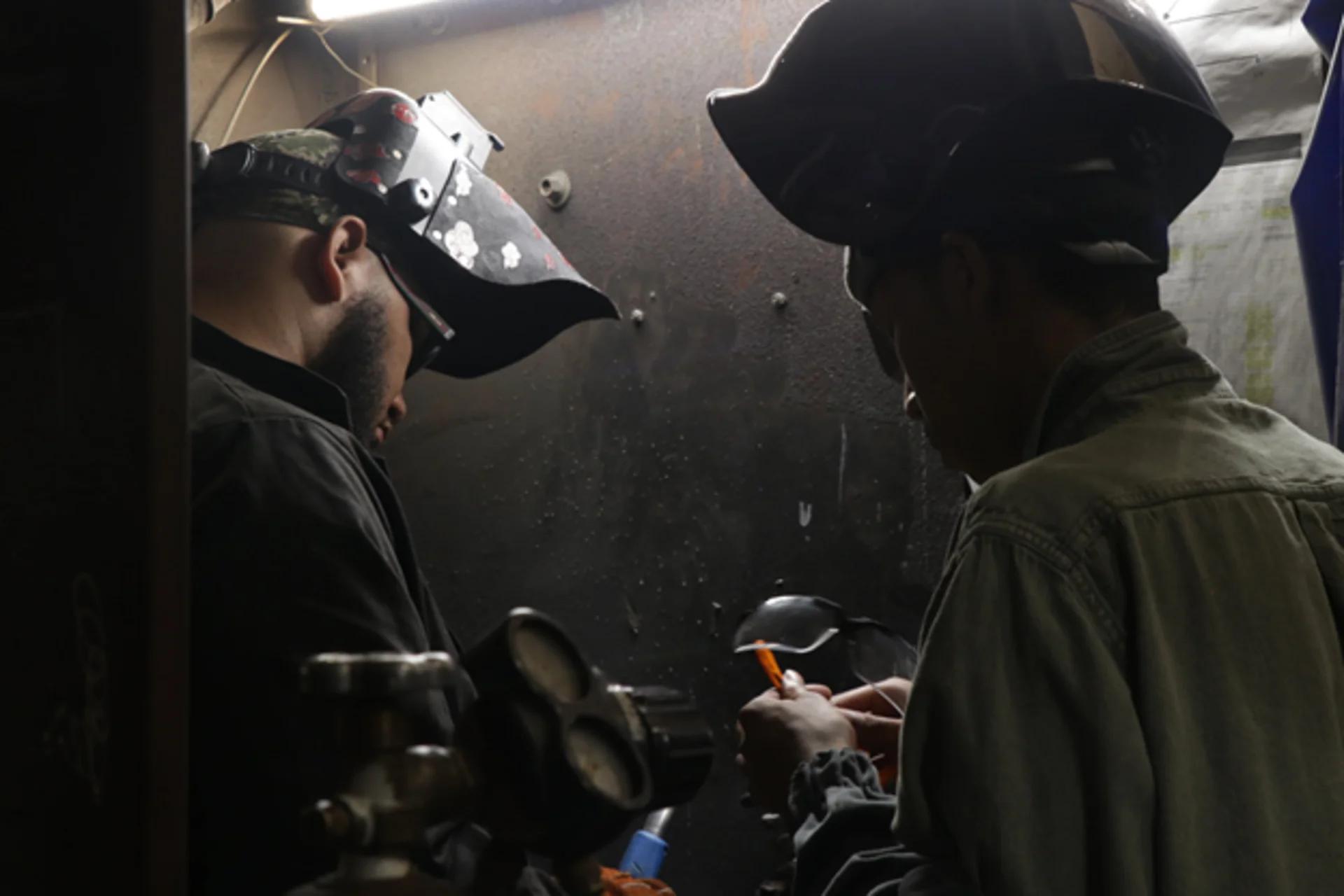
Choosing where to work shapes everything from daily commute to long-term earnings. A welder in Alaska or Hawaii might earn top wages yet face high living costs and limited job variety. Someone in the Midwest might earn less per hour but enjoy lower expenses and a wide choice of employers.
Portability also matters. Welders who build skills that travel well—such as structural steel, pipe, or coded work—can move between states and industries more easily. That flexibility protects against local downturns and opens doors when personal circumstances change.
Understanding the highest employment areas for welding technicians in 2026 helps someone make smarter choices about training, credentials, and where to plant roots. With the right welding tech training, regional awareness, and willingness to learn, the path from school to steady employment remains very reachable for those ready to start a welding career in the USA.
Read More: