
Cognitive learning in trade schools is quietly building one of the best talent ecosystems in the country for the future. And it’s doing so by focusing not just on what young people learn, but on how they learn and who they become along the way. If you’ve ever wondered how a city can build a strong, skilled, and community-rooted workforce from the ground up, you’ll see the answer right here in Philly’s approach. Furthermore, for those specifically searching for great vocational schools near me, Philadelphia provides compelling models.
What makes this model so effective is how personal, engaging, and intentional it feels for students, especially those from underserved communities. Instead of forcing young people to memorize disconnected facts, cognitive learning pushes them to think deeply, work with purpose, and apply what they know in environments that look like the real world—not a traditional classroom.
And honestly? That’s what today’s generation needs.
What makes this program in the U.S. and especially Philly so effective, and how it is impacting the lives of thousands of youths, will be examined in further detail now.
At the center of this transformation are programs like Career Connected Learning PHL (C2L-PHL), one of the city’s most intentional hubs for skilled trades programs for youth in Philadelphia. These programs help youngsters between the ages of 12 and 24 find real jobs that pay them. Specifically, they focus on professions like welding, electrical work, nautical work, digital fabrication, tech support, carpentry, and community restoration. Often, these pathways are overlooked; however, they offer huge opportunities—the kind of opportunities that make people start searching for vocational schools near me.
Beyond the daily task, they’re learning why they matter.
In this model, students don’t sit still and watch someone else work in this kind of learning. Consequently, they get their hands on tools, talk to mentors, try, fail, try again, think about what went wrong, make changes, and finally master. Seeking this level of hands-on mastery in a focused environment can be found in programs like those offered by PTTI (Philadelphia Technical Training Institute), which prioritize immediate, practical application.
Furthermore, an integral part of cognitive learning is metacognition, which is thinking critically about and making sense of how you learn. This is a huge step forward for young individuals who have had difficulty in more conventional classroom settings. At last, they can see themselves coming out on top. Moreover, the results are visible to them. They understand the “how” behind their advancement. Instead of rote memorisation that leads to forgetfulness a week later, learners are constructing true knowledge retention with each assignment.
Now we can talk about the skills that companies are begging for: skills that aren’t easily replaced by robots, AI, or automation. Philly’s approach strengthens problem-solving skills, communication abilities, teamwork strategies, and most importantly, critical thinking in workforce settings.
Take an electrician apprenticeship, for example. You don’t just memorize wiring patterns. Rather, you troubleshoot in real time. By identifying issues, you learn to collaborate with your crew. Therefore, you also test, analyze, fix, and document. Every step requires thought, awareness, and adaptability.
Clearly, this kind of learning sticks way more than classroom theory. Students remember because they did it, not because someone told them about it.
In addition, the principle of adult learning is also relevant here. Purpose, context, and individual relevance improve learning outcomes even for adolescents. Philly shows take advantage of that by grounding their stories in reality. As a result, the usual academic blahs go, and the desire to become an expert grows in that way. For many, finding the best skilled trades programs for youth in Philadelphia is the first step toward this mastery.

We must not lose sight of this vital reality: cognitive learning establishes a link between purpose, pride, identity, and career. Undoubtedly, this has a tremendous effect on Black students and other economically disadvantaged youngsters.
The school system has been ignoring students of colour for decades, often advocating for the idea that college is the only option. This occurs while completely neglecting trade education and professions, even though trades are historically associated with Black achievement, are highly regarded, and offer good salaries.
Fortunately, Philadelphia is working to change its story by implementing a number of trade education initiatives that are inclusive of everyone, supported by Rebuild Philadelphia’s workforce development programs.
For example, PTTI offers trade education programs for welding, electrical, and automotive that can quickly lead to high-demand careers. This directly addresses this gap in opportunity and provides a clear pathway to a lucrative future.
This way, students discover:
From master electricians to carpenters to welders to mechanics, Black tradespeople built neighborhoods, bridges, businesses, and city infrastructure long before they were recognized for it.
Small cohorts, mentors who look like them, and leaders who understand their challenges. Spaces where they are supported, not judged.
The message isn’t “get this certification so you can make money.” It’s:
“Take pride in rebuilding your block.”
“Develop the skills to fix what’s broken.”
“Become the reliable expert everyone calls when something truly matters.”
Ultimately, this purpose-driven narrative boosts motivation, improves completion rates, and helps youth feel that they aren’t just joining a workforce, they’re stepping into leadership roles in their own communities.
There is no denying that change is already upon us when we consider the workforce of the future. According to some studies, technological changes are expected to necessitate reskilling for approximately half of the world’s jobs.
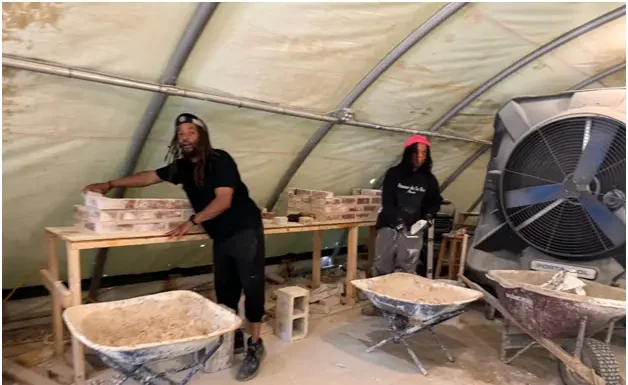
In response, one of the most powerful aspects of cognitive learning in trade schools is doing its job via focusing on how students get to work on real, visible, community-centered projects.
Through Rebuild Philadelphia’s workforce development programs, youth participate in:
Learning like this has real-world implications. As a result, people feel more secure, proud, and part of something bigger. Furthermore, it establishes a strong feedback loop in which students can observe the direct impact of their efforts.
Over time, students inevitably take charge as time goes on.
This is how the country develops leaders, not just workers.

One of the biggest reasons young people lose interest in school is that they don’t see a real future mapped out. To overcome this, America and Philly fix that with clear, simple, inspiring career ladders.
Students understand exactly how they can grow:
Apprentice: getting a head start
Journeyman: Building a reputation as a reliable authority
Foreman: Supervising a group of workers
Site Supervisor: Project management on a site
Project Manager: Supervising deadlines, designs, and budgets
Entrepreneur: assembling people, overseeing contracts, leaving a lasting impression
Because this is so clear, students and their families are considerably more interested in vocational schools near me and electrician apprenticeship programs in Philly since this path is so clear. Today, there’s direction, a movement, an opportunity, and long-term stability. And the best part? Most importantly, no overwhelming college debt. Programs like PTTI’s are designed to be an affordable, fast-track entry point onto this exact career ladder, helping students start earning and building their futures sooner.
This ladder gives students a story to imagine themselves in, and when young people can see their future clearly, they chase it harder.
Cognitive learning in trade schools is changing the way young people become adults. It’s showing students, especially those in underserved communities, that they are capable of leadership, mastery, and community impact.
With the help of skilled trades programs for youth in Philadelphia, electrician apprenticeship opportunities, purpose-driven Philly apprenticeship programs, and expanding rebuild Philadelphia workforce development programs, the city is cultivating a local talent pipeline rooted in pride, connection, and impact.
Read more: