
How do you fund automation and manufacturing training with PA grants before you commit to a program? Money shouldn’t be the reason you skip a solid career move. Pennsylvania offers several funding paths for trade training, though most people never hear about half of them. Below, we break down the funding options worth exploring in 2026, so cost doesn’t hold you back.
Funding options matter because they provide financial aid to students from weaker sections. They act like a bridge between institutes and students .Manufacturing and automation training typically runs shorter and cheaper than a four-year degree. However, tuition still adds up, and not everyone has savings sitting around to cover it upfront.
Lets know why exploring funding early makes a real difference:
Therefore, a little research before enrolling can save real money down the line.
FAFSA plays an important role in providing career opportunities by providing grants and financial aid based on income criteria. However, most students explore financial aid, including for trade and vocational programs. This government form lets students declare their family’s financial status. This helps students remain eligible for financial help. Additionally, eligibility depends on income and other factors, so it’s worth applying even if you’re unsure you’ll qualify.
Here’s what to know about FAFSA for trade training:
Apart from Financial aid from FAFSA and other grants PA grants is available for training .Beyond federal aid, Pennsylvania offers several state-level programs aimed at workforce training. Moreover, these programs specifically target in-demand fields like manufacturing and automation.
Here’s a general overview of what’s typically available:
Must note that : Grant programs, funding amounts, and eligibility requirements change frequently. Confirm current details directly through PA CareerLink or PHEAA before applying, since these figures shift year to year.
Lets see how these funding source works typically .These are approximate funding source estimates to help students plan and understand what financial aid they may need from different governing bodies: about 35% federal aid (FAFSA), 25% state grant programs, 25% workforce development funding (WIOA), and 15% employer-sponsored support. That’s roughly how funding often layers together for eligible students pursuing manufacturing and automation training.
| FAFSA | Federal government | Tuition, fees, materials |
| PA State Grant | PHEAA | Need-based tuition assistance |
| WIOA Funding | PA CareerLink | Training costs for in-demand occupations |
| WEDnetPA | State/employer partnership | Employer-sponsored skills training |
Overall, combining multiple funding sources can significantly reduce or eliminate out-of-pocket costs.
Getting started with funding applications doesn’t have to feel overwhelming. Here’s the general process:
Therefore, applying to more than one program at once often increases your total funding potential.
Manufacturing and Automation Training Qualifies for Targeted Funding Because in Pennsylvania . The Automation and Manufacturing program includes the use of technology, heavy equipment,t and machinery, especially during sessions. To an extent, all this equipment is used in industries that require setup and procedures for operating heavy equipment. A particular set of supervision is required,which consistently identifies manufacturing and automation as in-demand fields facing skilled labor shortages. This designation also often makes training in these fields eligible for targeted workforce funding that isn’t available for every career path.
Here’s why this matters:
Due to recent ongoing development in technology and in industry, the requirement for automation and manufacturing technicians has increased. Therefore, projected salary and demand are bound to increase. However, automation and manufacturing technician salaries depend on experience and job location. As per repurts by the According to the U.S. Bureau of Labor Statistics, employment for industrial machinery mechanics and maintenance workers is projected to grow steadily over the next decade, reinforcing why this field often qualifies for targeted funding support.
The most important questions arises here -Before enrolling in vocational education training, ask directly:
Therefore, choosing a school familiar with these programs can make the application process much smoother.
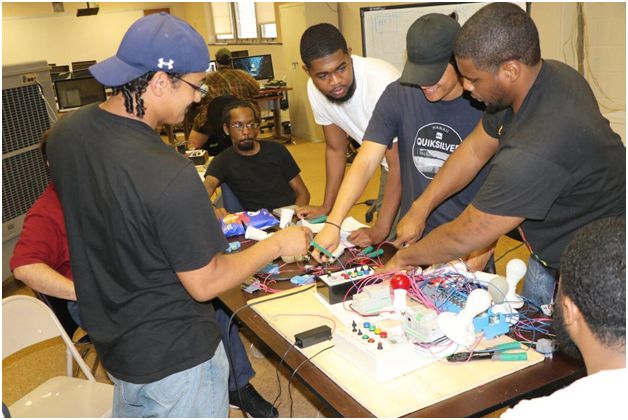
Philadelphia Technician Training Institute (PTTI) offers a 26-week, 900-hour Manufacturing and Automation program covering PLCs, robotics, machine vision, and electrical panels. Checking and installing electrical panels, fixing machine parts . PTTI also accepts FAFSA applications and can help guide students through additional funding conversations. Understanding the graphs and charts and the electrical configuration of machines. Highly advanced digital machine-learning knowledge. This is the most enrolled skilled trade program. Because they are tech-savvy, high school graduates mostly like and want to enroll in this type of program. PTTI teaches hands-on training on the latest machinery and tools, so students will be familiar with the latest equipment.
Here’s how enrollment works:
Before starting a career in a skilled trade program, you must think about financial help, especially if you are looking for a career in automation and Manufacturing . Funding automation and manufacturing training with PA grants in 2026 requires researching financial aid institutions’ requirements to understand the process. Financial aid is available if you belong to a low-income-based group. PTTI also supports financial aid; the main aim of PTTI is to make education affordable for underserved students so finance does not become a barrier to their dreams.
However, grant programs and eligibility requirements change often, and the PTTI career service team will be there to help during those shifts. So confirming current details directly with PHEAA or PA CareerLink matters before you apply. Overall, a little upfront effort exploring these options can make training far more affordable than most people expect.
If you love technology, gadgets, and you’re interested in machines and fixing issues, this is the perfect program for you to start your skilled trade training. This industry is irreplaceable and growing with Artificial Intelligence; this program also offers strong career opportunities with the right financial aid. Finally, PTTI reports a placement rate near 92%, meaning most graduates actually land jobs in the field. Are you now Ready to explore funding options for automation and manufacturing training? Contact PTTI at 215-381-9403 or info@ptt.edu to speak with an advisor.
Yes, absolutely. Many trade schools in Philadelphia, including PTTI, accept FAFSA applications for eligible students. PTTI also helps students and families with the loan and grant process.
WIOA is federal workforce funding administered through Philadelphia CareerLink offices for eligible in-demand training programs.
Yes, several state programs target in-demand fields like manufacturing and automation, though eligibility varies.
yes. You can combine Many students layer FAFSA with state or workforce development funding to further reduce costs.
You can Check directly with PHEAA or your local PA CareerLink office, since programs and amounts change yearly.
Raed More: