
Masonry is one of the oldest building trades in the world, and in a city built on brick and stone like Philadelphia, it remains one of the most dependable ways to earn a solid living without a four-year degree. What a lot of people miss is that a masonry career path is not one fixed job. It is a ladder. You can start as an apprentice laborer mixing mortar and moving materials, grow into skilled journeyman work, step up to lead a crew as a foreman, and eventually run your own business as a contractor who owns the work.
This guide walks that full masonry career path stage by stage. You will see what each role actually involves, what it pays in the Philadelphia area, how long each step tends to take, and the smartest way to get started. It is written for high school students, recent graduates, career changers, veterans, and adult learners who want a hands-on trade with real room to move up. If you have been looking for a practical way to learn how to become a mason and build toward ownership, the masonry career path gives you a clear route.
A masonry career path usually moves through four stages: apprentice laborer, journeyman mason, foreman, and masonry contractor. You start by learning the fundamentals on the job, gain certified skill and speed, then take on leadership, and finally, if you choose, run your own crew or company. Each step raises both your responsibility and your pay.
The reason this trade rewards people who stick with it is simple. Masonry skill compounds. A first-year apprentice and a fifteen-year mason may stand on the same job site, but the experienced mason lays more units per day, reads plans faster, spots problems earlier, and can direct others. That gap in skill is exactly what this trade pays you for as you climb.
Below, each stage is broken down so you can see where you would begin and where the work can take you.
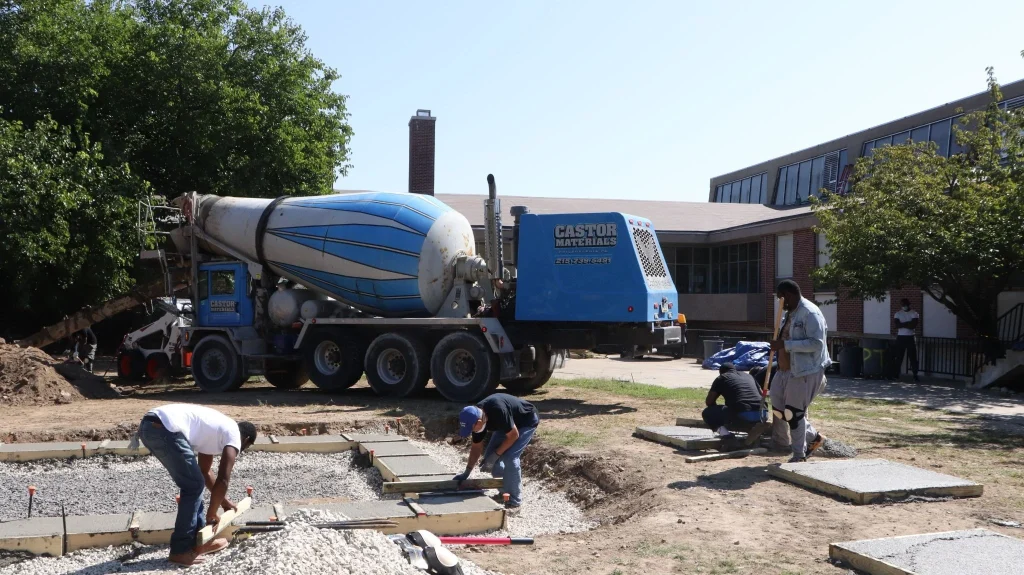
Almost everyone starts this trade at the bottom, and that is a good thing. As an apprentice laborer, you learn the trade by doing it. Your early days involve mixing mortar to the right consistency, stocking brick and block within reach of the masons, setting up and moving scaffolding, and keeping the work area clean and safe. It is physical work, but it is where the real learning happens.
Expect to spend your first months supporting experienced masons and absorbing the basics of the craft. You will learn how mortar behaves in different weather, how to keep a wall plumb and level, how to read a simple layout, and how to handle tools and materials safely. Good apprentices watch closely and ask questions, because every skilled mason on the crew is a teacher.
There are two common ways to enter a masonry apprenticeship. The first is a union route through the Bricklayers and Allied Craftworkers, whose apprenticeship combines paid field hours with classroom instruction, typically over three to four years. The second is starting with a masonry contractor who hires and trains helpers directly. Either way, a masonry apprenticeship is an earn-while-you-learn model, which is one of the biggest reasons people choose this trade over piling up college debt.
Many students strengthen their position before applying by completing hands-on masonry training in Philadelphia first. Arriving at a masonry apprenticeship already knowing how to strike a joint, mix mortar, and stay safe on a site makes you far more valuable to an employer from day one. You can explore how a structured program fits in through PTTI’s Concreting, Masonry & Framing program.
Once you complete your apprenticeship, you become a journeyman mason. This is the heart of the trade and where many people spend the most rewarding years of their working life. A journeyman works independently, lays brick and block to specification, sets stone, builds corners and arches, and produces finished work that meets code and holds up for decades.
At this stage your pay climbs meaningfully because you no longer need supervision. You read blueprints, run your own section of a wall, and often mentor the apprentice laborers coming up behind you. Speed and quality both matter here. A journeyman who lays clean, accurate work quickly is one of the most in-demand people on any commercial or residential site in Philadelphia.
Journeyman masons who want to keep growing start looking at specialties that pay premiums, such as restoration work on historic Philadelphia buildings, refractory masonry in industrial settings, or decorative stone. Specializing is one of the clearest ways to raise your income without leaving the tools behind.
The next rung up is foreman. A masonry foreman still knows the craft cold but now spends much of the day leading people, planning the work, and keeping the job on schedule and on budget. Foremen assign tasks, order materials, coordinate with other trades, enforce safety, and answer to the general contractor or project manager.
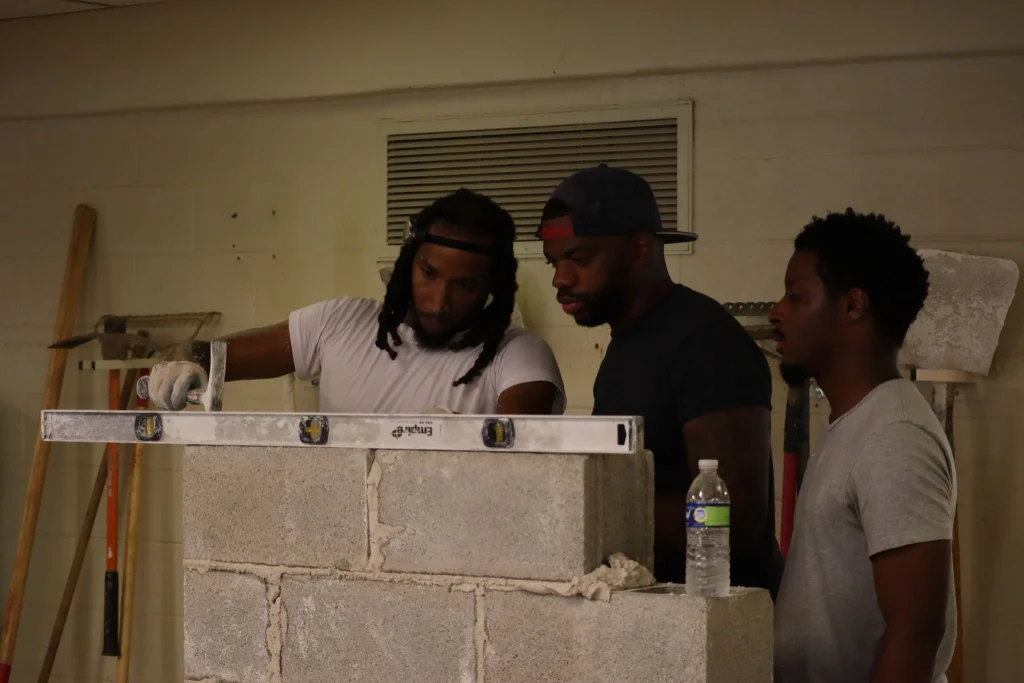
Moving into a foreman role is where communication and organization become as important as trowel skill. Employers promote masons who show up reliably, solve problems calmly, and can be trusted to run a crew when the boss is not on site. If you can lay excellent work and lead a team, you become very hard to replace, and your pay reflects it.
For masons who want a taste of this leadership track, it helps to understand how skilled tradespeople move into supervision. PTTI’s blog on career advancement from finisher to foreman covers the mindset shift that separates strong crew leaders from strong technicians.
At the top of the masonry career path sits the masonry contractor. This is the person who owns the company, bids the jobs, hires the crew, and takes home the profit when the work is done well. Becoming an owner is not for everyone, but for ambitious masons it is where the biggest earning potential lives. According to national wage data, the top ten percent of masonry workers earn more than $90,000 a year, and many of those are owners and lead contractors.
Running that business means adding a whole second skill set on top of your craft: estimating and bidding, scheduling, managing cash flow, buying materials, carrying insurance, and keeping clients happy. Many successful owners spend years as a journeyman and foreman first, because you cannot price or manage work you have not mastered with your own hands.
Pennsylvania does not issue a statewide masonry or general contractor license. Instead, most contractors who perform $5,000 or more of residential home-improvement work per year must register as a Home Improvement Contractor with the Pennsylvania Office of Attorney General. Registration is inexpensive, renews every two years, and does not require an exam.
That said, an owner should expect a few real requirements. You typically need liability insurance, workers’ compensation coverage if you have employees, and, for commercial work in the city, a Philadelphia contractor license through the local licensing system. You can confirm current registration rules directly through the Pennsylvania Attorney General’s contractor registration program. The low licensing barrier is one reason this trade is so friendly to people who eventually want to work for themselves.
Brick masons in the Philadelphia area earn an average of roughly $56,000 per year, with entry-level workers starting lower and experienced masons, foremen, and owners earning well above that. Pay depends on skill, certification, specialty, union status, and whether you work for someone else or run your own crew.
For context, the U.S. Bureau of Labor Statistics reported a national median wage of $56,600 for masonry workers as of May 2024, with brickmasons and blockmasons specifically around $60,800. The lowest earners made under $38,520, while the top earners cleared $90,120. That wide spread is the whole career ladder in a single number: your position on it decides your pay.
| Stage on the Masonry Career Path | Typical Philadelphia-Area Earnings |
| Apprentice laborer (earning while training) | Starts lower, rises each period as skills grow |
| Journeyman mason | Around $50,000 – $62,000 |
| Masonry foreman | Around $60,000 – $75,000+ |
| Masonry contractor / owner | $80,000 – $90,000+ potential, tied to business success |
A few things push these numbers higher. Overtime is common in construction. Union membership often raises base wages and benefits. Specialty skills like historic restoration or refractory work command premiums. And ownership, though it carries risk, has the highest ceiling of all.
Masonry is a stable career with steady, replacement-driven demand. The Bureau of Labor Statistics projects about 20,700 masonry openings each year through 2034. Even though overall growth is modest at around 2 percent, most of those openings come from experienced masons retiring or leaving the trade, which keeps opportunities open for newcomers.
There is a real workforce story behind those numbers. The construction industry has warned for years about a shortage of skilled masons, and industry groups rank bricklayers among the harder construction roles to fill. In practical terms, that shortage works in your favor. When employers cannot find enough trained masons, the people who do have skills gain leverage on pay, hours, and advancement along the way.
Philadelphia adds its own demand drivers. The city’s enormous stock of older brick and stone buildings needs constant repair, repointing, and restoration. New commercial, healthcare, and institutional construction continues to specify brick and block for durability. That mix means masons here work across both new construction and preservation, which is exactly the kind of variety that makes a long career interesting.
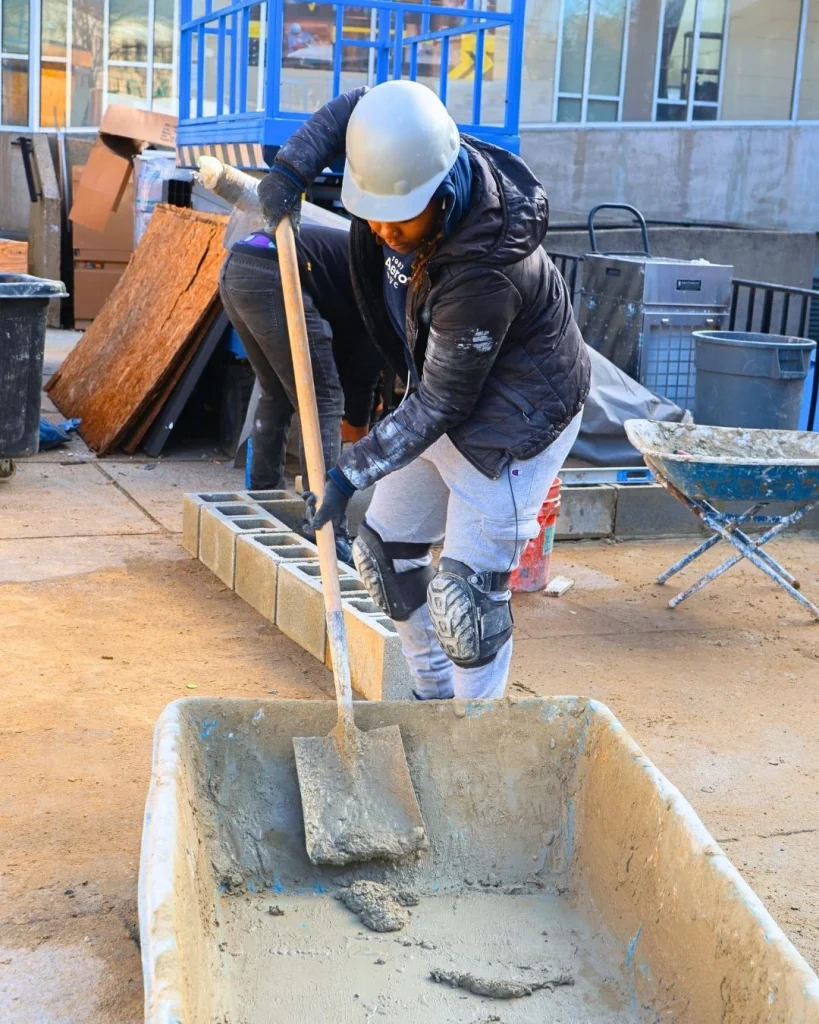
Climbing the masonry career path takes more than time served. Employers and clients reward masons who combine sharp hands-on ability with the professionalism to be trusted on any job site. The competencies that matter most include:
Certifications strengthen your standing at every stage. OSHA safety training signals that you can be trusted on a regulated site. As you advance toward becoming a masonry contractor, business and estimating knowledge become just as valuable as trowel work. Structured masonry training in Philadelphia is built to develop these skills together, so you graduate ready for real employer expectations rather than learning them the hard way. PTTI’s overview of certifications that strengthen a masonry career is a useful starting point.
Here is the practical route to become a mason and start climbing the masonry career path in the Philadelphia region.
This is where structured training pays off most. Learning to become a mason in a school environment with industry-standard tools and experienced instructors compresses the earliest, slowest part of the journey. PTTI’s hands-on approach at its masonry and construction campus is designed to get students comfortable with real job-site work before they ever apply for a position.
Few American cities are as literally built on masonry as Philadelphia. Row homes, historic landmarks, institutional buildings, and modern commercial projects all rely on brick, block, and stone. That deep, ongoing demand is why the trade holds up so well here for both new construction and restoration work.
A mason trained in Philadelphia can also carry those skills across the region. Opportunities extend through the surrounding Pennsylvania communities and across the river into South Jersey and Delaware, since the craft is portable and the demand is regional. Training centrally in the city puts you within reach of a large, varied job market rather than tying you to one narrow niche.
For students weighing their options, masonry sits comfortably among the strongest hands-on trades. If you are comparing routes, PTTI’s look at why a masonry career is a smart choice puts the trade in context against other skilled paths.
Conclusion
The masonry career path is one of the clearest examples of a trade where hard work and skill translate directly into income and independence. You can start as an apprentice laborer with no experience, grow into a respected journeyman, lead crews as a foreman, and eventually run your own company as a masonry contractor. Few careers let you begin near the bottom and realistically build toward ownership using nothing but your hands, your judgment, and your willingness to learn.
Philadelphia, with its brick-and-stone identity and steady construction demand, is one of the best places in the country to begin. The fastest, most reliable first step is hands-on masonry training in Philadelphia that makes you job-ready before you ever set foot on a paying site. If you are ready to become a mason and start climbing, explore PTTI’s Concreting, Masonry & Framing program and take the first step toward a trade you can build a life on.
The masonry career path usually runs through four stages: apprentice laborer, journeyman mason, foreman, and masonry contractor. You begin by learning fundamentals on the job, gain certified independent skill, move into crew leadership, and can finish by owning your own masonry business, with pay rising at every step.
To become a mason, start by completing hands-on masonry training in Philadelphia, then enter a masonry apprenticeship or an entry-level role with a masonry contractor. Build journeyman-level skill, take on foreman duties, and, if you choose, register as a contractor. Training first makes you job-ready faster.
A masonry apprenticeship commonly lasts three to four years, combining paid field hours with classroom learning. Completing a hands-on training program before you apply can shorten your learning curve and help you enter a masonry apprenticeship already knowing the core skills employers want.
Brick masons in Philadelphia average roughly $56,000 a year. Entry-level workers start lower, while experienced journeymen, foremen, and owners earn more. Nationally, top masonry earners exceed $90,000, which shows how much this trade rewards skill, leadership, and business ownership.
Pennsylvania has no statewide masonry license. Most masonry contractors doing $5,000 or more in residential work per year must register with the Pennsylvania Office of Attorney General. Commercial work in the city may also require a Philadelphia contractor license. No exam is required to register.
Yes. Steady replacement demand, a skilled-labor shortage, and Philadelphia’s mix of new construction and historic restoration make masonry a stable trade. The Bureau of Labor Statistics projects about 20,700 masonry openings a year through 2034, keeping the trade open to motivated newcomers.
Yes. A masonry apprenticeship is an earn-while-you-learn model, so you get paid on real job sites as you build skills. Many students first complete masonry training in Philadelphia to enter that apprenticeship already prepared, which strengthens both pay and advancement.