
Steamfitters and pipefitters are plumbing professionals who install, design, and maintain piping systems. Though they share many duties, the two also have key differences. But both profession demands learnings from plumbing trade school. In order to become a steamfitter or pipefitter, you must find out what they do and how they vary. The plumbing trade school will help the aspirants to explore who are steamfitters and pipefitters. You will get to know what they do and which career will suit you the best.
A steamfitter is a skilled pipefitter who specializes in installing and maintaining high-pressure piping systems. A steamfitter generally works in industrial settings, like power factories, plants, and construction sites. Steamfitters often operate with other construction professionals to design and build buildings.
They use to function on internal systems that transport and store high-pressure elements like steam, acids, and hazardous chemicals. They can operate on an irregular schedule during the week. Their work environment may be bright and loud, exposing them to hazardous materials and contaminants. Thus, a plumbing trade school will help them the best.
Some of the daily obligations that steamfitters handle, depending on their experience and skill level:
A pipefitter is a professional plumber specializing in handling, fixing, and maintaining pipes. Pipefitters generally work with construction crews when making new industrial or residential projects. But they can also visit homes to repair or replace new pipes or other pipefitting components.
Pipefitters may operate with other plumbing professionals or construction experts. They even have to consider pipefitter training program to gain practical aspects of this field. They may often work with steamfitters when operating high-pressure materials.
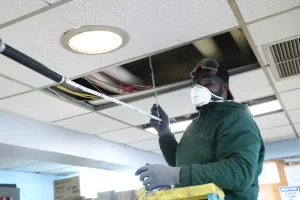
Some of the preliminary duties of a pipefitter are:
Steamfitters and pipefitters share multiple common responsibilities and job duties. But the essential thing for both professions is they have to pursue plumbing courses. These are as follows:-
The main difference between pipefitters and steamfitters is the materials within the pipes they work. Pipefitters are plumbers who deal in installing pipes and preparing general piping systems.
Steamfitters are skilled pipefitters who perform many identical tasks and operations. But they transport high-pressure pipes or otherwise hazardous materials. As a result, pipefitters may be more proficient at working with water. Meanwhile, steamfitters have more potential to perform with chemicals or steam.
To become either a steamfitter or a pipefitter, you must hold a high school diploma or equivalent. Most companies who hire pipefitters and steamfitters acknowledge that they finish Plumbing trade school or community college before beginning work.
To become a steamfitter, you must be capable of handling hazardous substances. Aspirants can gain detailed knowledge of both professions through plumbing classes.
Pipefitters and steamfitters must have many common skills. Physical strength and stamina are also crucial for cutting, moving, and installing heavy pipes.
Many devices require considerable hand and arm strength as they are difficult to use. Because steamfitters operate with pressurized materials, they must be cautious and excellent at problem-solving.
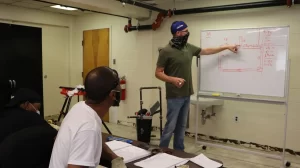
Pipefitters or steamfitters should attend a trade school or community college. They have to complete an internship or apprenticeship to evolve their skills. They operate with established plumbing professionals to build their abilities.
A pipefitter holds an interest in working with high-pressure pipes and hazardous materials. This needs them to undergo more plumbing education and training before functioning independently from a professional steamfitter.
There are many labels a pipefitter or steamfitter may gain as they acquire more position experience. Both steamfitters and pipefitters start as apprentices. A steamfitter or pipefitter may become a journeyman after three or four years of working in their position. They may also require to pass both written and practical testing before acquiring the title.
In order to gain the master steamfitter or pipefitter, aspirants require two years of journeyman work. They further need to qualify for the master-level exam to advance their career in both professions.
Read More: