
As we know, what gets you in the room is knowing how to weld a beam or fix an engine. To put it another way, technical proficiency is merely a prerequisite. What keeps you in the room is showing up on time, communicating like a pro, and accepting accountability. For this reason, the best trade schools in Philadelphia are stepping up for young folks entering the workforce by blending professional, hands-on training with the very behavioral traits that local employers are clamoring for.Students comparing trade schools in Philadelphia should look for programs that combine technical instruction, practical experience, career preparation, and employer connections.
Imagine arriving at a busy Philadelphia construction site to begin your day’s job. Your certificates now bear official seals. By all accounts, your degree is solid. But after only two weeks, the project manager finds out you’re not taking comments seriously, taking shortcuts, and even avoiding SMS. The best trade schools in Philadelphia help students develop workplace habits alongside the technical skills required for their chosen careers.
For years, people thought that if you wanted a fantastic job in the skilled trades, it was all about pure technical talent. On the contrary, a great change is going on throughout the city. The message from regional companies, ranging from industrial manufacturers to huge healthcare systems, is loud and clear: Technical skills can be learned on the job, but good professional habits must be instilled early.
As a result, this interactive guide unpacks exactly how local institutions are training the next generation of ambitious young professionals to win the local employment market.
A vocational center or trade school institute is essentially a specialized academy that focuses on teaching practical, job-specific skills rather than general academic subjects. Historically, these programs were only based on the mechanical performance of a job. In comparison, the best trade schools in Philadelphia today have completely revised their playbooks.

Research shows that by 2031, 72 percent of all occupations will require some form of postsecondary education, whether a professional credential, career certificate, or degree.
Schools are teaching more than how to use a wrench or run a diagnostic machine. Instead, they are launchpads for cultures. They intentionally create a bridge between the relaxed pace of young adulthood and the hard, high-stakes realities of an industrialized industry.
Without a doubt, the biggest difficulty businesses in the region face is not a shortage of personnel who can interpret blueprints. Rather, there is a shortage of entry-level professionals who consistently demonstrate professionalism in the workplace. Effective skilled trade training combines technical instruction with workplace safety, teamwork, communication, and problem-solving.
In response, top local schools have baked behavioral measures right into their daily grading scales. Furthermore, top trade schools in Philadelphia have begun using behavioral analytics as part of their daily grading checklists.
By all means, this strategic emphasis guarantees that trade schools in Philadelphia produce job-ready individuals who are noticeable the moment they set foot in an employer’s office.
What is causing local managers to shift their focus so aggressively toward behavioral readiness? The fact is that human errors and blunders cost considerable money in current industrial undertakings. Students gain more confidence when skilled trade training gives them repeated opportunities to practice skills in realistic work environments. For instance, an unexcused absence might stop a multi-million dollar construction pipeline or impede crucial patient flows in a medical center.
Regional industrial operations directors and service managers require a basic level of technical competence as a baseline for hiring. Nevertheless, the actual competitive edge is with the applicant who knows that being on time is not a bonus achievement; it is the basic minimum.
If you’re a young person trying in Philly to get your financial independence, this move is tremendously empowering. In short, it means your desire, your reliability, and your work ethic are just as valuable as your innate technical talents. To top it off, the best trade schools in Philadelphia will help you hone both skills simultaneously.
You can’t develop professional habits for life in a regular classroom listening to lectures. On the contrary, you construct them by living them every day. For this reason, leading institutions like the Philadelphia Technician Training Institute (PTTI) arrange their entire campus experience to be like active, industry-standard workplaces.Communication, punctuality, teamwork, adaptability, and accountability are essential soft skills for skilled trade jobs.
From the moment you walk on a campus like PTTI, you are treated as a junior professional and not a regular student. Specifically, digital time-tracking metrics are built at near-identical corporate clock-in stations to demand absolute punctuality. Arriving late to class is a matter of record, just as it would be if you got an official attendance notice on a real job site.
Proper attire is required at all times, regardless of whether you’re in a high-tech automated lab or a specialist mechanic bay. Strong professionalism in the workplace can help graduates stand out when employers compare candidates with similar technical qualifications. For this to be accomplished, it is imperative that students consistently wear either the prescribed professional clothing or standard Personal Protective Equipment (PPE). Prior to your first interview, you will have ingrained the habit of maintaining a clean and safe work environment by following this procedure.
Forgetting to wear protective gear in a professional workplace is not a small regulation infraction; it can lead to disastrous safety delays or expensive union penalties. You will learn to embrace your equipment as an extension of your professional self in elite trade schools in Philadelphia.
To break it down, high-quality skilled trade training deliberately embeds active teamwork and essential soft skills for skilled trade jobs into everyday workshop projects.
Students are regularly assigned to project crews that are as real as it gets and mirror the exact team dynamics found in local home construction, commercial restaurants, or medical facilities. In these crews, the leadership positions are often rotated. Students learn professionalism in the workplace by practicing punctuality, appropriate communication, teamwork, accountability, and workplace safety.
This deliberate arrangement provides each student with immediate, hands-on experience of:
In addition, hands-on training at best trade school in Philadelphia offers these practical workspaces teach the life skill of providing and receiving direct feedback. For example, a bad weld or a bad mechanical setup in a professional trade lab is a useful diagnostic tool.
Instant, useful feedback from instructors teaches you to disconnect your self-value as a person from technical changes. Ultimately, this is a critical mental shift that builds true professionalism in the workplace.
The real test of any skilled trade training program is out in the field. To ensure success, top trade schools in Philadelphia have long and active ties to local contractors, corporate employers, and regional labor unions. Trade schools in Philadelphia are stepping up for young folks entering the workforce by blending professional hands-on training with the very behavioral traits that local employers are clamoring for.
Structured internship and co-op assignments facilitate student transition from the training lab to real-world job sites. Mainly, this face-to-face contact with local industries provides a significant conduit to quick job opportunities.
| Co-Op Advantage | Real-World Impact on Your Career |
| Direct Feedback | Employers will also look at your initiative and dependability, not only how well you do technically. |
| Professional Mentorship | Learn the unwritten rules of the game while working with seasoned local veterans. |
| Direct Hire Lines | Consistently strong co-op performance often leads to full-time job opportunities before you graduate. |
Such community connections show local managers that graduates from top institutions are disciplined, mature, and ready to bring value to an active team immediately. This is why going to top-tier trade schools in Philadelphia will offer you a huge leg up when applying for jobs.
Moreover, businesses give preference to job applicants from accredited trade schools in Philadelphia.
If you’re ready to quit dead-end jobs and want to develop a true, independent career in Philadelphia, a clear plan can help you transition successfully into the professional sector.
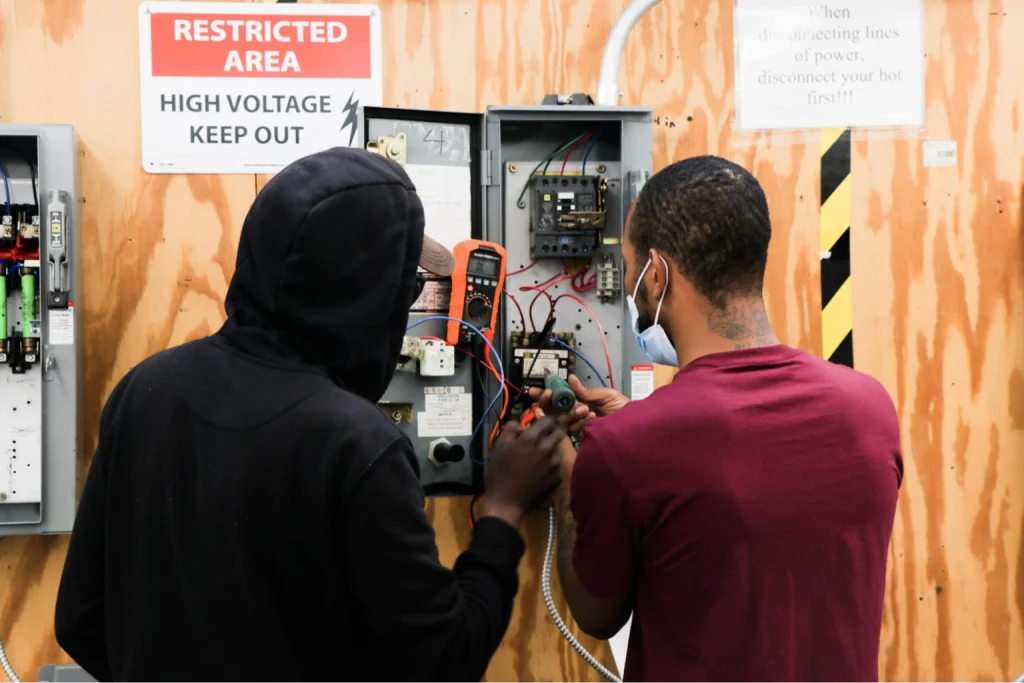
Find fields that fit your natural inclinations. If you appreciate working with your hands and mechanical systems, check out specific pathways like the automotive technology and repair program or the manufacturing and automation program at PTTI or any other trade schools in Philadelphia. Historically, these programs were only based on the mechanical performance of a job. In comparison, the best trade schools in Philadelphia today have completely revised their playbooks.
Check out local colleges and observe how they are run. In particular, look for institutions that run their laboratories like real job sites and place a lot of emphasis on soft skills for skilled trade jobs, as well as their core technical courses.
Treat each and every day of your training program like a day on the job. Above all, show up. Listen to what your instructors are telling you. Treat your other students like professional colleagues.
Last but not least, meet with hiring managers in person by taking advantage of your school’s job placement services, which may include mock interviews, resume seminars, and more.
The investment of time to develop these core working skills will pay huge benefits throughout your life. Technical systems will be changing all the time, car platforms are quickly going electric, industrial equipments is automating, and building designs are always changing. soft skills for skilled trade jobs is taught at the training program.
But on the other hand, the fundamental principles of personal accountability, clear communication, and keen attention to detail never go out of style. Comprehensive skilled trade training will help you hone both skills simultaneously.
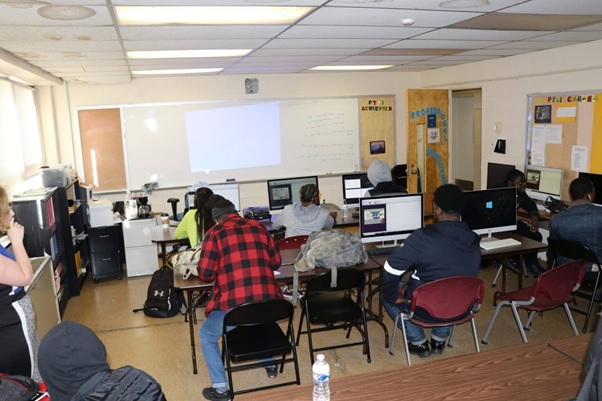
Graduates who enter the local workforce with these practices already established quickly find themselves separating from the pack. They are toftenfast-tracked for promotions, supervisory jroles and special corporate training programs.
In the end, innovative trade schools in Philadelphia are a dependable means out of generational poverty. skilled trade training deliberately embeds active teamwork and essential soft skills for skilled trade jobs into everyday workshop projects.
The contemporary Philadelphia trade school has changed the game for vocational education and hands-on training. They meet the immediate needs of regional employers, focusing on critical professional skills and the latest skilled trade training.
Don’t wait for the opportunity to come to you. Instead, take action today.
Schedule a campus tour with an admissions counselor at a school near you today, like the Philadelphia Technician Training Institute, to learn about the programs. By doing so, you may hone the professional habits that will unlock the door to a lasting, high-paying career.
Read more: