
Automation fear is the number-one reason people hesitate to start a welding career. So let us answer it plainly. Will robots replace welders? No, not in the way the headlines suggest. Robots will handle more repetitive factory welds. But human welders will stay essential for the vast majority of real-world work. The trade is changing, not vanishing.
This guide gives you a clear-eyed look at the future of welding. It covers what robotic welding can and cannot do. It explains which skills protect your career. And it shows why welder demand in Philadelphia and across the region remains strong heading into the next decade.
Robots assist, they don’t replace: Automation handles repetitive factory welds, while human welders keep doing complex, varied work.
Demand stays steady: Federal data projects tens of thousands of welding openings every year through 2034, driven largely by retirements.
Field work resists automation: Repair, infrastructure, and on-site welding are hard for robots to reach or perform.
The job is evolving: Tomorrow’s welder often runs, monitors, and troubleshoots automated systems.
Skilled welders earn more: Certified, specialized welders in the Philadelphia area often exceed $70,000.
Training is your safety net: Hands-on skills and certifications keep your welding career future-proof.
Robots will not replace welders. They will take over some repetitive, high-volume welds in controlled factory settings. But most welding happens in conditions robots handle poorly. Think field repairs, custom fabrication, tight spaces, and one-off jobs. Those require human judgment, adaptability, and skill that automation cannot match today.
This is the core reason the fear is overblown. Automation reshapes the trade. It does not erase it.
The numbers tell a reassuring story. According to the U.S. Bureau of Labor Statistics, the country needs roughly 45,600 welding openings each year through 2034. Most of those openings come from workers retiring or changing careers. In other words, demand stays steady even as technology advances.
The same data notes that automation may limit some factory demand. Yet it also stresses that aging infrastructure keeps welders busy. Bridges, pipelines, and buildings all need skilled hands to build and repair.
The worry makes sense. People see viral videos of robotic welding arms. They read that machines are coming for blue-collar jobs. So they ask an honest question: will robots replace welders like they replaced some assembly workers?
The difference lies in the work itself. Factory assembly is repetitive and predictable. Most welding is not. That distinction is why welding stays resilient.
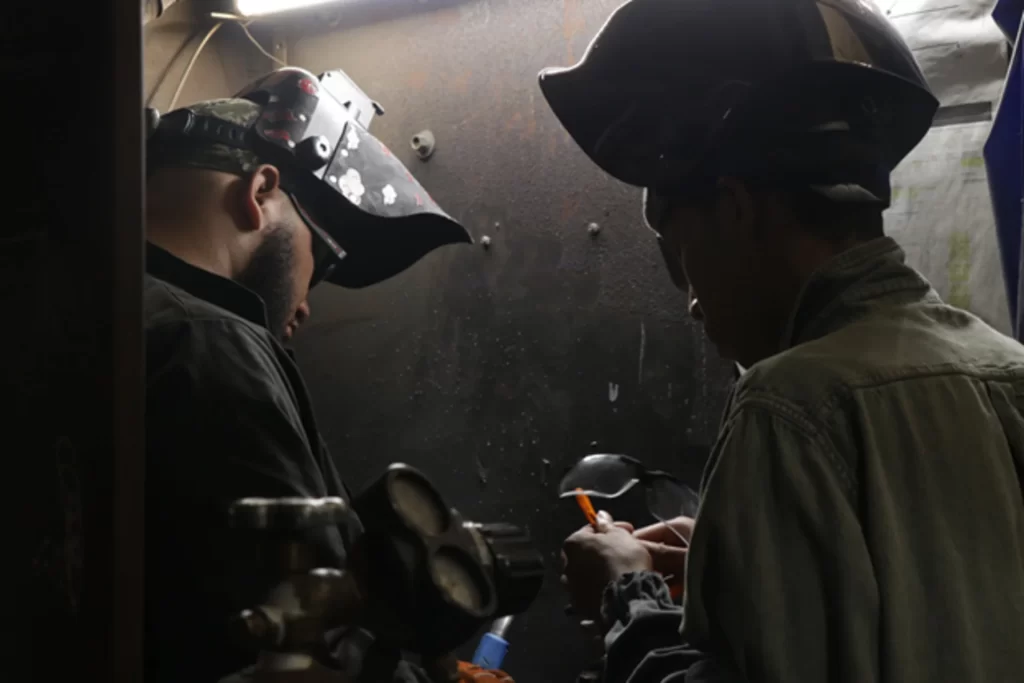
Robotic welding is powerful but narrow. It excels at repeating the same weld thousands of times. It struggles with variety, access, and surprises. Understanding this line helps you see why human welders stay in demand.
Automation is a tool. Skilled welders use it. It does not use them.
Robots shine in specific conditions. They perform best when the work is high-volume and unchanging.
In these settings, welding automation boosts output. Manufacturers in Pennsylvania use it to stay competitive. That is a real part of the future of welding.
Most welding does not fit a factory cell. It happens in messy, changing environments. This is where human skill wins every time.
Consider the daily reality of the trade. A welder might work overhead on a bridge. Another repairs a cracked pipe in a basement. A third fabricates a custom part no robot was programmed to build. These jobs demand adaptability.
Robots cannot climb scaffolding easily. They cannot improvise. They cannot judge a weld by feel. So when people ask, can robots replace human welders, the answer stays no for this vast category of work. If you want to build these skills, PTTI’s Welding Technology program focuses on exactly the hands-on ability that automation cannot replicate.
No job is fully automation-proof. But welding sits among the safer skilled trades. The physical, site-specific, judgment-heavy nature of the work makes it hard to automate. So is welding automation-proof? Not completely, yet it is far more resilient than most careers.
The smart move is to understand the real risk. Then you can train around it.
Some welding tasks face more automation pressure than others. These tend to be repetitive and factory-based.
If your entire career were built on these tasks alone, you would face more risk. But few welders work this narrowly.
Certain skills keep you valuable no matter how technology evolves. These are the human strengths robots lack.
Welders who master these skills stay in demand. This is why a strong welding career depends on real training, not shortcuts. PTTI also explores this topic in depth in its look at why a welding technician is a future-proof career.
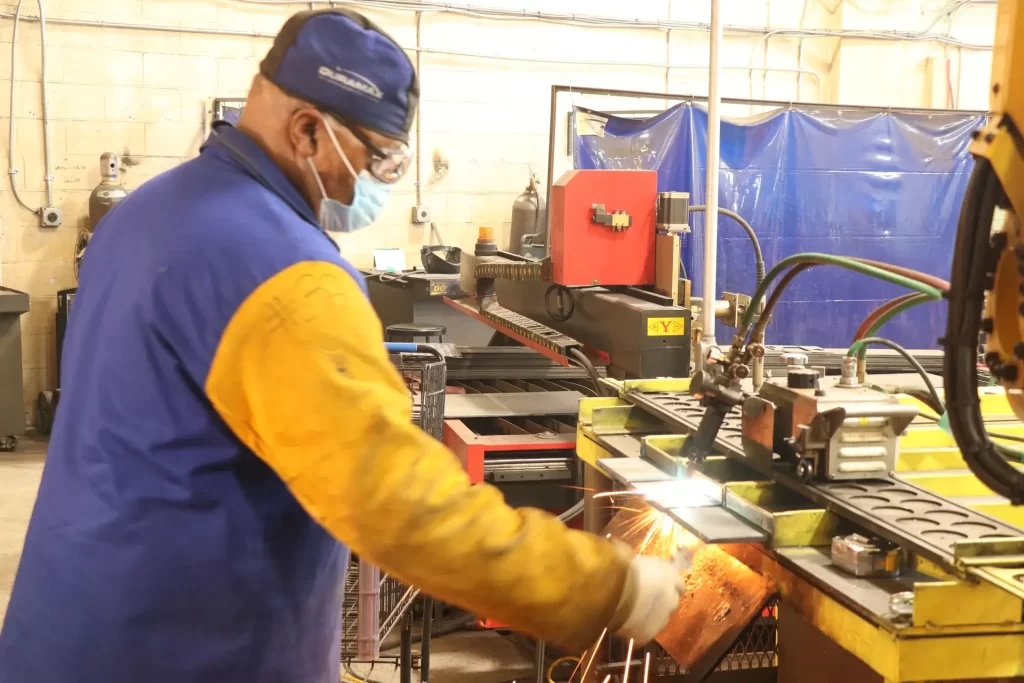
The future of welding is not empty booths. It is welders working alongside smart machines. Automation takes the dull, repetitive tasks. Humans handle the skilled, complex ones. The role grows more technical, not less important.
This shift creates opportunity for trained workers. It rewards those who learn new tools.
Tomorrow’s welder often does more than weld. They set up robotic cells. They monitor automated systems. They fix problems when machines fail. This blended role pays well and stays secure.
Employers increasingly want this hybrid skill set. A welder who understands both the torch and the technology becomes hard to replace. That is the real future of welding jobs.
Modern welders work with advanced systems every day. Learning them early gives you an edge.
Several technologies are reshaping the trade:
None of these remove the welder. They change what the welder does. PTTI covers this evolution in its guide to how automation is changing the welder’s role, which pairs well with this article.
Welder demand in Philadelphia remains strong in 2026. The city and its surrounding region rely on skilled welders across many industries. Automation has not changed that reality. If anything, aging infrastructure has increased local need.
This regional strength matters for your career. Training here connects you to real jobs.
Philadelphia’s economy keeps welders busy. Several sectors hire consistently.
These jobs reach far beyond city limits. Welders find work in Camden, Cherry Hill, Drexel Hill, Lansdowne, and Darby too. A portable skill travels well across the tri-state area.
Much of this work resists automation entirely. Repairing a bridge cannot happen in a factory cell. Fabricating custom parts requires human problem-solving. Ship repair often happens in tight, awkward spaces.
This is why welding jobs in demand in Philadelphia stay steady. The region needs hands, not just machines. You can explore local hiring pathways through PTTI’s careers and job opportunities resources.
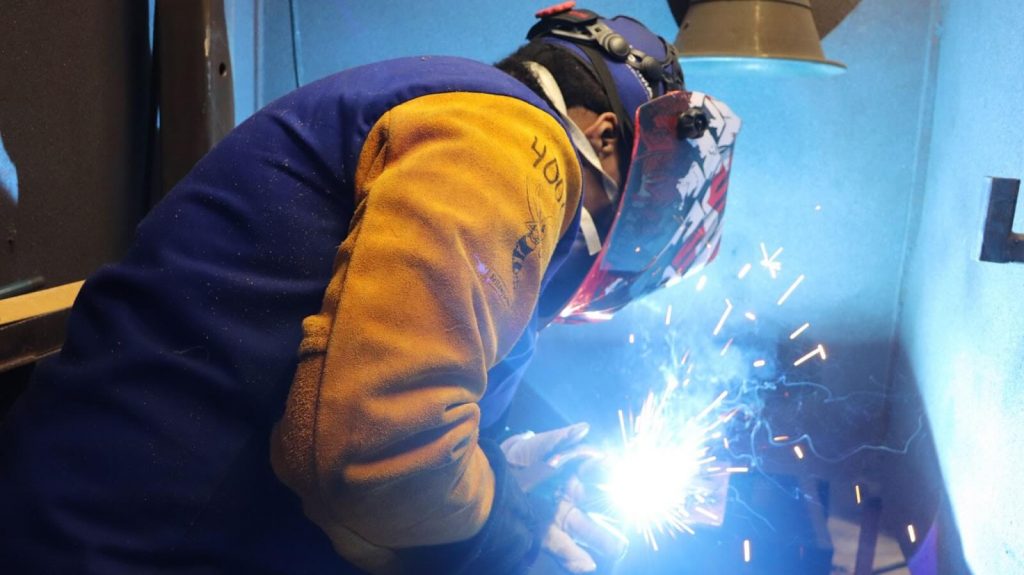
Welding remains a well-paid, stable trade in 2026. Entry-level welders in the Philadelphia area often start between $45,000 and $52,000. Experienced and certified welders frequently earn $70,000 or more. Overtime and specialty skills push pay even higher.
So is welding a good career in 2026? For trained, certified workers, the answer is clearly yes.
Pay varies by skill, process, and industry. Here is a realistic regional picture.
| Career Stage | Approximate Annual Range (Philadelphia Area) |
| Entry-level welder | $45,000 – $52,000 |
| Experienced welder | $55,000 – $65,000 |
| Certified / specialized welder | $68,000 – $80,000+ |
These figures reflect regional estimates. Union roles and specialty welding often pay at the higher end. Pipe welding, in particular, commands strong wages.
Certification separates you from the crowd. Employers trust welders whose skills a third party has verified. Certified welders also tend to earn more.
A strong program prepares you for these credentials. PTTI’s guide to welding certifications that boost your career explains which ones matter most. Stacking certifications is one of the best ways to stay valuable as technology evolves.
You cannot control automation. But you can control your skills. The best defense against any technology shift is strong, verified ability. That means real hands-on training, recognized certifications, and a willingness to learn new tools.
Future-proof trade careers belong to people who keep growing. Welding rewards that mindset.
Here is where your choice of training matters most. You cannot learn welding from a screen alone. You need booth time on professional equipment.
This is where hands-on programs beat the alternatives:
PTTI’s applied model focuses on real reps and job-ready skills. That approach directly answers the automation question. Robots cannot replace a welder who is genuinely skilled.
Specialization protects your career. A general welder is useful. A certified pipe or structural welder is in demand.
Follow this path and automation becomes an opportunity, not a threat. To take the first step, review PTTI’s financial aid options and start your admissions conversation. You can also see why AI cannot replace skilled trades jobs for a broader view of the topic.
So, will robots replace welders? The honest answer is no. Automation will change how welders work, not whether they work. Robots will take repetitive factory welds. Skilled humans will keep doing the complex, varied, and field-based jobs that keep the world running.
The real risk is not automation. It is entering the trade without strong skills. Train well, earn certifications, and learn the new technology. Do that, and your welding career stays secure for decades.
If you are ready to build a future-proof welding career, explore PTTI’s Welding Technology program, schedule a campus tour, or contact admissions to get started today.
No. Robots handle repetitive factory welds, but human welders remain essential for repair, fabrication, and field work. Most welding happens in changing conditions that automation cannot manage. Trained welders, like those from PTTI’s hands-on program, stay in strong demand.
No job is fully automation-proof, but welding is highly resilient. The physical, judgment-based, site-specific nature of the work makes it hard to automate. Skills like position welding, repair, and blueprint reading protect your career, all of which PTTI’s training builds.
The future of welding blends human skill with smart technology. Welders will increasingly run and troubleshoot automated systems while still performing complex manual welds. This makes the role more technical and secure, especially for welders trained on modern equipment.
Yes. Welding offers steady demand, strong pay, and a fast path to work. Certified welders in the Philadelphia area often earn $70,000 or more. Federal data projects tens of thousands of openings yearly, and hands-on training gets you job-ready quickly.
Yes. Philadelphia’s shipbuilding, fabrication, pipefitting, and infrastructure work keeps welders busy. Demand extends across Pennsylvania, New Jersey, and Delaware. Because certification is portable, PTTI-trained welders can pursue opportunities throughout the entire tri-state region.