
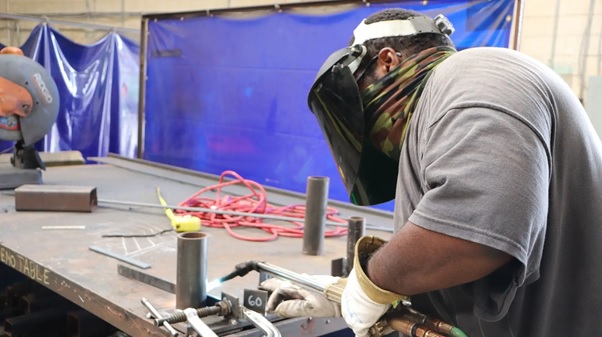
But skilled trade jobs– plumbing, electrical work, welding, and complex manufacturing are not just best suited for the human touch, but are utterly irreplaceable by technology. The truth is, the physical world is too unpredictable for computers to master. That’s why hands-on workers in skilled trades will always be in high demand, enabling them to build rewarding, future-proof careers.
At Philadelphia Technician Training Institute (PTTI), we’ll provide the targeted, hands-on training you need to excel in skilled trade jobs. We help you move from the classroom to a high-paying career in just a few short months.
Let’s move forward in the article!
Before we go into why these jobs are so secure, let’s explain what we mean by skilled trade jobs. Skilled trade jobs are a specific type of job. They involve specialised, hands-on knowledge and experience to create, maintain, repair, or operate physical infrastructure and equipment. They are not corporate desk jobs. Instead, they are the jobs that keep our lights on, our water flowing, and our city going forward.
Digital software can replicate white-collar work, like data analysis or rudimentary copywriting, with relative ease. But guess what? It strikes a literal brick wall when it comes to the physical world. No machines with the necessary human characteristics exist on an active job site. Therefore, these vital skilled trade jobs are not threatened by automation disruption.
Within a controlled virtual environment, computer code can function normally. However,AI is great at digital repetitive work. But it has no idea how to perform physical dexterity, solve real-time problems, or work in unpredictable physical environments. This makes the hands-on technical jobs the ideal future-proof careers, offering tremendous job security and excellent pay. Along with no need for a four-year college degree.
The obstacle that stands in the way of automating manual labor is not just a technological issue . Sophisticated senses, motor controls, and critical thinking are needed for true workmanship that cannot be replicated by current robotics.
| Unpredictability | Live sites have ever-changing structure, weather, and layout with no standard data. |
| Tactile Motor Discrepancy | Advanced robotics do not have the pressure sensitivity to manipulate different physical materials. |
| Diagnostics & Experiential intuition | Human Intuition, like feeling a vibration or hearing a certain hum, cannot be coded. |
Every job site is a completely distinct atmosphere. Because of this, a good technician working skilled trade jobs is always seeing, adjusting, and improvising around unseen problems.
An AI cannot anticipate an unpredictable change in structure, a water leak that appears out of nowhere, or a buried layer of outdated wiring behind a plasterboard panel. Machines like data that is ordered and predictable. In contrast, the actual world is messy and unpredictable.
Even with sophisticated robotics, we lack the fundamental tactile touch, grip, and accurate pressure that are required to do manual labour.
To put it simply, clean bricks laid with clean seams welded at tight angles, or delicate copper wires run through intricate electrical panels, require human fingertips that can feel the changes of texture and resistance. Robots are just too bulky for this kind of precision. This keeps skilled trade jobs secured among the highest-paying trades for human workers.
In addition, veteran tradesmen use years of cumulative field expertise to ‘feel’ mechanical vibrations, hear subtle engine troubles, or diagnose concealed building problems.
Having put in countless hours of physical practice, one develops this expert sensibility. In the end, a technician’s gut feeling about which bolt is causing a strange rattling under the hood is more important than any algorithm could ever be.
To be clear, smart technology doesn’t replace human labor. Rather, it has become a powerful tool that makes hands-on professionals working skilled trade jobs more effective. Automotive specialists now have sophisticated digital diagnostic equipment. These tools let them identify difficult-to-trace electrical problems in electric vehicles within minutes. Even so, the physical repair job itself – changing parts, rewiring, mechanical assembly – still needs human hands.
Similarly, in the commercial world, smart systems and predictive analytics can easily inform an industrial plant that a heating or cooling system is going to fail. Technology doesn’t take the job away; it just takes the guesswork out of it. It allows you to utilize your hands-on training to work smarter, to get things done faster and to prevent costly client downtime.
Philadelphia is enjoying a big development and infrastructure boom, which is increasing local earnings for experienced specialists. If you look at the highest-paying trades in the region, the demand is toward specialized physical expertise.
To sum it up, to choose to get into these fields is to choose an industry where your specialised abilities will always command a premium.
The old assumption that you had to go to a typical school for four years to make decent money is officially dead. Many college graduates are saddled with enormous student loan debts. Worse yet, they are employed in entry-level retail or desk jobs that could be eliminated by corporate downsizing.
Choosing a vocational career route means you can avoid the debt trap totally. Finally, you start earning a genuine pay cheque a lot earlier in secure, skilled trade jobs. According to Bureau of Labor Statistics (BLS) data, there will be a huge influx of retirees and an estimated 649,300 yearly employment opportunities in the extractive and construction professions through the period of 2034.
If you want to get your schooling down to the bare minimum, consider a short-term vocational certification. Specialised institutions cut the fluff. They offer you the exact technical capabilities local employers are searching for right now. Consequently, you learn the safety codes, get to know the equipment, graduate quickly, and go straight into the local workforce.
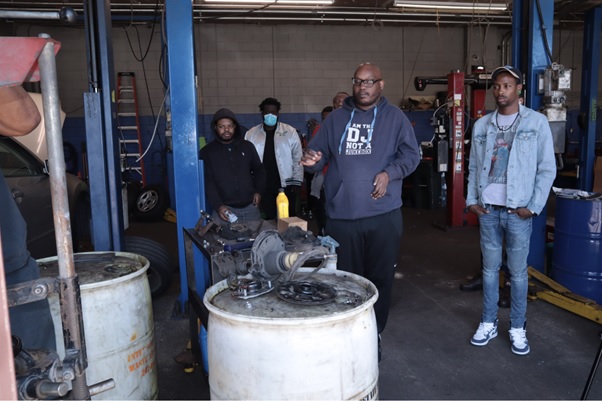
PTTI has a history of taking motivated young folks and turning them into skilled professionals. No long, boring lectures from us. Instead, we get you in the store on day one so you can get real-world confidence through direct hands-on training for lifelong skilled trade jobs.

The digital world will keep changing fast. Nevertheless, our physical infrastructure will always need to be constructed, maintained, and repaired by actual people working in stable, skilled trade jobs.
Don’t let a shifting job market stop you from pursuing dreams. Take charge of your life, create your own freedom, and acquire a skill that no software programmer can ever program away.
Want 100% future-proof careers? Contact the Philadelphia Technician Training Institute today or call our local Philly campus admissions team to earn your short-term vocational certification and launch your career adventure!
FAQs—
Q: Are skilled trades safe from AI automation?
A: Yes. Artificial intelligence cannot replace the human touch, spatial awareness, and rapid problem-solving abilities required to deal with the unpredictability of the actual world.
Q: What are the possible earnings after finishing a trade program?
A: To answer your question, the average entry-level trade professional may expect to earn between $55,000 and $85,000 per year as they gain experience. However, skilled tradespeople in the Philadelphia area often earn a decent entry-level wage.
Q: How long will it take to get certified and get to work?
A: At schools like PTTI, short-term vocational certifications can be obtained in just a handful of months, unlike a four-year college degree. This rapid method gets you certified fast and out there earning a real pay cheque — without spending years in a classroom.
Q: Do I have to be a tech wizard to break into these fields?
A: Not a bit. You don’t have to be a computer genius to make it. Actually, the modern trade school programs are based totally on practical learning. If you have a solid work ethic, a willingness to learn, and enjoy working with your hands, our instructors will teach you everything you need to know step-by-step.
Read more: