
The traditional college route is not the sole way to a stable six-figure career today. Today, local employers are coming into classrooms to change the game and trade school programs. By writing lesson plans, contributing high-tech machines, and providing paid apprenticeships, these local businesses make sure students learn exactly what local factories need. These updated programs provide the quickest path to financial independence for anyone who wants to avoid large school debt and gain a solid career quickly.
Remember the last time you saw a giant construction crane looming over the Philadelphia skyline, or drove or walked by a busy production site along the Delaware River? Behind those busy places is a silent catastrophe. Local firms are having a hard time finding individuals who know how to run new machinery. For a long time, the prevailing wisdom in Philly was that if you were young, you needed to earn a 4-year college degree. However, that old way has saddled many with enormous education debt and little career prospects.
The good news? We are in the midst of a great transition. Modern trade school programs are up to the challenge. These institutions are working with local manufacturing enterprises rather than relying on dusty, old books. Consequently, this collaboration pushes education from dusty classroom theory into the hands of real employer-driven education.
This guide explains just how local firms are changing technical training. We’ll talk about the enormous benefits of hands-on vocational training and demonstrate how a short-term vocational certification may propel you into high-paying skilled trades. And lastly, we’ll showcase how these workforce development programs offer clear pathways to long-term job stability right here in Philadelphia.
To understand why technical education is evolving so fast, we need to look at the disconnect between traditional classrooms and real job sites. In the past, vocational schools typically used antiquated legacy systems, worthless theory, or manual instruments that manufacturers stopped utilising decades ago.
Digital infrastructure now powers today’s factory floors. There won’t be any employees scanning paper manuals when you visit a Philadelphia manufacturing facility. In their place, they are using digital blueprints shown on tablets to track automated production lines and identify equipment malfunctions.
In reference to this, data from studies shows that there is a growing skills gap, leaving approximately 4.1% of operational positions unoccupied, and that manufacturers generally experience a talent crunch. This is also why optimized trade school programs are becoming vital for the industrial ecosystem.
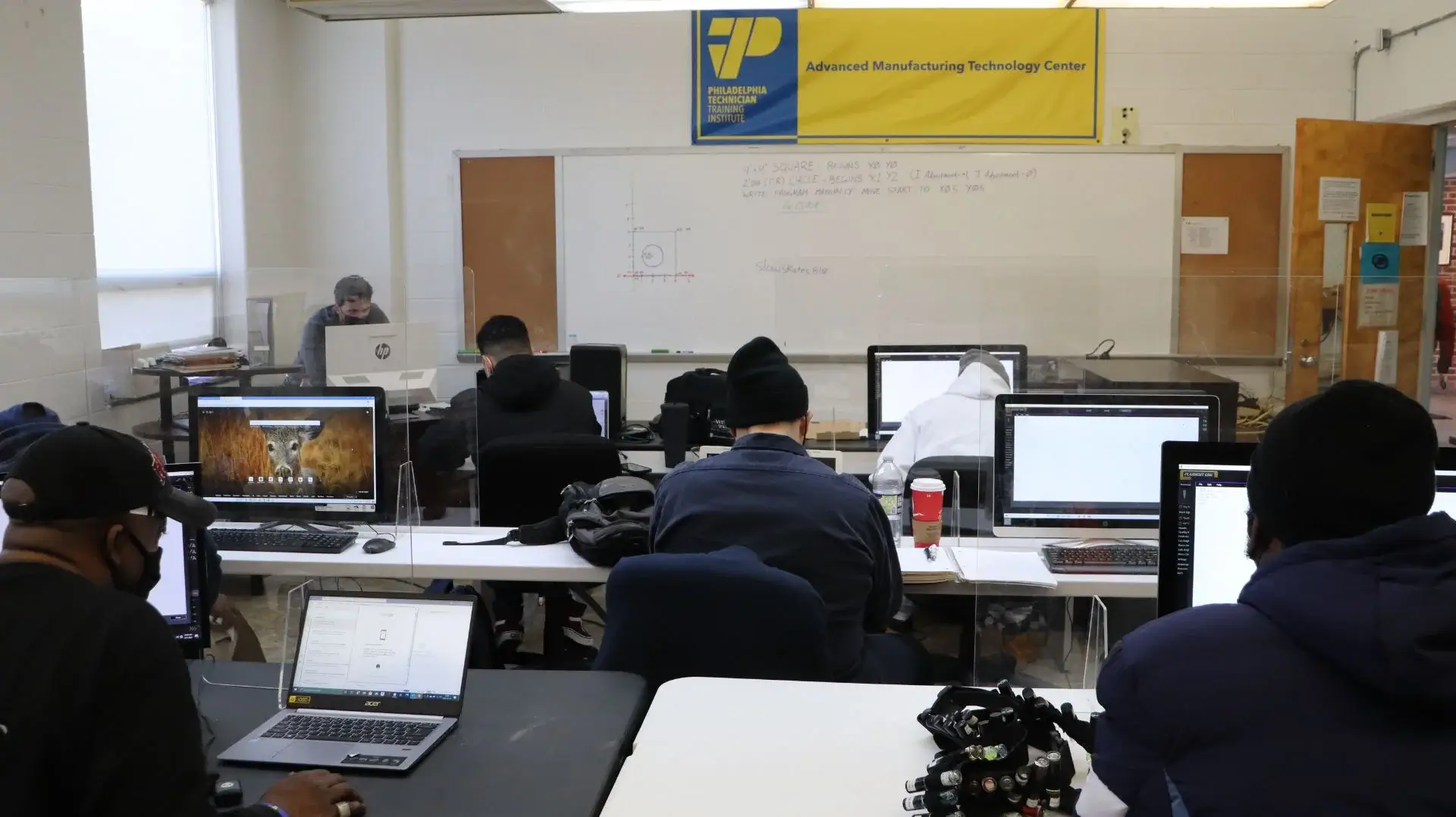
That’s what local employers are stepping up for. Partnering with trade school programs to develop curriculum allows companies to generate a direct pipeline of talent. This partnership gives pupils a huge edge. You don’t just get a piece of paper; you gain hands-on vocational training that provides the specific, technology-based abilities that local supervisors are actively seeking.
Local businesses aren’t on the sidelines – they drive the daily evolution of technical training in a number of important ways.
Modern factories are fitted with sophisticated automation, robotics, and networked gadgets. For this reason, regional employers call on trade school programs to adapt to interactive smart labs to stay competitive. Students are taught 3D modelling for production and practice troubleshooting Programmable Logic Controllers (PLCs), the specialised digital computers that operate automated assembly lines in these spaces. In the long run, this targeted preparation ensures that graduates transition smoothly into high-paying skilled trades right after graduation.
You can’t learn a modern trade from a whiteboard. With this in mind, local firms often provide up-to-date machinery, specialised software, and raw materials to training centres hosting these trade school programs.

Instead of requiring students to attend extensive, broad courses, local corporations are helping to develop a short-term vocational certification based on industry-recognized qualifications. Employers identify exactly what skills they need for jobs, and schools develop short, targeted modules to teach them. This tailored technique gets you out of the classroom and into a consistent wage in only a few months.
The mark of a true technical proficiency is the actual world application. Local factories have built up registered apprenticeships, internships, and cooperative education (co-op) opportunities through rigorous workforce development programs. This dual-education concept enables you to balance your time between classroom labs and real work. And the best part? These are paid opportunities, so you can earn an income while studying.
Local industry and educational centres have teamed up, making it easier than ever to get into high-paying skilled trades. If you want to develop a solid career path, choosing employer-aligned trade school programs is the most reliable strategy in the present job market.
| Technical Program Path | Core Hands-On Focus | Demand in Primary Industries |
| High Tech Manufacturing | Repair of PLCs, Industrial Automation and Robotics | Automated fulfilment centres and smart factories |
| Welding Tech | Reading blueprints and fabricating structural steel | Construction of massive infrastructure and factories |
| Auto Repair | Mechanical and digital engine diagnostics | Local service centres in the area, business vehicle upkeep |
If you go down the road of hands-on vocational training, you are developing a career that will be rather resistant to automation in the future. Artificial intelligence is changing desk-based information labour, but it cannot replace the physical effort and real-world problem-solving needed to repair an automated manufacturing line, weld a structural beam, or fix a complex vehicle system.
If you’re ready to leave low-wage employment behind and start a steady career, it’s easy to navigate the system following these four basic steps.
Seek groups in your area that have recognised trade school programs with an emphasis on building relationships with local companies. Verify if their training laboratories are equipped with modern, commercial-grade machinery, rather than antiquated textbooks.
Figure out which course best suits your interests. If you want to return to work and start making a steady income sooner, choose a program with a shorter completion period.
Get in touch with college guidance counsellors as soon as possible during your hands-on vocational training. Learn more about upcoming employer networking events, resume and interview prep classes, and direct job placement opportunities with manufacturing partners.
Fill out an application for an apprenticeship or other work-based learning opportunity. You can make money, build your professional network, and gain practical experience all at the same time with this option.
If you’re a Philadelphia-area resident, you have a huge advantage right in your backyard. The Philadelphia Technician Training Institute (PTTI) has made the demands of employers a good foundation of its educational program, getting young people across Philly into high-quality occupations rapidly.
PTTI has speciality employer-aligned trade school programs available, such as the Manufacturing and Automation Program, where you’ll master the ins and outs of smart manufacturing technologies.
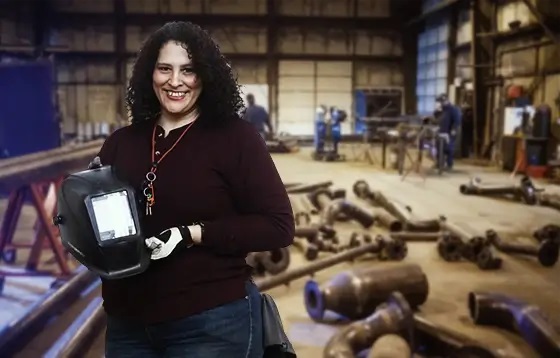
If you appreciate working with your hands to create and fix physical systems, the Welding Technology and Training Program or the Automotive Technology and Repair Program are a direct pathway into stable, local businesses. PTTI offers down-to-earth, straightforward training in friendly workshops – the right starting point for anyone ready to attain real financial freedom.
The advent of modern trade school programs has turned the game upside down for young job seekers. These trade school programs offer a clear pathway to steady, well-paying professions without the burden of four-year college debt, thanks to strong ties with local firms. Learn the exact skills local employers are looking for via interactive smart labs, donated equipment, and paid apprenticeships.
If you’re ready to take charge of your future, then don’t wait. Call a local training centre, like PTTI, now; see how their custom trade school programs can change your life; visit their hands-on seminars; and learn how soon you may begin a safe, rewarding profession.
Q: How do local businesses help students find jobs after graduation?
A: Employers partner directly with schools to tailor class curricula to their recruiting needs, contribute state-of-the-art machinery, and offer paid apprenticeships. Such close relationships typically lead to job offers for students even before they graduate.
Q: To what extent does practical, hands-on experience excel over traditional academic pathways?
A: You may avoid taking on massive amounts of debt and get into the workforce much more quickly—usually in less than a year. Gaining hands-on experience with real machinery will set you up for direct employment in secure industries.
Q: Is the future of high-paying, skilled jobs safe from AI and automation?
A: Yes, that is correct. Compared to desk jobs that rely on repetitive computerised analysis, high-paying skilled trade jobs primarily need physical agility, problem-solving skills, and the ability to apply what one learns in the real world. Their generosity makes them challenging to automate.
Read more: