
Imagine yourself walking across the graduation stage with your high school certificate in one hand and a professional industry credential in the other. While millions of grads are stepping into adulthood with years in lecture halls and huge student loan obligations, another group of smart students are fast-tracking their way straight into the profession. Skilled trades for high schoolers are the greatest shortcut to a high-paying, independent lifestyle without an additional four years behind a desk.
If you choose this route, you are not dodging an education. It signifies that you’re taking a practical, straightforward path to achievement. Even before you’re 18, utilizing skilled trades for high schoolers means you can develop a rock-solid base for your profession, taking advantage of specialised programs, local training centres and neighbourhood apprenticeships.
In this detailed guide, we’ll explain exactly what specialised professional skills are, why diving into skilled trades for high schoolers early gives you a substantial financial edge, and how you can get off the high school graduation stage and straight into a wonderful career. Here’s a quick overview of everything we’ll cover:
Before we get into the precise steps, let’s define what we mean by a “skilled trade.” A skilled trade is any employment that demands specialised practical knowledge and hands-on vocational training, rather than a generic academic degree. Instead of writing essays or studying ancient history, tech tradespeople learn specialised tools, machines and technical systems to build, repair or maintain our physical and digital world.
For years, high school students were convinced that the only way to a stable existence was a regular college degree. That’s all over now. “Across the country, businesses are experiencing a massive shortage of trained professionals, making skilled trades for high schoolers an incredibly smart choice. The U.S. Bureau of Labour Statistics forecasts a strong increase and need for skilled technical workers, particularly when older workers retire.
For young individuals residing in major industrial centres like Philly, exploring trade schools in Philadelphia during this shortage is a great opportunity. Local firms are keen to fill unfilled positions and are aggressively seeking fresh talent. With specialised trade school programs, you are not only getting a job, but you are also gaining a profession for life that cannot be outsourced or replaced by a machine soon.
Choosing a technical professional path is choosing financial freedom. Many college grads find themselves unable to find entry-level work while saddled with thousands of dollars in debt. On the other hand, students who look into skilled trades for high schoolers get to study while they earn, walking right into the job market with highly monetizable abilities.
Below are some of the best, highest-paying trade jobs and specific industrial fields you can start training for today:
The construction business is starving for new talent. If you love to see the immediate, tangible effects of your hard work, these career paths offer tremendous stability:
Welders utilise high heat to melt metal together. You’ll become an indispensable asset for structural manufacturing, infrastructure, and custom fabrication projects when you master specialised techniques like MIG, TIG, and stick welding.
The HVAC and electrical systems of today’s commercial buildings are complex and rely on each other. To keep communities running safely, people need to learn how to construct, diagnose, and wire these systems.
Day by day, vehicles are getting more and more sophisticated, with a combination of mechanical engineering and intricate computerised systems.
This track is much more than just oil changes. You will get into advanced engine diagnostics, drivetrain maintenance and electrical systems.
Keeping the supply chain going from transport trucks to giant construction excavators. These machines are so crucial to business that corporations will pay top cash for experts who know how to keep them working.
Not all trades are heavy machinery. There are several choices in the modern trade landscape if you like working with computers or specialised equipment in controlled environments:
Securing operating systems and network infrastructures, protecting today’s businesses from cyber threats.
This is a speciality in Healthcare that deals with the management, sterilisation, and preparation of critical medical devices for hospitals and surgical centres. It is a vital, fast-growing healthcare job that doesn’t require years of medical education.
Some people learn best by sitting at a desk, listening to a lecture and reading textbooks. But many children learn best through actual tactile experience. This is where the help of hands-on vocational training comes in.
School is relevant when what one learns in the classroom is connected to real-world applications. Working on projects in a welding lab, for instance, makes abstract geometry ideas a visual, tangible reality. Similarly, taking apart an engine block shows the laws of physics much better than any textbook ever could.
Reputable local training hubs partnering with high schools facilitate the smooth transition from student to young professional. For example, young people who are looking for trade schools in Philadelphia frequently turn to institutions like the Philadelphia Technician Training Institute (PTTI) or something similar. These local trade schools in Philadelphia and similar settings enable you to develop actual, marketable talents that are valued by local employers.
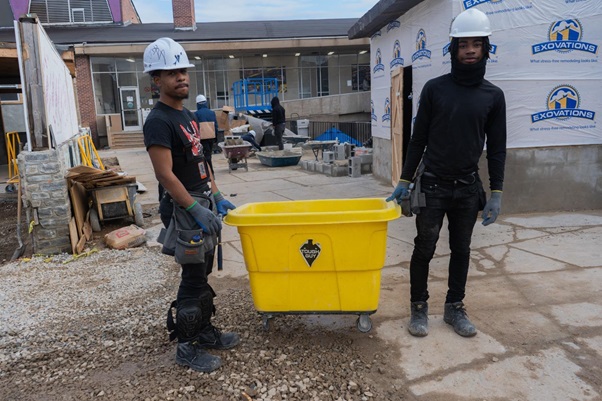
You don’t have to wait till you earn your high school diploma to start your profession. Act now to get ahead of the competition and enter the workforce ahead of your peers by exploring skilled trades for high schoolers. Here’s a step-by-step approach to help you maximise your time before graduation:
Schedule a meeting to learn about Career and Technical Education (CTE) opportunities. Many school districts allow pupils to spend half a day at local vocational centres that offer skilled trades for high schoolers or register in dual-enrollment programs that earn college or trade credits simultaneously.
Replace broad elective classes with practical subjects such as shop, drafting, basic coding or auto maintenance. You learn the safe way to use basic tools and get a taste of several possible job choices.
Secure foundational, high-demand industry certifications before the end of your senior year. Get safety certifications such as OSHA-10 or trade-specific qualifications such as an EPA 608 certification for HVAC, and you’re immediately employable.
Explore registered pre-apprenticeship programs that focus on skilled trades for high schoolers, which are government, union, or school-funded. The programs connect you with experienced professional mentors, and you can gain real-world experience and create a local network as you finish school.
The work market has undergone massive changes, but some old beliefs about technological jobs persist. It’s time to clear up these myths so you and your family can make an informed decision about skilled trades for high schoolers:
That is not true at all. High-level critical thinking, complex math, blueprint reading and data analysis are all needed in modern industrial jobs. We’re problem solvers. We’re smart.
In fact, seasoned professionals in specialised sectors like industrial manufacturing, commercial plumbing, or heavy equipment repair can typically make substantially more than the average college graduate – without the student debt.

Learning a trade gives an entrepreneurial base. You will see many experts who begin as apprentices, become master technicians, and go on to open very successful local enterprises of their own.
After experiencing technical training in high school, the next step is to seek out an accredited program of study to perfect your talents. The most crucial decision you will make for your future profession is selecting the correct training centre.
If you are looking for the best local possibilities, seek out training facilities that offer:
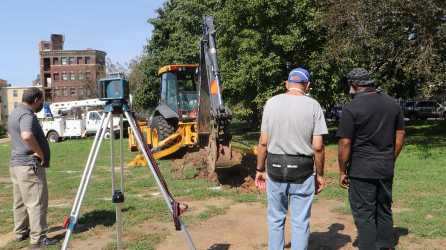
Don’t allow the heaviness of traditional expectations to push you into a career that doesn’t play to your talents. Learning skilled trades for high schoolers is a proven, smart and highly appreciated option for high schoolers to become financially independent early on.
Taking action today by looking into skilled trades for high schoolers is putting yourself on the path to a secure, high-paying career that keeps our world on track.
A single local link is the beginning of a secure future. Explore hands-on tracks in your town and take charge of your professional path today.
Q: Can high school student actually acquire specific skills while attending traditional classes?
A: Yes, that is correct. Numerous educational institutions provide dual enrolment or other forms of career and technical education. A traditional classroom setting is available in the mornings, while a local technical centre or connected university provides hands-on vocational training in the afternoons.
Q: What are the quickest highest-paying trade jobs you can get into?
A: Some of the highest-paying industries with quick training turnarounds include specialised welding, commercial electrical work, HVAC system installation and heavy diesel machine repair. These are high-paying fields because they need specialised knowledge that is always in demand.
Q: What criteria should I use to select an appropriate local trade school program?
A: Look for places to enrol that value hands-on experience in the shop over theoretical study. Enquire about their direct job placement agreements with local firms, see if they have certificates recognised by the sector, and examine their graduation rates.
Read more: