
Not all skilled trades give you the same return on the months you spend training. Some careers ask for four or five years before you reach full pay. Others get you job-ready in well under a year and still pay a solid, growing wage. That difference, the ratio between what you earn and how long you train, is the single most useful number for anyone deciding how to enter the workforce fast without taking on college debt.
This ranking looks at ten skilled trades through that exact lens. Each one is evaluated on median pay, realistic time to your first job, job outlook through 2034, and how quickly training converts into earnings. Every trade here can be entered through a focused, hands-on program rather than a traditional degree, which is why they consistently outperform four-year paths on return.
The rankings also carry direct local relevance. Across Philadelphia, Pennsylvania, and South Jersey, employers in construction, manufacturing, healthcare, and building services are hiring skilled workers faster than schools can supply them. For students in North, South, and West Philadelphia and the surrounding counties, that demand turns a short training program into a genuine career. If you want a high-paying trade career that starts paying back quickly, this list is your shortlist.
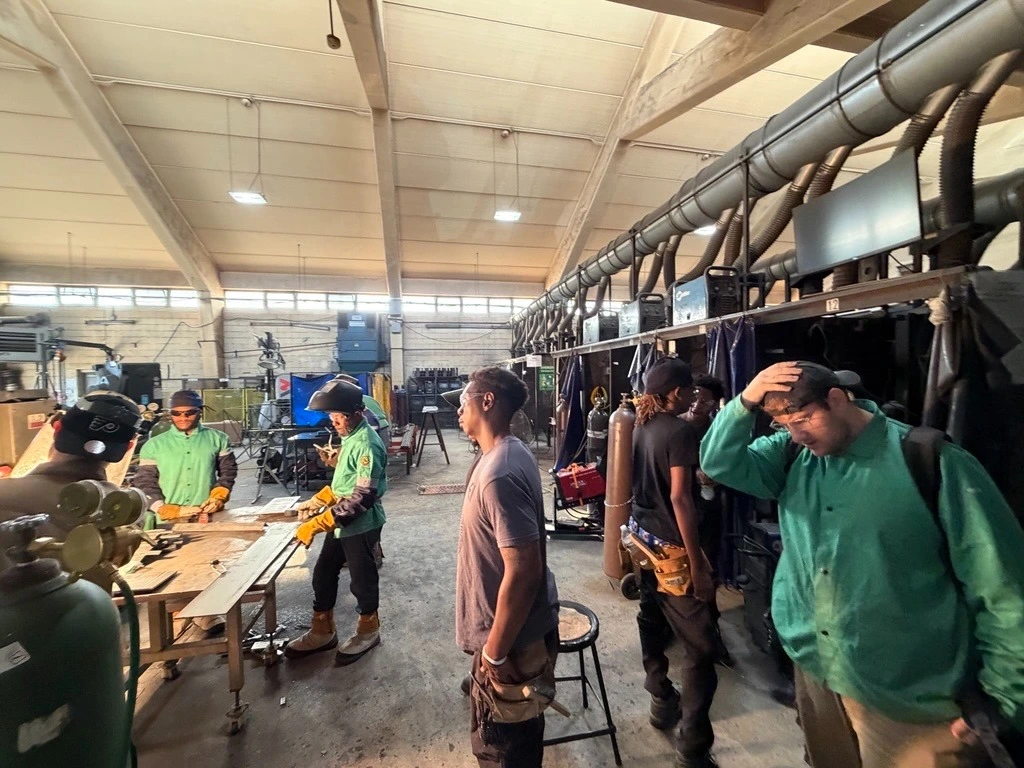
Each trade was scored on a simple, honest question: how much do you earn relative to how long it takes to become job-ready? “Training time” here means the time to reach entry-level employment through a focused trade program, not the years it takes to reach full journeyman or master status. That distinction matters, because it reflects when you actually start earning.
Pay figures come from the U.S. Bureau of Labor Statistics (BLS) Occupational Outlook Handbook and Occupational Employment and Wage Statistics, using the most recent May 2024 median wages, with regional context for the Philadelphia market where available. Job-outlook figures use BLS projections for 2024 to 2034. Where a trade pays moderately but trains extremely fast, its ratio can beat a higher-paying trade that takes longer to enter.
Here is the full ranking at a glance.
| Rank | Trade | National Median Pay (BLS, May 2024) | Time to Job-Ready | Outlook 2024–34 |
| 1 | HVAC Technician | ~$59,810 | 6–12 months | +8% (much faster) |
| 2 | Welder | ~$48,000 (higher in Philly) | Under 12 months | Steady, ~45,600 openings/yr |
| 3 | Manufacturing & Automation Technician | ~$70,760 (mechatronics) | 6–12 months | Growing |
| Pipefitter / Steamfitter | ~$62,970 | Under 12 months (foundational) | ~44,000 openings/yr | |
| 5 | Sterile Processing Technicia | ~$47,000 | 4–8 months | Faster than average |
| Sprinkler Fitter | ~$60,000+ | Under 12 months (foundational) | Steady | |
| 7 | Automotive Service Technician | ~$49,670 | ~12 months | ~70,000 openings/yr |
| 8 | Brick & Block Mason | ~$60,800 | 6–12 months | ~20,700 openings/yr |
| 9 | Cement Mason / Concrete Finisher | ~$56,600 | 6–12 months | Stead |
| 10 | Drywall & Framing Technician | ~$55,700 | 4–9 months | Steady construction demand |
HVAC tops the list because it pairs strong pay with a short path in. The national median wage is about $59,810 per year, and training can make you job-ready in 6 to 12 months. The BLS projects 8% job growth through 2034, much faster than average, driven by aging building systems and rising demand for efficient climate control.
In the Philadelphia area, HVAC technicians commonly earn $55,000 to $75,000, with commercial and controls specialists earning more. The EPA Section 608 certification is required to handle refrigerants, and it is a standard part of quality training. Because heating and cooling cannot be outsourced or automated away, HVAC offers rare stability. For a fast, high-return entry into the trades, it is hard to beat. PTTI’s HVAC training prepares students for certification and real job-site work.
Welding earns its rank on demand and speed. A focused welding program can make you job-ready in under a year, and while the national median sits near $48,000, welders in the Philadelphia region typically earn more, roughly $52,000 to $60,000, with certified and union welders often exceeding $70,000. The BLS projects about 45,600 welding-related openings each year through 2034, largely from retirements.
Welding is performance-based, which is exactly why it converts training into pay so quickly. Employers do not ask for a degree; they ask you to pass a weld test. Philadelphia’s shipbuilding, fabrication, and infrastructure work keeps local demand steady. PTTI’s welding technology program is built around the standards employers test for, and pipe or structural specialization raises the ceiling further.
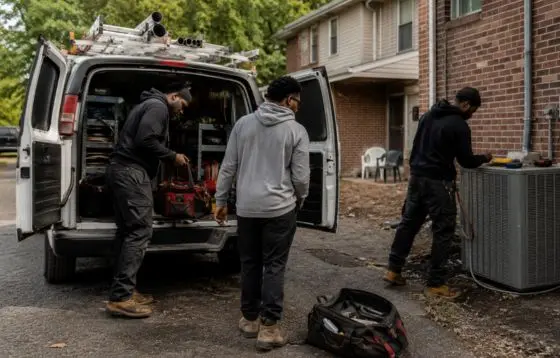
This is the quiet high-earner on the list. Electro-mechanical and mechatronics technicians, the BLS category closest to modern automation roles, post a median wage around $70,760, and entry through a trade program takes months rather than years. As factories add robotics and automated lines, employers need technicians who can install, maintain, and troubleshoot those systems.
Entry-level roles start lower, often in the $42,000 to $55,000 range, but the growth path is steep and the skills are in short supply. This is one of the strongest pay-to-training-time ratios available precisely because demand is climbing while the trained workforce is thin. PTTI’s manufacturing and automation program trains students for exactly these emerging roles across the region’s industrial base.
Pipefitters and steamfitters install and maintain the high-pressure, high-temperature piping systems that power plants, hospitals, refineries, and commercial buildings depend on. The BLS reports a median wage of $62,970 for plumbers, pipefitters, and steamfitters, with the top 10% earning more than $105,150. About 44,000 openings are projected each year through 2034.
Foundational training that gets you into the field can be completed in under a year, and adding welding skill, especially certified pipe welding, pushes earnings toward the top of the trade. Philadelphia’s aging steam and gas systems, active industry, and ongoing construction sustain steady hiring. PTTI’s steam, sprinkler, and pipe fitting program opens this high-ceiling career to students without years of prerequisites.
If your priority is the fastest possible entry, sterile processing wins outright. Job-ready training runs as short as 4 to 8 months, and the national median wage is roughly $47,000, with hospital and certified technicians earning more. The field is growing faster than average, with thousands of openings each year as surgical volumes rise.
Sterile processing technicians decontaminate, inspect, and sterilize surgical instruments, the behind-the-scenes work every operating room relies on. The CRCST credential is the industry standard, and Pennsylvania requires certification within a set window of hiring, which makes structured training essential. For a stable healthcare career with a short runway and no four-year degree, the ratio is excellent. PTTI’s sterile processing and central services program prepares students for certification and hospital placement.
Fire-protection sprinkler fitters install and service the life-safety systems required in nearly every commercial building. The work sits alongside pipefitting in pay, commonly $60,000 or more with experience, and foundational training can be completed in under a year. Because fire codes mandate these systems, demand is steady and largely recession-resistant.
Sprinkler fitting rewards precision and code knowledge, and certified fitters are consistently sought by mechanical contractors across the tri-state area. It is an often-overlooked trade with a strong ratio: essential work, protected demand, and a training path measured in months. PTTI trains for this specialization within its steam, sprinkler, and pipe fitting program, giving students a direct route into fire-protection careers.
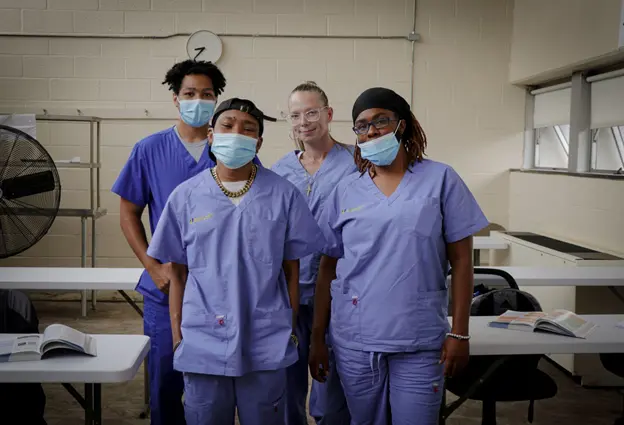
Modern vehicles are rolling computers, and the technicians who diagnose and repair them are in steady demand. The BLS median wage is $49,670, with about 70,000 openings projected each year through 2034. A focused program gets you job-ready in roughly a year, and ASE certifications plus hybrid and EV specialization raise earnings meaningfully.
The ratio here is solid rather than spectacular on base pay, but the volume of openings and the shift toward electric and advanced-diagnostic work make it a durable, upward-moving career. Dealerships, fleets, and independent shops across Philadelphia hire continuously. PTTI’s automotive training and repair program emphasizes the diagnostics and EV fundamentals employers now expect.
Masonry is one of the oldest trades and still one of the better-paying construction careers. Brickmasons and blockmasons earn a median around $60,800, with the top quarter well above $77,000. Training that gets you working can be completed in months, and skilled masons are consistently in demand for commercial, institutional, and restoration work.
The trade is physically demanding, which is part of why experienced masons are hard to replace and command strong wages. Philadelphia’s dense stock of brick and stone buildings guarantees ongoing repair and construction work. For students who prefer building tangible, lasting structures, masonry offers a strong ratio and a clear path to running crews or a business. PTTI covers this within its construction cluster.
Concrete is the backbone of nearly every build, and the finishers who place and shape it earn a median around $56,600 through the broader masonry category. Job-ready training takes months, and demand tracks closely with construction and infrastructure spending, both strong in the region.
Concrete work rewards speed, precision, and the ability to read a job site, skills that hands-on training builds directly. Because concrete cannot be poured remotely, the work stays local and steady. It is a dependable, fast-entry trade with room to advance into supervision and estimating. PTTI’s concreting, masonry, and framing program trains students across concrete, masonry, and framing for broad job-site versatility.
Drywall and framing round out the list with one of the shortest training paths in construction, often 4 to 9 months to job-ready, and a median wage near $55,700 for installers, with tapers and finishers earning more. Every new build and renovation needs framing and drywall, which keeps demand constant.
The trade is beginner-friendly, which makes it an excellent on-ramp into construction, and skilled finishers who reach the highest levels of finish quality are well paid. It also stacks naturally with framing, carpentry, and other construction skills for a multi-skilled career. PTTI’s drywall framing and finishing program turns beginners into job-ready technicians quickly.
The highest-paying job on paper is not always the smartest choice. A career that pays $75,000 but takes five years to reach full wage can be a worse financial decision than one paying $55,000 that you enter in eight months, because you spend those extra years earning far less, or paying tuition instead of collecting a paycheck.
The ratio approach accounts for time, debt, and opportunity cost together. Trades that train fast let you start earning, avoid student loans, and gain the experience that raises your pay from year one. Over a decade, an early start often outperforms a delayed one, even when the delayed path has a higher ceiling. This is the core reason skilled trades increasingly outcompete four-year degrees for return on investment.
For students weighing options, the comparison is straightforward.
| Factor | Fast-Track Trade Program | Four-Year College |
| Time to first paycheck | 4–12 months | About 4 years |
| Typical debt | Low, focused tuition | Often significant |
| Earning during study | Possible in many trades | Usually delayed |
| Skills alignment | Directly employer-tested | Broad, less applied |
| Entry wage in these trades | $45,000–$70,000 range | Varies widely by major |
College remains the right path for some careers. But for the trades on this list, a focused program delivers employer-ready skills in a fraction of the time and cost. That is the entire point of the pay-to-training-time ratio.
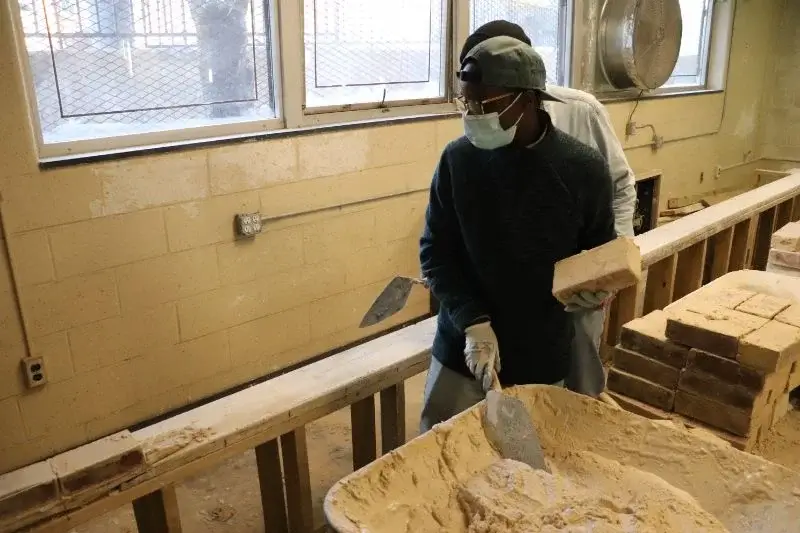
Not every program converts training into earnings equally well. The strongest ones share a few traits: real hands-on lab time on industry-standard equipment, instructors with field experience, certification preparation aligned to what employers require, and genuine job-placement support. Multi-certification programs add further value by widening the roles you qualify for.
For students across Philadelphia and the surrounding Pennsylvania and New Jersey communities, local matters too. Training centrally means shorter commutes, employer connections in the region, and a credential recognized by the companies actually hiring nearby. PTTI is built around exactly this model, offering hands-on training, certification readiness, and placement support across eight of the ten careers ranked here. To compare paths, prospective students can explore all PTTI programs and review financial aid options.
The smartest way to enter the workforce in 2026 is not to chase the single highest salary. It is to choose a trade where solid pay meets short training, so you start earning quickly, skip the debt, and build experience from day one. Every career on this list clears that bar, and most can be entered in under a year.
For students across Philadelphia, Pennsylvania, and New Jersey, the opportunity is immediate: real local demand, employer-recognized training, and a paycheck measured in months, not years. The next step is simply choosing your trade and starting.
Ready to move? Explore PTTI’s programs, request information, or schedule a campus tour to see the hands-on labs. When you are ready to begin, contact admissions and start your skilled trades career this year.
HVAC technician ranks first, combining a national median wage near $59,810 with a training path of roughly 6 to 12 months and 8% projected job growth through 2034. Sterile processing offers the single fastest entry, at 4 to 8 months, making both excellent returns on training time.
HVAC, welding, sterile processing, automotive repair, drywall and framing, masonry, concrete finishing, and foundational pipefitting and sprinkler fitting can all be entered through programs completed in under a year, with median wages ranging from roughly $47,000 to $70,000 depending on the trade and region.
Pipefitters and steamfitters, welders, and manufacturing and automation technicians have the highest ceilings among these trades. Certified pipefitters can exceed $105,000, and mechatronics technicians post a median around $70,760, with specialization, certification, and overtime driving the top figures.
For the trades on this list, usually yes. You reach a paycheck in months instead of years, avoid heavy debt, and start gaining the experience that raises your pay. Over a decade, that early start frequently outperforms a delayed, higher-ceiling path.
Programs in sterile processing, HVAC, welding, and drywall and framing offer some of the shortest paths to employment in the Philadelphia area, typically well under a year, while still preparing students for certification and real job-site work.
Many do. HVAC requires EPA Section 608, welding value rises sharply with AWS certification, sterile processing requires CRCST (and Pennsylvania mandates certification within a set window), and automotive advancement runs through ASE. Quality programs prepare students to earn these credentials.
PTTI offers hands-on training for HVAC, welding, manufacturing and automation, steam/sprinkler/pipe fitting, automotive repair, concreting/masonry/framing, sterile processing, and drywall framing and finishing, covering eight of the ten careers ranked here.