
If you are weighing the electrician vs HVAC technician decision, you are looking at two of the strongest skilled trades careers in the country. Both keep buildings running, both pay well, and both are hiring faster than most careers that require a four-year degree. The challenge is that they sit so close together that they are often confused. Both involve wiring, controls, diagnostics, and hands-on problem-solving, which makes the choice genuinely difficult for someone deciding where to invest a year of training.
This guide settles the electrician vs HVAC technician question with current 2026 data rather than opinion. We compare salary, job outlook, training length, certifications, and the technology trends shaping each trade, then look at what demand actually looks like across Philadelphia and the surrounding region. By the end, you will know which path fits your goals and how to start training locally. Whether you lean toward electrical work or heating and cooling, both are realistic routes to a stable, well-paid career.
Before going deep, here is the side-by-side comparison most people are searching for. These figures come from the U.S. Bureau of Labor Statistics Occupational Outlook Handbook, using May 2024 wage data and 2024–2034 employment projections.
| Factor | Electrician | HVAC Technician |
| National median wage (2024) | $62,350 | $59,810 |
| Projected growth (2024–34) | 9% (much faster than average) | 8% (much faster than average) |
| Annual openings (avg per year) | ~81,000 | ~40,100 |
| Total jobs (2024) | ~818,700 | ~425,200 |
| Typical entry education | High school diploma + apprenticeship | Postsecondary nondegree award |
| Key credential | State or local electrical license | EPA Section 608 certification |
| Work setting | Homes, businesses, factories, sites | Homes, businesses, hospitals, plants |
The headline takeaway from the electrician vs HVAC technician comparison is that neither is a weak choice. Both outpace nearly every other occupation for growth, and the pay difference is small enough that your interests, learning style, and local market matter more than a few thousand dollars in median wage. If you are still deciding whether the trades are right for you at all, it helps to first understand why trade jobs offer high salaries without a degree.
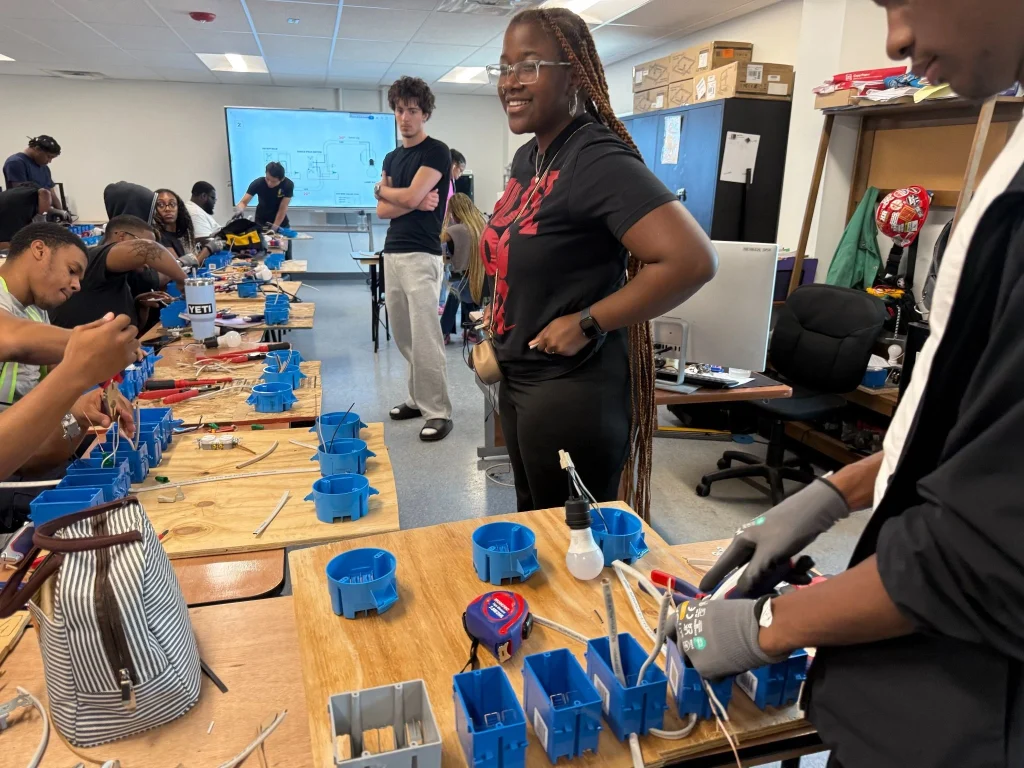
The electrician vs HVAC technician choice gets clearer once you understand the day-to-day work, because the two trades feel very different on the job even though they overlap on paper.
Electricians install, maintain, and repair electrical power, lighting, and control systems in homes, businesses, and factories. On a typical day, an electrician might run conduit and pull wire on a construction site, upgrade an electrical panel, troubleshoot a dead circuit, or connect an EV charger. The work is precise, code-driven, and increasingly tied to renewable energy and building automation. If this path interests you, our guide on how to become an electrician in Philadelphia walks through the steps in detail, and the essential electrician tools every modern electrician should know gives a sense of the gear you will actually use.
An HVAC technician works on heating, ventilation, air conditioning, and refrigeration systems that control temperature and air quality. A typical shift might include installing a new furnace or heat pump, diagnosing why an air conditioner is not cooling, recovering and recharging refrigerant, replacing a compressor, or performing seasonal maintenance. HVAC work blends mechanical, electrical, and airflow knowledge, and it is heavily service-oriented, which means strong customer communication is part of the job. The fast-growing shift toward electric heating makes heat pump installation training one of the most valuable HVAC skills right now.
Notice the overlap: HVAC technicians do real electrical work every day, and electricians sometimes wire HVAC equipment. That shared ground is exactly why the electrician vs HVAC technician question comes up so often, and why hands-on training in either trade builds skills that transfer.
Electricians have a slight edge on paper. The Bureau of Labor Statistics projects electrician employment to grow 9% from 2024 to 2034, with about 81,000 openings a year, while HVAC technician employment is projected to grow 8%, with about 40,100 openings a year. Both rates are described as much faster than the 3% average for all occupations.
So in the electrician vs HVAC technician job outlook debate, electricians win narrowly on raw growth and total openings, largely because it is a bigger occupation and because electrification is accelerating. HVAC technicians’ salaries are expected to grow from 2026 to 2034, according to data suggested by the BLS. The nation’s push toward EV charging, solar and wind integration, battery storage, grid modernization, and AI data centers runs through electrical work, and much of the projected hiring is replacement demand as older workers retire. This is a big reason why manufacturing and automation jobs in Philadelphia are booming in 2026.
HVAC is not far behind, and its demand is exceptionally stable. Every building needs heating and cooling, equipment eventually fails, and the shift toward energy-efficient systems and electric heat pumps is generating new installation and retrofit work. HVAC also carries less exposure to construction slowdowns because so much of the work is essential service and repair. For a prospective student, the honest answer is that both trades offer excellent security; electricians lead slightly on volume, while HVAC offers steadier year-round service demand.
Electricians earn slightly more on average, but the gap is small. The national median wage is $62,350 for electricians and $59,810 for HVAC technicians, per BLS May 2024 data. In practice, specialization, overtime, union membership, and local market conditions move individual pay far more than the trade you pick.
Here is how earnings tend to progress, using national medians alongside typical Philadelphia-area ranges compiled from current regional compensation data. Treat the local figures as approximate ranges that vary by employer, certification, and overtime.
| Career Stage | Electrician (approx.) | HVAC Technician (approx.) |
| Entry-level (Philadelphia area) | $45,000 – $55,000 | $45,000 – $52,000 |
| Experienced (Philadelphia area) | $60,000 – $80,000 | $60,000 – $75,000 |
| Specialized / union (Philadelphia area) | $85,000+ | $80,000+ |
| National median (BLS 2024) | $62,350 | $59,810 |
Two points matter for anyone comparing electrician vs HVAC technician pay. First, HVAC technicians often earn strong overtime during peak heating and cooling seasons, which can close the gap quickly — our breakdown of HVAC pay by state and where technicians earn six figures shows how far specialization can push earnings. Second, the top earners in both trades are specialists; on the electrical side, our electrician salary guide to making your first $100K maps how experienced and industrial electricians reach the top of the scale. In Philadelphia, union electricians and experienced HVAC technicians both routinely clear the figures above. The practical conclusion: choose based on the work you want to do, because the earning ceiling is high in each.
Not sure which pays off for your goals? PTTI’s program matchmaker can help you compare the electrical and HVAC pathways against your interests in a couple of minutes.
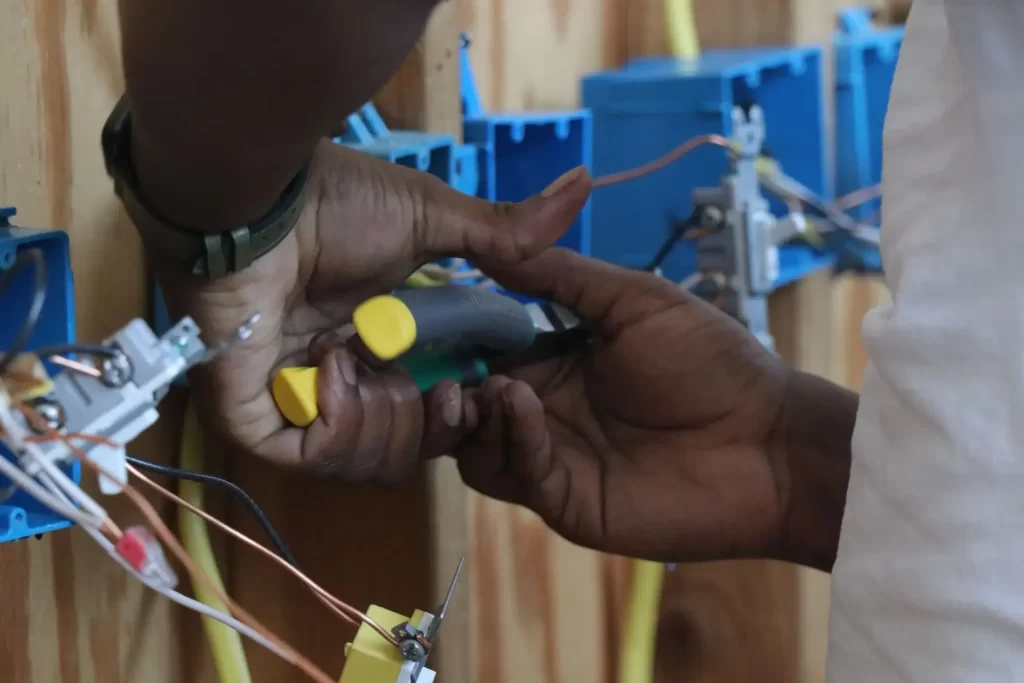
Training length is where the electrician vs HVAC technician paths differ most, and it often decides the question for people who want to start earning quickly.
Becoming a fully licensed electrician is the longer road. Most electricians enter through an apprenticeship that combines paid on-the-job hours with classroom instruction, typically running four to five years before qualifying for a journeyman license. Pennsylvania licenses electricians at the local or municipal level rather than statewide, and Philadelphia requires electrical work to be performed and permitted by properly registered electricians. Focused, hands-on foundational training accelerates this path by giving you the wiring, code, and safety fundamentals before you ever enter an apprenticeship, which is part of why manufacturing and automation program graduates are ahead of their college peers when it comes to job readiness.
HVAC generally offers a faster start. The typical entry point is a postsecondary nondegree award followed by on-the-job training, so a focused program can prepare you for entry-level work in months rather than years. The one non-negotiable credential is EPA Section 608 certification, which is federally required to handle refrigerants on nearly every HVAC job. Once earned, it does not expire. Many HVAC technicians also pursue NATE certification to signal advanced competency to employers. Because the credential bar is clear and reachable, HVAC is often the quicker route from training to a first paycheck.
For someone deciding between electrician vs HVAC technician primarily on speed, HVAC usually wins the race to employment, while electrical work offers a longer but well-defined ladder toward licensed, higher-ceiling roles.
Local demand is strong for both trades, and that is what makes training in Philadelphia worthwhile. The city combines old housing stock and commercial buildings that constantly need electrical upgrades and HVAC service with a steady pipeline of new construction, healthcare facilities, and industrial work. Data center growth, building electrification, and energy-efficiency retrofits are adding electrical and HVAC demand at the same time — a trend reflected across the region’s top in-demand trade careers for 2026.
That demand reaches well beyond Center City. Hiring for skilled electrical and HVAC workers spans North Philadelphia, South Philadelphia, West Philadelphia, Southwest Philadelphia, the neighborhoods across Upper North and South Philadelphia, and the surrounding counties in Pennsylvania and New Jersey. Because these skills are essential and portable, a technician trained through hands-on skilled trades programs in Philadelphia can find work across the tri-state region rather than being tied to a single employer or neighborhood.
For prospective students, this is the practical payoff of the electrician vs HVAC technician decision: in this region, either credential positions you for consistent local hiring rather than an uncertain job search.
The electrician vs HVAC technician comparison is not just about today’s pay; it is about where each trade is heading. Both are being reshaped by technology in ways that reward hands-on, well-trained workers.
On the electrical side, electrification is the dominant force. EV charging infrastructure, solar and battery storage, smart panels, building automation, and the enormous power demands of AI data centers are all driving sustained demand for electricians who understand modern systems. This is skilled, judgment-intensive work that is very difficult to automate, and it is opening new specialties such as EV charger installation services.
On the HVAC side, the shift to electric heat pumps and high-efficiency systems is the defining trend. As buildings move away from fossil-fuel heating, technicians who can install, commission, and service heat pumps and smart thermostats are increasingly valuable. HVAC controls are also getting more digital, blending mechanical skill with diagnostics and connectivity.
The common thread is clear: in both trades, the future belongs to technicians who train on current, industry-standard equipment. That is why applied learning matters so much when comparing electrician vs HVAC technician training options.
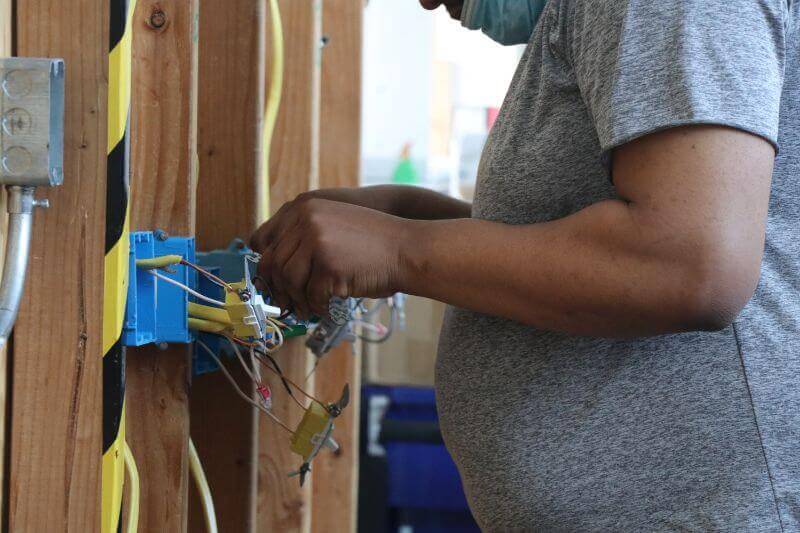
Choose based on the work environment and pace you prefer, not just the numbers, since the pay and outlook for electricians and HVAC technicians are so close. Pick electrical work if you like precise, code-driven installation and a structured ladder toward licensing. Pick HVAC if you want a faster start, seasonal variety, and hands-on service work.
Here is a simple way to decide:
If you are still torn between the trades and a degree, our comparison of trade school vs traditional college puts the cost and time trade-offs side by side. There is no universally “better” answer to electrician vs HVAC technician — the better trade is the one that matches how you like to work, because motivation is what carries you through training and into a strong first job.
Philadelphia Technician Training Institute (PTTI) offers hands-on training paths for both directions of the electrician vs HVAC technician decision. Its Manufacturing, Automation & Electrical Technician program builds the electrical fundamentals — wiring, controls, safety, and troubleshooting — that give you a real head start toward electrical and technician roles and apprenticeships. Its HVAC training focuses on the heating and cooling skills employers expect, including preparation for EPA Section 608 certification and real job-site readiness. You can see the full lineup on the PTTI programs page.
What both programs share is applied, lab-based learning on industry-standard equipment, taught by instructors with field experience. That approach matters because employers in both trades hire on demonstrated ability. Students also get support with certification readiness, résumé and interview preparation, and connecting to local hiring — the practical bridge from classroom to career. Veterans exploring a trade can also review PTTI’s veterans education benefits to help fund training.
Explore your options. Compare the electrical and HVAC pathways, then request information to talk through which fits you best.
The electrician vs HVAC technician question does not have a losing side. Electricians edge ahead slightly on growth and median pay, while HVAC technicians offer a faster start and rock-solid year-round demand. Both are far outpacing the average job market, both reward hands-on skill over degrees, and both keep Philadelphia hiring steadily. The right pick comes down to the work you want to do and how quickly you want to start earning.
Whichever way you lean in the electrician vs HVAC technician decision, the fastest route to a career is structured, hands-on training that gets you certification-ready and job-ready. That is exactly what PTTI is built to deliver.
Ready to decide? Explore PTTI’s programs, take the program matchmaker, schedule a campus tour, or contact admissions to start your skilled trades career in 2026. If you need help funding it, review your financial aid options to get started.
Both are excellent. Electricians have a slightly stronger outlook (9% projected growth vs 8%) and a higher national median wage ($62,350 vs $59,810), but HVAC offers a faster start and steady year-round service demand. The better choice depends on your goals and preferred work style.
Electricians earn slightly more on average, with a national median of $62,350 versus $59,810 for HVAC technicians. However, specialization, overtime, and union status often matter more than the trade itself. Top earners in both fields exceed $85,000 in the Philadelphia area.
HVAC is usually faster. It typically enters through a postsecondary award plus on-the-job training, so you can reach entry-level work in months. Full electrician licensing runs through a multi-year apprenticeship, though foundational training shortens the path.
HVAC technicians need EPA Section 608 certification to handle refrigerant, and many add NATE certification. Electricians need a state or local license, earned through documented apprenticeship hours and an exam. Philadelphia requires registered, licensed electricians for permitted work.
Both are highly resistant to automation because they involve hands-on, judgment-based work. Electrical work benefits from EV charging, solar, and data center demand, while HVAC benefits from the shift to electric heat pumps and efficiency retrofits. Both are strong long-term bets.
No. Neither electrician nor HVAC technician requires a four-year degree. Both are entered through hands-on training, certification, and apprenticeship or on-the-job experience, which makes them appealing lower-debt alternatives to college.
PTTI offers hands-on programs covering both the electrical pathway (through its Manufacturing, Automation & Electrical Technician program) and HVAC training, using industry-standard equipment and serving students across Philadelphia and the surrounding region.