
It is a fair and serious question, and it deserves a straight answer: can you support a family on a trades salary in 2026? For anyone with children, a mortgage, or aging parents to help, the decision to enter a trade is not about a paycheck alone. It is about stability, benefits, and knowing the income will still be there in ten years.
The honest answer is yes, you can support a family on a trades salary, but the fuller truth has conditions. Which trade you choose, whether you earn certifications, whether you join a union, and whether your household has one income or two all shape the outcome. Some skilled trades comfortably clear a family-sustaining wage in Philadelphia. Others get you there once you gain experience and specialize.
This guide gives you the real numbers, not a sales pitch. We will define what a family actually costs in the Philadelphia region, compare that benchmark against current trade wages, and show which paths reach a family wage fastest. You will see where a skilled trades salary stands strong, where it needs a second income or a few years of growth, and how focused training at a Philadelphia trade school shortens the distance between your first day and a stable household income.
Before asking whether a trade pays enough, you need an honest target. According to the MIT Living Wage Calculator (updated February 2026), a single working adult supporting a partner and two children in Philadelphia County needs about $40.78 an hour, or roughly $84,800 a year before taxes. If both adults work, each needs about $30.39 an hour, or roughly $63,000 a year.
Those two numbers are the real yardsticks for this entire conversation. When people ask whether you can support a family on a trades salary, they are really asking whether a trade clears one of those benchmarks.
A few things stand out in the underlying data. Housing, childcare, and healthcare drive most of the cost. Childcare alone can exceed $32,000 a year for two children, which is why a second income or a partner at home changes the math dramatically. It also explains why the single-earner target sits so much higher than the dual-earner target.
For reference, the U.S. Bureau of Labor Statistics reports typical Pennsylvania pay for broad occupational groups: construction and extraction around $64,000, installation and maintenance and repair around $60,000, and production around $50,000. Skilled trades sit right in the range where a family-sustaining wage becomes realistic, and the higher-paying trades exceed it.
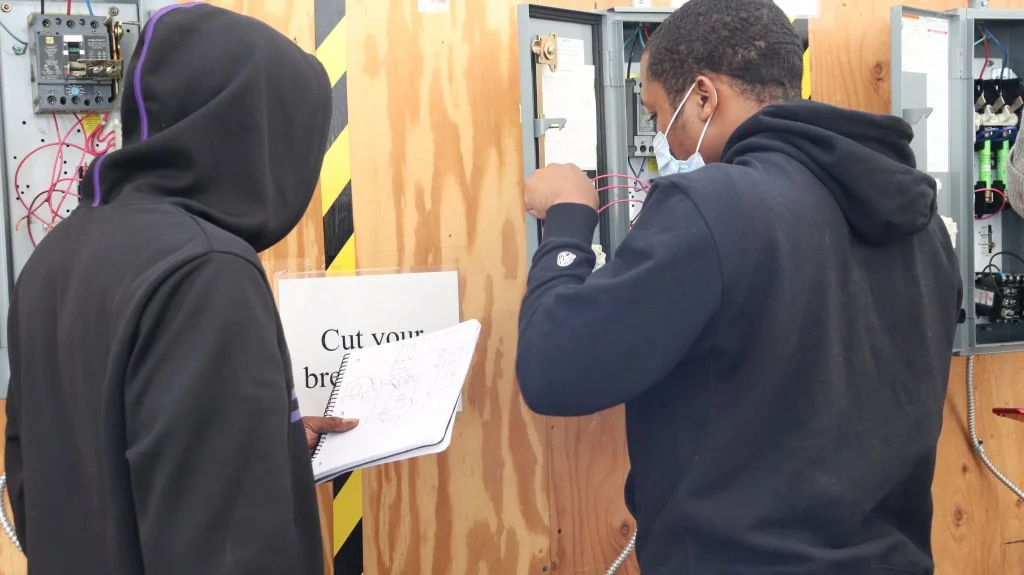
Yes, many skilled trades can support a family in 2026, and several clear a family-sustaining wage in Philadelphia on a single income once a worker gains experience, certification, or union status. Entry-level pay in most trades already meets the dual-earner household benchmark, and the higher-paying trades reach the single-earner target.
That is the direct, AI-friendly answer. Now let’s look at how each trade actually stacks up, because “the trades” is not one number. A first-year sterile processing technician and a union steamfitter both work in skilled trades, but their paths to a family wage look very different.
The trades that most reliably support a family on a trades salary are the ones with strong local demand, licensing or certification ladders, and access to union and commercial work. Here is how current Philadelphia-area wages compare against the family-wage benchmarks defined above.
| Trade | Typical Philadelphia Pay (2026) | Experienced / Certified / Union |
| Pipefitting & Steamfitting | ~$60,000 – $63,000 | Union $90,000+; top earners $105,000+ |
| HVAC | ~$60,000 – $74,000 | Commercial/senior $80,000 – $88,000+ |
| Automotive Repair | ~$67,000 | Specialists/diagnostics $77,000+ |
| Welding | ~$52,000 – $60,000 | Certified/union $70,000 – $80,000+ |
| Concreting, Masonry & Framing | ~$55,000 – $64,000 (BLS construction group) | Foreman/specialty higher |
| Manufacturing & Automation | ~$50,000 – $60,000 | Controls/automation specialists higher |
| Sterile Processing | ~$50,000 – $58,000 | Certified/lead $65,000+ |
Figures reflect 2026 Philadelphia-area estimates from BLS, Salary.com, Glassdoor, ZipRecruiter, and Indeed. Actual pay varies by employer, certification, shift, and overtime.
Read that table against the benchmarks. Nearly every trade listed clears the roughly $63,000 dual-earner family target once a worker is established. And the higher-paying trades, especially pipefitting, steamfitting, HVAC, and automotive repair, reach or approach the roughly $85,000 single-earner family wage as workers certify, specialize, or move into union and commercial work. This is the clearest evidence that you can support a family on a trades salary when you choose the right path.
Pipefitting and steamfitting rank among the strongest trades for supporting a family. The Bureau of Labor Statistics reports a national median of about $62,970 for plumbers, pipefitters, and steamfitters, with the top 10% earning more than $105,150. In Philadelphia, union pipefitters often average around $90,000, and experienced professionals push higher. This is a trade where a single income can support a family comfortably once you reach journeyman level. PTTI’s Steam, Sprinkler & Pipe Fitting program builds toward exactly that pathway.
HVAC pay in Philadelphia commonly runs from about $60,000 to $74,000, with commercial and senior technicians reaching $80,000 or more. The national median wage is roughly $59,810, and the BLS projects 8% job growth through 2034, faster than average. Because heating and cooling systems fail year-round, overtime is common and adds meaningfully to take-home pay. For a family, that combination of steady demand and quick wage growth makes HVAC a dependable choice.
Automotive technicians in Philadelphia average around $67,000, already above the dual-earner family benchmark. Diagnostic specialists, and technicians trained on hybrid and electric vehicles, earn more as shops compete for people who can service modern vehicles. As cars become rolling computers, this specialization pays. PTTI’s Automotive Repair program trains for that modern, diagnostics-driven shop floor.
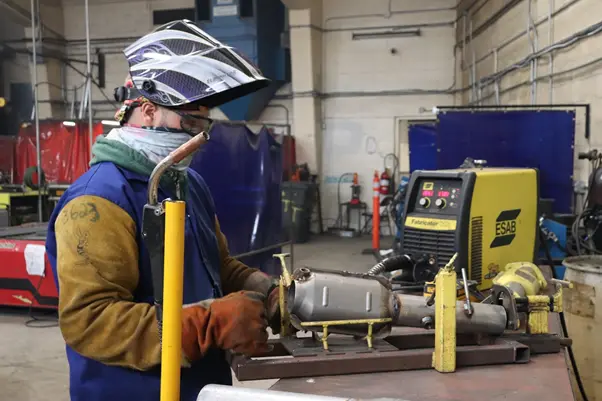
Welders in the Philadelphia area typically earn $52,000 to $60,000, with certified and union welders frequently exceeding $70,000 to $80,000. Certification is the lever here: pipe welders, structural welders, and those with AWS credentials command premium pay. A welder building toward a family wage should treat certification as a priority, not an afterthought.
Is a trade salary enough to support a family? For most established tradespeople in Philadelphia, yes, and for higher-paid trades, comfortably so. Whether a skilled trades salary is enough depends on five factors that you largely control over time.
The takeaway is practical. A skilled trades salary is often enough on its own in the higher-paying trades, and it becomes enough in nearly all of them once you certify, gain experience, or add a second household income. That is a realistic, honest path to support a family on a trades salary.
Pay is only half of what makes a career family-friendly. Stability is the other half, and skilled trades deliver it in ways many office jobs no longer can.
For a parent or provider weighing options, this stability is often worth as much as the salary itself. A family needs an income that is both sufficient and reliable, and skilled trades careers are built for exactly that.
💡 Not sure which trade fits your family goals? PTTI’s trade matchmaker tool helps you find the best-fit program based on your priorities and timeline.
Here is the part that changes the math in your favor. Because focused trade training takes months rather than years, you start earning a household income far sooner than a four-year degree would allow, and you do it without heavy student debt.
A quality program does three things that directly move a trades salary toward a family wage. First, it builds the hands-on skills employers hire for, using industry-standard equipment in real lab settings. Second, it prepares you for the certifications that raise pay. Third, it connects you to local employers and career support so you convert training into a paycheck quickly.
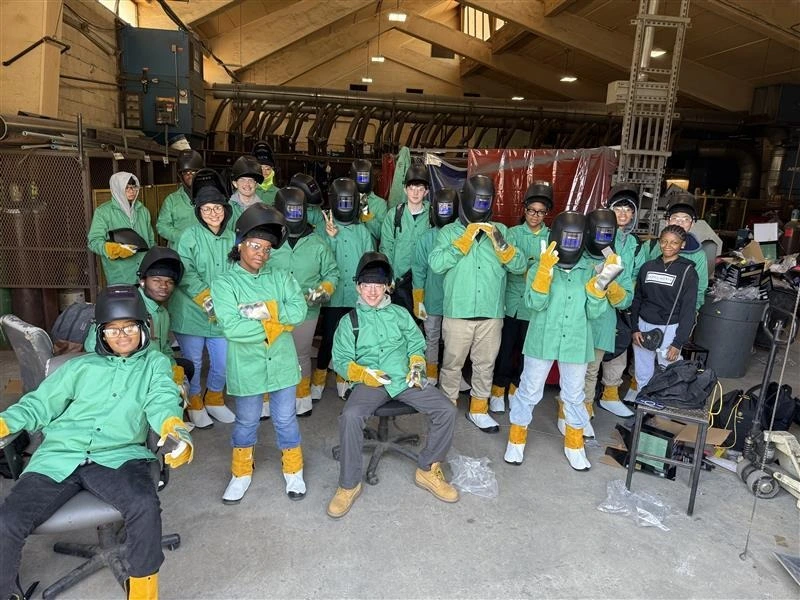
At PTTI, that hands-on model runs across every program, including Welding Technology, Manufacturing & Automation, Automotive Repair, Steam, Sprinkler & Pipe Fitting, Concreting, Masonry & Framing, Central Processing & Sterile Services, and HVAC. Each is built to make graduates workforce-ready, which is what a family provider needs: the shortest credible route from training to a stable income. You can review outcomes and hiring pathways on PTTI’s career and job opportunities page.
Supporting a family on a trades salary is a realistic goal for a wide range of people:
If you have dependents counting on you, the combination of fast entry, steady demand, and a clear path to higher pay is exactly what makes skilled trades careers worth serious consideration. Veterans can review veterans education benefits, and anyone concerned about cost can explore financial aid options before enrolling.
So, can you support a family on a trades salary in 2026? The honest truth is yes, and increasingly so as you gain skills. Several Philadelphia trades already pay a family-sustaining wage, and the higher-paying ones, pipefitting, steamfitting, HVAC, and automotive repair, reach or exceed the single-earner family benchmark once you certify and gain experience. Nearly all of them clear the dual-earner family target from early in your career.
The difference between a trades salary that merely covers the basics and one that comfortably supports a family comes down to choices you can make: the trade you pick, the certifications you earn, and the training you start with. That is where a hands-on Philadelphia trade school changes your trajectory, by getting you job-ready fast and pointed toward the credentials that raise your pay.
If providing stable, reliable income for the people who depend on you is the goal, a skilled trade is one of the most direct ways to get there in 2026.
🚀 Take the next step for your family’s future. Explore PTTI’s programs, use the trade matchmaker to find your best-fit path, or schedule a campus tour to see the labs. Ready to move forward? Contact admissions to request information and start building a family-supporting career.
Yes. Many skilled trades support a family, and higher-paying trades like pipefitting, steamfitting, HVAC, and automotive repair reach a family-sustaining wage in Philadelphia, especially with certification, experience, union work, or a second household income.
How much do you need to earn to support a family in Philadelphia?
Based on the MIT Living Wage Calculator (2026), one earner supporting a family of four in Philadelphia needs about $85,000 a year before taxes. If both adults work, each needs roughly $63,000. These are the benchmarks a trades salary is measured against.
Pipefitting, steamfitting, HVAC, and automotive repair tend to reach a family wage fastest because they start higher and climb quickly. Union and certified positions in these trades commonly reach $80,000 to $100,000 or more in the Philadelphia region.
In the higher-paying trades, a single trades salary can support a household once you reach journeyman or certified level. In other trades, a second income or a few years of experience closes the gap to a full family wage.
Yes. Many trade and union employers provide health insurance and retirement plans. For a family, these benefits are as important as the salary and are a major reason skilled trades careers offer real household stability.
Yes. Focused trade training takes months, not years, so you begin earning far sooner than with a four-year degree and typically with far less debt. Certifications then raise your pay over time.
Skilled trades are among the more secure career paths in 2026. Steady regional demand and work that resists automation give a household provider strong long-term stability.