
Few decisions carry more weight than the one students make about what to do after high school. Yet many young people, career changers, and their families make that decision based on assumptions that stopped being true decades ago. Outdated skilled trades myths still shape how people talk about welding, pipefitting, automotive work, manufacturing, drywall, and other hands-on careers, and those myths quietly steer capable students away from some of the most stable, well-paying opportunities in the 2026 economy.
The gap between perception and reality has rarely been wider. Employers across Philadelphia and the wider region cannot find enough trained hands, wages are rising, and the work is more technical than ever. Meanwhile, the same tired misconceptions keep circulating: that trades are a fallback, that they do not pay, that robots will take over, that the work is only for a certain kind of person. This article takes the most damaging myths about skilled trades one by one and measures each against current data and real hiring conditions.
If you have ever hesitated about the trades because of something you heard rather than something you checked, this is the piece that sets the record straight. By the end, you will understand what skilled trades careers actually offer in 2026, and why a hands-on program at a Philadelphia trade school may be one of the smartest moves a student can make.
Ideas have consequences, and few ideas cost students more than the belief that the trades are somehow a lesser path. When a talented high school senior rules out welding or manufacturing without ever visiting a shop, or when a warehouse worker assumes a trade cannot pay the bills, a real opportunity disappears quietly. Multiply that across a city, and you get exactly the workforce shortage employers describe today.
The data tells a blunt story. According to industry surveys, roughly 92 percent of construction firms report difficulty finding qualified craft workers, and the Associated Builders and Contractors estimates the construction industry alone needs about 349,000 net new workers in 2026. At the same time, the workforce is aging: for every five experienced tradespeople who retire, only about two new workers step in to replace them. That imbalance is why the skilled trades shortage is now described as structural rather than temporary.
Here is the point that matters for students: a shortage of trained workers is an opportunity for anyone willing to train. The myths about skilled trades are not just wrong; they are actively costing individuals access to careers with security, upward mobility, and strong pay. Let us take the biggest ones apart.
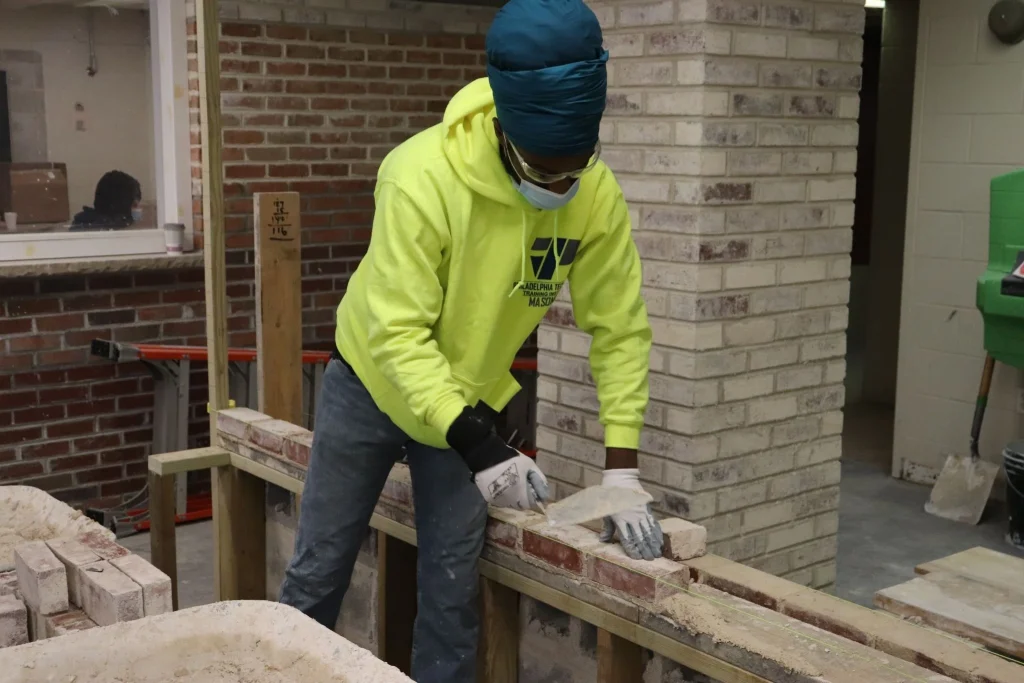
This is one of the most persistent skilled trades myths, and it is simply false. Trades offer clear, well-defined ladders. A new welder, pipefitter, or drywall technician can move from entry-level work to lead, then to foreman, superintendent, inspector, estimator, or project manager. Many advance further and open their own businesses.
The trades are, in fact, one of the few fields where you can start earning early and still climb into supervisory or ownership roles without accumulating debt along the way. Foremen and project managers who came up through the trades frequently earn six figures. Specialty certifications, such as advanced welding credentials or inspection qualifications, open doors to higher-paying, more selective work.
What actually determines advancement is reliability, skill, and a willingness to keep learning, not a four-year degree. That is why hands-on training matters: it front-loads the technical foundation that makes advancement possible. Students exploring the Welding Technology program or the Manufacturing & Automation program are not choosing a ceiling; they are choosing a starting line with a long runway ahead.
Among all trade school myths, the pay myth is the most financially damaging. The reality is that skilled trades careers pay competitively, and when you subtract student debt and count years of earning, the math often favors the trades.
Consider the timeline. A student who trains in a hands-on program can be working and earning in under a year. By the time a four-year graduate enters the workforce, the trade worker may already have several years of experience, raises, and zero educational debt. National wage data underscores the point: skilled trade medians land in solid middle-income territory, and top earners across trades regularly clear six figures.
| Myth | Reality (2026) |
| Trades pay little | Trades pay competitive wages, with experienced workers and specialists reaching six figures |
| College guarantees more | Debt and delayed earning often erase the college pay advantage in early career years |
| Only degrees lead to good money | High-paying trades without a degree are widely available and in demand |
The broader trend reinforces this. As qualified workers stay scarce, wages rise; construction wages have been growing faster than the national average across occupations. For students weighing trade school vs college, the honest answer is that both can lead to good outcomes, but the assumption that college automatically wins on money no longer holds. Anyone researching high-paying trades without a degree will find that the pay gap has narrowed or reversed in many fields.
This may be the most insulting of the myths about skilled trades, and it collapses the moment you step onto a modern job site. Today’s trades are deeply technical. Welders read blueprints and interpret welding symbols. Automotive technicians diagnose complex electronic and hybrid systems. Manufacturing technicians program and maintain automated equipment. Pipefitters work from precise specifications on high-pressure systems where a mistake has real consequences.
None of that is “less than.” It is a different kind of intelligence: spatial reasoning, precision, problem-solving, and applied judgment under real conditions. Many students who struggle in a lecture hall thrive in a hands-on environment because the work is concrete, immediate, and meaningful.
Choosing a trade is not settling. It is matching how you learn and what you value to a career that rewards those strengths. For a high school graduate who wants to be a technician rather than a traditional college student, the right path is not a consolation prize; it is a deliberate, informed choice. PTTI’s hands-on labs and industry-standard equipment exist precisely because this work demands real technical competency, not because it demands less.
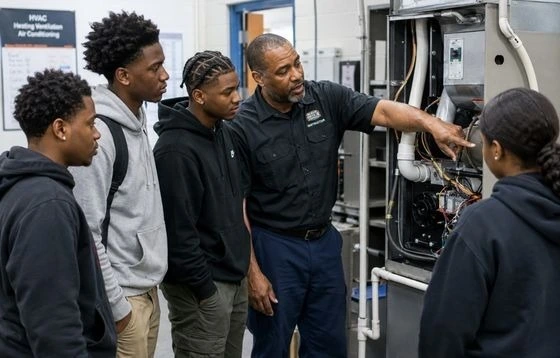
This fear is understandable in 2026, but the evidence points the other way. Automation tends to increase demand for skilled workers, because someone has to install, program, calibrate, maintain, and repair the new systems. As factories adopt more robotics, they need technicians who can keep that equipment running, which is one of the fastest-growing corners of the trades.
Hands-on, site-specific work is also genuinely hard to automate. A welder working overhead on infrastructure, a pipefitter solving a fit-up problem in a tight mechanical room, a technician troubleshooting a fault that is not in any manual, these tasks require human judgment that machines cannot replicate at scale. That is a large part of why so many skilled trades are now described as among the most AI-resistant careers available.
So the honest reframing is this: technology is changing the trades, not erasing them. The workers who train now, especially those comfortable with modern tools and systems, are positioning themselves on the right side of that change. This is exactly the mindset PTTI builds into programs like Manufacturing & Automation and Automotive Repair, where technology integration is treated as an advantage, not a threat.
Another of the common trade school myths holds that trade work is unpredictable, feast-or-famine, and the first to disappear in a downturn. The current labor market says otherwise. Demand across welding, pipefitting, manufacturing, automotive, construction, and sterile processing is being driven by forces that do not switch off with the seasons: aging infrastructure that must be repaired, reshored manufacturing, healthcare demand, and a retiring workforce.
Essential work is, by definition, durable. Buildings need maintenance, water and gas systems need service, vehicles need repair, hospitals need sterile instruments, and factories need technicians. That breadth is what gives skilled trades careers their stability; when one sector slows, another absorbs the slack, and trained workers move with the work.
For students specifically asking whether skilled trades are in demand, the answer in 2026 is unambiguous. Employers are competing for qualified people, and that competition favors anyone who arrives with real training and the right certifications.
Many students overestimate how long it takes to enter the trades, and that misconception, another entry on the list of skilled trades myths, causes real hesitation. In reality, focused hands-on programs are built around job readiness, not semesters of unrelated coursework. Depending on the field, a motivated student can complete training and be prepared for entry-level work in well under a year.
The trades are largely performance-based. Employers care whether you can do the work, weld to standard, wire a panel, service a system, finish drywall to a clean level, far more than they care about how many years you sat in a classroom. That is why accelerated, practical training works: it concentrates on the exact skills that make you hireable.
For adult learners and career changers who cannot afford to disappear from the workforce for four years, this speed is decisive. It is the difference between “someday” and “this year,” and it is why so many people are quietly moving from low-wage jobs into skilled trades careers through short, intensive programs.
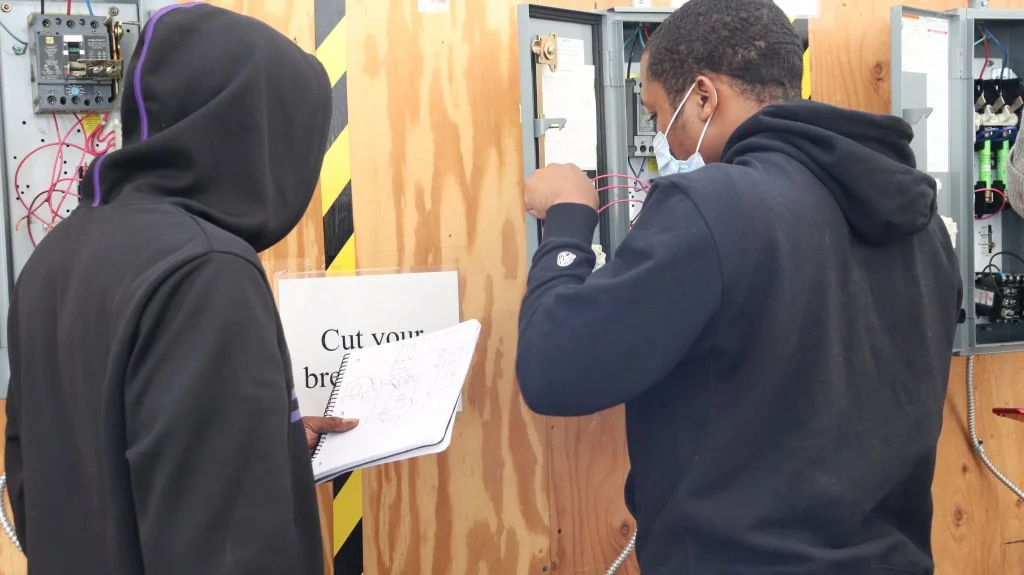
Finally, one of the most limiting myths about skilled trades is that they belong to a narrow demographic. That picture is changing, and quickly. Women are entering the trades in growing numbers, and the field is increasingly open to veterans, immigrants, adult learners, and people making a second or third career move.
Nothing about welding, pipefitting, automotive work, or manufacturing is inherently gated by background. What the work rewards, precision, reliability, problem-solving, and a strong work ethic, is distributed across every group of people. Employers facing a serious shortage have every incentive to hire and support qualified workers wherever they come from.
For a woman considering welding or the skilled trades, or a career changer worried they have missed their window, the reality is encouraging: the door is open, the demand is real, and supportive, hands-on training exists to help you walk through it. This is where a trade school in Philadelphia focused on career readiness makes a measurable difference.
| Common Myth | The 2026 Reality |
| Trades are a dead-end | Clear ladders to lead, foreman, inspector, and business owner |
| Trades don’t pay | Competitive wages, debt-light, six figures achievable |
| Trade school is a fallback | Technical, demanding, cognitively rich work |
| AI will replace trades | Automation increases demand for skilled technicians |
| Work is unstable | Structural, essential, shortage-driven demand |
| Training takes years | Job-ready in under a year via hands-on programs |
| Not for women or changers | Increasingly diverse and open to all backgrounds |
If these myths have been shaping your thinking, PTTI’s Matchmaker tool can help you cut through the noise and see which hands-on program fits your goals, strengths, and schedule.
Philadelphia Technician Training Institute exists to close the gap between what people assume about the trades and what the trades actually offer. Every myth above is answered not with a slogan but with the structure of the training itself: real labs, industry-standard equipment, certification-focused instruction, and a direct line into local workforce demand.
Students can train across a range of in-demand fields, from Welding Technology and Steam, Sprinkler & Pipe Fitting to Drywall, Framing & Finishing, Manufacturing & Automation, Automotive Repair, and Sterile Processing. Each program is built around the same principle: prepare students with practical, employer-relevant skills so they graduate ready to work, not just ready to keep studying.
Serving students across North, South, and West Philadelphia and the surrounding region, PTTI connects hands-on training to real careers and job opportunities. That combination, practical skill plus local demand, is what turns a training decision into a career.
The most expensive thing a student can do in 2026 is let outdated skilled trades myths make a career decision for them. The trades are technical, well-paid, in demand, and open to more people than ever, and the fastest way to prove that to yourself is to look closely rather than take the myths at face value.
Take the next step with PTTI. Use the Matchmaker tool to find the program that fits you, explore all of PTTI’s hands-on programs, or review careers and job opportunities in the skilled trades. When you are ready, request information, schedule a campus tour</a, or contact admissions to start building a career the myths said you couldn’t have.
The most common skilled trades myths are that trades are a dead-end, that they pay poorly, that trade school is only for people who couldn’t get into college, that automation will replace the work, that it is unstable, that training takes years, and that the field is not open to women or career changers. Each is contradicted by 2026 data.
No. This is one of the biggest trade school myths. Skilled trades careers offer clear advancement, from entry-level to lead, foreman, inspector, estimator, and business owner. Additional certifications open higher-paying, specialized roles, and many tradespeople reach six figures over time.
Not typically. When you account for years of earning without debt, high-paying trades without a degree often match or beat early-career college outcomes. As worker shortages continue, trade wages have been rising faster than the national average.
Unlikely for hands-on, site-specific work. Automation tends to increase demand for skilled technicians who install, program, and maintain advanced systems. Many trades are considered among the most AI-resistant careers because they require human judgment that machines cannot easily replicate.
Yes, strongly. Roughly 92 percent of construction firms report difficulty hiring qualified workers, and hundreds of thousands of net new workers are needed. An aging workforce and steady infrastructure, manufacturing, and healthcare demand keep skilled trades careers in high demand.
No. Modern trades are technical and demanding, involving blueprints, diagnostics, automation, and precision work. Trade school suits students who learn best by doing and want a fast, practical path into a real career, regardless of their academic history.
Absolutely. The trades are increasingly diverse and open to women, veterans, adult learners, and career changers. The skills that matter, precision, reliability, and problem-solving, are not tied to any background, and employers are actively hiring qualified people.
Start by comparing programs, pay, and demand, then use PTTI’s Matchmaker tool to match your strengths and goals to a specific hands-on program. Visiting a campus and talking with instructors is one of the fastest ways to separate skilled trades myths from reality.