
Starting a career in construction requires much more than reading textbooks or watching demonstrations. Today’s employers want workers who can confidently handle tools, follow safety procedures, and contribute effectively on an active job site. For that reason, choosing a training program that emphasizes real job-site style practice can make a significant difference in your future career.
Suppose you’re searching for the best place to learn concrete masonry and framing in Philadelphia. It’s important to look beyond classroom instruction alone. Instead, choose a program that combines technical knowledge with extensive hands-on experience. This approach not only helps you understand construction concepts but also prepares you to apply them in real-world situations.
In this guide, you’ll learn what to look for in a quality construction training program, why practical learning matters, and how Philadelphia Technician Training Institute (PTTI) helps students build job-ready skills.
Construction is a practical profession where every day brings new challenges. Workers are expected to measure accurately, operate equipment safely, read blueprints, and collaborate with others to complete projects on time.
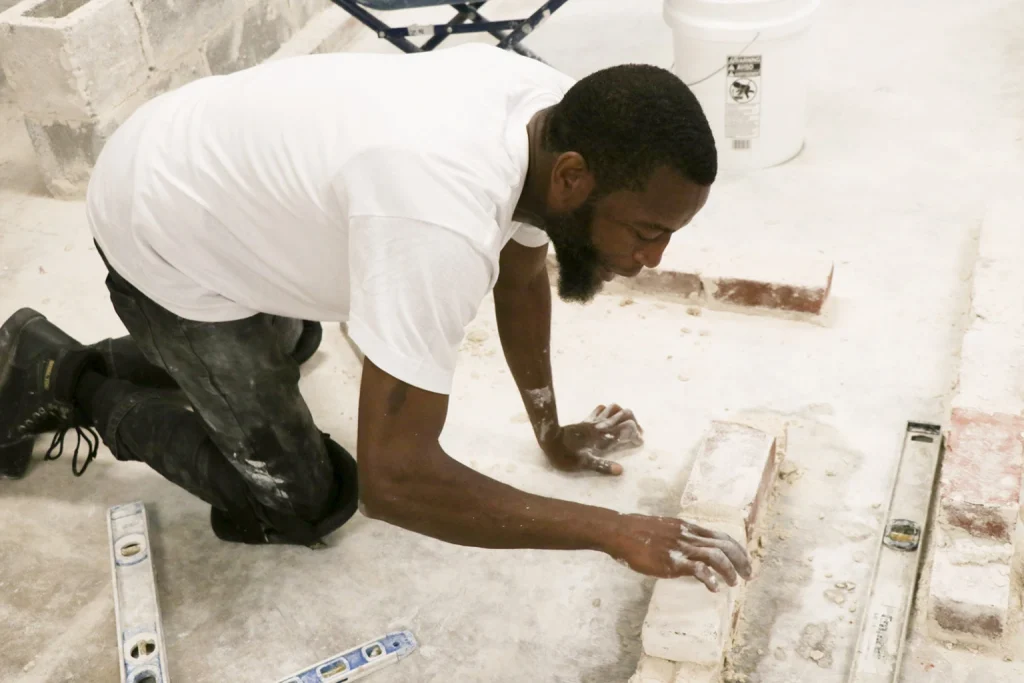
While classroom instruction provides a solid foundation, hands-on experience allows students to turn that knowledge into practical skills. As a result, graduates often feel more confident when entering the workforce because they have already practiced many of the tasks they’ll perform on the job.
With hands-on construction training, students can:
* Build confidence using professional tools
* Learn proper construction techniques
* Practice solving real-world problems
Consequently, employers often appreciate candidates who already understand the pace and expectations of a construction environment.
Since not every construction program offers the same learning experience, it’s important to compare curricula carefully. A well-rounded program should combine classroom instruction with practical training across multiple construction disciplines.
Concrete is one of the most commonly used building materials in residential, commercial, and industrial construction. Therefore, students should understand both the theory behind concrete work and the techniques required to perform it correctly.
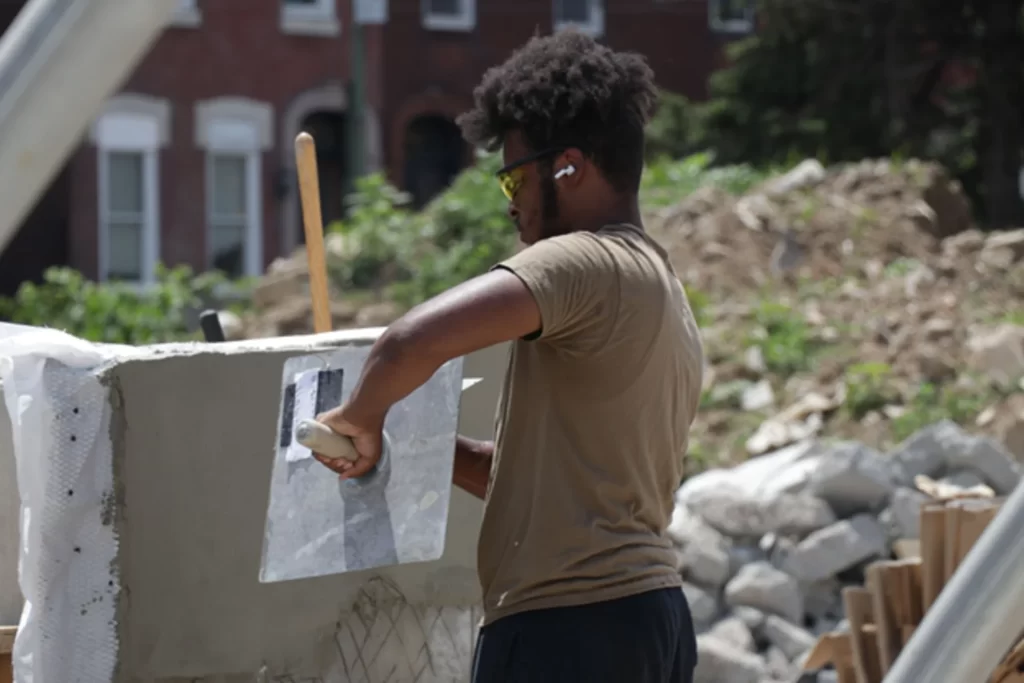
* Mixing concrete
* Preparing work areas
* Building concrete forms
* Finishing concrete surfaces
* Reinforcing concrete
* Basic concrete repair techniques
By practicing these skills repeatedly, students develop accuracy, consistency, and confidence.
Likewise, masonry requires precision, patience, and attention to detail. Whether constructing walls or repairing existing structures, proper technique is essential.
Students typically learn:
Brick Laying: Learn to place bricks accurately, maintain even spacing, and build strong, straight walls.
Concrete Block Installation:Develop skills in positioning and securing concrete blocks while maintaining proper alignment.
Mortar Mixing: Learn to mix cement, sand, and water in the correct proportions to produce workable, durable mortar.
Joint Finishing: Practice finishing mortar joints neatly to improve the strength, weather resistance, and appearance of masonry.
Wall Alignment:Learn to use levels, plumb lines, and other tools to keep walls straight, level, and properly positioned.
Masonry Repairs: Gain basic skills in repairing damaged bricks, blocks, cracks, and deteriorated mortar joints.
Construction Measurements: Learn to take accurate measurements and read basic construction plans to ensure precise and efficient work.
Moreover, regular hands-on practice helps students improve both their efficiency and craftsmanship.
Framing serves as the structural backbone of most buildings. Because of this, framing professionals remain in demand across many sectors of the construction industry.
A comprehensive framing curriculum should cover:
Wood Framing:Learn to build strong structural frameworks using timber.
Metal Stud Framing:Gain practical skills in using metal studs for walls and partitions.
Wall Construction: Learn how to frame and assemble interior and exterior walls accurately.
Floor Framing:Understand joists, beams, and other components used to create stable floor structures.
Roof Framing Basics: Learn the fundamentals of roof structures, including rafters and trusses.
Material Layout: Practice planning and positioning materials efficiently before construction.
Measuring and Cutting:Develop accurate measuring and cutting techniques to ensure proper fit and reduce material waste.
As students complete framing projects, they gain a better understanding of how buildings are assembled from the ground up.
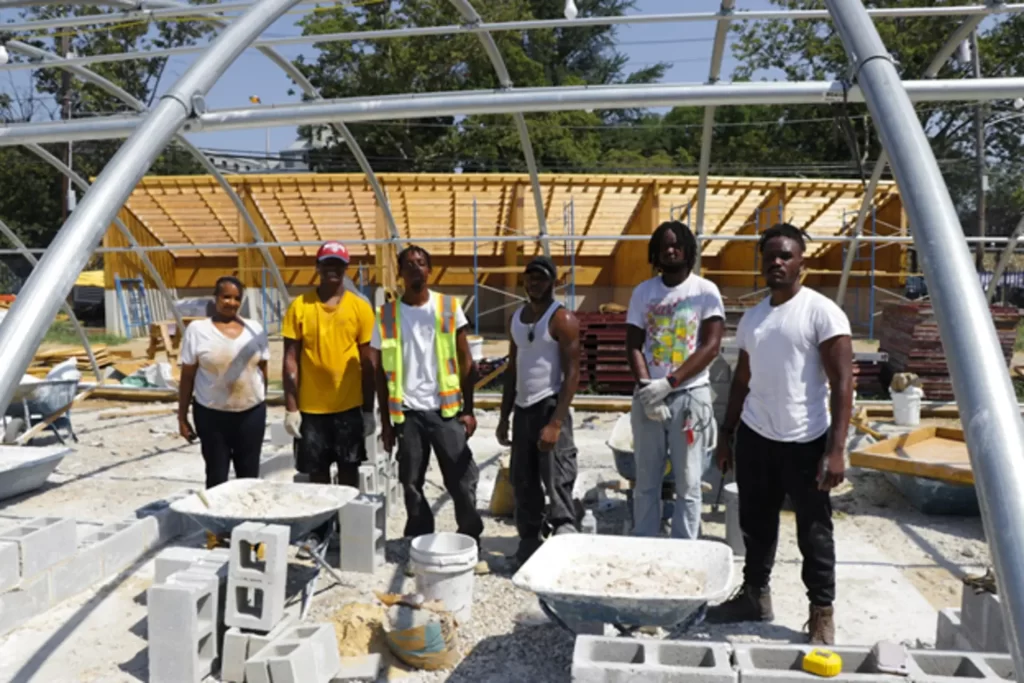
One of the biggest advantages of quality construction training is the opportunity to learn in an environment that closely resembles an actual job site.
Rather than simply watching demonstrations, students actively participate in projects using industry-standard tools and techniques. In addition, they learn how to manage tasks while following professional safety procedures and working as part of a team.
This type of practical learning helps students:Alt Text: Concrete masonry and framing students working on a hands-on construction project.
* Follow construction procedures
* Handle building materials correctly
* Work safely around equipment
* Complete projects efficiently
* Communicate effectively with teammates
* Solve construction challenges with confidence
Ultimately, these experiences help bridge the gap between training and employment.
In today’s construction industry, blueprint reading is a valuable skill. Nearly every project begins with construction drawings, making it essential for workers to understand how to interpret them correctly.
Students should learn to read and understand:
Floor Plans:Understand the layout and arrangement of rooms, walls, doors, and other features.
Building Elevations:Learn to interpret exterior views and building heights.
Dimensions: Accurately understand measurements, distances, and sizes shown on drawings.
Construction Symbols: Recognize commonly used symbols for different building elements and materials.
Notes: Read important instructions, specifications, and construction details.
Material Schedules: Understand lists and details of the materials required for a project.
Furthermore, blueprint reading improves communication among contractors, supervisors, and different construction trades, helping projects run more smoothly.
Safety is a priority on every construction site. Therefore, quality training programs incorporate safety practices throughout the entire curriculum instead of treating them as a separate topic.
Students should become familiar with:
* Personal protective equipment (PPE)
* Safe lifting techniques
* Ladder safety
By developing safe work habits early, students are better prepared to meet employer expectations.
Another factor to consider is the experience of the instructors. Learning from professionals who have worked in the construction industry allows students to benefit from real-world knowledge and practical advice.
Experienced instructors can teach:
* Industry-standard techniques
* Efficient work methods
* Common mistakes to avoid
As a result, students gain insights that extend beyond textbooks and classroom lectures.
Completing a construction program is only the beginning. Finding the right job is the next important step.
Fortunately, schools that offer career services help students prepare for employment through:
* Resume assistance
* Interview preparation
* Job search guidance
Because of these services, graduates often feel more confident as they begin their careers in the skilled trades.
For students seeking practical construction education, Philadelphia Technician Training Institute (PTTI) offers a Concreting, Masonry, Framing, and Construction Technician Program designed with hands-on learning at its core.
Instead of relying mainly on classroom lectures, students spend significant time developing practical skills in environments that reflect real construction job sites. Throughout the program, they receive guided instruction while practicing industry-relevant techniques.
Students receive training in:
* Concrete placement and finishing
* Masonry techniques
* Wood framing
* Blueprint reading
Most importantly, PTTI combines technical instruction with practical application, helping students graduate with greater confidence and job-ready skills.
After completing training, graduates may pursue entry-level positions such as:
* Construction Technician
* Concrete Worker
* Masonry Technician
* Brick Mason Helper
* Framing Technician
* Construction Laborer
* Building Maintenance Technician
* Residential Construction Worker
As workers gain experience, they can continue advancing into supervisory positions or specialized construction trades.
Before making your decision, consider asking these important questions:
* Does the program emphasize hands-on learning?
* Will I use industry-standard tools?
* Are instructors experienced construction professionals?
* Is blueprint reading included?
* Is safety integrated throughout the curriculum?
* Does the school provide career services?
* Can I tour the training facilities?
Answering these questions will help you choose a program that aligns with your goals.
Choosing the right construction training program is an investment in your future. Although classroom instruction is important, practical experience is what helps students develop the confidence and technical abilities employers expect.
If you’re looking for the best place to learn concrete masonry and framing in Philadelphia, prioritize a program that offers extensive hands-on training, experienced instructors, safety education, blueprint reading, and career support.
Philadelphia Technician Training Institute (PTTI) provides students with opportunities to develop practical construction skills in a learning environment that reflects today’s job-site expectations. Whether you’re beginning your first career or exploring a new path in the skilled trades, practical training can provide the strong foundation needed for long-term success.
PTTI offers hands-on construction training that combines concrete masonry, framing, blueprint reading, and safety instruction to help prepare students for entry-level construction careers.
Hands-on training allows students to practice real construction techniques, build confidence with tools, and gain experience that closely reflects actual job-site conditions.
Students typically learn concrete placement, masonry work, framing, blueprint reading, construction safety, tool usage, measurements, and basic construction mathematics.
Many trade schools, including PTTI, offer career services such as resume assistance, interview preparation, and employer connections to support graduates during their job search.
Yes. The skilled trades continue to offer strong career opportunities for individuals who enjoy hands-on work, problem-solving, and building a long-term future in the construction industry.
Read More