
Looking for an online central sterile processing certificate program? You’ve picked one of the fastest, most flexible paths into healthcare. This field doesn’t require years of nursing school or a mountain of prerequisites. However, most people don’t even know this career exists until they stumble across it. Below, we break down what this program covers, why it’s growing, and how to get started.
Central sterile processing technicians clean, sterilize, and prepare medical instruments for surgery. Additionally, every hospital, surgical center, and clinic depends on this work happening correctly, every single time. Therefore, this role sits at the center of patient safety, even though it happens behind the scenes.
Here’s what the job actually involves:
Overall, it’s detail-focused work that keeps hospitals running safely.
Online training removes many barriers that prevent people from starting healthcare careers. Moreover, this format works especially well for people juggling jobs, family, or limited transportation options. It is flexible, as in the meantime, you can do other household chores.
Here’s why online training is growing in popularity:
Therefore, this path opens healthcare careers to people who couldn’t otherwise make it work.
The central processing training program blends online learning with hands-on experience. The hands-on training provides students with exposure to the tools and equipment. However, hybrid classes offer an opportunity to learn from anywhere. That’s roughly how balanced training time looks in a well-built hybrid program.
| Training Component | Focus Area | Why It Matters |
| Online Lecture | Sterilization theory, safety standards | Builds core knowledge base |
| Hands-On Lab | Equipment handling, sterilization process | Core daily skill for the job |
| Externship | Real hospital or clinic setting | Bridges training and employment |
Overall, this combination prepares students for the exact environment they’ll work in.
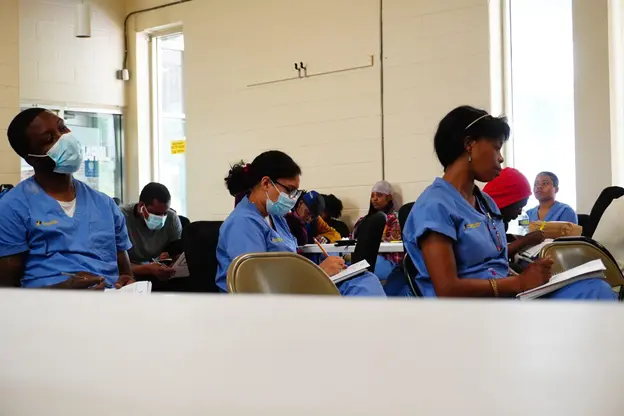
Hospitals and surgical centers constantly need trained sterile processing technicians. Additionally, this demand doesn’t slow down, since surgeries and medical procedures happen every single day, regardless of the economy.
According to the U.S. Bureau of Labor Statistics, employment in medical support occupations, including surgical equipment preparers, is projected to grow faster than average over the next decade, based on analysis of the health care industry.
Here’s why job security stands out in this field:
Here’s a general look at how pay tends to break down by experience:
| Experience Level | Hourly Range |
| Entry-Level | $16 – $20 |
| Mid-Career | $21 – $26 |
| Experienced/Certified | $27 – $34+ |
Note: These figures are general estimates — worth verifying against current BLS or state labor data before publishing.
Moreover, technicians who earn certification, such as CRCST, often move into that higher pay range faster than those without it.
Enrolling in a certification that enables you to learn from anywhere for a few days. This kind of certification program, especially in health care, providing online certification and hybrid learning, is rare. Especially in health care . Therefore, completing an online central sterile processing certificate program with a recognized certification gives you a real edge. Therefore, employers look for candidates who can prove their skills, not just describe them.
Common certifications in central processing programs includes:
Finally, certification gives graduates a clear advantage when applying for open positions.
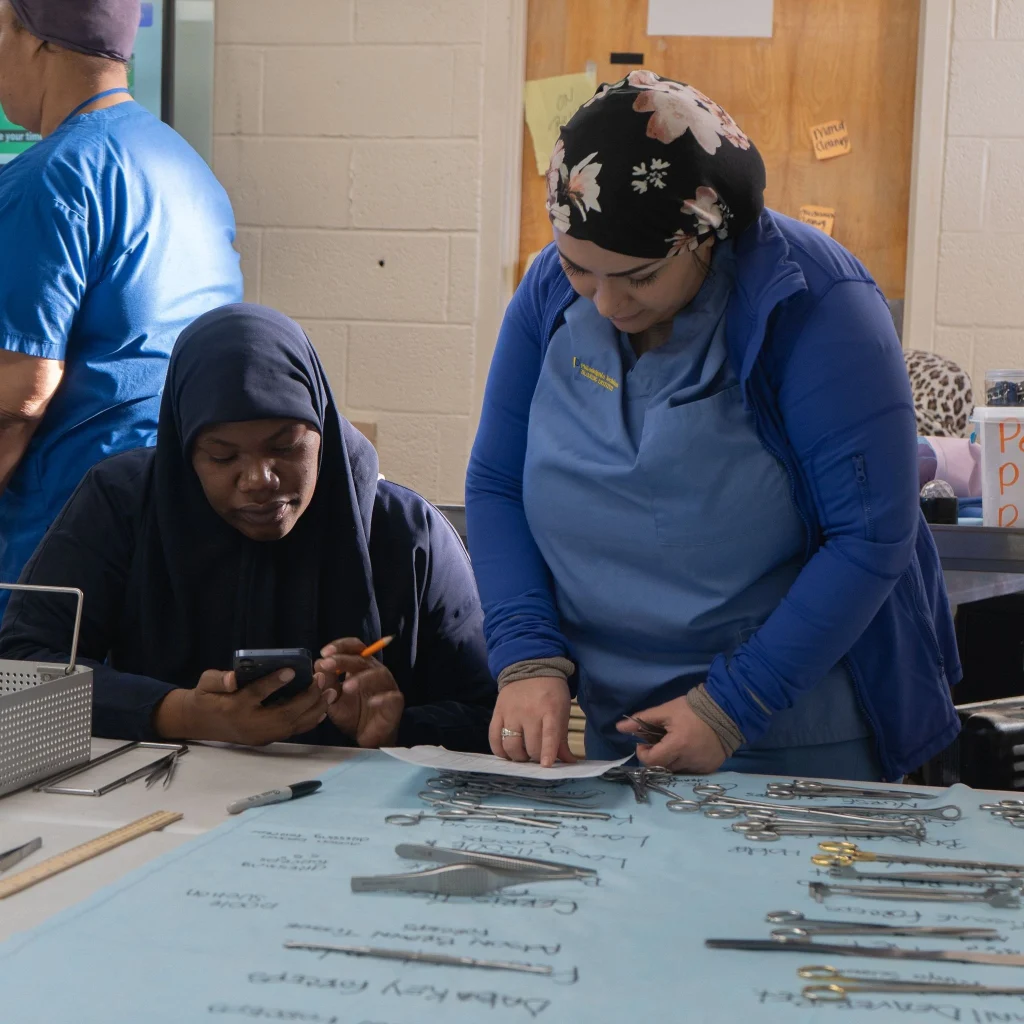
Getting into this field doesn’t require years of preparation. Here’s the basic process:
Therefore, even though coursework happens online, real hands-on experience remains part of the path.
Philadelphia Technician Training Institute (PTTI) offers a hybrid Sterile Processing and Central Services program totaling 1,100 hours. PTTI offers hybrid classes for central processing; the hybrid and flexible online classes are” ONLY” available for the Sterile Processing program. No other program gets to be conducted online. All the programs are run at the PTTI Campus. This includes 200 hours of online lecture, 500 hours of hands-on lab training, and 400 hours of real externship experience. Additionally, the program leads to CRCST certification and aligns directly with HSPA industry standards.
Here’s how enrollment works:
Finally, PTTI reports a placement rate of nearly 92%, meaning most graduates land jobs in the field.
An online central sterile processing certificate program offers a real, practical way into healthcare without years of school. This is the only online program that also meets hybrid criteria. So that students, working professionals, or mothers can attend hybrid classes. However, the strongest programs still include hands-on lab and externship hours, not just online lectures. Between flexible scheduling, strong job demand, and industry-recognized certification, this path checks a lot of boxes for people ready to start something new. Overall, this career proves you don’t need a traditional four-year route to build a stable future in healthcare.
If you are looking for Hybrid classes in skilled trades. Central Processing program is the only skilled trade education program that offers this flexible schedule. No other classes or programs are offered in Hybrid Mode. Only online classes in sterile processing are available at PTTI. Ready to start your sterile processing career? Contact PTTI at 215-381-9403 or info@ptt.edu to speak with an advisor.
Yes, only the sterile processing program is available in hybrid mode. Combining online lectures with hands-on lab and externship hours.
PTTI’s hybrid program totals 1,100 hours, combining online, lab, and externship training.
No. Most sterile processing technician jobs require certification, not a four-year degree.
Programs like PTTI’s lead to CRCST certification, aligned with HSPA industry standards.
Yes. PTTI accepts FAFSA applications under school code 042213.
Read More: