
Ask any high school senior in Philadelphia what comes after graduation, and most will say the same thing: college. That answer used to feel automatic. In 2026, it no longer is. Tuition keeps climbing, student debt keeps growing, and a four-year degree no longer guarantees a job. Meanwhile, employers across construction, manufacturing, and healthcare cannot find enough trained technicians to fill open roles.
That shift is why more students, parents, and career changers are asking a sharper question: is a skilled trade certification worth more than a college degree right now? The honest answer is that it depends on your goals, but for a growing number of people, the credential delivers a faster, cheaper, and more direct route to steady, well-paid work. This guide breaks down the real numbers behind trade school vs college in 2026, what a certification proves to employers, where a college degree still holds value, and how the choice plays out for students exploring a trade school in Philadelphia.
For many students, yes. In 2026, a skilled trade certification can be worth more than a college degree because it costs far less, takes far less time, and leads directly to in-demand work. A degree still matters for careers that legally require one, but for hands-on technical fields, certification often delivers a stronger, faster return.
The key word there is “career goal.” A certification and a college degree are tools built for different jobs. If your goal is to become a welder, an automotive technician, a pipefitter, or a sterile processing technician, a certification and real hands-on training will get you there faster than a bachelor’s program ever could. If your goal is to become a physician or an attorney, college is non-negotiable. The smart move in 2026 is to match the credential to the outcome, not to assume one path is automatically better.
Money is where the trade school vs college comparison becomes hard to ignore. National student loan debt has climbed past $1.8 trillion, and the average bachelor’s degree borrower graduates owing roughly $30,000, with many carrying far more once private loans and interest are added, according to figures reported by the Federal Reserve and the U.S. Department of Education.
Certification changes that math entirely. Trade programs are shorter, more focused, and cost a fraction of four years of tuition, housing, and fees. Instead of borrowing tens of thousands of dollars and delaying income, trade students often finish, get certified, and begin earning within a year.
Consider the timeline difference in plain terms:
| Factor | Skilled Trade Certification | Four-Year College Degree |
| Typical time to complete | Months to about a year | About four years |
| Overall cost | Lower, focused tuition | Often significant debt |
| When you start earning | Quickly after certification | Usually delayed until graduation |
| Debt at completion | Low or none | Frequently $30,000+ |
| Skill focus | Job-specific, hands-on | Broad, often theoretical |
This is exactly why so many families now weigh trade school vs college as a genuine financial decision rather than a fallback. A degree that leads to a strong salary can still be worth the cost. But paying four years of tuition for a credential that does not guarantee a job is a real risk, and students are right to question it.

Speed is one of the biggest advantages of the trades. Many of these programs can be completed in under a year, which means graduates can enter the workforce while their college-bound peers are only halfway through a degree. That head start compounds over time.
Think about two 18-year-olds. One enrolls in a four-year program. The other enrolls in a focused trade program with hands-on training and finishes in months. By the time the college student graduates, the trade graduate may already have three or four years of paid experience, real certifications, and zero or minimal debt. That is a meaningful lead, not a small one.
For adults changing careers, this speed matters even more. A career changer, a veteran, or a working parent usually cannot afford four years out of the workforce. A short, practical program that leads to certification lets them retrain and return to earning quickly. This is a common reason adults choose a trade school in Philadelphia over a traditional college route.
The strongest argument for a skilled trade certification in 2026 is simple: employers are short on skilled workers and actively hiring. The construction industry alone needs roughly 349,000 net new workers this year, according to the Associated Builders and Contractors. In manufacturing, Deloitte and The Manufacturing Institute project that the sector could need as many as 3.8 million new workers by 2033, with a large share of those jobs at risk of going unfilled.
Several forces drive this shortage at once:
This is where a college degree and certification diverge sharply. Many degree holders graduate into crowded fields where openings are limited. Skilled trades workers often graduate into fields where employers compete for them. When demand outpaces supply, wages and job security tend to rise, and that dynamic currently favors people with certified, hands-on skills.
It is also worth noting that these jobs resist automation. The skilled trades depend on problem-solving in unpredictable, physical environments that machines and software cannot easily replicate. That durability is a big part of why a skilled trades career feels more secure to many young workers than a desk job.
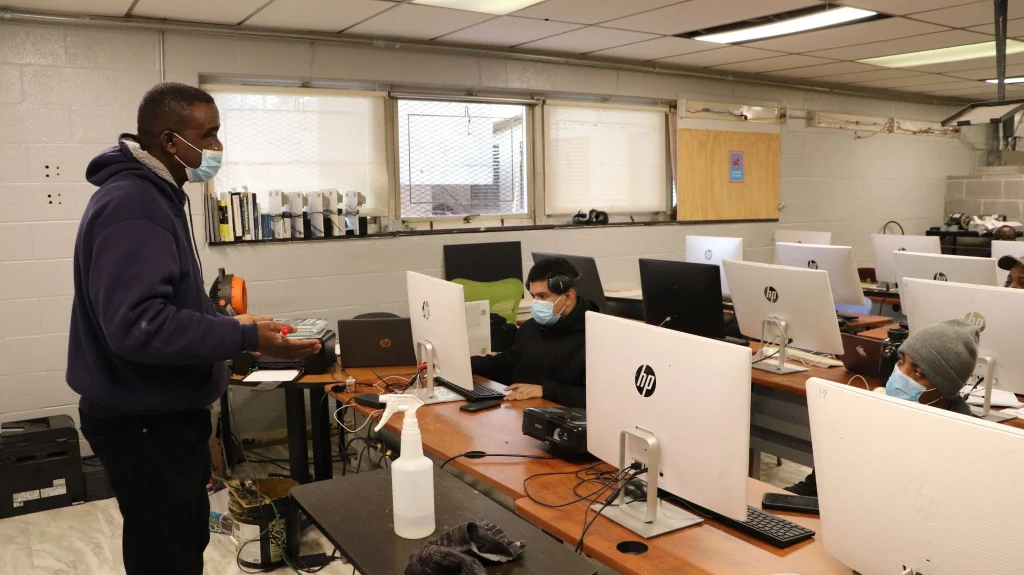
A college degree tells an employer you completed a broad course of study. A skilled trade certification tells an employer something more specific and, in the trades, more valuable: that you can do the job to a recognized standard. In technical fields, that proof of ability is what gets you hired.
Employers in the skilled trades consistently prioritize demonstrated competency over academic credentials. They want workers who can read a blueprint, follow safety procedures, operate equipment correctly, and produce quality work on day one. A certification earned through real hands-on training signals exactly that readiness.
Different trades recognize different credentials, but several stand out to hiring managers:
A strong program helps students prepare for and pass these exams, turning classroom learning into credentials employers actually search for. That is the practical difference certification makes: it converts training into hireable proof.
An honest comparison has to acknowledge that a college degree still holds real value for certain paths. This is not a case against college; it is a case for choosing the right tool.
A college degree remains essential for careers that legally or structurally require one. Doctors, lawyers, licensed engineers, teachers, and many research and management roles all depend on a degree. If your goal sits in one of those fields, no certification replaces it, and a four-year path is the correct investment.
The problem is not college itself. The problem is treating a degree as the only respectable option for everyone. Many students pursue expensive degrees without a clear career target, then graduate with debt and no direct path to work. For those students, a focused skilled trades career often would have delivered better outcomes. The goal is to be honest about what each credential does, then choose deliberately rather than by default.
For students weighing trade school vs college locally, choosing a trade school in Philadelphia puts you in a strong market for the trades. The region’s mix of infrastructure, manufacturing, shipbuilding, healthcare, and commercial construction keeps demand for certified technicians steady across Pennsylvania, New Jersey, and Delaware.
Pay in the trades is competitive, especially given how quickly you can start. Nationally, the median wage for construction and extraction occupations sits above the median for all occupations, and specialized, certified roles pay more. In the Philadelphia area, skilled trades workers in fields like welding, pipefitting, and automotive repair can build solid, growing incomes, with experienced and certified professionals earning well into higher brackets. Because certifications are portable, that earning power travels across the region.
The local job market rewards exactly what a certification proves. Fabrication shops, mechanical contractors, manufacturers, and healthcare facilities across the city need people who can step in with job-ready skills. For a high school graduate, a career changer, or an adult learner, training close to home at a trade school in Philadelphia keeps you near those opportunities from the start. You can explore PTTI’s range of skilled trades programs to see which local career paths line up with your goals.
Choosing well starts with your goal, not with pressure or assumptions. A few honest questions make the decision clearer:
There is no single right answer for everyone. But for students who want a direct, affordable path into stable work, the trade school vs college math increasingly points toward the trades. If you are still comparing, PTTI’s guide on trade school versus traditional college walks through the trade-offs in more detail.
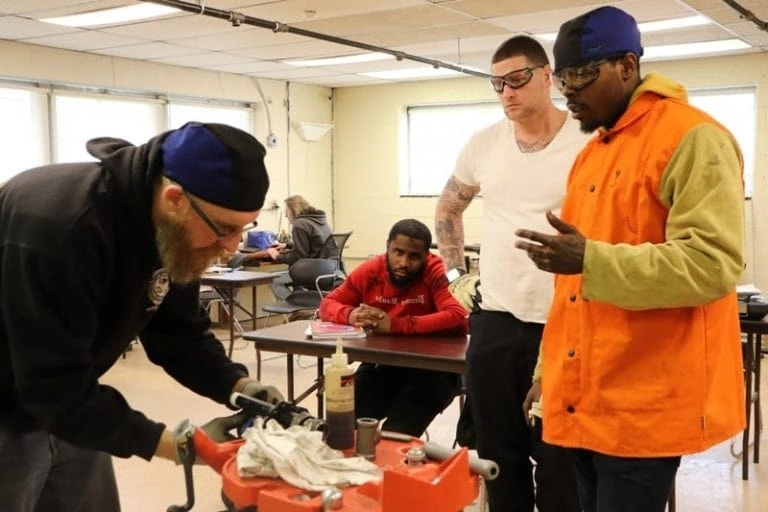
A certification is only as strong as the training behind it. Employers can tell the difference between someone who watched videos and someone who built real skills on real equipment. That is why hands-on training matters so much in the trades.
Quality programs put students in working labs with industry-standard tools, guided by instructors who have done the work. Students practice safety, troubleshooting, measurement, and technique until the skills become reliable. They also build the workplace habits employers expect: reliability, communication, and teamwork. This kind of applied learning is what turns a certificate into genuine job readiness.
Philadelphia Technician Training Institute (PTTI) is built around this model. As a trade school in Philadelphia, PTTI focuses on practical, hands-on training across welding, manufacturing and automation, automotive repair, steam and pipefitting, concreting and masonry, and central processing and sterile services. The goal is straightforward: prepare students for the certifications employers want and the jobs the region needs. For anyone weighing a skilled trades career against a college degree, that direct connection between training and employment is the point.
The old assumption that a college degree is always the smarter choice no longer holds up in 2026. Costs have risen, debt has ballooned, and employers in the skilled trades cannot find enough certified workers. For students who want a direct, affordable path to stable, well-paid work, a skilled trade certification frequently delivers more value than a four-year degree, and it does so faster and with far less financial risk.
That does not make college wrong. It makes the trades a serious, respectable, and often smarter option that deserves equal consideration. The right decision comes from matching the credential to your goal, being honest about cost and time, and choosing training that actually prepares you for the job. If a hands-on, career-focused path sounds right for you, take the next step and explore PTTI’s skilled trades programs in Philadelphia.
For hands-on technical careers, often yes. A skilled trade certification costs less, takes less time, and leads directly to in-demand work. A college degree still wins for careers that legally require one, so the best choice depends on your specific goal.
Many do, and some pay more, especially once you factor in low debt and an earlier start. Certified, experienced tradespeople in fields like welding and pipefitting can earn strong salaries, and demand keeps pushing wages up.
Many programs take under a year. Because the training is focused and hands-on, students can complete a certification and enter the workforce far faster than the four years a typical college degree requires.
Yes. A trade school in Philadelphia is a strong fit for adults changing careers, since short programs let you retrain quickly without leaving the workforce for years. Veterans and working parents especially benefit from the faster timeline.
Look for programs that prepare you for recognized credentials such as OSHA, AWS, ASE, CRCST, or NCCER, depending on the trade. These certifications prove your skills to employers and strengthen your job prospects.
No. Many skilled trades career paths stack into advanced certifications, specializations, and even business ownership. Starting with a certification keeps your options open while you earn.