
Finding high-paying jobs without a degree is no longer a pipe dream; it is the new reality of the modern industrial economy. For decades, the “American Dream” seemed to lie behind a $100,000 gate: the four-year university degree. Without those pieces of paper, you were often left with nothing but back-breaking manual labour or low-wage service jobs. However, while the world was watching intently, the industry was transforming silently.
Today, an automobile is less of a mechanical task and more of a computer on wheels. Similarly, the production floor is no longer just steam and iron; it is an ecosystem of autonomous sensors and robotics. This move is opening up a lot of high-paying jobs without a degree.
With the passage of time, the line between “blue collar” and “white collar” occupations is blurring. Now, this new type of labour force combines the accuracy of digital diagnostics with the endurance of conventional tradespeople.
TL;DR – What we’ll be covering:
In this blog, we’ll describe the “new collar” movement, analyse the problem of “degree inflation” and show you exactly how to pivot into a tech-enabled profession in as little as 6-8 months.
First things first: we need to get a better grasp of the fundamentals and the big picture. The typical image of a blue-collar job includes a mechanic covered in grease or a welder wearing a heavy protective mask. Although these positions are essential to our infrastructure, they are undergoing transformations.
A new-collar job is one that involves specialised technical training, but not necessarily a college degree. These jobs sit in the sweet spot of the modern economy. They want you to know how a machine works physically, but also how to plug them into a laptop to tell machines what to do. This evolution is the primary driver behind the rise of high-paying jobs without a degree.
For instance, if you are in Philadelphia, the message is the same – companies are clamouring for workers who can cross this digital barrier.
Years of “degree inflation” pushed people into debt for jobs they might have learned on the fly. Research demonstrates that after the 2008 recession, advertisements for bachelor’s degree jobs rose 10 percent—even for jobs that didn’t really require them. Consequently, this made it harder to find high-paying jobs without a degree.
Moreover, this produced a “skills gap.” Companies had offices full of degree-educated personnel but vacant workshops because no one knew how to program a CNC machine or replace a high-voltage battery. Now the pendulum is swinging back toward high-paying jobs without a degree.
Moving forward, firms have pioneered “skills-first” hiring. They know that graduates of targeted skilled trades programs are more immediately useful than someone who spent four years studying general theory. Therefore, this is the green light for a young person in Philly who wants to be independent.
If you are not yet “tech-savvy,” don’t worry. This change from blue-collar jobs or manual labour to software diagnosis isn’t about learning to code in complex ways; rather, it’s about how to use the instruments of the modern trade.
At the Philadelphia Technician Training Institute (PTTI), it’s all about “doing.” We understand this difference – Technical service jobs are not something you read about; you climb under the hood of a car or inside a circuit breaker. You master the manual craft first, then you add on the digital skills to qualify for high-paying jobs without a degree.
Modern skilled trades programs educate their students to converse in computer language.
While traditional colleges are 4-year institutions, PTTI programs are designed to be completed in 6-8 months. This means you can enter the employment sooner, begin making money, and escape the “Vanilla Offer Void” where you have a broad degree but no particular, marketable expertise.
Beyond the basics, the income is just the beginning. A “new collar” position provides a “future-proof” future.
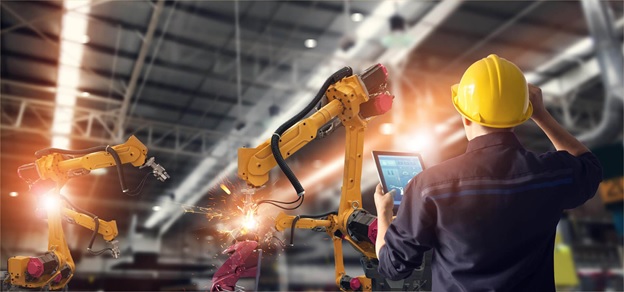
Here’s the blueprint if you’re ready to stop working hard and start “working smart”:
Do you love cars? Construction? Electronics? Now there is a “new collar” version of every trade. Choose the industry that you’re most excited about.
Consider skilled trades programs and place an emphasis on certification rather than diplomas. All of the classes ought to include digital multimeters, modern tools, and the fundamentals of computer-aided design (CAD).
In technical service occupations, a certification is a “proof of work”. It tells an employer, “I can actually do this task”. It’s often worth more than a transcript.
When you interview, be sure to emphasise your ability to work both physically and digitally. Say you can repair the equipment and know what the sensors are saying.
PTTI graduates in Philadelphia are living proof of this transition. For example, they are not just mechanics; they are called “High-Voltage Technicians.” They’re not simply workers; they are ‘Industrial Automation Specialists’.
Know from PTTI’s alumni itself.
PTTI offers a 6-8-month bridge for young Philly professionals to transition into high-paying jobs without a degree and provide career longevity.

In summary, the bridge between manual labour and software diagnostics is not a canyon. Instead, that bridge is constructed on a specialised talent. If you are weary of hearing that a four-year degree is the only path to success, then it’s time to consider the new-collar jobs or paths.
What You Should Do Next:
First, don’t allow “degree inflation” to stand in your way. Secondly, browse high-paying jobs near you that don’t require a degree today. Finally, explore the 6-month track that meets your goals on the PTTI Programs Page.
Independence is only a skill away!

A: Basically, a blue-collar job usually entails manual work and physical labour. The new collar profession combines such practical abilities with technology, like software diagnostics, data analysis, or IT tools, often without having a four-year degree.
A: Yes. Many skilled trades programs, like those at PTTI, focus only on the technical skills companies demand. It skips the general education “filler” classes and allows you to get the skills you need to do technical service jobs in a fraction of the time.
A: In fact, it is new-collar workers who are managing the automation. Simple manual operations can be automated, but the person who can diagnose, repair, and optimise the software-driven machinery is still vital.
A: Not in the least. Modern diagnostic instruments are user-friendly. If you know how to use a smartphone and follow logic, you can learn how to use the digital tools necessary for these high-paying jobs without a degree.
Read more: