
Drywall finish levels are the construction industry’s shared language for how smooth, complete, and paint-ready a gypsum board surface needs to be. Running from Level 0 to Level 5, this six-step scale tells hangers, finishers, painters, and general contractors exactly what a wall or ceiling should look like before the next trade takes over. For anyone training in a hands-on drywall framing and finishing program, learning this scale is not optional, because it is the difference between passing an inspection and tearing out finished work.
In Philadelphia’s busy commercial and residential construction market, the ability to deliver the correct finish on demand is what separates an entry-level helper from a well-paid specialist. This guide explains drywall finish levels 0 to 5 in plain terms, shows what each stage is used for, and explains why the higher levels of drywall finish directly affect how much you earn. Whether you are a high school graduate, a career changer, or a veteran exploring the trades, knowing this scale gives you a real advantage on the job site and in your paycheck.
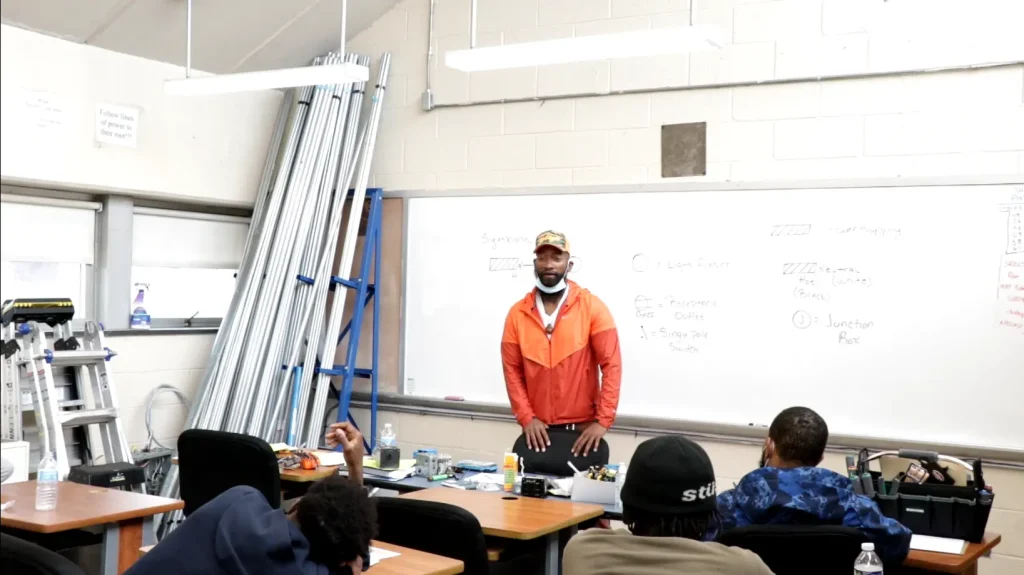
Drywall finish levels are a standardized zero-to-five scale describing how much taping, coating, and smoothing a gypsum board surface receives before painting or decoration. Developed jointly by major trade associations under the GA-214 standard, the levels of drywall finish give every trade on a project a shared benchmark for quality and expectations.
The standard was created so architects, contractors, finishers, and painters could stop arguing about what “finished” means. Instead of a vague request for a smooth wall, a blueprint or specification simply calls out a required level. That single number defines how many coats of joint compound go on, whether fasteners get covered, and whether the surface is skim coated. This is why drywall taping is never one-size-fits-all: the same wall might be finished five different ways depending on what happens to it next. Understanding the scale protects finishers from doing too little and failing inspection, or doing too much and giving away unpaid labor.
Here are the levels of drywall finish explained one stage at a time, from the roughest to the most refined. Each level builds on the one before it.
Level 0 means no taping, finishing, or accessories are required at all. It applies to temporary construction, mock-ups, or situations where the final decoration has not yet been decided. You will rarely see Level 0 called out as a finished product, but it is a useful starting point that describes bare, freshly hung board.
At Level 1, joint tape is set into a single coat of joint compound over all joints and interior angles. Tool marks and ridges are acceptable, since the drywall taping at this stage is purely functional. This level is common in concealed spaces such as the area above ceilings, service corridors, and plenums where the assembly is hidden from view. It is sometimes informally called fire taping when used to help maintain a fire rating.
Level 2 adds a coat of joint compound over the embedded tape, plus a coat over all fasteners and accessories. It is used in garages, warehouses, and other utilitarian spaces, and as the substrate beneath tile. The surface is functional but not smooth enough for a quality paint job.
Level 3 involves two separate coats of compound over the tape and one over the fasteners, producing a surface ready for medium to heavy textures or heavy-grade wall coverings. It is not appropriate under smooth flat paint, because the texture is expected to hide minor imperfections.
Level 4 adds a third coat over the joints and a second coat over the fasteners, and then everything is sanded smooth. This is the most common residential standard, well suited to flat paints, light textures, and lightweight wall coverings. Most homes and standard commercial spaces are finished to Level 4.
A Level 5 drywall finish takes everything in Level 4 and adds a thin skim coat of joint compound, or a product manufactured for the purpose, across the entire surface. This creates the most uniform, defect-free wall possible. This finish is specified for gloss and semi-gloss paints and for areas exposed to severe or critical lighting, where any flaw would be obvious.
| Level | What Is Done | Typical Use |
| Level 0 | No taping or finishing | Temporary work; final finish undecided |
| Level 1 | Tape embedded in one coat | Concealed areas above ceilings, plenums |
| Level 2 | One coat over tape and fasteners | Garages, warehouses, tile substrate |
| Level 3 | Two coats over joints | Medium to heavy texture, heavy wall coverings |
| Level 4 | Three coats, sanded smooth | Flat paint, light texture (most common) |
| Level 5 | Level 4 plus full skim coat | Gloss paint, critical lighting, premium spaces |
The main difference is the skim coat. Level 4 sands the joints and fasteners smooth and is perfectly acceptable under flat paint and light texture. A Level 5 drywall finish adds a full skim coat over the entire wall, evening out differences in texture and surface porosity so the finished surface looks flawless under glossy paint or harsh, raking light.
Critical lighting is the deciding factor. When light from a large window or a row of wall sconces travels almost parallel to a wall, it exaggerates every ridge, sanding scratch, and fastener dimple. Glossy paint does the same thing by reflecting light unevenly. Because a Level 5 skim coat neutralizes those variables, it is the standard for lobbies, high-end residential feature walls, and any space where appearance is scrutinized. It also costs more, because the extra skim coat adds labor, material, and drying time.
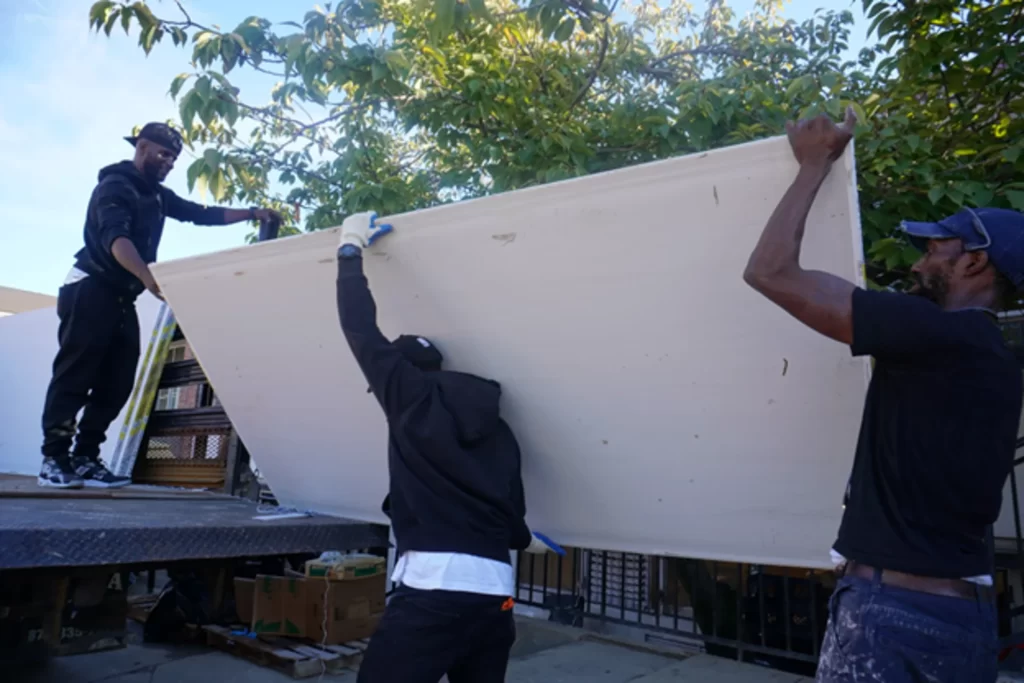
Higher drywall finish levels take more skill, time, and material, so the work is billed at a premium, and the finishers who can reliably deliver it earn more. A worker who only hangs board or tapes to Level 2 sits at the bottom of the pay scale, while a drywall finisher who can skim-coat a Level 5 wall for a high-end space sits near the top.
Think of it as a ladder. Helpers and hangers handle board and basic drywall taping. Above them, a skilled finisher produces clean Level 4 work all day. At the top, specialists who can deliver a Level 5 finish under critical lighting are the hardest to replace, and the natural path from finisher to foreman rewards that expertise with supervisory pay. In short, the levels of drywall finish you can produce set the ceiling on what an employer will pay you.
Union membership, overtime, and specialization push earnings higher still. Complex commercial projects with tight specifications reward finishers who understand the standard and can prove their quality, which is exactly why drywall finishing is a skill that scales with pay rather than plateauing early.
According to the U.S. Bureau of Labor Statistics, drywall installers, ceiling tile installers, and tapers earned an average of roughly $45,500 in 2024, but tapers, the finishing specialists, earn considerably more, with median pay near $30 an hour and top earners approaching $48 an hour. That gap is the whole point: finishing skill pays.
Earnings vary by experience, employer, specialization, union status, and region, so treat these as reference figures rather than guarantees. In the Philadelphia area, steady commercial and residential construction, plus overtime on deadline-driven projects, supports competitive wages for drywall finishers who can work to specification. As experience grows and workers take on Level 5 and supervisory roles, income climbs further.
| Career Tier | Typical Pay Position |
| Entry-level hanger / helper | Lower tier; learning board and basic taping |
| Experienced taper / finisher | Middle-to-upper tier; steady Level 4 work |
| Level 5 specialist / foreman | Highest tier; premium and supervisory pay, sometimes approaching six figures |
Nationally, drywall employment is projected to grow about 4 percent from 2024 to 2034, roughly as fast as the average for all occupations, with steady replacement demand as experienced workers retire. Because the work is hands-on and done on site, it is difficult to automate, which adds long-term stability to the trade.
For most painted walls, Level 4 is the standard before flat or matte paint. If you plan to use semi-gloss, gloss, or enamel paint, or the wall sits under critical lighting, you need a Level 5 drywall finish so imperfections do not telegraph through. Textured surfaces generally require only Level 3.
Matching the finish to the paint is where many beginners lose money or damage their reputation. Applying glossy paint over a Level 4 wall almost always reveals flaws that force expensive rework. Learning proper drywall finishing techniques, and knowing which level each situation calls for, is a core part of becoming a reliable, employable finisher.
The fastest way to build real drywall finishing skills is hands-on practice on full-size walls, guided by instructors who have worked in the field. Watching a video cannot teach the feel of loading a taping knife, feathering a seam, or pulling a clean skim coat, so shop time matters.
A quality program takes you from hanging board through every stage of drywall taping and finishing, up to a full Level 5 skim coat. Along the way you learn to read blueprints and specifications, use hand tools and automatic taping tools, sand safely, and meet the standards inspectors and contractors expect. Building the skills beginner drywall technicians need for certification early makes you far more employable.
At Philadelphia Technician Training Institute, students practice these skills in a realistic shop environment on the drywall framing and finishing campus, working with industry-standard materials and tools. That practical foundation is what turns a beginner into a finisher an employer will trust with high-value Level 5 work.
Drywall finish levels are more than a technical checklist; they are a map of where the money is in the trade. Level 0 through Level 4 covers the everyday work, while a clean Level 5 drywall finish is the high-skill work that commands premium pay and keeps you in demand. Once you understand the levels of drywall finish and can produce them on demand, you become the kind of finisher employers compete to hire.
If you want to turn that knowledge into a career, build job-ready drywall finishing skills with hands-on training at PTTI. Reach out to the admissions team or schedule a campus visit to take the first step.
The scale actually has six stages, numbered Level 0 through Level 5. Level 0 is bare board, Levels 1 through 3 add progressively more drywall taping and compound for concealed or textured surfaces, Level 4 is the standard for flat paint, and Level 5 adds a full skim coat for the smoothest possible result.
A Level 5 drywall finish is used where walls must look flawless, such as under glossy or semi-gloss paint and in spaces with severe or critical lighting like lobbies and feature walls. It adds a skim coat over the entire surface to eliminate any visible variation.
Drywall finishers can earn solid, competitive wages, and finishing specialists typically out-earn basic installers. Federal data shows tapers earning median pay near $30 an hour, with top earners approaching $48 an hour, and pay rises further with Level 5 skill, overtime, union membership, and supervisory roles.
Basic drywall finishing can be learned in a focused hands-on program in a matter of months, though mastering a clean Level 5 skim coat takes ongoing practice. Structured training shortens the learning curve by giving you supervised repetition on real walls.
Pennsylvania does not issue a specific statewide license to work as a finisher, though local permitting and contractor registration rules can apply, especially for self-employed contractors. This is general information, not legal advice, so verify current requirements with your municipality before bidding work.