
Searching for intensive welding training in Philadelphia that actually leads somewhere? You want more than just technique practice, you want a real path to a paycheck. Welding remains one of the most consistently in-demand skilled trades, but not every program delivers the same results. Below, we break down what intensive welding training should include, and how to find a program that connects directly to real employment.
Intensive welding training packs real, hands-on skill-building into a focused, efficient timeline. Skilled trades focus more on hands-on experience than on building theoretical knowledge. It deals with a problem-solving attitude. Additionally, this approach prioritizes shop time and technique practice over long stretches of classroom lecture.
Here’s what sets intensive training apart:
Therefore, intensive training gets students job-ready faster than a slower, more spread-out approach.
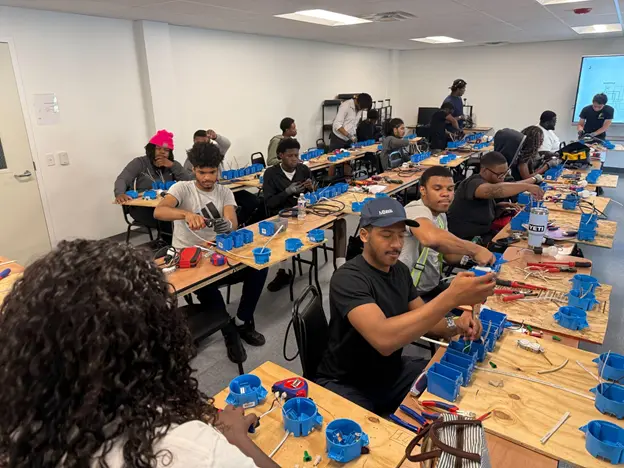
Not every welding program connects directly to employment. Moreover, a few key features separate training that leads to a job from training that leaves graduates unprepared.
Here’s what actually matters:
Therefore, checking for these features helps separate a strong program from a weak one.
A strong welding training program moves through a structured sequence combining safety, technique, and real fabrication practice. Picture a pie chart split into three sections: about 9% lecture, 69% hands-on shop work, and 22% real-world externship experience. That’s roughly how heavily hands-on shop time dominates a well-built welding program.
| Training Component | Focus Area | Why It Matters |
| Lecture | Safety, blueprint reading, theory | Builds foundational knowledge |
| Hands-On Shop | MIG welding, Stick welding, plasma cutting | Core daily skill for the job |
| Externship | Real job site fabrication work | Bridges training and employment |
Overall, this heavy hands-on ratio reflects exactly what welding employers expect from new hires.
Intensive training should cover the core techniques employers actually use on the job. Here’s what to look for:
All these welding techniques are covered in the Welding Technology program. Moreover, these techniques, tools, and equipment needed in a skilled trade program make students more versatile and hireable with employers and local business owners. Students at PTTI learn the basics and common challenges through hands-on tool exposure aligned with industry standards.
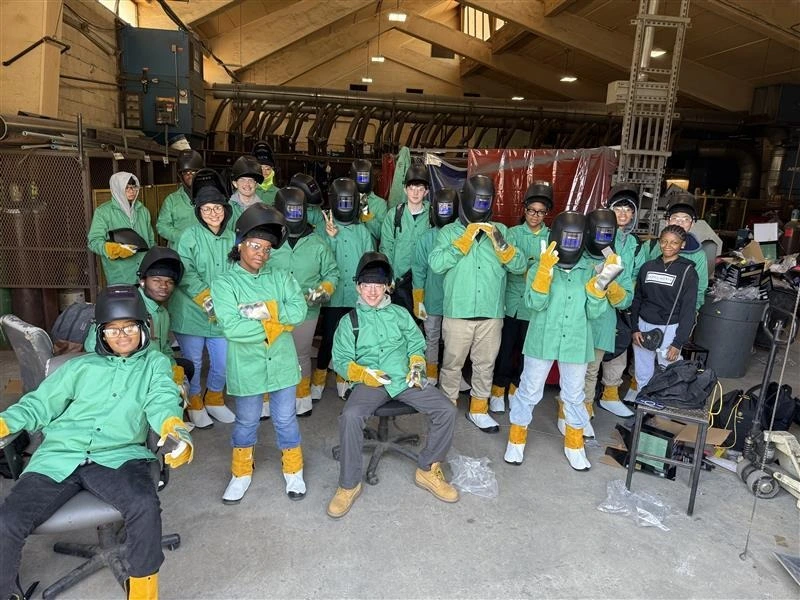
AWS D1.1 certification confirms welding technique meets recognized industry standards . It also assures employers and local business owners that the student is well-versed in the tools and safety standards. It also shows awareness of relevant certifications. As a result, this credential often functions as a near-requirement during hiring because it proves tested, verified skill.
Here’s why employers trust this certification:
Moreover, Budding welders without this certification often face a much harder path into steady employment. But without this certification, it becomes difficult for employers to consider you a qualified welder. Certification plays an important role in placement. It assures the company and business owners that the candidate is well-versed in the process, tools, and techniques.
During a welding technology program, students train at institutes and apply those learnings at real job sites. They are taught real work-site machines and tools while wearing protective gear, helmets, and gloves. Therefore, strong programs build job placement support directly into the training experience, not as an afterthought.
Here’s how that typically works:
Finally, this combination gives graduates a real, practical path from training to paycheck.
Welding career Pay and job outlook is changing and also salary .The U.S. Bureau of Labor Statistics projects steady growth in employment for welders, cutter-pipefitters, and braziers, driven by demand across the United States’ construction, manufacturing, and infrastructure projects.
| Experience Level | General Pay Range |
| Entry-Level | $18 – $23/hour |
| Mid-Career | $25 – $32/hour |
| Experienced/Certified | $34 – $45+/hour |
Note: These figures are general estimates and should be verified against current BLS or state labor data before publishing.
Therefore, certified welders with strong hands-on training tend to move into that higher pay range faster.
Before enrolling, you must consider these questions:
Asking these questions upfront helps you find training that leads to employment.
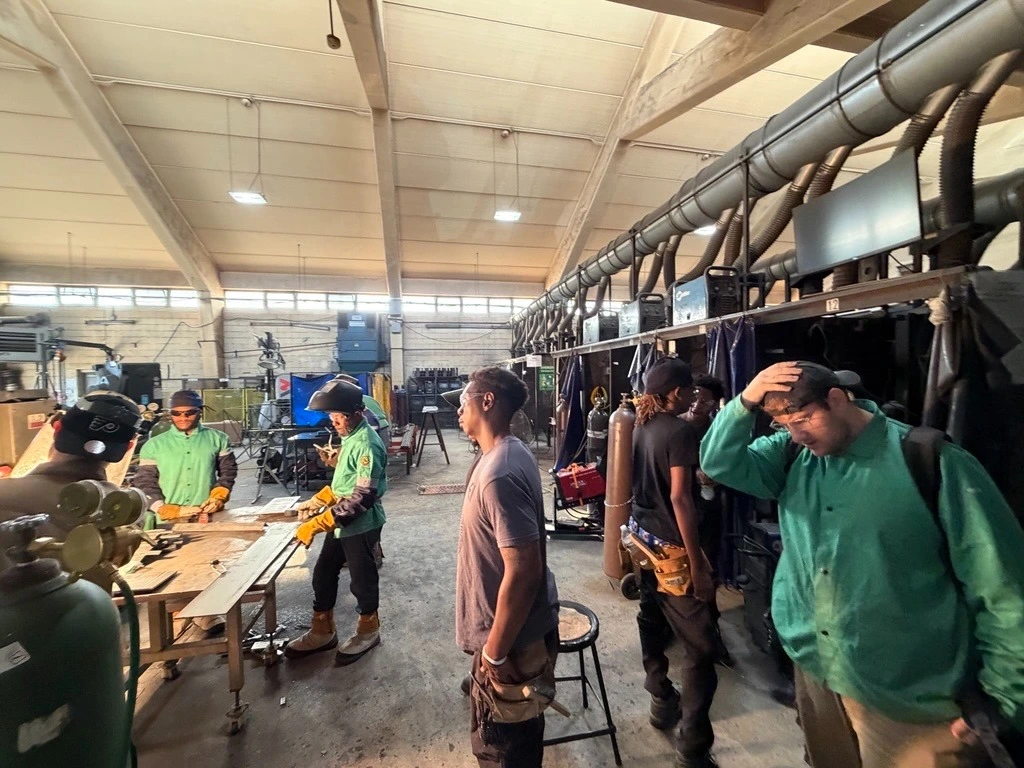
Philadelphia Technician Training Institute (PTTI) offers a Welding Technology program running 26 weeks and 900 hours total, including 83 lecture hours, 617 hands-on shop hours, and 200 externship hours. The program also includes in-house AWS D1.1 certification, MIG and Stick welding, and plasma cutting training.
Here’s how enrollment works:
PTTI has good placement for graduates, leading to jobs in the field. Alumni placed at different job sites also prefer students when a job opening is available in welding or another skilled trade industry.
Welding job placement in Pennsylvania requires safety, strength, and hard work. All these are important in a welding technology program. It requires dedication and strength; you wear proper safety gear while working. Intensive welding training in Philadelphia that leads to a job comes down to hands-on hours, real certification, and genuine employer connections. However, not every program delivers all three, so ask direct questions before enrolling. The strongest programs offer AWS certification and externship placement, giving graduates a real, practical path to employment.
Ready to start intensive welding training that leads to a job? Contact the career services team at PTTI at 215-381-9403 or info@ptt.edu to speak with an advisor.
Read More: