
If you want a healthcare career you can start without a four-year degree, sterile processing deserves a close look, and CRCST certification is the credential that moves you from entry-level helper to recognized professional. CRCST stands for Certified Registered Central Service Technician, and it is the industry-standard credential for the people who decontaminate, sterilize, and assemble the surgical instruments every operating room depends on. In the Philadelphia area, where large hospitals and surgical centers run around the clock, trained and certified technicians stay in steady demand.
This guide explains exactly how to earn the credential: the education and experience requirements, what the CRCST exam involves, how much it costs, and what the work actually pays. Whether you are a high school graduate, a career changer, a veteran, or an adult learner exploring hands-on healthcare, you will find a clear path here. For readers in the region, PTTI’s Central Processing & Sterile Services program is one local starting point, but first, here is what the credential actually requires.
CRCST certification is the entry-level professional credential for central service technicians, awarded by the Healthcare Sterile Processing Association (HSPA), formerly known as IAHCSMM. It verifies that a technician can safely decontaminate, inspect, assemble, sterilize, and distribute surgical instruments according to national standards.
Sterile processing is the behind-the-scenes engine of every surgical department. Before an instrument ever reaches a patient, it must be cleaned, inspected, correctly packaged, and sterilized without error. A central service technician is the professional responsible for that chain. The CRCST credential tells employers that you understand decontamination science, sterilization methods, instrument identification, and the quality-assurance steps that protect patients from infection.
Across much of the country, this certification has shifted from “preferred” to “expected.” Many hospitals require new hires to earn a sterile processing certification within a set window after starting, which makes the CRCST a practical priority for anyone entering the field. Understanding why this certification carries so much weight helps explain why so many employers now build it into their hiring and onboarding expectations.
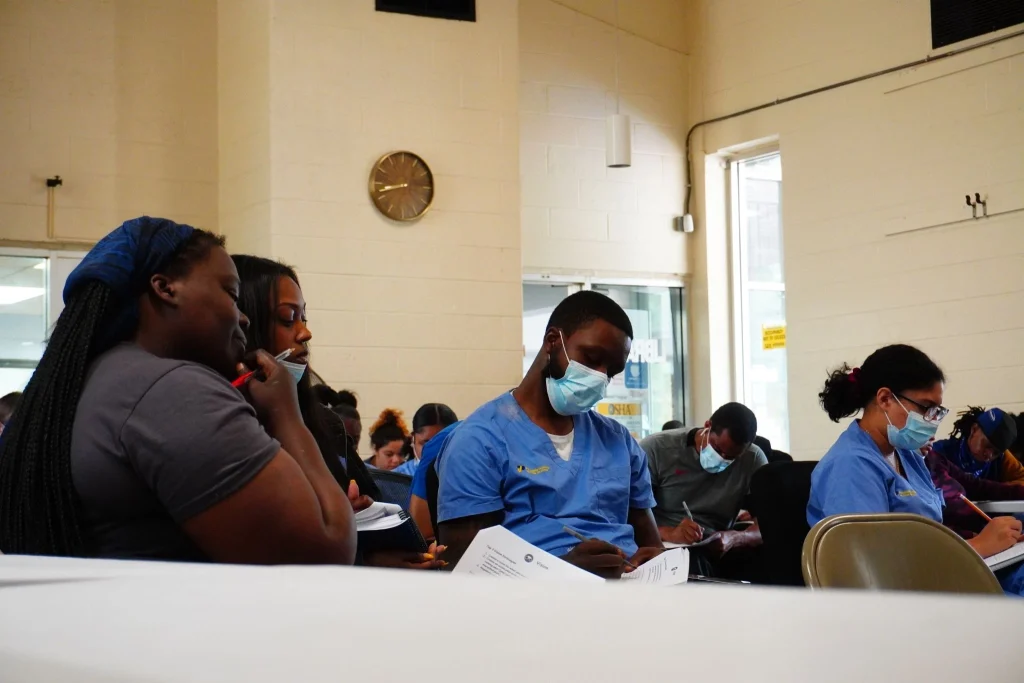
To earn CRCST certification, you need a high school diploma or GED, a passing score on the CRCST exam, and 400 hours of documented hands-on experience in a sterile processing department. HSPA does not require college credits, prerequisite courses, or a minimum age, which keeps the door open to a wide range of candidates.
The two non-negotiable pieces are the exam and the hands-on hours. The education bar is modest by design, because this is a performance-and-knowledge credential, not an academic degree. What matters is that you can demonstrate the knowledge on the test and the practical experience on the floor.
The 400 hours are the heart of the requirement. HSPA expects those hours to be earned inside an actual sterile processing or central service department, on either a paid or volunteer basis, and spread across the core functions of the job rather than concentrated in one task. A typical distribution looks like this:
| Core Area | Approximate Hours |
| Decontamination | 120 |
| Preparation & packaging of instruments | 120 |
| Sterilization & disinfection | 96 |
| Storage & distribution | 24 |
| Quality assurance processes | 24 |
| Equipment handling | 16 |
These hours ensure you have touched every stage of the workflow before you are certified. Because gaining them requires department access, many students look for sterile processing training that includes an externship or a clinical placement, which is one of the most common ways new technicians log qualifying experience in a real hospital setting.
HSPA offers two routes to the same credential. With full certification, you complete all 400 hours within the five years before you test, so you walk in fully qualified. With provisional certification, you pass the exam first and then have six months to complete and submit your 400 hours. Provisional status is not an exemption from the experience requirement; if you miss the six-month deadline, the certification is forfeited and you must reapply. For most people, finishing the hours before testing is the cleaner path.
⚕️ This article is for educational purposes and reflects requirements current at the time of writing. Certification rules and fees are set by HSPA and can change, so always confirm the latest details directly with HSPA before applying.
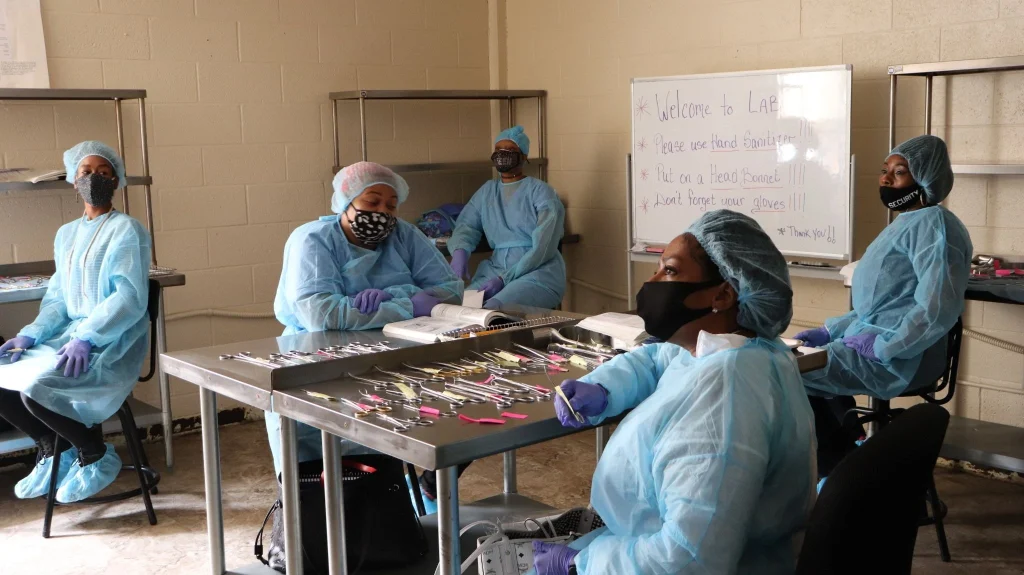
The CRCST exam is a computer-based test of 150 multiple-choice questions that you must complete within three hours, administered at Prometric testing centers. The application fee is $140 as of 2026, and that fee covers one exam attempt. Results are reported as pass or fail.
Here is the practical sequence most candidates follow:
The exam content mirrors the daily realities of the job: decontamination, cleaning chemistry, instrument assembly, sterilization methods, packaging, storage, distribution, and documentation. This is exactly why the hands-on hours matter so much. Candidates who have worked the floor tend to recognize the scenarios on the test, which is a central reason structured sterile processing training built around real skills tends to improve a candidate’s readiness for the exam.
It is also worth noting that HSPA is not the only certifying body in this space; another organization, CBSPD, offers a separate sterile processing certification. The CRCST, however, is the most widely referenced credential in hospital job postings, which is why it is the focus here.
A sterile processing technician salary runs a national median of about $47,700 per year, or roughly $22.93 per hour, according to the U.S. Bureau of Labor Statistics, which tracks the role under “medical equipment preparers.” The top 10% of earners nationally make more than $69,950. Pay varies with experience, certification, shift, employer, and region.
A sterile processing technician salary in the Philadelphia market generally sits at or above the state figure, supported by a dense concentration of hospitals, academic medical centers, and surgical facilities. The table below puts the numbers in context.
| Location / Level | Approximate Annual Pay |
| U.S. median (all technicians) | ~$47,700 |
| Pennsylvania median | ~$45,800 |
| Philadelphia area (typical range) | ~$48,000 – $58,000 |
| Experienced / lead technicians | $60,000 – $78,000+ |
Two factors push a sterile processing technician salary higher. The first is certification: credentialed technicians are consistently more competitive for better-paying roles, and many employers reserve certain positions for certified staff. The second is specialization and seniority; moving into instrument specialist, lead technician, or supervisory roles raises the ceiling significantly. For a fuller breakdown of how a sterile processing technician salary shifts from one state to another, this state-by-state salary and training guide is a useful reference point.
No school or employer can promise a specific wage, and a sterile processing technician salary will always depend on your experience and the facility. What the data does show is a stable, credential-rewarded healthcare role with clear room to grow.
Yes, sterile processing is a strong career choice in 2026. Federal labor data classifies the role as a “Bright Outlook” occupation, with employment projected to grow about 10% between 2024 and 2034, much faster than the average for all jobs, and roughly 10,900 openings expected each year nationwide.
Several forces drive that demand. Surgical volume keeps rising as the population ages, every one of those procedures requires sterilized instruments, and infection-control standards continue to tighten. At the same time, experienced technicians are retiring, creating replacement openings on top of new growth. The result is a field where qualified, certified people are genuinely needed rather than merely welcome.
The role also appeals to people who want healthcare stability without years of schooling. You work inside the hospital ecosystem, your skills transfer between facilities, and the central service technician role can serve as a launch point toward surgical technology, instrument specialization, or department leadership. For anyone weighing options, it is worth comparing how sterile processing stacks up against other healthcare paths before committing.
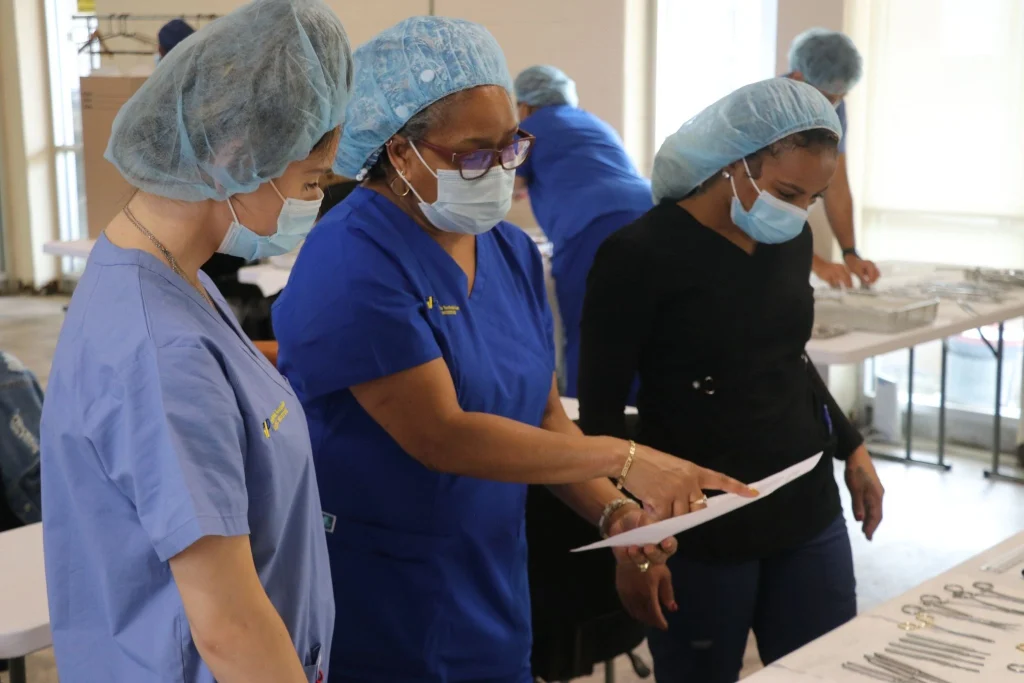
Earning CRCST certification is easier when your training mirrors the exam and the job. Strong technicians combine technical knowledge with disciplined habits, because a single missed step can compromise patient safety. The competencies that matter most include:
These are teachable, hands-on skills, which is why classroom theory alone rarely prepares someone to pass the exam or thrive on the floor. Programs that emphasize lab practice and real equipment give candidates a meaningful edge, and reviewing the core sterile processing skills every technician should master is a good way to gauge whether a training path is thorough enough to support your goals.
Few regions offer as much opportunity for central service technicians as Greater Philadelphia. The city and its surrounding counties are home to major hospital systems, academic medical centers, outpatient surgical facilities, and a growing life-sciences sector, all of which rely on sterile processing departments that operate day and night.
Opportunity reaches well beyond the city limits. Technicians find work across nearby Pennsylvania communities such as Yeadon, Lansdowne, Darby, Drexel Hill, and Ardmore, and across the river in South Jersey towns including Camden, Pennsauken, Cherry Hill, Collingswood, and Maple Shade. Because a sterile processing certification is portable, training in Philadelphia positions you to take the best available role in whichever direction it appears, including into Delaware and the broader tri-state market. Local sterile processing programs that are reshaping healthcare careers in Philadelphia have made it realistic for new students to enter the hospital workforce in a matter of months rather than years.
Once earned, CRCST certification must be renewed on an ongoing basis by completing continuing education and paying a renewal fee to HSPA. This keeps technicians current as sterilization technology, instruments, and standards evolve.
Renewal is straightforward but not optional. Letting the credential lapse can require retesting, so most technicians treat continuing education as a routine part of the job. The upside is real: staying certified keeps you competitive for raises, specialized roles, and leadership positions, and it signals to employers that you take patient safety seriously.
CRCST certification is one of the most direct ways to turn an interest in healthcare into a stable, respected career without spending years in a classroom. The path is clear: meet the education requirement, log 400 hands-on hours, pass the CRCST exam, and keep the credential current. In a region as hospital-dense as Greater Philadelphia, certified sterile processing technicians are exactly the professionals surgical teams cannot operate without, and the field’s strong outlook makes this a timely moment to begin.
If you are ready to take the next step, connect with PTTI admissions to learn how its hands-on training can help you prepare for this career and work toward your sterile processing certification.
Many people become job-ready in a matter of months through focused training, then layer on the 400 hands-on hours needed for CRCST certification. The exact timeline depends on your training schedule and how quickly you can log qualifying department experience, but it is far shorter than most degree programs.
Requirements vary by employer and state, but certification has become the norm. Many hospitals hire candidates who are not yet certified on the condition that they earn a sterile processing certification such as the CRCST within a set period, so pursuing it early is a smart move.
The CRCST application fee is $140 as of 2026, which covers one attempt at the exam. Study materials and any retest fees are separate. Always confirm current pricing with HSPA before applying, since fees can change.
A sterile processing technician prepares and sterilizes instruments behind the scenes, while a surgical technician assists directly in the operating room during procedures. Many people begin as a central service technician and later move into surgical technology or instrument specialization.
Pay in the Philadelphia area commonly ranges from about $48,000 to $58,000 per year, with experienced and lead technicians earning more. A sterile processing technician salary rises with certification, specialization, and seniority, though no specific wage is guaranteed.