
The healthcare sector is growing rapidly, which is creating opportunities for young professionals to develop successful careers and build strong careers in this sector without having to spend years in medical school. Among the most popular and growing opportunities in this sector is the Central Processing and Sterile Service Technician Program, which is a specialized training program for those who wish to develop their careers in this sector.
For years, healthcare careers have been associated with long academic commitments for those who wish to develop successful careers in this sector. However, with programs like the one offered by the Philadelphia Technician Training Institute, it is now possible for youth to join this sector in just 6-8 months with job-ready skills.
Healthcare does not just encompass doctors or nurses. What goes on behind the scenes for a successful surgery or medical procedure to take place is a team of workers who ensure that all equipment used is safe for use. Central processing technicians are essential to this process.
The demand for sterile processing professionals has significantly increased due to:
According to industry insights from organizations like the International Association of Healthcare Central Service Materiel Management (IAHCSMM), sterile processing professionals are considered the backbone of safe medical services.
This demand makes it a great career for young minds to pursue.
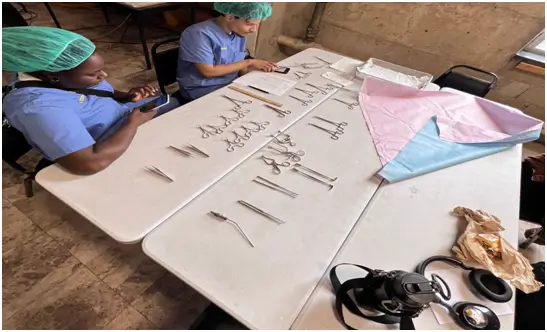
The Central Processing and Sterile Service Technician Program is a job-related training program that teaches learners how to handle, clean, and distribute medical instruments for use in healthcare settings.
The skills that students are equipped with include:
The first advantage is the short duration of the course. The course is designed for about 31 weeks, equivalent to 6-8 months. This is a fast-track program for entry into the healthcare industry.
This is attractive to the youth because:
Programs like those described at PTT Institute emphasize career readiness from day one.
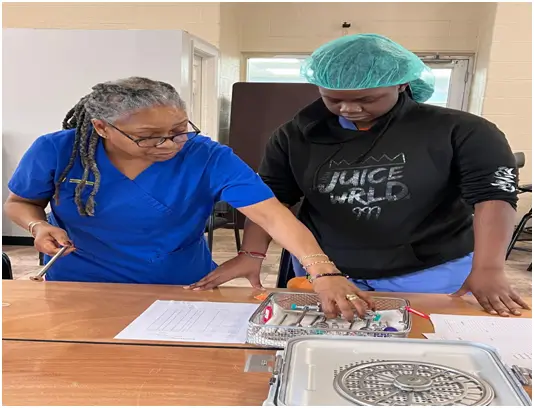
The program is not purely theoretical. In central processing courses, the focus is on hands-on experience. In this program, the students will be exposed to practical knowledge in the following areas:
This is a practical approach that will make the graduates ready for the job market from the first day.
The program is industry-relevant. The students will be required to study the following areas:
The training programs may also offer assistance in career development, which includes:
However, Institutes that offer strong support highlight this on their Career Services, helping students transition into jobs more quickly.
Today’s youth want a profession that offers a quick return on their investment. It is not always possible to spend years in education. This program offers:
The healthcare industry will always be in demand, even in a recession. There will always be a need for sterile processing technicians because:
These programs compare favorably to medical degrees in that they are:
This makes healthcare careers accessible to a wide population of aspiring students.
A career as a sterile processing technician can lead to:
It is a stepping stone in the healthcare system.
Additionally, these are a vital part of the medical team. Their role is related to patient care, surgical success, and infection prevention.
After cleaning, instruments are inspected for quality. Technicians check:
Technicians use magnifying glasses to check their instruments, as faulty instruments could hamper medical procedures.
Furthermore, this is the main task that a sterile processing technician undertakes. He or she uses advanced sterilization techniques such as:
The choice of method depends on the tools. The objective of sterilization is to kill all microorganisms, such as bacteria and viruses.
After sterilization, tools are:
However, this ensures that tools are kept in a sterile environment until they are required for use.
Sterile processing technicians ensure that:
Their efficiency helps surgeries run smoothly.
Additionally, the Central Processing and Sterile Service Technician Program is not a hypothetical program; rather, it is geared to prepare students for the real environment of hospitals.
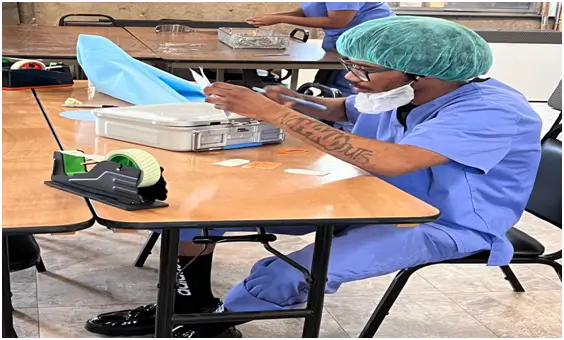
The program is practical in its approach. Students are trained using the practical approach, where they are required to:
Moreover, through this approach, students gain knowledge. By the time they graduate, they have already learnt the practical environment.
Overall, the program not only focuses on practical knowledge but also provides a solid academic foundation for students. In this regard, the program includes courses in:
Through this approach, students are able to understand the importance of sterilization.
This program includes the following steps:
Infection prevention is an area of focus it is essential in contemporary healthcare. In this area, the student is taught:
This is a direct contribution to reducing hospital-acquired infections.
This program works particularly well for young individuals because it:
It helps students start making money early and build a stable future.
The Central Processing and Sterile Service Technician Program is an outstanding change in how young people can enter the healthcare industry. Therefore, many industries that has for so long required years of educational qualifications, this program is a fast, practical, and effective way for young people to get into a secure and focused career in just six months.
The role of a processing technician is an important yet underrated one in healthcare. From ensuring surgical equipment is perfectly sterilized to running the smooth operations of healthcare facilities, these technicians have a direct hand in patients’ health and the success of the healthcare industry as a whole.
Moreover,In today’s fast growing world where time is of the essence, where skills and security count more than ever, getting into a program such as this is not only an effective solution but also a sound decision for anyone who wants to get into the healthcare industry quickly and make a real difference behind the scenes as a sterile processing technician.
Read more :