
Few skilled trades offer a clearer, more structured climb from beginner to high earner than pipefitting. If you have looked into the trades and wondered what the real pipefitter career path looks like, the honest answer is that it is one of the most defined ladders in construction. You start as a trainee who barely knows a flange from a fitting, and within several years you can stand on a job site as a journeyman earning a full union wage with benefits. For students exploring hands-on careers, quality pipefitting training in Philadelphia is often the first rung on that ladder, and understanding how to become a pipefitter from day one makes the whole journey far less intimidating.
This guide walks through the complete progression, from your first day of training through a registered pipefitter apprenticeship and finally to journeyman status with a union pipefitter local. Along the way, we cover what the work involves, how long each stage takes, what a realistic pipefitter salary looks like at each level, and why the Philadelphia region remains a strong market for this trade in 2026. Whether you are a high school graduate, a career changer, or a veteran, the pipefitter career path rewards people who are willing to learn a genuine craft.
A pipefitter installs, assembles, maintains, and repairs the high-pressure piping systems that move steam, water, gas, chemicals, and other liquids through industrial and commercial buildings. Unlike a residential plumber, a pipefitter usually works on larger mechanical systems in power plants, refineries, hospitals, manufacturing facilities, and high-rise construction.
The daily work blends precision and physical skill. On a given day a fitter might read isometric drawings, measure and cut pipe, bevel and fit joints, bolt up flanges, and weld or prepare welds for inspection. Because these systems often operate under extreme pressure and temperature, accuracy and safety are not optional. That combination of brainwork and handwork is exactly why the trade pays well and why employers invest heavily in training.
Pipefitting also overlaps with related specialties. Steamfitters focus on systems that carry steam, sprinkler fitters install fire-protection systems, and gasfitters handle gas lines. Many fitters pick up welding certifications along the way, which widens their options and raises their earning ceiling. Students weighing their options sometimes compare the two most popular metal trades directly; reading an honest breakdown of pipefitter versus welder can help clarify which craft fits your temperament.
To become a pipefitter, you generally need to be at least 18 with a high school diploma or GED, complete hands-on training in pipe systems and safety, and then enter a registered apprenticeship where you earn while you learn. The clearest answer to how to become a pipefitter is this: build real skills first, then let those skills carry you into paid on-the-job training. Understanding how to become a pipefitter early keeps the whole plan realistic.
Most people start in one of two ways. Some apply directly to a union apprenticeship and learn entirely on the job. Others complete a trade-school program first to build fundamentals, make themselves stronger apprenticeship candidates, and avoid washing out in the early months. Enrolling in a structured program is a dependable way to become a pipefitter with no experience, because it front-loads the math, blueprint reading, and tool skills that apprenticeship committees look for.
Here is the typical sequence to become a pipefitter:
Knowing which tools to expect also removes a lot of first-week anxiety; a quick look at the tools beginner pipefitters need for certification gives newcomers a realistic picture of the trade before they ever set foot on a job site.

This progression is best understood as a series of well-marked stages, each with its own title, responsibilities, and pay. This structure is one of the trade’s biggest advantages, because it removes the guesswork that plagues so many other careers.
At the entry level, you are learning the language of the trade. A trainee focuses on fundamentals: safety, tool handling, measuring, cutting, and basic fit-up. This is where quality pipefitting training in Philadelphia earns its value, turning a motivated beginner into a candidate who can actually contribute on a crew. The goal of this stage is simple: become good enough, and reliable enough, to be accepted into an apprenticeship.
Once accepted, you become a paid apprentice. A pipefitter apprenticeship is the heart of the entire journey. You work full time under experienced journeymen while attending related classroom instruction, usually a couple of evenings a week. Your pay rises on a published schedule as you complete hours and coursework, and your responsibilities grow with your competence.
After completing the apprenticeship, you become a journeyman, the trade’s benchmark of full competency. A journeyman works independently, interprets complex drawings, and is trusted with high-stakes installations. This is the point where a journeyman fitter reaches full-scale wages and the benefit package that makes the trade so financially stable.
The ladder does not stop at journeyman. Experienced fitters move into foreman and general foreman roles, leading crews and managing portions of a project. From there, some become superintendents, estimators, inspectors, instructors, or even open their own contracting businesses. The trade genuinely extends from an 18-year-old trainee to a business owner.
| Stage | Typical Duration | What You Do | Pay Reality |
| Trainee / Pre-apprentice | Months | Learn fundamentals and safety | Training phase |
| Apprentice | ~5 years | Paid work + classroom | % of journeyman scale, rising yearly |
| Journeyman | Ongoing | Independent, skilled work | Full scale + benefits |
| Foreman / Superintendent | With experience | Lead crews, manage projects | Premium above journeyman |
A registered pipefitter apprenticeship typically takes about five years. Over that span, apprentices complete roughly 10,000 hours of paid on-the-job training plus around 1,200 or more hours of classroom instruction, advancing through classifications with scheduled raises along the way.
The five-year timeline is not arbitrary. Pipefitting is a deep trade, and competency in welding, rigging, system layout, and code compliance takes time to build safely. The upside is that you are employed and paid throughout, which is why the apprenticeship model is often described as “earn while you learn.” If you want a closer look at the timeline and what each year involves, PTTI breaks down how long a steamfitter apprenticeship takes in detail.
It is worth noting that strong pipefitting training in Philadelphia before you apply can shorten the practical learning curve inside the apprenticeship, even though it does not reduce the required hours. Apprentices who arrive already comfortable with tools, math, and blueprints tend to advance more smoothly through each classification.

The two main routes forward are joining a union pipefitter local or working directly for a non-union mechanical contractor. Both can lead to a solid career in the trade, but they differ in structure, pay progression, and benefits.
The union route, run nationally through the United Association (UA), is the most structured. A union pipefitter apprentice earns a defined percentage of the journeyman wage that climbs on a fixed schedule, and health and pension contributions often begin early in the apprenticeship. For many fitters, the predictability and the benefits package are the deciding factors. In the Philadelphia region, the UA’s Steamfitters’ Local 420 has been a major presence on industrial and commercial projects for decades.
Direct, non-union employment can offer faster hiring and more scheduling flexibility, and skilled fitters can still earn well. The trade-offs usually come down to benefits, long-term wage ceilings, and training structure. Because this decision shapes your whole career, it is worth weighing the real pros and cons of union versus independent pipefitting work before you commit to either direction.
A well-run trade program helps students transition toward either outcome. Philadelphia Technician Training Institute’s Steam, Sprinkler & Pipe Fitting Technician program is designed to give graduates the fundamentals that both union apprenticeship committees and private contractors want to see.
Nationally, the median pipefitter salary is about $63,800 per year, according to the U.S. Bureau of Labor Statistics, which reports pay for plumbers, pipefitters, and steamfitters together. The lowest earners make under roughly $44,000, while the top ten percent earn more than $108,000. Earnings rise predictably as you move up the pipefitter career path.
Pay tracks closely with stage and specialization. A first-year apprentice typically earns a set percentage of the journeyman rate, often starting near 40 to 55 percent, then climbing with each completed year. By the time a fitter reaches journeyman status, they are earning full scale, and total compensation, including health and pension contributions, can approach or exceed six figures in value for experienced fitters working overtime or shutdown jobs.
| Career Stage | Approximate Earnings (Regional Estimate) |
| First-year apprentice | ~40–55% of journeyman scale |
| Mid-apprenticeship | ~60–75% of journeyman scale |
| Journeyman pipefitter | Full scale wage + benefits |
| Foreman / specialized welder-fitter | Premium above journeyman scale |
In the Philadelphia market specifically, local surveys place the average pipefitter salary in the low 60,000s,withexperiencedandunionfittersreachingthemid-70,000s to low $80,000s before overtime. Keep in mind that the pipefitter salary you ultimately earn depends on experience, certifications, employer, specialization, and hours worked; these figures are estimates, not guarantees.
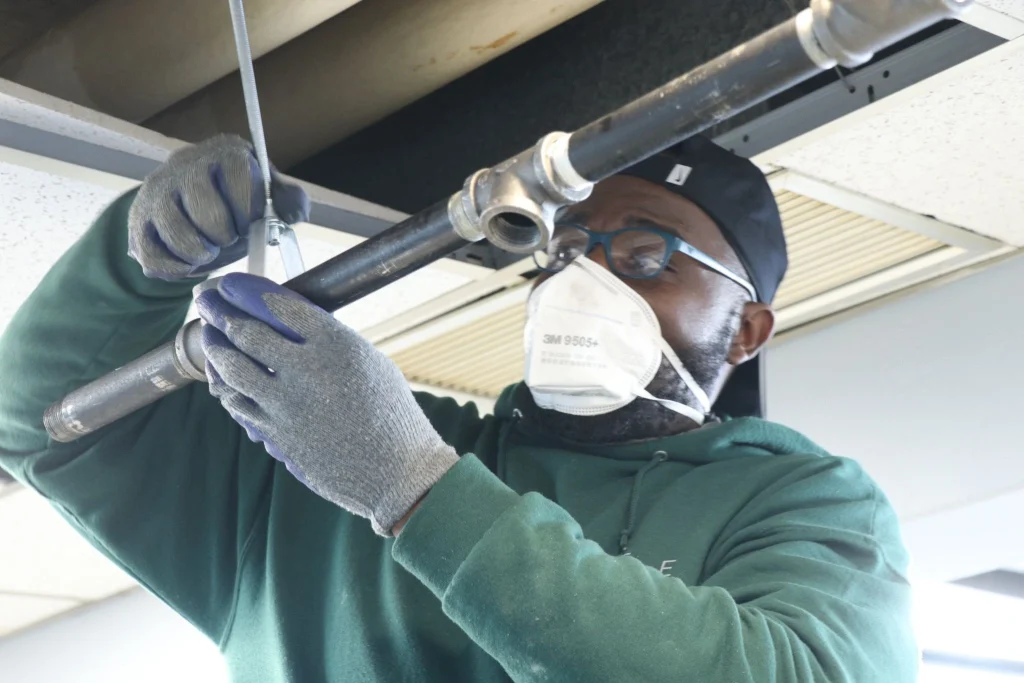
Once you understand how to become a pipefitter, the next question is how to rise faster, and advancement on the pipefitter career path is driven by skill. The fitters who climb fastest add capabilities that employers value. Core competencies include blueprint and isometric reading, precise measurement and layout, rigging, threading and fit-up, and a disciplined approach to safety.
Welding is the single most valuable add-on skill. A pipefitter who can pass weld tests becomes far more employable and commands higher pay, especially on industrial and energy projects. Beyond welding, employers increasingly value familiarity with modern layout tools and the mechanical systems tied to heating, cooling, and process piping. Students who want to understand what hiring managers are prioritizing can review the most in-demand pipefitting skills heading into the current market.
Certifications and safety credentials also matter. OSHA safety training is widely expected, and specialized certifications in welding processes or specific codes can set you apart. The through-line is simple: every credential you earn is a lever that moves you further along in the trade.
The Philadelphia region is a genuinely good place to build a pipefitting career. The area combines aging infrastructure, active commercial and healthcare construction, industrial facilities, and a deep union tradition, all of which generate steady demand for skilled fitters. Because credentials are portable, graduates of pipefitting training in Philadelphia can also pursue work across the river in South Jersey and down into Delaware.
Demand is reinforced by national trends. The U.S. Bureau of Labor Statistics projects faster-than-average employment growth for plumbers, pipefitters, and steamfitters, with roughly 44,000 openings each year, many of them created by experienced workers retiring. That replacement demand keeps the door open for new entrants year after year.
Local opportunity stretches well beyond Center City. Fitters find work throughout North, South, and West Philadelphia and in surrounding communities such as Camden, Pennsauken, Cherry Hill, Drexel Hill, Lansdowne, and Darby. For veterans in particular, this is a field where discipline and a safety mindset transfer directly, and PTTI can help eligible students understand their veterans’ education benefits as they plan their training.
The pipefitter career path is one of the clearest, most rewarding ladders in the skilled trades. You begin as a trainee learning fundamentals, grow into a paid apprentice earning while you learn, and reach journeyman status with full wages, strong benefits, and real job security. From there, foreman, superintendent, and ownership roles are all within reach. With faster-than-average demand and a healthy regional market, now is a sound time to learn how to become a pipefitter and step onto that ladder.
If you are ready to take the first step, connect with PTTI admissions to learn how hands-on pipefitting training in Philadelphia can prepare you for an apprenticeship and a long-term pipefitter career path.
It typically takes about five years. You complete a registered pipefitter apprenticeship of roughly 10,000 on-the-job hours plus classroom instruction, advancing through apprentice classifications with scheduled raises until you meet journeyman requirements and move to full-scale wages.
No. A high school diploma or GED is the standard requirement. This career is built on hands-on training and a paid apprenticeship, not a four-year degree, which is a major reason the trade appeals to people who want to start earning sooner.
The national median pipefitter salary is about $63,800 per year, with top earners above $108,000. Apprentices start at a percentage of journeyman scale and earn scheduled raises, and experienced union fitters can reach six-figure total compensation with benefits and overtime.
Both can work. A union pipefitter gains structured pay progression and strong benefits through the United Association, while non-union roles can offer faster hiring and flexibility. The right choice depends on your priorities around benefits, wage ceilings, and training structure.
No reputable program guarantees employment. However, strong pipefitting training in Philadelphia makes you a far more competitive apprenticeship and entry-level candidate by building the tool skills, safety habits, and blueprint knowledge that employers and apprenticeship committees expect.