
Most people can picture what a plumber does, but far fewer can explain what happens when a hospital needs sterilizing steam, a high-rise needs heating and cooling loops, or a chemical plant needs piping that safely moves acid. That work belongs to pipefitters, and it is one of the most misunderstood skilled trades in the country. If you have ever asked what does a pipefitter do beyond “work with pipes,” this guide breaks the trade into the real systems it covers. Students who want the fastest route in can start with a hands-on pipefitting program in Philadelphia that trains on the equipment employers actually use. By the end of this article you will understand the four major system types pipefitters build, how the trade differs from plumbing, what the work pays in the Philadelphia region, and how training prepares you for it. The goal is simple: turn an unknown trade into a career you can evaluate on the facts.
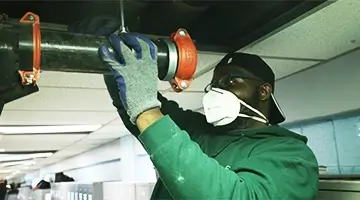
A pipefitter installs, assembles, and maintains high-pressure piping systems that carry steam, hot and chilled water, gases, chemicals, and other fluids through industrial and commercial facilities. Unlike residential water work, this trade focuses on mechanical, power, and process systems in plants, hospitals, and large buildings.
That short answer hides a lot of range. On any given project, the work can involve measuring and cutting pipe, bending and threading it, welding or bolting joints, mounting hangers and supports, and pressure-testing a finished system before it goes live. So when someone asks what does a pipefitter do day to day, the honest answer is that it depends heavily on which system they are building — and those systems are worth understanding one at a time.
Pipefitters also read and interpret technical drawings, calculate pipe runs and angles, and follow strict codes for pressure and safety. The job rewards precision. A joint that leaks in a home is an inconvenience; a joint that fails in a steam line or a chemical process line is a serious hazard, which is why the trade places such weight on accuracy and testing.
Pipefitting is the trade of installing and maintaining piping that moves fluids and gases under pressure, usually for heating, cooling, power, or industrial processes. Plumbing, by contrast, handles water supply and drainage in homes and buildings. The simplest way to frame the pipefitter vs plumber question is that plumbers deliver water to people, while pipefitters move energy and materials through systems.
Understanding what is pipefitting starts with understanding where it happens. A plumber might install a water heater, a toilet, or a drain line in a house. A pipefitter is more likely to be found in a boiler room, a factory, a power plant, or the mechanical floor of a hospital, assembling the piping that keeps those facilities running.
| Factor | Pipefitter | Plumber |
| Typical setting | Industrial, commercial, power, institutional | Residential and commercial |
| What moves through the pipe | Steam, chemicals, gases, heated/chilled water | Potable water, waste, drainage |
| Pressure level | Often high-pressure systems | Mostly low-pressure |
| Core joining skills | Heavy on welding and fitting | Heavy on soldering and fixtures |
| Common codes | Mechanical and process codes | Plumbing codes |
The pipefitter vs plumber distinction matters when you choose training, because the two trades build different skills. Both are valuable, but if you are drawn to industrial systems and welding rather than household fixtures, pipefitting is the better fit. This is also why many people researching the pipefitter vs plumber decision eventually look specifically for pipefitting training rather than a general plumbing course.
Let’s understand what pipefitting is. The clearest way to answer what does a pipefitter do is to break the trade into the four system families that make up most of the work. Each one shows up in different buildings and industries across the Philadelphia region.
Steam systems move heat and energy as pressurized vapor, and they are everywhere once you know to look: hospitals use steam for sterilization, universities and downtown buildings use it for heating, and power and manufacturing plants use it to drive equipment. Pipefitters who specialize in steam systems — often called steamfitters — install and maintain the high-pressure lines, valves, and traps that make this possible.
Because steam systems operate under high pressure and high temperature, they demand careful welding, precise fitting, and rigorous testing. A well-built steam system runs quietly for decades; a poorly built one is dangerous. This is the part of the trade where the margin for error is smallest, and where skilled pipefitters are most valued.
Hydronic systems use water — hot or chilled — to move heat around a building. The large office towers, schools, and apartment complexes across Philadelphia rely on hydronic loops connected to boilers and chillers. Pipefitters build and service these loops, including the pumps, valves, and balancing components that keep temperatures even from floor to floor.
Hydronic work overlaps with the mechanical side of HVAC, which is why pipefitting and heating-and-cooling careers often sit close together. If you like the idea of keeping large buildings comfortable and efficient, this branch of the trade is a natural fit.
Process piping carries the raw materials of industry — chemicals, acids, gases, oils, and other fluids — through the equipment that turns them into products. It is the circulatory system of a manufacturing plant. Pipefitters who build these lines work in refineries, chemical plants, food and beverage production, and pharmaceutical facilities, often alongside the manufacturing and automation technicians who run the equipment those lines feed.
Process piping is demanding because the contents can be corrosive, flammable, or tightly regulated. Material selection matters, welds must be clean and inspectable, and documentation is strict. For pipefitters who enjoy technical problem-solving, this is among the most specialized and best-paid corners of the trade.

Fire sprinkler systems are a life-safety specialty within the trade. Sprinkler fitters install and maintain the networks of pipe, heads, and valves that protect commercial buildings, warehouses, and institutions. The work combines standard fitting skills with code knowledge specific to fire protection, and demand is steady because sprinkler systems are required and regularly inspected in most commercial construction.
Together, these four families explain why the trade is hard to summarize in one sentence. Steam systems, hydronic loops, process piping, and sprinkler networks each require overlapping but distinct skills — and a strong training program introduces all of them.
Pipefitters work with a wide range of materials, from carbon and stainless steel to copper and specialized alloys, and they join them using welding, threading, grooving, and bolted flanges. The trade blends physical skill with technical knowledge, and the best fitters are strong in both.
The core competencies employers look for include:
These are learnable skills. None of them require a four-year degree — they require structured instruction and repetition on real equipment, which is exactly what hands-on training delivers.
To become a pipefitter, you generally need a high school diploma or equivalent, followed by hands-on training that teaches welding, fitting, blueprint reading, and system testing. From there, many fitters enter apprenticeships or move directly into entry-level roles with contractors and facilities.
Training is where the trade becomes accessible. A focused program compresses the fundamentals — the core processes, the four system types, and the safety and code knowledge employers expect — into months rather than years. Quality pipefitting training also emphasizes the applied practice that turns classroom concepts into job-site ability. Prospective students can speak with an admissions team to understand program length, schedules, and entry requirements before committing.
For career changers, veterans, and recent graduates alike, this is the appeal of the trade: a realistic path into skilled, well-paid work without heavy debt. The combination of steady demand and short pipefitting training timelines makes it one of the more practical career moves available in the region today.
Understanding what does a pipefitter do also means understanding what the role pays. Pipefitters earn a national median wage of $63,800 per year, according to the U.S. Bureau of Labor Statistics (May 2025 data), and the Philadelphia metro area runs meaningfully higher at roughly $74,860 per year. Pay rises with experience, specialization, certification, and union membership.
The outlook is one of the strongest in the skilled trades. The BLS projects 7% employment growth for plumbers, pipefitters, and steamfitters from 2025 to 2035 — much faster than the average for all occupations — with about 42,000 openings projected each year over the decade.
| Measure | Figure (BLS, May 2025 / 2025–35) |
| U.S. median annual wage | $63,800 |
| Philadelphia metro median | ~$74,860 |
| Philadelphia 10th–90th percentile | ~$48,400 – $142,210 |
| Projected job growth (2025–35) | 7% (much faster than average) |
| Average annual openings (U.S.) | ~42,000 |
| Typical entry education | High school diploma + training |
A few things drive the strong Philadelphia numbers: a dense base of hospitals, universities, commercial high-rises, and industrial facilities, all of which depend on steam, hydronic, and process systems. Earnings vary by employer, specialty, overtime, and experience, so these figures are ranges rather than guarantees — but they show why the trade is worth serious consideration.
Pipefitting demand in the Philadelphia area is broad because the systems the trade builds exist in nearly every large facility. Hospitals and universities across the city run on steam and hydronic systems. Manufacturing and chemical facilities throughout Pennsylvania, New Jersey, and Delaware rely on process piping. Commercial construction across the region needs sprinkler and mechanical fitters.
That reach extends well beyond Center City into surrounding communities — from North, South, and West Philadelphia to nearby towns like Camden, Cherry Hill, Drexel Hill, Lansdowne, and Darby. Because the skills transfer across settings and state lines, a fitter trained in Philadelphia can follow the work wherever it is strongest. Students who want to broaden their options sometimes pair fitting with welding skills in a complementary program, since strong welding ability raises a pipefitter’s value on high-pressure and process jobs.
Pipefitting is a strong career choice for people who want hands-on, well-paid, in-demand work without a four-year degree. The combination of above-average wages, faster-than-average job growth, and short training timelines makes it one of the more practical skilled-trade paths in the Philadelphia region.
It is not for everyone. The work is physical, sometimes performed in plants or on scaffolding, and it demands precision and safety discipline. But for those who enjoy building real systems and solving technical problems, few trades offer this mix of stability and earning potential. Once you understand what does a pipefitter do across steam, hydronic, process, and sprinkler work, the trade stops looking like a mystery and starts looking like a considered option.

Pipefitting is a trade most people can’t name, yet it quietly keeps hospitals sterile, buildings heated and cooled, and factories running. Once you break it into steam systems, hydronic loops, process piping, and fire sprinkler networks, the answer to what does a pipefitter do becomes clear — and so does why the work pays well and stays in demand across Philadelphia, Pennsylvania, New Jersey, and Delaware. If this sounds like the kind of hands-on, high-value career you want, explore PTTI’s Steam, Sprinkler & Pipe Fitting program to see how training can get you started.
A pipefitter installs and maintains high-pressure piping that carries steam, gases, chemicals, and heated or chilled water through industrial and commercial buildings. The work includes measuring, cutting, welding, and testing pipe systems in plants, hospitals, and large facilities rather than homes.
The pipefitter vs plumber difference comes down to what the pipe carries and where. Plumbers handle water supply and drainage in homes and buildings, while pipefitters build high-pressure industrial, mechanical, and process systems. Pipefitting leans heavily on welding and system testing.
Process piping moves the raw materials of industry — chemicals, gases, oils, and other fluids — through manufacturing equipment. It is found in refineries, chemical plants, food production, and pharmaceutical facilities, and it is among the most specialized branches of the trade.
Focused, hands-on pipefitting training can prepare you for entry-level work in months rather than years. Programs concentrate on welding, fitting, blueprint reading, and safety, and many graduates continue into apprenticeships. Cost and financial aid options vary, so it helps to confirm details with the school.
Pipefitters in the Philadelphia metro area earn a median of roughly $74,860 per year, above the national median of $63,800. Actual pay depends on experience, specialty, overtime, and union status, so individual earnings vary.