
Two workers can hang board side by side for years and earn roughly the same paycheck. Then one of them learns to read a set of plans, measure a building before a single sheet is cut, and put an accurate price on the whole job. That worker stops being only a pair of hands and starts being the person who wins the work. That shift is what drywall estimating makes possible, and it is exactly what a focused hands-on drywall training program is designed to build alongside the physical craft.
This guide explains drywall estimating and takeoffs in plain terms: what a takeoff actually is, how the pricing process works, which tools and math matter, and why this single skill set is the bridge from hourly installer to business owner. It is written for drywall hangers who want to advance, career changers eyeing the building trades, and Philadelphia-area students deciding where the real earning power lives. By the end, you will understand how this skill turns a hanger into a working drywall contractor.
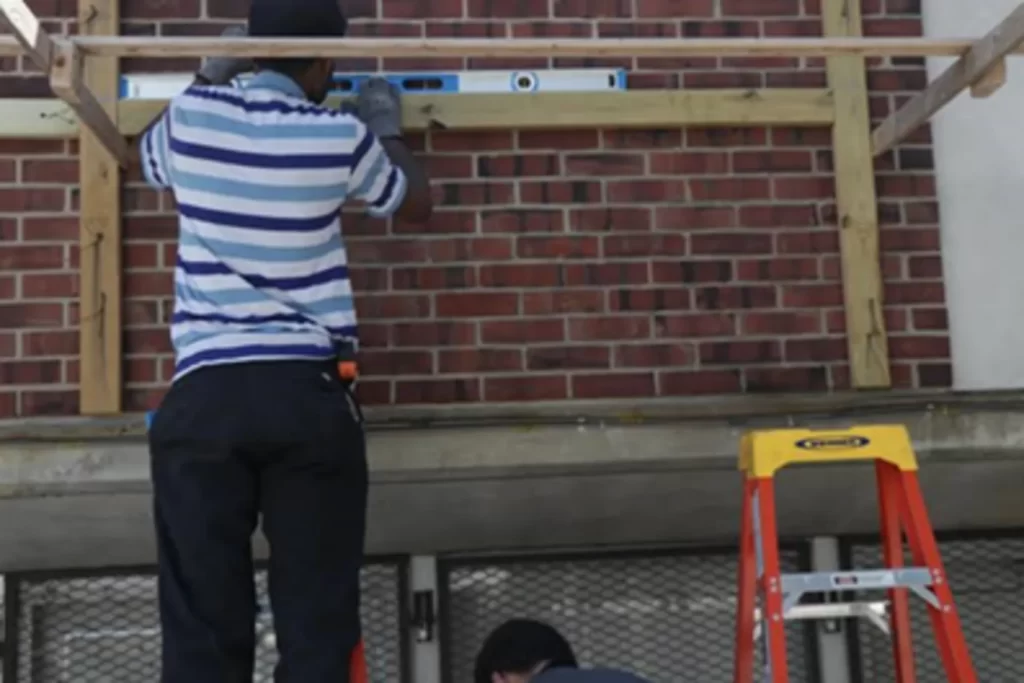
Drywall estimating is the process of calculating how much material, labor, and time a job will require, then converting those quantities into a price a company can bid. In short, it answers one question before work begins: what will this job cost, and what should we charge to do it profitably?
That answer carries enormous weight. On a commercial interior, drywall is one of the largest line items in the budget, and the estimate determines whether a company wins the contract and whether it makes money doing so. A strong estimate accounts for sheets of board, joint compound, tape, fasteners, corner bead, framing, insulation, waste, labor hours, and overhead. Miss any of these, and the profit disappears.
This is why drywall estimating sits at the center of the business. A skilled hanger produces finished walls; a skilled drywall estimator decides whether there is a job to hang at all. Learning construction estimating is how a tradesperson moves from executing the work to controlling it.
A drywall takeoff is the detailed count of every material and labor quantity needed for a project, measured directly from the architectural plans. It is the raw data behind the estimate: square footage of board, linear feet of framing, number of fasteners, gallons of compound, and the hours required to install it all.
The process generally follows a clear sequence. An estimator reviews the full drawing set, identifies every wall and ceiling assembly, and then measures each one. Here is how most takeoffs unfold:
Accurate takeoffs are the single most important input to a bid. If the count is wrong, every number after it is wrong. This is why estimators treat the takeoff as a discipline, not a guess, and why learning to perform drywall takeoffs is a core part of serious drywall training.
Estimating is the skill that converts a drywall hanger into a drywall contractor because it moves a worker from selling hours to selling outcomes. A hanger is paid for time on the wall; a contractor is paid for delivering a finished, priced scope of work, and the estimate is what makes that possible.
Consider the progression. An installer who learns to estimate can start bidding small jobs, then larger ones, then hire a crew of their own. At that point, the person is no longer trading labor for wages; they are running a contractor business, and the estimate is the engine that keeps it profitable. Every successful drywall contractor can price work accurately, because a company that cannot estimate cannot survive a single bad bid.
This is also why pricing knowledge raises earning potential so sharply. The market pays a premium for people who can be trusted with a bid, since one skilled estimator protects the profit on every job the company takes. For anyone serious about advancement, learning to advance your career in drywall starts with mastering the numbers behind the work.
Strong drywall estimating rests on two technical foundations: reading construction drawings and doing the math those drawings require. You cannot measure what you cannot interpret, so blueprint reading is where every estimate begins.
Blueprint reading means understanding floor plans, elevations, wall sections, and schedules well enough to identify exactly which assemblies go where. A plan might call for Type X fire-rated board in a stairwell, standard board in offices, and moisture-resistant board in restrooms. An estimator has to spot each condition and measure it separately, because each carries a different material and labor cost.
The math is practical, not abstract. Estimators calculate area and perimeter, convert measurements to the number of 4-by-8 or 4-by-12 sheets, apply waste factors, and translate square footage into labor hours. These are the exact fundamentals of construction estimating that a quality construction and building trades program teaches alongside installation, because blueprint reading and layout are what make accurate takeoffs possible in the first place.
Modern construction estimating is part craft and part software. While an experienced drywall estimator still needs to understand materials and methods, the day-to-day work increasingly happens on a screen, and employers now expect familiarity with digital tools.
Learning these tools does not replace understanding the trade; it amplifies it. Someone who knows how drywall is actually installed and can also run digital takeoff software is far more valuable than a person who knows only one or the other. This blend of hands-on knowledge and construction estimating skill is why structured drywall training that includes pricing fundamentals gives students a real advantage.
A drywall estimator in the United States earns an average of roughly $83,000 per year in 2026, with most salaries falling between about $62,000 and $95,000 and top earners exceeding $120,000, according to compensation data from ZipRecruiter. That is well above what most drywall hangers earn, which is precisely why learning to estimate is such a powerful career move.
The reason for the gap is simple: estimators control pricing and profit. A company can replace a hanger more easily than a trusted estimator who consistently wins profitable work. Pay varies by region, company size, project complexity, and experience, and moving into an ownership role can raise earnings further still. Figures here are national averages and are not a guarantee of any specific salary, but the trend is consistent across the industry: pricing skill commands a premium.
| Role | Typical 2026 Pay Range (National) | What Drives It |
| Hanger / installer | Hourly, lower range | Paid for labor time |
| Drywall estimator | ~$62,000 – $95,000+ | Controls pricing and bids |
| Contractor / business owner | Varies widely, often highest | Owns the profit on every job |
Philadelphia and its surrounding communities generate steady demand for drywall work and, by extension, for people who can price it. Ongoing commercial interiors, healthcare and institutional construction, apartment development, and residential renovation across the city and nearby areas such as Camden, Cherry Hill, Drexel Hill, and Darby all require drywall contractors who can bid and deliver work reliably.
That demand creates a clear opening for trained workers. Every active project needs accurate takeoffs before it can be bid, and every growing contractor needs people who can produce them. For someone building a career in the region, pricing is a skill with steady demand across the skilled trades, not a narrow specialty. The same construction activity that keeps hangers busy keeps estimators and contractors in demand.
Drywall also connects to the broader building trades. A worker who understands this side of the business is well positioned to appreciate how related mechanical trades like steam, sprinkler, and pipe fitting coordinate on the same job sites, which makes for a more capable and employable tradesperson overall.
Not all programs teach the business side of the trade. When evaluating drywall training, look for instruction that goes beyond hanging and finishing to include blueprint reading, layout, measurement, and the fundamentals of construction estimating. The goal is to graduate able to both build the work and price it.
Strong drywall training should give you real practice reading plans, performing takeoffs by hand, and understanding how quantities become a bid. It should be taught by people with genuine field experience, use realistic materials and tools, and connect classroom learning to actual job-site conditions. A program that treats pricing as part of the trade, rather than an afterthought, is what prepares a student to climb from installer toward drywall contractor.
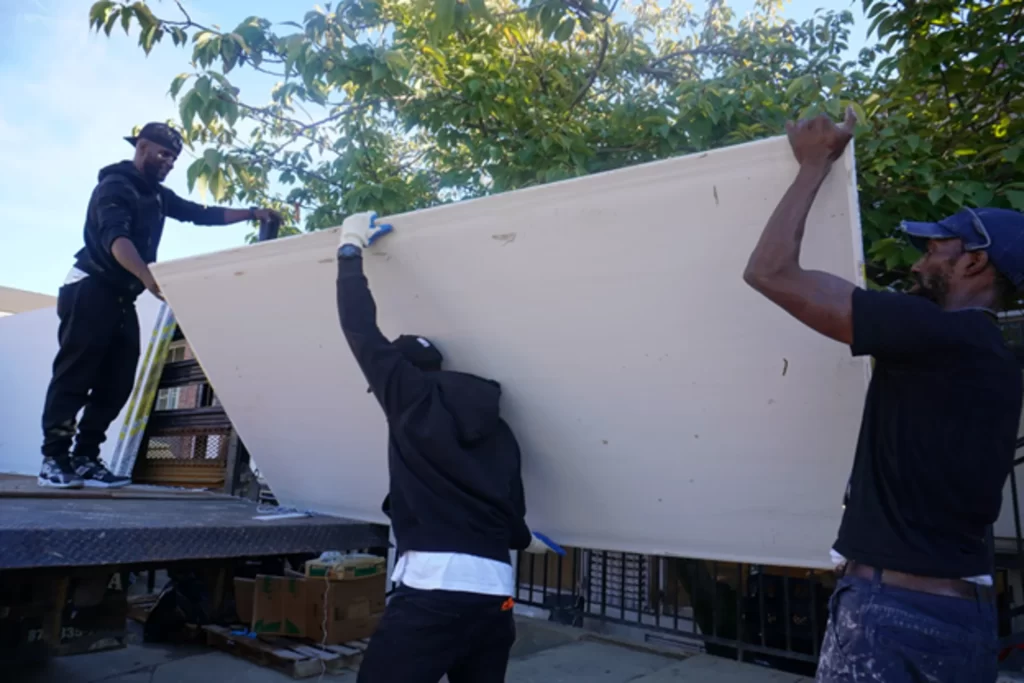
Drywall estimating is the skill that separates a worker who hangs board from a professional who runs the job. It begins with accurate drywall takeoffs, rests on blueprint reading and practical math, and uses modern tools to turn measurements into profitable bids. That is the exact progression that carries a hanger up the ladder to drywall contractor, and the pay data makes clear why the climb is worth it. In a building market as active as Philadelphia’s, the people who can price work will always have work.
If you are ready to build both the craft and the business skill behind it, explore PTTI’s Drywall, Framing, and Finishing program or schedule a campus visit to see the training firsthand.
A drywall takeoff is a measured list of everything a job needs, pulled from the plans, including board square footage, framing, fasteners, compound, and labor hours. It is the quantity data an estimator uses to build an accurate price, and it is the first step in the whole estimating process.
You need practical math, not advanced math. The work relies on area, perimeter, unit conversions, waste factors, and labor-hour calculations. These are learnable skills, and quality drywall training teaches them step by step alongside blueprint reading, so a motivated student without a strong math background can absolutely succeed.
Most contractors start as installers, learn takeoffs and pricing, begin bidding small jobs, and grow from there. Mastering construction estimating is the key step, because it lets you price work profitably, hire a crew, and run the business rather than only working on it.
Yes. A drywall estimator averages well above $80,000 nationally in 2026, demand is steady wherever construction is active, and the skill opens a direct path to becoming a contractor. Because estimating controls pricing and profit, trained estimators remain valuable to employers.
Philadelphia Technician Training Institute (PTTI) offers hands-on drywall, framing, and finishing training that builds the installation craft and the plan-reading and measurement fundamentals behind pricing, serving students across Philadelphia and nearby Pennsylvania and New Jersey communities.