
Finishing a trade program and getting hired are two different milestones, and the gap between them is smaller than most people think. Hiring managers in welding, automotive, manufacturing, and pipefitting are not looking for perfect résumés. They are looking for people who can do the work safely, show up ready, and keep learning on the job. For anyone weighing a career in the skilled trades, understanding what employers actually value is the clearest way to train with purpose and land a job faster.
This guide breaks down what employers look for when hiring entry-level trade school graduates, drawn from how real hiring decisions get made on job sites and shop floors across the Philadelphia region. You will learn which hands-on skills matter most, which industry certifications signal readiness, why soft skills like reliability often decide who gets hired, and how the right training prepares you for entry-level trade jobs. Whether you are a high school graduate, a career changer, or a veteran, knowing these expectations gives you a real advantage before you ever walk into an interview.

Employers hiring entry-level trade school graduates look for four things above all: demonstrated hands-on skill, relevant certifications, dependable work habits, and the ability to follow safety procedures. A candidate who can show these qualities is hireable immediately, because employers can trust them with real work and real equipment on day one.
Everything else, such as years of experience or an advanced credential, comes later. At the entry level, hiring managers are making a practical bet: can this person contribute safely, learn quickly, and stay reliable? When you understand that this is the question behind every interview, you can train and present yourself to answer it directly. The sections below unpack each expectation so you know exactly what employers look for and how to meet it.
The single most important thing employers look for is proof that you can perform the core tasks of the trade. In welding, that means laying a sound bead and passing a weld test. In automotive, it means diagnosing and repairing a real problem. A trade school graduate who has spent months on actual equipment stands far ahead of someone who only studied theory.
This is why the quality of a program matters so much. Hands-on training on industry-standard equipment is what turns classroom knowledge into job-site ability, and it is exactly what PTTI emphasizes across its Welding Technology program and other career tracks. Employers can tell the difference within minutes of a practical test.
When you train with real tools, you also build the muscle memory and confidence that interviews reveal. A graduate who can confidently explain how they set up a machine, troubleshoot a fault, or read a blueprint demonstrates the kind of applied competence that hands-on training produces. That competence is what moves you to the top of the hiring list.
Certifications are the second thing employers look for, because they provide independent proof of skill and safety knowledge. For a new graduate with limited work history, industry certifications do a lot of heavy lifting. They tell a hiring manager that a recognized body has verified the candidate can meet a standard.
The exact certifications depend on the trade. Welders benefit from American Welding Society (AWS) credentials. Across nearly every trade, employers also value safety training, and an OSHA safety card is often expected before a worker can step onto a job site. According to the U.S. Bureau of Labor Statistics, welders and many skilled trades workers face real workplace hazards, which is why employers treat safety credentials as non-negotiable rather than optional.
Programs that build toward recognized credentials give their graduates a measurable edge. When a school aligns its curriculum with the credentials employers request, as PTTI does across tracks like its Manufacturing & Automation program, graduates arrive already able to speak the language of the standards that matter on the job.
Safety is not a formality. Employers in the skilled trades are legally and practically responsible for job-site safety, so they screen hard for candidates who respect procedures. A graduate who understands lockout/tagout, personal protective equipment, and hazard awareness reduces risk for the whole crew. Demonstrating a strong safety mindset is one of the fastest ways to earn an employer’s trust as a new hire.
Technical ability gets you considered, but soft skills often decide who actually gets hired. Employers consistently say that reliability, punctuality, communication, and a strong work ethic matter as much as hands-on skill for entry-level roles. A graduate who shows up on time, listens, and works well on a crew is worth more than a slightly more skilled worker who is hard to depend on.
This is exactly why many Philadelphia trade programs treat professionalism as part of the curriculum. Skills like communication, teamwork, and showing up ready are teachable, and the best schools build them into daily practice. Programs that understand that employers hire people, not just skill sets, tend to produce graduates who get and keep jobs, which is a theme PTTI explores in its look at how trade schools help students get hired, not just trained.
For an entry-level candidate, these habits are a genuine differentiator. When a hiring manager is choosing between two graduates with similar technical skill, the one who communicates clearly and demonstrates dependability almost always wins. Treating work ethic as a skill to develop is one of the smartest moves a new graduate can make.
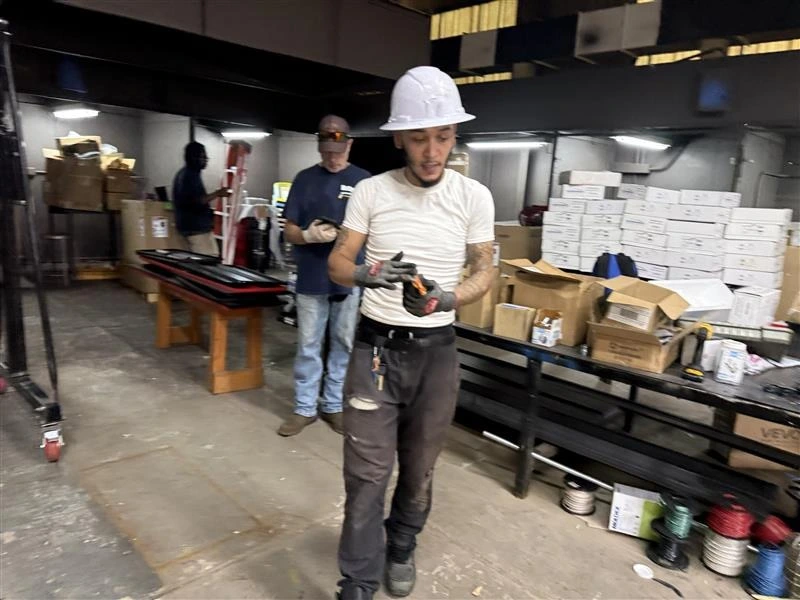
For skilled trades roles, many employers prefer trade school graduates over four-year degree holders because trade programs produce job-ready, hands-on ability in less time. A degree is rarely the gatekeeper in the trades. What matters is whether a candidate can do the work and pass the required tests.
This is a meaningful shift for anyone deciding between college and a trade path. In these fields, employers hire for demonstrated competence, certifications, and reliability rather than academic credentials. That is why so many graduates report getting hired within a year of starting focused training. The trade-school route is not a lesser option here; it is often the direct one.
None of this guarantees a specific job or salary, and outcomes always vary by effort, employer, and market conditions. But the broad pattern is clear: for these roles, hands-on training and proof of skill carry more weight than a diploma, which makes trade school a strong, efficient investment for the right person.
Good trade schools are built around what employers look for, not around theory for its own sake. The strongest programs regularly update their curriculum based on employer feedback and local industry demand, so graduates learn the exact skills, tools, and certifications that hiring managers request. This alignment is what turns a graduate into a candidate employers actually want.
Effective preparation usually includes several elements working together:
| What Employers Want | How Quality Training Delivers It |
| Proven hands-on ability | Real lab time on industry-standard equipment |
| Recognized credentials | Curriculum aligned to industry certifications |
| Safety readiness | Integrated safety and OSHA-focused training |
| Professional habits | Attendance, teamwork, and work-ethic standards |
| A smooth path to hire | Career support, résumé help, and interview prep |
The last element matters more than people expect. Career services that help with résumés, interview preparation, and employer connections shorten the distance between graduation and a paycheck. When you have questions about how a program supports that transition, PTTI’s common questions about training and enrollment are a useful place to start. A school that takes job readiness seriously treats placement support as part of the education, not an afterthought.
Philadelphia and its surrounding region offer steady demand for entry-level trade jobs, which makes local training especially valuable. The area’s mix of manufacturing, construction, ship repair, automotive service, and facility maintenance means employers across multiple industries are regularly hiring new technicians and tradespeople.
That diversity matters for graduates. A trained worker in Philadelphia is not dependent on a single employer or sector. Opportunities extend from the city’s neighborhoods, including North, South, and West Philadelphia, out into nearby Pennsylvania communities such as Yeadon, Lansdowne, Darby, and Drexel Hill, and across the river into South Jersey towns like Camden, Pennsauken, Cherry Hill, and Maple Shade. Nationally, the Bureau of Labor Statistics projects tens of thousands of openings each year in the skilled trades, driven largely by the need to replace retiring workers, and the Philadelphia region reflects that same replacement demand.
For an entry-level graduate, this local depth means a credential and solid hands-on training can open doors in several directions at once. Training where the jobs are is one of the practical advantages of choosing a Philadelphia-based program.
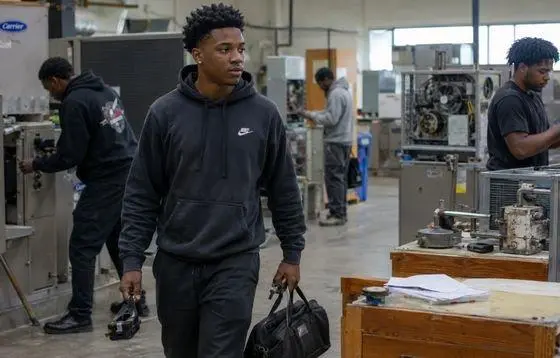
Knowing what employers look for is only useful if you act on it. Entry-level trade school graduates who get hired fastest tend to do a few specific things well:
Do each of these consistently, align yourself with what employers look for, and you stop looking like a beginner and start looking like a safe hire. That shift in perception is exactly what gets entry-level candidates across the finish line.
Getting hired after trade school comes down to meeting a short, consistent list of employer expectations: prove you can do the work, carry the certifications that signal readiness, respect safety, and show up as a dependable professional. Entry-level trade school graduates who train with those expectations in mind, and who choose a program aligned to real employer needs, consistently move from classroom to paycheck faster than those who leave it to chance. In a region with steady demand across the skilled trades, that preparation is what turns a new graduate into a confident first hire.
If you are ready to train for what employers actually want, explore PTTI’s hands-on programs or contact the admissions team to find the path that fits your goals.
Employers look for demonstrated hands-on skill, relevant certifications, safety awareness, and dependable work habits. At the entry level, the core question is whether a candidate can contribute safely and reliably from day one, so proof of ability and professionalism matter most.
For skilled trades roles, many employers prefer trade school graduates because they bring job-ready, hands-on ability in less time. A four-year degree is rarely required; demonstrated competence, certifications, and reliability carry far more weight in hiring decisions.
It depends on the trade, but safety credentials like an OSHA card are widely expected, and trade-specific certifications such as AWS credentials for welders strongly signal readiness. Industry certifications give new graduates independent proof of skill when work history is limited.
Strong programs align their curriculum with employer feedback and local demand, deliver hands-on training on real equipment, build in safety and certification preparation, and provide career support like résumé and interview help to ease the move into employment.
Yes. Philadelphia’s mix of manufacturing, construction, automotive, and maintenance employers creates steady demand for entry-level trade jobs, and much of that demand is driven by the need to replace retiring skilled workers across the region.