
Every few months, a new headline warns that artificial intelligence is coming for someone’s job. For students weighing their futures, and for adults thinking about a career change, that noise makes one question urgent: which careers will still be here in ten or twenty years? The clearest answer, backed by labor economists and hiring managers alike, is the skilled trades. There are entire categories of skilled trades AI can’t replace, because the work happens in the physical world, in unpredictable conditions, using judgment that no algorithm has learned to reproduce.
This is not wishful thinking. The same research institutions that model automation risk consistently rank hands-on, site-based physical work among the hardest jobs to automate. A welder reading how a joint is behaving in real time, an HVAC technician diagnosing a system by sound and airflow, a pipefitter routing around obstacles no drawing predicted- these are exactly the tasks machines struggle with. Meanwhile, the trades face the opposite of a jobs crisis: an aging workforce is retiring faster than new workers are entering, leaving employers competing for trained talent.
For anyone in Philadelphia and the surrounding region, that gap is an opportunity. This guide breaks down the specific skilled trades that automation can’t replace anytime soon, what they pay, why they resist automation, and how hands-on training at Philadelphia Technician Training Institute (PTTI) turns that opportunity into a real, future-proof career.
AI and automation can’t replace most skilled trades because the work is physical, non-routine, and performed in unpredictable environments. Software excels at digital, repetitive tasks, but it cannot crawl into a tight mechanical room, feel a misaligned fitting, or make a judgment call when a job site doesn’t match the blueprint. That combination of dexterity and on-site reasoning is what keeps tradespeople in demand.
Research from the McKinsey Global Institute has long identified physical tasks that require fine motor skills in unpredictable settings as among the least automatable categories of work. That describes the daily reality of welders, pipefitters, HVAC technicians, electricians, and automotive technicians. One widely cited analysis even placed the automation probability for electricians at roughly 16 percent, low precisely because every building, panel, and fault is a little different.
There is also a simple economic reason. Building a robot capable of handling billions of one-off situations, across old row homes, modern high-rises, cars, and factory floors, is far more expensive than training a skilled human who can adapt on the spot. For the foreseeable future, the smart money is on enhancing skilled workers with better tools, not replacing them.
No two job sites are identical. Pipes run where they shouldn’t, older buildings hide problems no drawing mentions, and a repair often depends on space, access, and conditions a technician can only assess in person. AI performs well in clean, controlled, digital environments. The trades happen in the messy, physical one, which is exactly why they resist automation.
The most valuable thing a skilled tradesperson brings is judgment: knowing what’s wrong, why, and the safest, fastest way to fix it. That knowledge is built through hands-on repetition and mentorship. It is not a dataset an AI can simply absorb, which is a core reason these remain careers automation can’t replace.
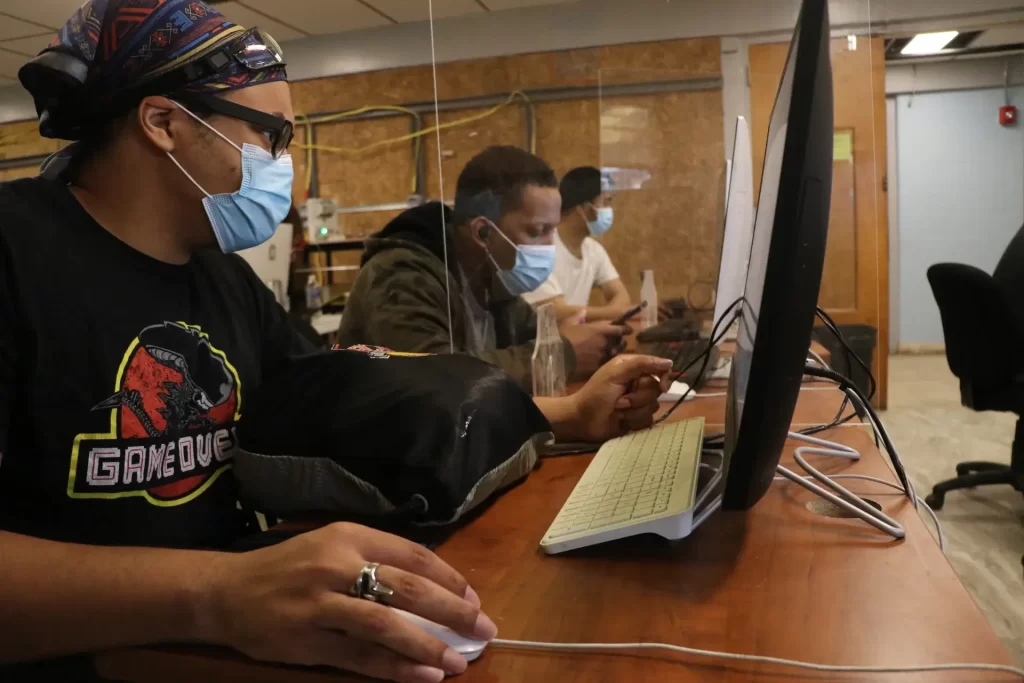
The following trades combine three qualities that make them durable: hands-on physical work, real-time problem-solving, and steady employer demand. Each is also a program area where PTTI provides hands-on, employer-aligned training.
Welding is a defining example of a skilled trade AI can’t replace. A welder constantly reads the puddle, heat, and material behavior and adjusts by hand, often in awkward positions or in the field on infrastructure a machine can’t reach. Robotic welding exists in factories for repetitive production runs, but structural, pipe, and repair welding still depend on human skill and certification. The U.S. Bureau of Labor Statistics reports about 45,600 welding openings each year through 2034, largely to replace retiring workers, and Philadelphia’s shipbuilding, fabrication, and infrastructure work keeps local demand strong.
Pipefitting is physical, spatial, and safety-critical, everything automation handles poorly. Fitters route, cut, join, and pressure-test systems in confined spaces and around obstacles that no two buildings share. BLS projects steady openings for plumbers, pipefitters, and steamfitters through 2034, and fire-protection and mechanical systems in commercial buildings across the region require certified human hands.
HVAC is one of the strongest future-proof trades on the board. Technicians diagnose, install, and repair heating and cooling systems in thousands of unique buildings, work that requires physical presence and troubleshooting AI can’t perform. The numbers back it up: BLS reports a median wage of $59,810 (May 2024) and projects 8 percent growth from 2024 to 2034, much faster than average, with about 40,100 openings each year. An industry-wide technician shortage, driven by roughly five retirements for every two new entrants, is pushing wages up.
Modern vehicles are rolling computers, but fixing them is still deeply physical. An automotive technician uses diagnostics as a tool, then relies on hands, hearing, and judgment to locate and repair the actual fault. As EVs and advanced driver systems spread, the work grows more technical, not less, which raises the value of trained technicians rather than eliminating them.
This one surprises people: automation itself creates AI-resistant jobs. Someone has to install, program, maintain, and troubleshoot the robots and automated lines. Manufacturing and automation technicians are the humans who keep automated systems running, and as factories add more technology, demand for those skills climbs. It’s a clear case of automation augmenting the workforce rather than replacing it.
Masonry and framing are among the hardest trades to automate. The work is highly variable, site-specific, and dependent on skilled hands adjusting to real conditions, materials, weather, and structures that never match a template exactly. Construction’s ongoing labor demand across the Philadelphia region keeps these builders essential.
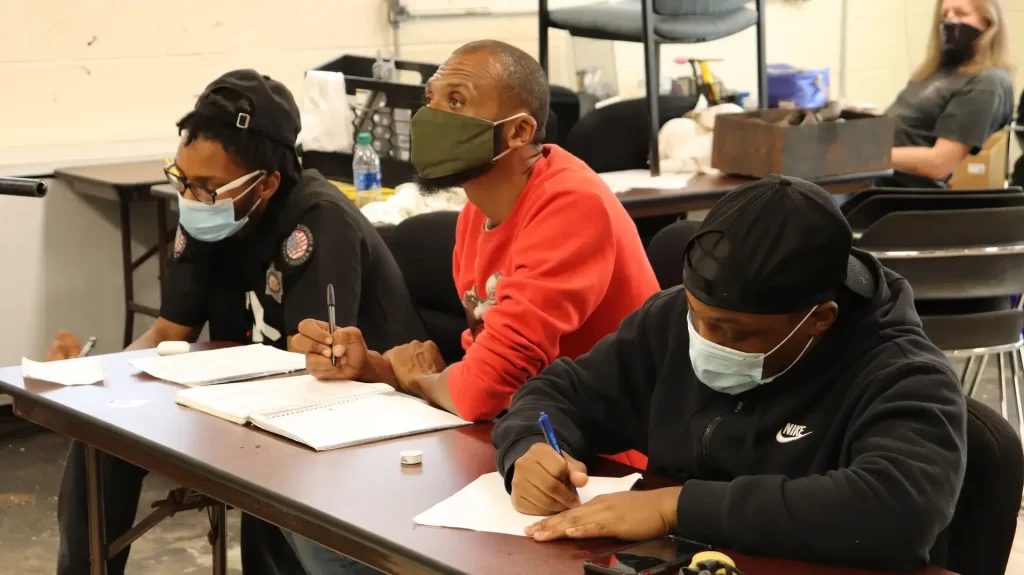
In healthcare, sterile processing technicians handle, decontaminate, inspect, and sterilize surgical instruments with a precision and accountability that hospitals cannot hand to a machine alone. The role is hands-on, detail-critical, and tied to patient safety, and Philadelphia’s large hospital and life-sciences sector makes it a stable, in-demand path.
One reason these careers are worth serious consideration is that they pay well without a four-year degree. The table below summarizes national outlook data; local Philadelphia pay often runs higher due to union presence, shipbuilding, and construction activity.
| Trade | Median / Typical Pay (National) | Projected Growth (2024–34) | Automation Resistance |
| HVAC Technology | ~$59,810 median | +8% (much faster than avg.) | High |
| Welding Technology | ~$48,000–$50,000 median | +2% (steady, retirement-driven) | High |
| Steam / Sprinkler / Pipe Fitting | Competitive; union roles higher | +4% | High |
| Automotive Repair | Competitive; specialists higher | Steady | High |
| Manufacturing & Automation | Competitive; tech-driven premiums | Growing with factory tech | High |
| Masonry & Framing | Competitive; skilled roles higher | Steady construction demand | Very High |
| Sterile Processing | Stable healthcare wages | Growing with healthcare | High |
A pattern stands out across all seven trades: much of the demand comes from replacing a retiring workforce, not just new growth. Nationally, welding alone accounts for roughly 45,600 openings a year, HVAC about 40,100, and electricians about 81,000, with most of those tied to workers leaving the field. For new entrants, that replacement demand is a powerful tailwind.
Automation is reshaping the trades, but the story is augmentation, not replacement. AI-assisted diagnostics help automotive and HVAC technicians pinpoint issues faster. Advanced welding systems handle repetitive factory runs while certified welders take on the complex, custom, and field work. Collaborative robots (cobots) share factory tasks with human technicians who program and maintain them. Smart layout and measurement tools make masons and framers more precise.
In every case, the technology raises the value of the trained worker who can operate, interpret, and troubleshoot it. The tradespeople who thrive in 2026 and beyond are the ones who learn to work alongside these tools, which is precisely the skill set modern hands-on training is built to deliver.
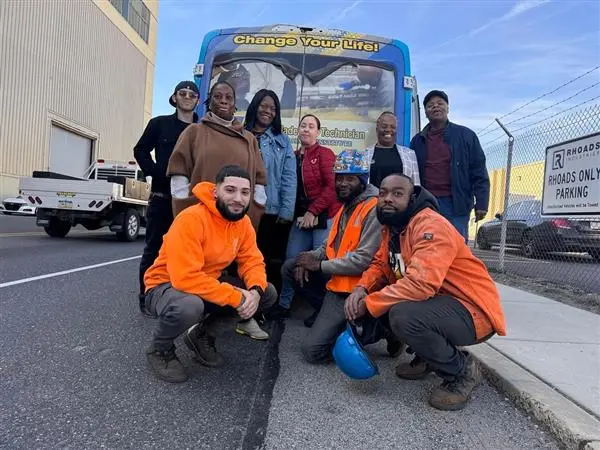
Not every job is equally protected. The skilled trades AI can’t replace tend to share the same traits. When evaluating any career for long-term security, look for these signals:
Score any career against that list and the pattern is clear: the trades check every box.
Understanding that the trades are future-proof is one thing; getting trained for them is another. This is where hands-on education matters, because the judgment and dexterity that make these careers automation-resistant can only be built by doing the work.
PTTI’s programs are structured around applied, real-world learning:
For high school students, career changers, veterans, and adult learners across the Philadelphia area, that combination turns a future-proof trade into a reachable, near-term goal.
Ready to explore your options? Explore PTTI’s hands-on trade programs, request information, or schedule a campus tour to see the labs in person.
These careers fit a wide range of people looking for stability in an AI-driven economy:
If you want a career built on skills that stay valuable as technology advances, a hands-on trade is one of the smartest bets available.
The anxiety about AI is understandable, but for anyone choosing a career path, it points to a clear conclusion. The safest bet is not to compete with machines at digital tasks, it’s to master the physical, judgment-driven work machines can’t do. The skilled trades AI can’t replace, welding, pipefitting, HVAC, automotive repair, manufacturing automation, masonry, and sterile processing, offer exactly that: durable demand, competitive pay without a four-year degree, and work that stays essential as technology advances.
The one thing these careers require is real, hands-on training. That’s the bridge between recognizing a future-proof opportunity and actually stepping into it.
Take the next step. Explore PTTI’s programs, apply now, or contact admissions to start building a career automation can’t replace. Veterans can review veterans education benefits, and anyone weighing cost can explore financial aid options.
Welding, pipefitting, HVAC, automotive repair, manufacturing and automation maintenance, masonry and framing, and sterile processing are among the skilled trades AI can’t replace. They rely on physical work, real-time judgment, and unpredictable job sites that automation cannot reliably handle.
AI struggles with non-routine physical tasks in unpredictable environments. Research consistently ranks hands-on work requiring fine motor skills and on-site judgment among the least automatable. Trades also require adaptability and troubleshooting that can’t be reduced to a fixed program.
Largely, yes. Robotic welding handles repetitive factory runs, but structural, pipe, and field welding still need certified humans. HVAC work is highly site-specific and is projected by BLS to grow 8 percent through 2034, much faster than average, with a significant technician shortage.
HVAC technology, welding, pipefitting, automotive repair, manufacturing and automation, masonry, and sterile processing all offer competitive pay, often $50,000–$80,000 or more with experience, certification, or union roles, without a bachelor’s degree.
It’s shifting them. As factories add robots and automated lines, they need technicians to install, program, and maintain that technology. Manufacturing and automation is a clear example of automation creating skilled, AI-resistant roles rather than eliminating them.
Many hands-on trade programs prepare students for entry-level work in months rather than years. PTTI’s programs are built around fast, applied, employer-aligned training for the Philadelphia region.
Philadelphia Technician Training Institute (PTTI) offers hands-on programs in welding, HVAC, pipefitting, automotive, manufacturing and automation, construction, and sterile processing, serving students across Philadelphia and the surrounding area.