
Looking for the best pay for pipefitter workers? You’re asking the right question. Where you work matters just as much as how skilled you are. However, most people never check state-by-state numbers before choosing where to build their career. Below, we break down the 8 best-paying states, plus how to actually get into this trade.
Pipefitter salary isn’t the same everywhere. Its very fluctuating especially It depends on the state and city; the cost of living, construction demand, and union presence all shift the numbers. Additionally, states with more industrial and commercial building tend to pay more for skilled trades.
Why location matters so much is discussed here; you must have a look
Therefore, picking the right state can seriously boost your earning potential and will give you career growth with the perfect lifestyle.
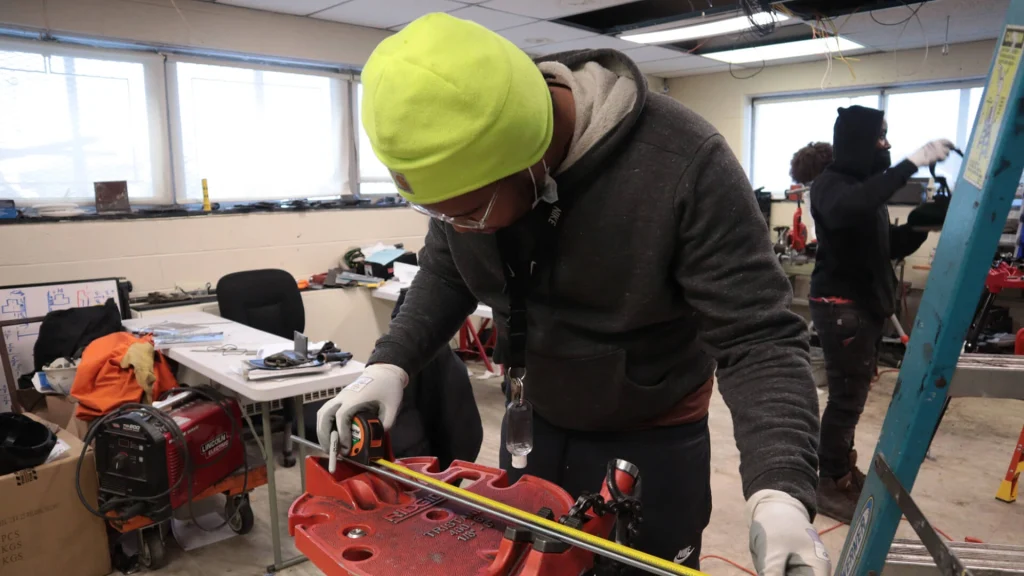
Before understanding the details about individual states, the below findings say it all for pipefitter jobs in the United States:
| Metric | Approximate Range |
| Entry-Level Hourly | $18 – $24 |
| Mid-Career Hourly | $28 – $36 |
| Experienced Hourly | $38 – $50+ |
| National Annual Average | $55,000 – $75,000 |
Overall, this trade program offers strong upward movement as experience builds. At every stage
High-Paying Tier
| State | Hourly Range | Annual Range |
| Illinois | $40 – $52 | $83,000 – $108,000 |
| New York | $38 – $50 | $79,000 – $104,000 |
| California | $37 – $49 | $77,000 – $102,000 |
Mid-Paying Tier
| State | Hourly Range | Annual Range |
| New Jersey | $32 – $42 | $67,000 – $87,000 |
| Massachusetts | $31 – $41 | $65,000 – $85,000 |
| Washington | $30 – $40 | $62,000 – $83,000 |
Solid-Growth Tier
| State | Hourly Range | Annual Range |
| Pennsylvania | $27 – $36 | $56,000 – $75,000 |
| Ohio | $26 – $34 | $54,000 – $71,000 |
Moreover, Pennsylvania stands out because of steady demand in Philadelphia’s construction and industrial sectors, making it a strong entry point for new technicians.
The entry-level salary for a pipefitter salary is around $20/hour, mid-career at around $32/hour, and experienced technicians can get over $45/hour. This is the data according to BLS. However, that shift in salary shows exactly why staying in the trade pays off over time.
| Experience Level | Hourly Rate |
| 0–2 Years | $18 – $24 |
| 3–7 Years | $28 – $36 |
| 8+ Years | $38 – $50+ |
Therefore, patience, along with dedication and continued skill-building, directly translates into bigger paychecks.
Several factors push pay higher for pipefitter jobs, regardless of state:
Additionally, technicians willing to travel for large industrial projects often see the highest pay bumps.
It’s not just about pay — job availability matters too. According to the U.S. Bureau of Labor Statistics, employment for plumbers, pipefitters, and steamfitters is projected to grow steadily over the next decade, driven by nationwide construction and infrastructure needs.
| Trade | Job Growth Outlook |
| Pipefitting | Steady growth |
| HVAC | Steady growth |
| Welding | Moderate growth |
Overall, pipefitting remains one of the more stable, dependable skilled trades going forward.
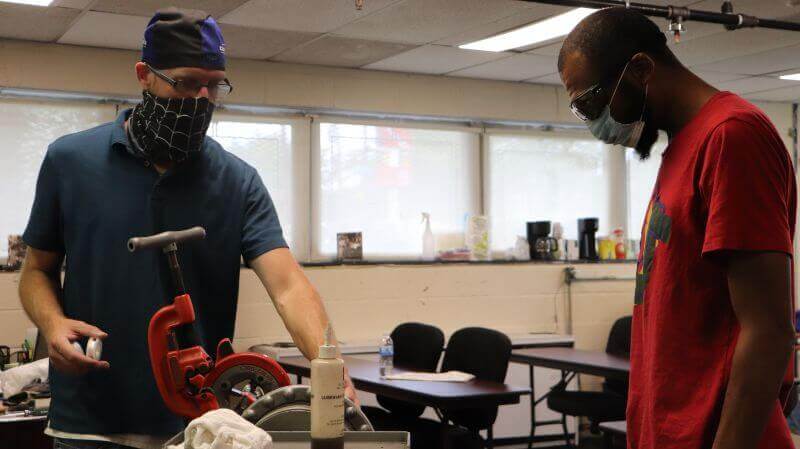
Pipefitter salaries depend on more than just skill. Several factors push wages higher in certain states:
For example, Illinois leads the nation in average annual pay for plumbers, pipefitters, and steamfitters over $98,000, driven by union contracts and major infrastructure work.
Here’s a perfect roadmap of how pipefitter salary tends to grow:
Finally, many pipefitters use this roadmap to plan certifications and career moves strategically.
Getting into this trade doesn’t require years of school. Here’s the basic process:
While PTT’s core programs focus on drywall, framing, masonry, and automation, the skills you learn—blueprint reading, safety compliance, and hands-on tool mastery—translate directly to pipefitting careers.
Many PTT graduates start as construction workers or in drywall framing, then cross-train into pipefitting or employer-sponsored programs. This “earn while you learn” path is one of the fastest ways to reach six-figure potential. This path showcases their interested field.
If you are serious about pipefitting, start with a solid foundation in construction basics then specialize through on-the-job training or UA programs.
PTTI’s Steam/Sprinkler/Pipefitting program runs about 26 weeks and includes hands-on lab training. Additionally, PTTI reports a placement rate of nearly 92%, indicating that graduates are landing jobs in the field.

The best salary for pipefitters depends mostly on location, experience, and certifications. The best certification will provide you with good career opportunities. Moreover, Pipefitting remains one of the best-paying trades in 2026 if you know where to look. States like Illinois, Alaska, and New Jersey offer top wages, but success also depends on your skills, certifications, and willingness to work in high-demand sectors.
Ready to build your future? Start with hands-on training at PTT, then target union apprenticeships or industrial employers in high-paying regions. Your $80K+ career is within reach.
Ready to start your pipefitting career? Contact PTTI at 215-381-9403 or info@ptt.edu to speak with an advisor.
Note: Salary figures above are representative ranges based on general industry patterns — worth double-checking against current BLS or state labor department data before publishing, since these numbers shift year to year.
Illinois, New York, and California currently offer some of the highest pipefitter salary ranges.
Programs like PTTI’s Steam/Sprinkler/Pipefitting track run about 26 weeks.
No. Most pipefitter jobs require trade certification rather than a four-year degree.
Yes. Experienced pipefitters often earn significantly more than entry-level workers.
Yes. PTTI accepts FAFSA applications under school code 042213.
Read more :