
Ask ten people to name skilled trades jobs and you’ll hear the usual answers: electrician, plumber, welder. Those are correct, but they barely scratch the surface. The category is far broader than most people realize, spanning construction, manufacturing, healthcare support, transportation, and advanced technical work that keeps hospitals, factories, and infrastructure running. If you’re weighing your options after high school, thinking about a career change, or simply trying to understand where the stable, well-paying work is, knowing what actually counts as a skilled trade is the first step toward one of the most reliable skilled trades careers available today.
This guide answers the question of what are skilled trades in plain terms, lays out the complete 2026 list of skilled trades jobs, explains what separates a skilled trade from other work, and shows which trades are hiring hardest right now. It’s written for students, graduates, veterans, and adult learners across the Philadelphia region who want real answers, not recycled career-quiz filler. Along the way, you’ll see which of these trades you can train for locally and how quickly you can move from classroom to paycheck.
A skilled trade is defined by training, not just labor — it requires specialized, hands-on competency built through instruction, practice, and often certification.
The list is broad: skilled trades jobs span construction, metalworking, mechanical, automotive, manufacturing, and healthcare-support fields.
Demand is structural, not temporary — U.S. construction alone needs roughly 349,000 net new workers in 2026, driven heavily by retirements.
Trades pay a premium: skilled-trade roles pay about 31% more than the median for other jobs that don’t require a bachelor’s degree.
Six trades PTTI trains for are among the most in-demand: welding, manufacturing & automation, automotive, pipefitting, masonry/framing, and sterile processing.
Philadelphia demand is strong across infrastructure, manufacturing, healthcare, and construction throughout PA, NJ, and DE.
You don’t need four years: many skilled trades jobs are reachable through focused training in under a year.
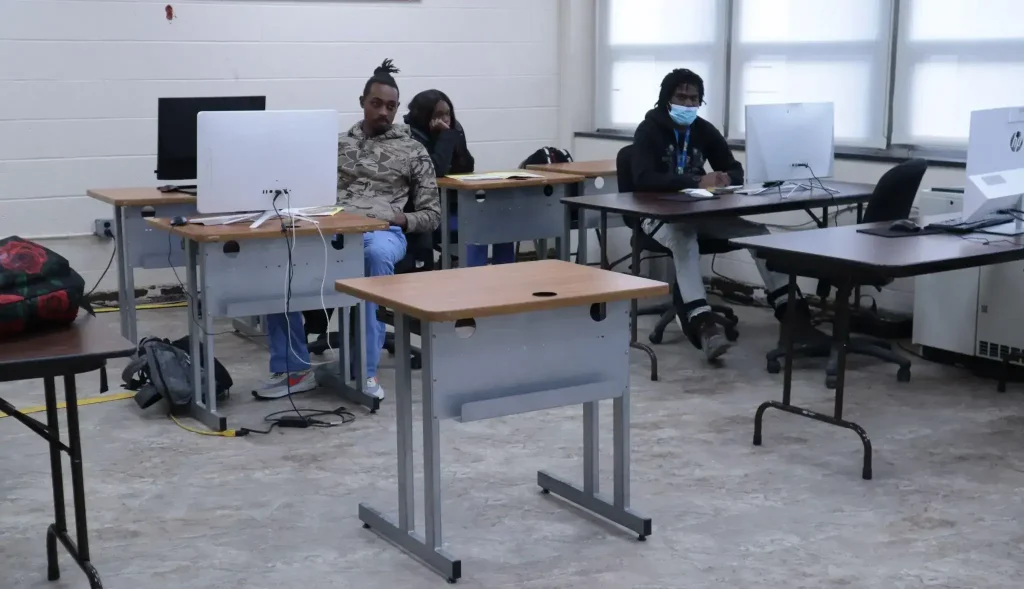
A skilled trade is an occupation that requires specialized, hands-on knowledge and practical ability developed through formal training, apprenticeship, or structured instruction, rather than a four-year academic degree. What sets it apart is demonstrated competency: the worker can perform technical tasks to a standard, often verified by certification or licensing.
That definition matters because it draws a clear line. Skilled trades jobs are not simply manual labor. They combine technical understanding, safety discipline, problem-solving, and tool mastery. A welder reading a blueprint and laying a code-compliant weld, a sterile processing technician following exact decontamination protocols, or an automotive technician diagnosing an electrical fault are all applying trained judgment, not just physical effort. That trained judgment is exactly what employers pay for, and it is what makes skilled trades careers unusually resistant to automation and offshoring.
Skilled trades jobs fall into several broad families. Below is a practical, categorized list of skilled trades that employers are hiring for in 2026. This list of skilled trades isn’t every niche occupation in existence, but it covers the fields where training leads reliably to real work.
These trades build and maintain the physical world around us — homes, offices, bridges, and public infrastructure.
For anyone drawn to this family of work, PTTI’s concreting, masonry, and framing program and its drywall framing and finishing program map directly onto several of these roles.
These trades install, maintain, and repair the systems that move water, steam, air, and energy through buildings and plants.
Steam, sprinkler, and pipe systems are a core PTTI focus. If mechanical systems interest you, the steam, sprinkler, and pipe fitting program trains directly for these in-demand positions.
Metalworking trades join, shape, and fabricate the steel and metal that hold structures and machines together.
Welding is one of the most versatile trades on this list, and one of the fastest to enter. Prospective students can explore the welding technology program to see how a focused path leads into fabrication, structural, and pipe work. For a deeper look at the field, our guide on how to become a welder in Philadelphia breaks down the timeline.

These trades keep vehicles and transportation systems safe and running, increasingly using advanced diagnostics and electronics.
Modern automotive work is as much about data and electronics as it is about wrenches. Students interested in this direction can look into the automotive repair technician program, which reflects how diagnostics-driven the field has become.
These trades run, program, and maintain the automated equipment behind modern production.
As factories adopt more robotics and connected systems, demand for technicians who can keep that equipment running is climbing. The manufacturing and automation program prepares students for exactly this kind of Industry 4.0 work.
Not every skilled trade wears a hard hat. Several technical roles support healthcare and depend on precise, protocol-driven skill.
Sterile processing is one of the fastest routes into a hospital career. The sterile processing and central services program trains students for a role that hospitals across the region need filled.
A newer but fast-growing branch of the skilled trades list ties directly to clean energy and modern infrastructure.
The clearest way to understand the category is to compare it against the alternatives. Skilled trades jobs sit between unskilled labor and degree-dependent professions, and they carry advantages over both.
| Factor | Skilled Trades | Unskilled Labor | Four-Year Degree Path |
| Training required | Specialized, hands-on | Minimal | 4+ years academic |
| Entry cost | Lower, focused tuition | None | Often significant debt |
| Credential | Certification / license | None | Bachelor’s degree |
| Earning start | Quickly | Immediately, but capped | Delayed |
| Automation risk | Low (judgment-based) | Higher | Varies |
| Career ceiling | High (foreman, owner) | Low | High |
The middle column is where a lot of workers get stuck. Unskilled roles pay from day one but rarely lead anywhere. Skilled trades jobs require an upfront investment in training, but that investment is what unlocks higher wages, stability, and advancement. Notably, roughly one in three skilled-trade workers eventually moves into a management or executive role, showing these careers are launchpads, not dead ends.
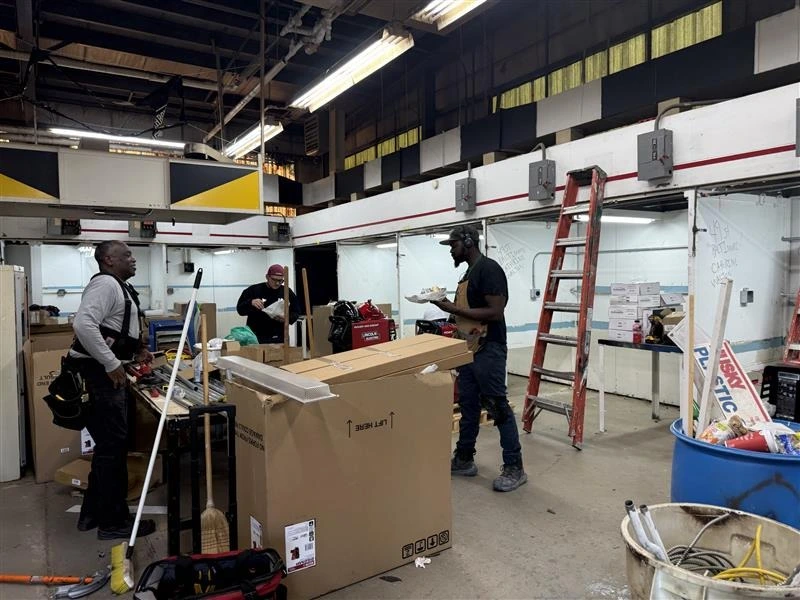
The most in-demand trade jobs in 2026 include electricians, welders, HVAC technicians, plumbers, pipefitters, industrial maintenance technicians, and manufacturing and CNC technicians. Demand for these in-demand trade jobs is driven by a wave of retirements, infrastructure investment, and manufacturing growth — a structural shortage rather than a temporary spike.
The numbers make the case plainly. Industry analysis from the Associated Builders and Contractors estimates U.S. construction needs roughly 349,000 net new workers in 2026 and about 456,000 in 2027, with more than half of that simply replacing retiring workers. In manufacturing, Deloitte and the Manufacturing Institute project that as many as 3.8 million new workers could be needed by 2033, with a large share at risk of going unfilled. Meanwhile, national research from JLL warns that by 2030, an estimated 2.1 million skilled trades positions across trades like electrical, HVAC, plumbing, and pipefitting could go unfilled.
For a prospective student, that gap is opportunity. When more than nine in ten construction firms report difficulty finding qualified craft workers, a trained candidate walks in with leverage. Our overview of in-demand trade jobs in Philadelphia shows how this national picture plays out locally.
Skilled trades jobs pay competitively, and the wage gap over other non-degree work is significant. Labor-market research indicates high-paying trade jobs pay roughly 31% more — about $13,000 more per year — than the median for other occupations that don’t require a bachelor’s degree. Actual pay varies by trade, certification, region, and union status, but the highest-paying trade jobs cluster in specialized, certified, and union roles.
| Skilled Trade | Typical U.S. Pay Range (Median-Based) |
| Welder | ~$48,000 – $70,000+ |
| Pipefitter / Steamfitter | ~$55,000 – $80,000+ |
| Electrician | ~$60,000 – $85,000+ |
| Automotive Technician | ~$45,000 – $70,000 |
| Manufacturing / Automation Technician | ~$50,000 – $75,000 |
| Sterile Processing Technician | ~$40,000 – $60,000 |
A few points worth emphasizing. These are ranges, and experienced, certified, and union tradespeople frequently earn well above the top figures. Overtime is common in many trades and adds to take-home pay. And because most of these credentials are portable, earning power travels with the worker. For a fuller breakdown, see our resource on high-paying trade jobs without a degree.
Knowing the list is one thing; acting on it is another. Among trade school programs in Philadelphia, Philadelphia Technician Training Institute (PTTI) focuses on six skilled trades that appear repeatedly on any 2026 list of in-demand trade jobs, and it trains for them with hands-on labs and industry-standard equipment rather than lecture-only instruction.
What ties these together is a workforce-readiness approach: real practice, certification preparation, and support moving into employment. You can explore all PTTI programs> to compare them side by side, or reach out to PTTI admissions to talk through which path fits your goals.
No. The defining feature of skilled trades jobs is that they’re reachable through focused training, certification, or apprenticeship rather than a four-year degree. Most employers care about demonstrated skill and relevant credentials, not a bachelor’s diploma. That’s precisely why skilled trades careers appeal to people who want to start earning sooner and avoid heavy student debt.
This is also where the timeline advantage shows up. Many skilled trades can be entered through programs measured in months, not years. If you’re weighing your options, our comparison of trade school versus a traditional college path breaks down the trade-offs in cost, time, and outcomes. For those worried about affordability, PTTI’s financial aid resources explain what support may be available.
Skilled trades jobs suit a wide range of people, which is part of why the field is growing. It’s worth a serious look if you’re:
If you like solving problems, working with your hands, and building skills that pay, skilled trades careers reward that far more than most entry-level office roles.
One reason training locally pays off is the breadth of the regional job market. Skilled trades jobs are hired across Philadelphia neighborhoods — from North and South Philadelphia to West Philadelphia, Mantua, Powelton Village, Allegheny West, and the Spring Garden corridor — and throughout the surrounding area.
Opportunities extend across nearby Pennsylvania communities including Yeadon, Lansdowne, Darby, Drexel Hill, and Ardmore, and into South Jersey towns such as Camden, Pennsauken, Collingswood, Cherry Hill, Maple Shade, Cinnaminson, Haddonfield, Gloucester City, and Audubon. Because trade credentials are portable, training centrally in Philadelphia positions graduates to take work in whichever direction the strongest opportunity appears, including into Delaware and the wider tri-state market.
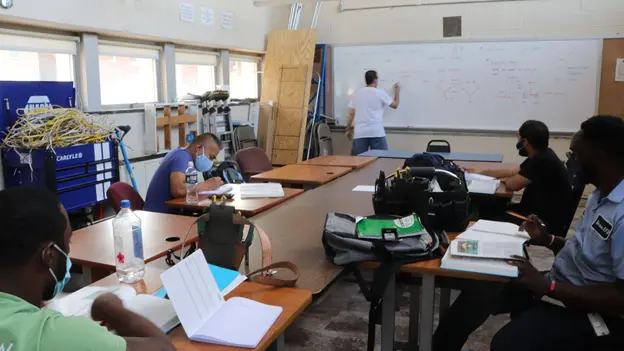
The real answer to “what jobs are considered skilled trades” is: far more than most people assume. The category runs from welding and pipefitting to automotive diagnostics, manufacturing automation, masonry, and sterile processing — each one a legitimate, well-paying career reachable without a four-year degree. And in 2026, with structural labor shortages across nearly every one of these fields, trained workers are entering a market that genuinely needs them.
If any of the skilled trades jobs on this list of skilled trades careers caught your attention, the next step is simple: learn what training actually looks like. Among trade school programs in Philadelphia, PTTI trains for six of the most in-demand skilled trades using hands-on labs and real equipment, right here in the city.
Ready to move from list to career? Explore PTTI’s programs, request information, or schedule a campus tour to see the labs for yourself and talk with admissions about the path that fits you.
Skilled trades include welders, electricians, plumbers, pipefitters, HVAC technicians, masons, carpenters, automotive technicians, manufacturing and automation technicians, and sterile processing technicians, among others. They span construction, mechanical, metalworking, automotive, manufacturing, and healthcare-support fields.
A skilled trade jobs requires specialized, trained competency — often verified by certification or licensing — while unskilled work requires little formal training. That trained skill is what commands higher pay, better stability, and stronger resistance to automation.
Electricians, welders, HVAC technicians, plumbers, pipefitters, industrial maintenance technicians, and manufacturing/CNC technicians top the 2026 demand lists. The shortage is driven largely by retirements and infrastructure and manufacturing growth.
No. Skilled trades jobs are reachable through focused training, certification, or apprenticeship. Employers prioritize demonstrated skill and credentials over a four-year degree, which is why many people enter the trades to avoid student debt.
It varies by trade, but many skilled trades can be entered through programs measured in months rather than years. Hands-on training focused on employer-tested skills is the fastest reliable route.
At PTTI, you can train in welding technology, manufacturing and automation, automotive repair, steam/sprinkler/pipe fitting, concreting/masonry/framing, and central processing and sterile services.
Yes. With documented labor shortages, a roughly 31% wage premium over other non-degree work, and clear advancement into supervisory and ownership roles, skilled trades jobs are among the most dependable career choices available.
Skilled Trade jobs that are actually considered high-paying
Hands-on Skilled trade jobs you must know
Find your path to the best skilled trade