
Two people can graduate from the same program, carry the same job title, and still watch thousands of dollars separate their paychecks every year. One welder clears $75,000 while another, with the same starting point, sits closer to $45,000. That gap puzzles almost everyone researching the skilled trades, and it is the single most useful thing to understand before you invest time and money in hands-on trade training. Pay in the trades is not random, and it is not luck. It follows a clear set of factors you can influence from day one.
This article breaks down exactly why pay varies so much inside the same trade, which factors move your earnings the most, and what the pattern looks like for high paying trade jobs across Philadelphia and the surrounding region. Whether you are a high school graduate, a career changer, a veteran, or an adult learner weighing your options, understanding these drivers helps you make smarter decisions about training, certifications, and the kind of work you pursue. The goal is simple: show you how to land on the high end of the pay range instead of the low end.
Two people in the same trade earn different pay because a job title describes what you do, not how well you do it, what you are certified to do, or where and for whom you do it. Certifications, specialization, experience, union status, overtime, industry, and location each shift earnings. Stack several in your favor and you reach the trades that pay well.
In other words, “welder,” “pipefitter,” or “automotive technician” is a category, not a salary. Inside each category sits a wide range, and the people at the top almost always share a handful of advantages. The encouraging part is that most of these advantages are earned, not inherited. You can plan for them.

When you study real wage data, the spread within a single occupation is striking. The U.S. Bureau of Labor Statistics reports that welders, cutters, solderers, and brazers nationally range from roughly the low $30,000s at the 10th percentile to the high $70,000s and beyond at the 90th percentile, according to the Bureau of Labor Statistics. That is a enormous difference for the same core job. Five factors explain most of it.
Certifications are often the fastest lever. A credential tells an employer that an inspector or testing body has verified your skill to a recognized standard, which reduces their risk and raises your value. In welding, for example, the American Welding Society runs a performance-based Certified Welder program, and certified welders routinely command higher pay than uncertified peers, particularly in pipe, refinery, and structural work. The same pattern holds across every trade: the person who can prove a specialized qualification gets the better-paying assignment. This is a core reason high paying trade jobs cluster around certified workers.
Not all work inside a trade pays the same. A welder running simple repetitive welds in a shop earns less than one who can handle pipe welding in tight positions to a strict code. An automotive technician who masters hybrid and electric-vehicle diagnostics is worth more than one limited to oil changes. Specialization narrows the pool of people who can do the job, and a smaller pool means higher pay. If you want trades that pay well, aim for the harder, higher-stakes work that fewer people can perform. PTTI’s steam, sprinkler, and pipe fitting program is one example of training built around that kind of in-demand, specialized skill.
Experience pays, but not only because of time served. Employers pay more for a track record: consistent quality, clean safety habits, the ability to read a complex drawing without hand-holding, and the reliability to show up and finish. In the skilled trades, a worker who has proven they produce sound results under pressure becomes expensive to replace, and that leverage shows up in the paycheck. This is why two people who started together can diverge sharply after a few years.
How and where you are employed changes the math. Union positions often carry higher base wages plus benefits, and the BLS consistently finds union members earn more on average than non-union workers in comparable roles. On top of base pay, overtime is common in many trades and can add thousands of dollars a year, while night and weekend shifts frequently pay a differential. Two welders with identical skill can earn very different annual totals simply because one works a steady overtime schedule on a union project and the other does not.
The same trade pays differently depending on the sector and the region. Shipbuilding, aerospace, defense, energy, and heavy construction tend to pay more than light manufacturing for the same core skill. Larger employers often pay more than small shops. And geography matters: a higher cost-of-living metro with strong demand generally pays above a rural area. For trade jobs in Philadelphia, a dense mix of construction, shipbuilding, infrastructure, and manufacturing helps keep wages competitive. Training in manufacturing and automation or another in-demand field positions you where the better-paying industries are hiring.
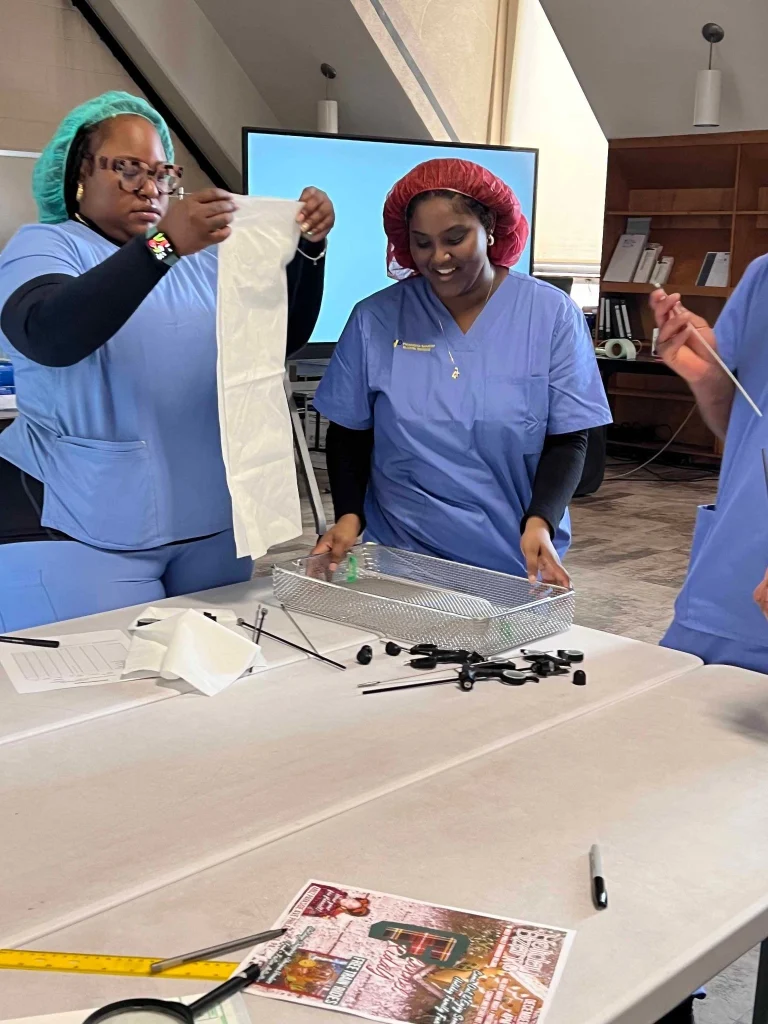
Welding is the clearest illustration because the pay spread is so visible. Regional data and compensation surveys put the typical welder salary in the Philadelphia area somewhere around $52,000 to $60,000, with entry-level roles lower and certified, specialized, or union welders often exceeding $70,000. That range is not a measurement error; it is the gap between the low end and the high end of the same trade.
Picture two graduates. The first takes a steady shop job running basic welds, stays uncertified, and works days with little overtime. The second earns a welding certification, develops pipe-welding skill, joins a union project in shipbuilding, and picks up regular overtime. A few years in, their welder salary figures can differ by $20,000 or more. Neither is working harder in a vague sense; the second person simply stacked the factors that raise pay. You can read more about how a strong welder salary in Pennsylvania breaks down by city and specialization.
The lesson applies to every trade. That spread is just an easy way to see a pattern that repeats for electricians, pipefitters, HVAC technicians, and automotive specialists alike.
There is no single trade that makes the most money for everyone, because the top earners in almost every trade out-earn the bottom earners in a “higher-paying” trade. Specialized pipefitters, certified welders in energy or defense, and experienced electricians can all reach six figures, while beginners in those same fields start far lower.
That is why chasing the “highest paying” trade on a list is the wrong question. A better question is: within a trade you can realistically commit to, how do you reach the top of its pay range? The trades that pay well are the ones where you build rare, verified, in-demand skill, not simply the ones with an impressive headline number. Someone who genuinely enjoys automotive work and masters automotive diagnostics and repair will usually out-earn someone who picked a “higher-paying” trade they dislike and never specialized in. Commitment and skill-building are what turn any trade into one of the genuinely high paying trade jobs.
In the Philadelphia region, the pay-variation pattern is amplified by a diverse economy, and it shapes how much trade jobs in Philadelphia actually pay. The area supports shipbuilding and repair, a strong union building-trades presence, ongoing commercial and healthcare construction, manufacturing, and infrastructure work across the city and suburbs. That mix means the same trade can be worth noticeably more here than in a smaller market, and it gives skilled workers room to move toward the better-paying sectors.
Opportunity also spreads well beyond the city core. Graduates take trade jobs in Philadelphia neighborhoods from North Philadelphia to West Philadelphia and Southwest Philadelphia, and across the region into Delaware County communities such as Drexel Hill, Lansdowne, and Darby, as well as South Jersey towns like Camden, Pennsauken, and Cherry Hill. Because skilled credentials travel, a certification earned at a trade school in Philadelphia carries the same weight whether you work in the city, the Pennsylvania suburbs, New Jersey, or Delaware.
This regional strength is also why local demand for trained workers stays steady. Employers across these areas repeatedly report difficulty finding skilled candidates, and that shortage is one more reason trade jobs in Philadelphia reward the people who show up credentialed and ready.
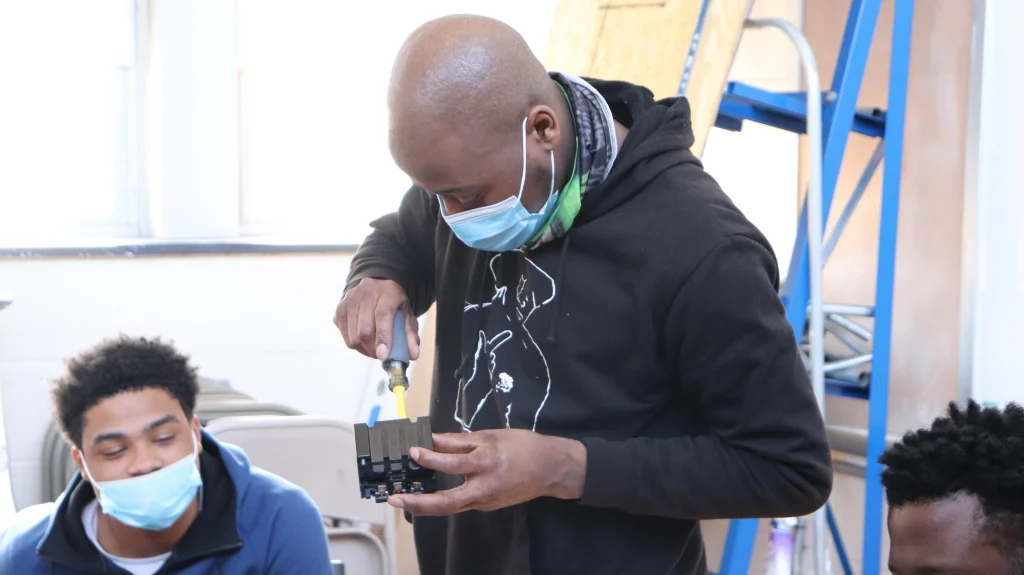
If pay variation comes down to a set of factors, then earning more is a matter of deliberately stacking them. The highest earners tend to do the same handful of things early.
A good trade school in Philadelphia accelerates the first two steps dramatically, which is where most of the early pay gap is created. Hands-on labs, industry-standard equipment, and certification-focused instruction mean you enter the workforce closer to the high end of the range rather than starting at the bottom. For many students, understanding financial aid options is the practical first move toward that training. If you are unsure which field fits your goals, PTTI’s program Matchmaker can help you compare paths before you commit.
You can enter some trades without formal training, but it usually means a slower, lower-paid start. Here is how the two paths compare on the factors that drive pay.
| Factor | Structured Trade School | Learning on the Job Alone |
| Time to job-ready skill | Focused and fast | Slower, uneven |
| Path to certification | Built into training | Often delayed or skipped |
| Starting pay position | Closer to the high end | Usually near the bottom |
| Access to specialized skills | Taught directly | Learned piecemeal, if at all |
| Employer confidence | Credential-backed | Must be proven over time |
Neither path is wrong, but the data is consistent: the people who reach high paying trade jobs faster are usually the ones who built verified skill early. Structured training is simply the most direct way to compress that timeline and reach the trades that pay well sooner.
The pay gap between two people in the same trade is not a mystery, and it is not fixed at the start. It reflects choices and investments: the certifications you earn, the specialized skills you build, the industries you target, and the reliability you prove over time. Understand those drivers, and you can plan your way toward the top of the range instead of the bottom. That is the real path to high paying trade jobs, in any field you choose. For trade jobs in Philadelphia and the surrounding counties, that path is well within reach.
If you are ready to build the verified, in-demand skills that put you on the high end of the pay scale, explore PTTI’s hands-on programs and connect with admissions to find the right fit for your goals.
Because a job title only describes the category of work, not the worker’s certifications, specialization, experience, union status, overtime, industry, or location. Each of these shifts earnings, and the top earners in a trade usually have several working in their favor at once.
Yes. Certifications verify your skill to a recognized standard, which lowers an employer’s risk and raises your value. Certified and specialized workers consistently reach higher pay than uncertified peers, which is a major reason high paying trade jobs reward credentials.
There is no single answer, because the top earners in nearly every trade out-earn beginners in a “higher-paying” field. Specialized welders, pipefitters, and electricians can all reach six figures. The trades that pay well are the ones where you build rare, in-demand, verified skill.
Regional figures put a typical welder salary in the Philadelphia area around $52,000 to $60,000, with certified, specialized, or union welders frequently exceeding $70,000. The wide welder salary range reflects exactly the pay-variation factors covered in this article.
It shortens the path to the credentials and specialized skills that unlock higher pay. By building verified ability early, a trade school in Philadelphia helps graduates enter the workforce closer to the high end of the range rather than the bottom.