
Staring at a blank page, wondering what even to put on it? You’re not alone. A skilled trades resume with no work experience feels impossible at first. Every job post seems to require years of experience. However, employers hiring for trade roles care about more than past paychecks. They want to see skills, reliability, and training. Here’s how to put all that on one page.
Trade employers know everyone starts somewhere. Many would also rather train someone with a good attitude than fix bad habits later.
What they actually look for:
So you’ve got more to offer than you think. Your job is to show it clearly.
Keep it simple to the point. One page is good enough. Clean and bigger fonts. No fancy graphics or illustration needed. Moreover, hiring managers skim fast, so make the good stuff easy to spot.
Here’s the order that works for an entry-level trades resume:
Notice that work history sits near the bottom. That’s on purpose.
Skip the stiff “seeking a challenging position” line. Nobody talks like that. Instead, say what you’re training for and what you bring. Mention your expertise in the following tools and equipment. Always mention the number of projects you completed over the years.
That should be something like this:
Hands-on HVAC trainee with EPA 608 and OSHA 30 certifications. Reliable, safety-focused, and ready to learn on the job. These certifications matter because employers look for them. Therefore, they tell an employer exactly who you are in seconds.
This is where you shine. In your resume, also add extra hands-on learning in cross skills; if you are into welding, you must show that you also know pipefitting and pipe-fixing techniques. List real, trade-specific abilities. Also include a few soft skills, since employers weigh both. This ensures that
Here’s a quick breakdown of resume skills for trades:
| Skill Type | Examples | Why It Helps |
| Technical | Reading blueprints, using hand tools, basic wiring | Shows you can do the work |
| Safety | OSHA standards, protective gear, lockout procedures | Employers hate accidents |
| Soft Skills | Teamwork, punctuality, clear communication | Shows you’re easy to work with |
| Equipment | Diagnostic tools, welders, gauges (whatever you trained on) | Proves hands-on practice |
Only list what you’ve actually practiced. You’ll get asked about it in the interview.
When you have no job history, training becomes your experience. Treat it that way. Moreover, list the hours, the tools, and what you built or repaired.

Here’s how to describe it:
An externship counts as real experience. Put it up top and describe what you did.
Certifications tell employers someone tested your skills. Therefore, give them their own section and don’t bury them.
Common examples of certifications required for each program include:
Only list credentials you’ve earned or are actively pursuing. If you’re still working toward one, write “In progress” with the expected date. Never claim a certification you don’t hold.
In the skilled trade industry, your resume, along with certification and experience, matters a lot. Below are the differentiations of how much weight must be given to a resume.
| Resume Section | Rough Space | Priority |
| Training/Certifications | ~30% | Highest |
| Skills | ~25% | High |
| Summary + Contact | ~20% | Medium |
| Education | ~15% | Medium |
| Other Experience | ~10% | Supporting |
Note: These percentages are a rough layout guide, not a rule.
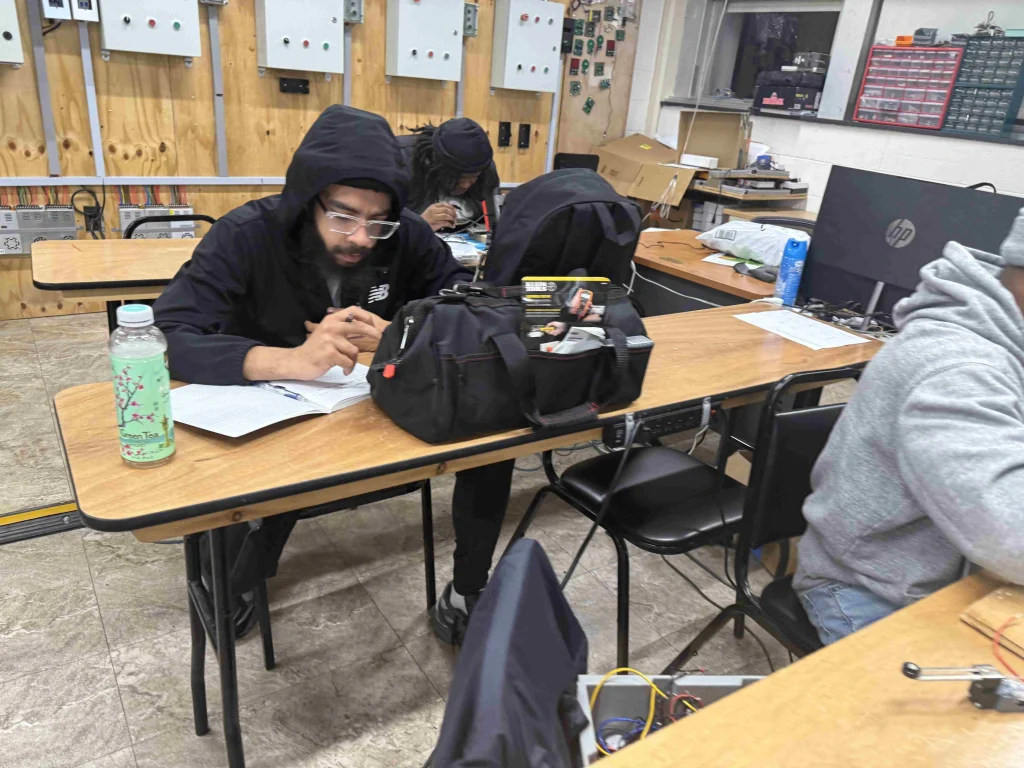
You’ve done more than you think. School projects, volunteer work, family jobs, and side gigs all count. Additionally, they show responsibility.
Ideas to include:
Describe each one with a short action line, like “Repaired and maintained equipment for church food drive.”
Use plain action words. Start each bullet with a verb. However, don’t stuff in big words you wouldn’t say out loud.
Good options:
Compare “Responsible for tools” with “Maintained and organized hand tools for a 12-person lab.” The second one is clearer and more believable. These words on your resume will make owners and employers trust you for certain work based on your mentions. That’s how many problems you’ve solved, installed, and maintained for clients in residential and commercial areas.
A few things can sink a good resume fast. Watch for these:
Finally, also be connected with your mentors . Ask them to guide you while making your resume during placement activities. Ptti mentors will definitely do that for you, since you trust them to read it before you send it.
A strong resume matters for placement and includes experience and expertise in a particular field. If you are a fresher, a certification will help you get started. According to the U.S. Bureau of Labor Statistics, employment across HVAC, automotive repair, welding, and healthcare support trades is projected to grow steadily over the next decade. So openings exist. A clear resume helps you grab one.
Philadelphia Technician Training Institute (PTTI) includes Job Application , resume writing, and interview preparation during the placement process in its programs. That covers resumes, interviews, and workplace expectations. Additionally, hands-on labs and externships give you real material to put on the page.
Here’s how to get started:
PTTI reports a placement rate near 92% across its trade programs.
A skilled trades resume with no work experience isn’t empty. It’s just built differently. Lead with training, certifications, and real skills. Then back it up with honest examples from school, volunteer work, or side jobs. However, the best resume still needs follow-through, so apply, follow up, and keep learning. Overall, show employers you’re ready to work, and the experience will come.
Ready to build skills worth putting on a resume? Call PTTI at 215-381-9403 or email info@ptt.edu to talk with an advisor.
Yes. Many employers hire and train people who have certifications, hands-on training, and a good attitude.
Yes. When you have little work history, training and certifications should come first.
One page. Hiring managers skim quickly, so keep it short and clear.
Yes, if you mark it “in progress” with an expected date. Never list one you haven’t earned.
PTTI includes Job Application Skills coursework covering resumes, interviews, and workplace expectations.
Read More :