
Picking a career around what is hiring today is only half the decision. The smarter question is which skilled trades in demand right now will still be hiring a decade from now, after automation, retirements, and shifting technology reshape the job market. For students, career changers, and adults across the Philadelphia region, that answer determines whether a training investment pays off for years or stalls out. The good news is that federal labor data points to clear, durable winners. If you are weighing your options, the hands-on trade programs at PTTI are built around exactly these long-horizon careers. This guide breaks down which trades are most in demand now, which are the safest bets through 2035, what they pay, and how to train for them without taking on four years of college debt. Every figure here comes from current U.S. Bureau of Labor Statistics data, so you can plan around facts rather than hype. By the end, you will know where the stable, high-paying trade jobs are and how to start moving toward one this year.
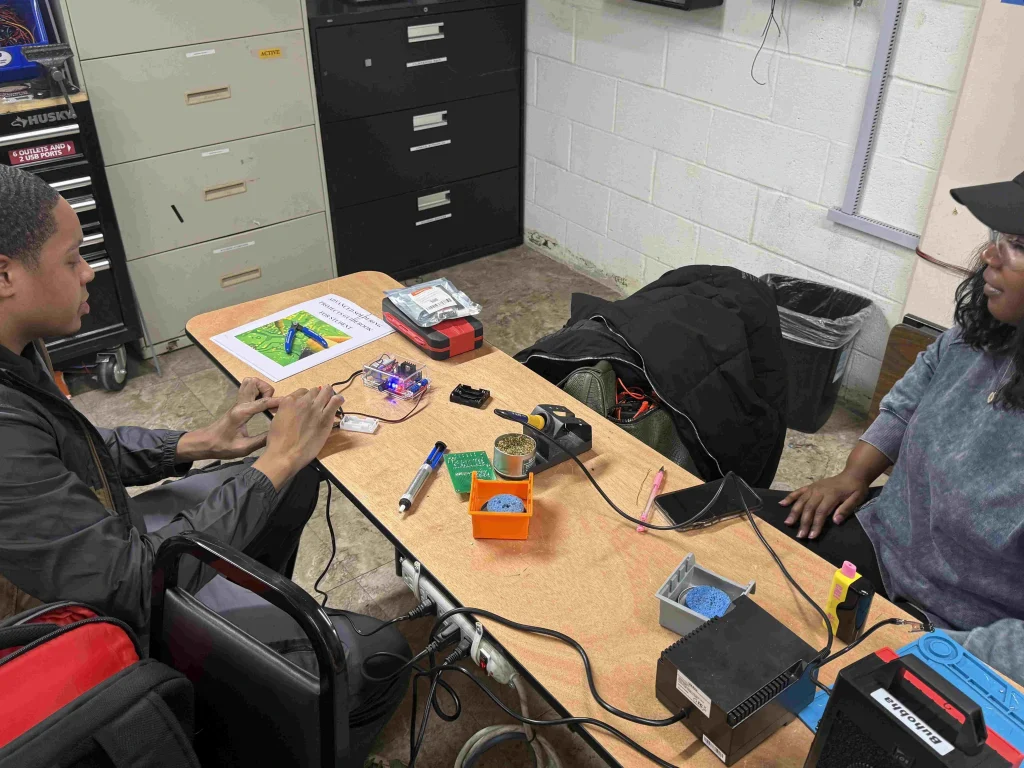
A future-proof trade combines three things: steady or growing demand, strong replacement needs as older workers retire, and work that is hard to automate. When all three line up, a career stays stable even when the broader economy slows. That combination is exactly what separates the most reliable skilled trades in demand from jobs that look good on paper but fade quickly.
Automation resistance matters most over a ten-year horizon. A robot can weld a repeated seam on a factory line, but it cannot crawl through a mechanical room to diagnose a failing boiler, wire a renovated row home, or fit pipe in a tight commercial ceiling. The U.S. Bureau of Labor Statistics specifically notes that the nation’s aging infrastructure will keep demand up for trades that rebuild bridges, buildings, and systems that machines cannot service on their own.
Replacement demand is the quieter force. Even trades with modest growth percentages generate tens of thousands of openings every year simply because experienced workers are retiring faster than new ones arrive. For someone entering the field now, that retirement wave is an opportunity, and it is a core reason the skilled trades careers covered below remain dependable choices.
The skilled trades in demand right now are led by electrical work, HVAC, plumbing and pipefitting, with automotive, welding, sterile processing, and advanced manufacturing close behind. Each pairs steady hiring with wages that do not require a bachelor’s degree. The table below summarizes current federal projections so you can compare them side by side.
| Trade | Projected Growth (2025–2035)* | Annual Openings* | Median Annual Wage (May 2025)* |
| Electricians | 9% | ~72,700 | $63,190 |
| HVAC mechanics & installers | 11% | ~40,600 | $61,010 |
| Plumbers, pipefitters & steamfitters | 7% | ~42,000 | $63,800 |
| Automotive service technicians | 5% | ~66,200 | $50,620 |
| Sterile processing technicians | ~11% | ~10,700 | $47,700 |
| Welders, cutters & brazers | ~2% (2024–2034) | ~45,600 | ~$48,000 |
Source: U.S. Bureau of Labor Statistics, Occupational Outlook Handbook. Figures are national; local wages vary by employer, experience, certification, and specialization.
A few patterns stand out. HVAC leads on growth rate, electrical leads on sheer volume of annual openings, and plumbing/pipefitting leads on median pay. Welding shows slower headline growth, yet it still projects around 45,600 openings a year because of retirements, which is why it remains one of the most accessible entry points into the trades. For a closer look at how fast one of these careers is expanding, PTTI’s breakdown of why HVAC technicians are in such high demand adds useful regional context.
Electrical work is the single largest source of new trade openings on the list, and demand is reinforced by electrification, data centers, and renovation of older buildings. In Philadelphia’s housing stock, much of it decades old, skilled electrical and automation technicians are essential. This is also where modern manufacturing lives, as plants increasingly run on automated, electrically controlled systems. Training that blends electrical fundamentals with automation, like PTTI’s Manufacturing, Automation & Electrical Technician program, targets two in-demand lanes at once.
Climate control and piping systems are the definition of automation-resistant work. Every commercial building, hospital, and home needs heating, cooling, and water systems installed and serviced on-site by a person. With 11% projected HVAC growth and strong plumbing and pipefitting numbers, these are among the most durable high-paying trade jobs available. Steam, sprinkler, and pipe systems in particular support commercial and institutional construction across the tri-state area.
Welding remains a flexible entry point with openings across fabrication, shipbuilding, and infrastructure. Automotive technicians stay in demand as vehicles grow more complex with hybrid and electric systems that require diagnostic skill. Sterile processing technicians, who prepare and sterilize surgical instruments, are projected to grow around 11% as healthcare expands, making this one of the quieter but fastest-growing skilled trades careers in the region.
Yes. Current federal projections run through 2035, and the trades above are expected to keep growing or hold steady, driven by infrastructure renewal, healthcare expansion, electrification, and a large retirement wave. Their reliance on on-site, judgment-based work makes them resistant to the automation pressures reshaping office and retail jobs.
The ten-year outlook is where these careers separate themselves from trend-driven fields. Electrical work, projected to grow 9% with more than 70,000 annual openings, is tied directly to long-term shifts like grid upgrades and building electrification that will unfold across the entire decade. HVAC’s 11% projection reflects both new construction and the constant need to service existing systems. These are not short cycles; they are structural demands that keep skilled trades in demand year after year.
Even where growth is slower, stability holds. Welding’s modest 2% projected change still translates into tens of thousands of yearly openings because the existing workforce is aging out. That dynamic, repeated across nearly every trade, is why workforce analysts consistently describe the skilled trades as one of the safest long-term bets for people who want a career that cannot be easily offshored or automated. PTTI explores this trend in depth in its overview of rising job growth in skilled trades.
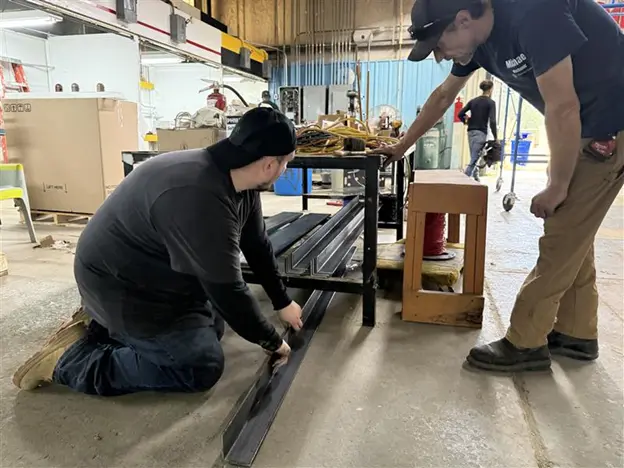
Among trades you can train for quickly, plumbers and pipefitters, electricians, and HVAC technicians post the highest median wages, each above $61,000 nationally, with experienced and specialized workers earning well beyond that. These are genuine high-paying trade jobs that require no bachelor’s degree and far less debt than college.
Pay climbs with certification and specialization. A welder who adds pipe or structural certifications, an electrician who moves into industrial or automation work, or an HVAC technician who handles commercial refrigeration can all push earnings significantly higher than entry-level figures. Overtime, common across construction and mechanical trades, adds more. The pattern is consistent: the workers who keep stacking skills and credentials are the ones who turn a solid starting wage into one of the region’s genuinely high-paying trade jobs.
It is worth being clear-eyed, too. Starting wages are usually lower than the medians above, and pay varies by employer, region, and specialty. No school can guarantee a specific salary. What the data does support is that skilled trades careers offer a faster, lower-cost route to a middle-class income than most alternatives, which is a major reason enrollment in trade school programs continues to rise.
Most focused trade school programs take well under a year to complete, often a matter of months, compared with two to four years for a degree. Because training concentrates on job-ready skills rather than general education, students can finish quickly, enter the workforce, and start earning far sooner than traditional college graduates.
That speed is the core financial advantage. A shorter program means lower total tuition and, just as important, fewer months of lost income while you train. Instead of accumulating debt for years, students in hands-on training are often working and earning within a year of starting. For career changers and adults supporting families, that timeline is frequently the deciding factor. PTTI’s guide on how adults in Philadelphia can retrain for a trade in under a year walks through what that path realistically looks like.
Cost varies by program and school, so it is worth asking any trade school in Philadelphia for a clear, itemized breakdown of tuition, tools, fees, and certification costs before enrolling. A transparent school will give you real numbers and explain exactly what is included, which is a good signal of how it treats students overall.
Philadelphia is unusually well-positioned for the trades. Its mix of aging infrastructure, active healthcare and commercial construction, a maritime and manufacturing base, and a large stock of older row homes creates steady, year-round demand for electrical, HVAC, plumbing, welding, and construction technicians. That demand is exactly why a well-located trade school in Philadelphia can translate so directly into local work.
Opportunity reaches well beyond the city core. Graduates find work throughout North, South, and West Philadelphia and neighborhoods like Mantua, Powelton Village, and Spring Garden, and across nearby communities including Darby, Lansdowne, Drexel Hill, and Yeadon in Pennsylvania. Because these are regional skilled trades careers, the same credentials carry across the river into South Jersey towns such as Camden, Pennsauken, Cherry Hill, and Collingswood, and into Delaware.
For students comparing options at a trade school in Philadelphia, local placement support matters as much as training quality. PTTI’s look at how Philadelphia trade schools place mechanics and technicians shows why the connection between a program and regional employers is so important when you are choosing where to train.
Once you know which skilled trades in demand fit your interests, the next step is choosing among the trade school programs that will actually prepare you for the job site. The strongest trade school programs share a few clear traits worth checking before you enroll:
A trade school in Philadelphia that checks these boxes across several trades lets you choose a career based on demand and interest rather than on whatever single program happens to be available, which is what strong trade school programs are designed to do. Exploring the full range of PTTI’s trade programs is a practical way to compare these in-demand paths in one place before you commit.
For many of the highest-demand trades, a focused trade school beats a four-year degree on speed, cost, and direct path to work. College still suits some careers, but for electrical, HVAC, welding, automotive, and similar fields, employers hire on demonstrated skill and certification rather than a diploma, which is exactly what a focused trade school in Philadelphia is built to deliver.
| Factor | Trade School | Four-Year College |
| Time to start earning | Under a year possible | About four years |
| Typical cost | Lower, focused tuition | Often significant debt |
| Training style | Hands-on, job-specific | Broad, theory-heavy |
| Demand for the skill | Steady, retirement-driven | Varies widely by major |
| Credential employers want | Industry certifications | Bachelor’s degree |
The best path depends on the goal. For a high school graduate who wants to become a technician rather than sit through four more years of classrooms, or an adult who needs to start earning soon, hands-on training in a high-demand trade is often the stronger financial decision. PTTI’s how high school graduates become skilled technicians without traditional college lays out that alternative clearly.
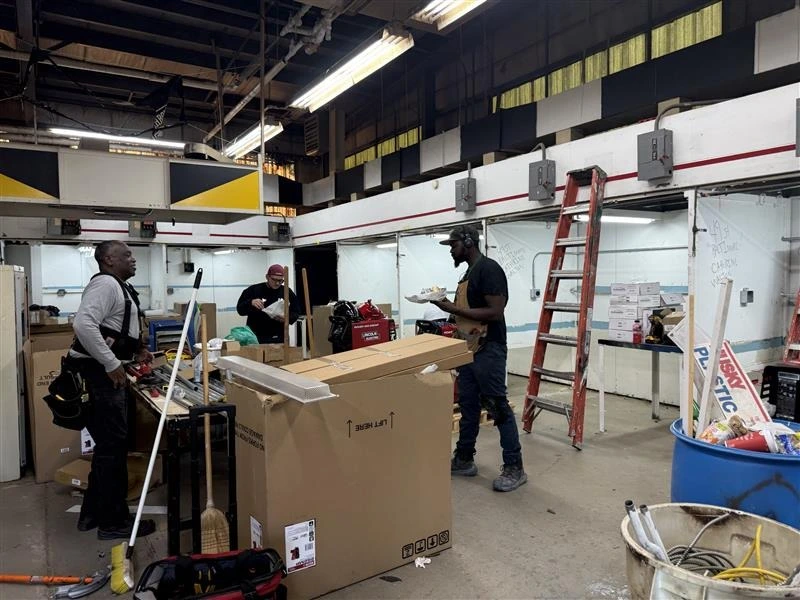
The trades with the strongest futures are the ones that combine growing demand, heavy replacement needs, and work that resists automation: electrical and automation, HVAC, plumbing and pipefitting, welding, automotive, and sterile processing all qualify.
These skilled trades in demand include some of the best high-paying trade jobs around, offering fast training, real earning potential, and the kind of stability that holds up over a full decade rather than a single hiring cycle. For students and career changers across the Philadelphia region, that makes hands-on training one of the smartest moves available today. Explore PTTI’s trade programs to find the in-demand path that fits you, or contact the admissions team to take the first step toward a career built to last.
By growth rate, HVAC leads at 11% projected through 2035, while electrical work generates the most annual openings at roughly 72,700. Plumbing and pipefitting pay the highest median wage. All three are considered among the most dependable skilled trades in demand nationally and across the Philadelphia region.
Electrical, HVAC, plumbing and pipefitting, welding, automotive, and sterile processing are all projected to grow or hold steady through 2035. Their reliance on on-site, hands-on work makes them resistant to automation, and retirements will keep generating openings regardless of economic cycles.
Plumbers and pipefitters, electricians, and HVAC technicians post the highest median wages among fast-to-train trades, each above $61,000 nationally. Pay rises further with certifications, specialization, and overtime, making these some of the strongest high-paying trade jobs available without a four-year degree.
Most focused trade school programs take under a year, far less than a college degree. Because training targets job-ready skills, students can start earning quickly with lower tuition and less debt, which is why many consider hands-on training a strong return on investment.
Yes. Skilled trades careers are built on demonstrated ability and industry certifications, not bachelor’s degrees. A high school diploma or GED plus quality hands-on training at a trade school in Philadelphia is the standard entry point into most in-demand trades.