
You just finished high school and everyone around you is asking about college applications, student loans, and four-year plans. However in your mind, someone else you are worried about is asking a different question: Will I end up getting a good job after college?The Philadelphia Technician Training Institute, known as PTTI gives high schoolers a direct path into skilled, well-paying careers. You don’t need a 4-year degree as it is only 8 months. No huge burden of debt, as financial aid is available; it’s just real, practical training with industry experts. Also, mentors are available to help you with placement support, specifically resume building and interview guidance. If you’re a recent grad wondering what comes next, this blog is for you.
Explore PTTI’s programs and talk to an admissions advisor today →
The Philadelphia Technician Training Institute (PTTI) provides high schoolers with a direct path into skilled, well-paying careers. You don’t need a 4-year degree as it is only 8 months. No huge burden of debt, as financial aid is available; it’s just real, practical training with industry experts. Also, mentors are available to help you with placement support, specifically resume building and interview guidance. If you’re a recent grad wondering what comes next, this blog is for you.
Youth here in the United States very quickly build their own careers after high school. There are so many opportunities for them. Various industries are in demand for technicians and mechanics due to increased infrastructure and development. If you study a skilled trade at a technical institute, you can end up getting a good-paying job. Students opt to skip college for trade school.
The average college student now leaves with over $48,000 in student loan debt, and the unemployment rate for young college graduates hit 8.7% in September 2025. Meanwhile, the skilled trades are telling a different story.
A striking 37% of skilled trades workers now earn more than the median college graduate. That’s known to every individual looking for a vocational training program with no debt and no longer duration classes . Just practical hands-on with good career opportunities. Add in the fact that trade school graduates enter the workforce two to three years earlier — and without the debt — and the math starts looking very different.
This shift is exactly why so many high school graduates in Philadelphia are choosing vocational training over a traditional four-year college. And PTTI is the center of it.
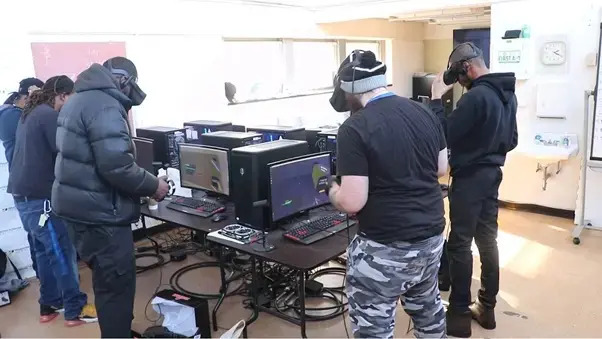
PTTI is a technical training school institutes that creates a challenging, technology-based learning environment led by industry mentors and instructors with real professional experience focused on hands-on learning that helps students acquire technology skills and secure long-term employment with career opportunities
Here’s what that skilled technician training actually looks like
That’s a very different experience from sitting in a lecture hall with 300 other students, hoping a degree eventually leads somewhere.
Here comes the most awaited answer. This is where things get exciting. PTTI offers a wide range of skilled technician training programs in Philadelphia each one designed to get you job-ready in months, not years.
Welding Technology
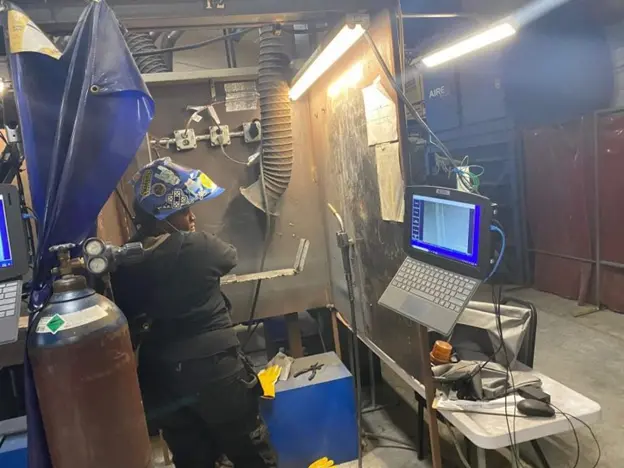
PTTI’s welding program focuses on technical knowledge, referring to industry standards, problem-solving skills, workplace safety, and computerized systems training for green-collar jobs in high-technology and manufacturing. Students and individuals will earn certification badges, including pipe welding.
A welder in certain industries can start earning between $45,000 and $60,000 right out of training. That’s a strong starting salary for someone who recently graduated from high school.
HVAC Technology
Every building in Philadelphia or you say in united states, needs heating, cooling, and ventilation. Its mandatory due to extreme climatic conditions HVAC technicians keep those systems running and the demand is year-round.
HVAC technicians often earn between $45,000 and $60,000 annually, and specialists who handle smart building systems frequently exceed $80,000 per year.
Automotive Technology
The automotive students here are trained to maintain, repair, and troubleshoot cars , electric vehicles and trucks including servicing electrical vehicle failures in cars and cargo trucks. Today’s auto shops are high-tech environments, the mentors helpss you prepare for that
Manufacturing and Automation
Manufacturing and automation technicians at PTTI learn electrical wiring codes, wire installation, panel setup, and much them ready for the demands of advanced industrial environments. Also getting them acquainted with the client’s choices and the solution to this.
Sterile Processing and Central Services
Want to work in a hospital without spending years in medical school? This is the program for you. Central processing technicians prepare surgical instruments and equipment in hospital getting it ready before any surgery.
Pipefitting, Drywall, Masonry, and More
The institute also provide a Sprinkler, Pipefitting, and Steamfitter program that covers industrial safety, pipe fitting operations, pipe fabrication, valve installation, blueprint reading, and basic installation and tools knowledge . However, Programs in concrete, masonry, and drywall framing are also available for students interested in construction trades.
The trade school vs college debate for high school graduates comes down to a few simple questions: How fast do you want to start earning? How much debt are you willing to carry? And what kind of work do you actually want to do?
Here’s an honest and correct comparison:
| Things to consider | PTTI Trade School | Traditional 4-Year College |
| Time to graduate | 6–12 months | 4–6 years |
| Average cost | ~$18,200 total | $35,000–$40,000 per year |
| Start earning | Within months | 4+ years later |
| Student debt | Low | Average $43,333+ |
| Job placement | Career services support | On your own |
| Degree required? | No — certification-based | Yes |
Trade school for high scholers in Philadelphia costs an average $33,000 total, compared to college’s $270,811 investment, and skilled trades workers earn competitive salaries of $54,000 to $95,000+ with faster job entry and 90% career satisfaction.
The numbers speak clearly. For many high school graduates, vocational training after high school is the smarter financial move especially when PTTI pairs affordable tuition with strong job placement support.
Completing a PTTI career program in Philadelphia gives you more than just a certificate. It gives you a full package that employers respond to.
Technical certification. Depending on your program, you’ll earn industry-recognized credentials that hiring managers trust.
Hands-on experience. Because 80% of PTTI’s curriculum is practical, you graduate having actually done the work not just studied it.
A professional resume. PTTI’s career services team helps you build a strong, field-tailored resume before you even finish training. Under the guidance of mentors.
Interview preparation. You’ll practice for real interviews so you’re confident, not nervous, when it counts.The similar interview questionnaire will be provided to students
An employer network. PTTI works with community partners and employers throughout the region to help connect graduates with job opportunities in their field .That’s a complete career launch system — not just a diploma.
You don’t need to be a straight-A student to thrive at PTTI. You just need to be willing to show up and do the work.
PTTI’s programs are a great fit if you:
PTTI courses are designed for beginners. Most students have no prior experience when they enroll, and the curriculum is built to take them from zero to job-ready.All you need to get started is a high school diploma or GED.
Worried about paying for training? PTTI has options.
All PTTI programs are approved for veterans’ education benefits, and federal financial aid through FAFSA is available to qualifying students. PTTI’s FAFSA school code is 042213.
Grants, federal loans, and institutional financing plans are also available for students who qualify. Given that the total cost of PTTI’s programs is $18,200 — compared to $35,000+ per year at most four-year colleges the financial picture is significantly easier to manage.
Many students also begin earning in their trade well before their college-going peers even graduate.

If you just graduated high school and you’re unsure what to do next, you don’t have to default to a four-year degree just because everyone else is. There’s a faster, more affordable, and equally rewarding path available to you right here in Philadelphia.
PTTI’s trade school for high school graduates in Philadelphia provides hands-on training, certification, and career support to launch a real career in months, not years.
Q1. Do I need any prior experience to enroll at PTTI?
No, you don’t. PTTI programs are designed specifically for beginners. Most students come in with zero experience in their chosen trade.
Q2. How long does it take to complete a program at PTTI?
Most programs at PTTI take between 6 and 12 months to complete. That means you could be certified and working in your trade within a year of graduating high school — while your peers are still in their first year of college.
Q3. Does PTTI help graduates find jobs after they finish training?
Yes. PTTI has a dedicated career department will helps graduates with resume writing, interview preparation, and job placement support. The school also maintains relationships with local employers and helps connect graduates with open positions in the Philadelphia area.
Q4. Is financial aid available at PTTI?
Yes. PTTI accepts FAFSA (federal financial aid), and all programs are approved for veterans’ education benefits. Grants, institutional financing, and federal loan options are also available for students who qualify. You can start the FAFSA process using PTTI’s school code: 042213.
Q5. What careers can I pursue after completing a PTTI program?
PTTI graduates go on to work as welders, HVAC technicians, automotive technicians, sterile processing technicians, manufacturing and automation technicians, pipefitters, and more. Many secure jobs at hospitals, construction companies, manufacturing plants, and auto dealerships across Philadelphia and the surrounding region
Read More blogs :