
The highest employment areas for manufacturing and automation jobs in Philadelphia sit in the city’s industrial corridors, the Navy Yard, Montgomery and Bucks County plants, South Jersey logistics hubs, and Delaware County fabrication shops. These zones concentrate pharmaceutical, food, chemical, packaging, and warehouse-automation employers actively hiring trained technicians.
If you are weighing a stable, well-paid career that does not require a four-year degree, this is one of the clearest opportunities in the region right now. Factories, fulfillment centers, and process plants across Greater Philadelphia run on automated equipment, and that equipment needs people who can install it, troubleshoot it, and keep it running. The work is hands-on, the pay is competitive, and the demand is durable. This guide breaks down exactly where the jobs are, what they pay, which industries are hiring, and how to train for manufacturing and automation jobs in Philadelphia in months rather than years. Whether you are searching for automation technician jobs in Philadelphia or broader manufacturing jobs near Philadelphia, the roadmap below shows where to focus.
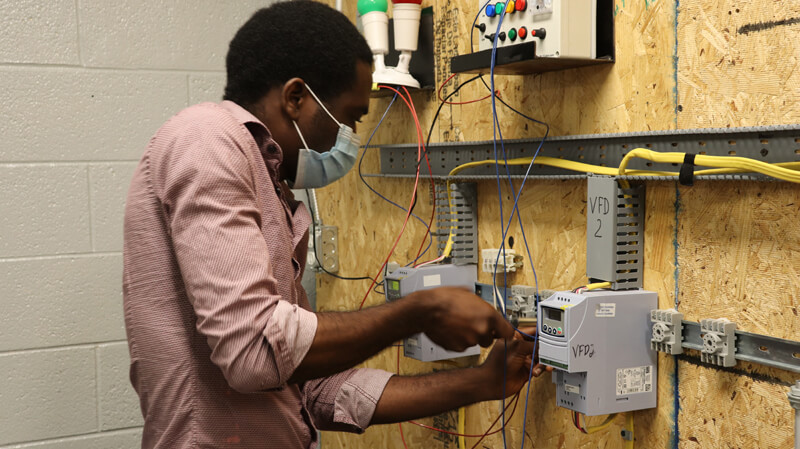
The highest-employment areas for manufacturing and automation jobs near Philadelphia are concentrated in a handful of distinct industrial zones. Each cluster carries its own mix of employers and equipment, which means your training and location choices shape the kind of work you can pursue. Knowing where the jobs actually sit helps you plan a realistic, local career path.
Manufacturing in the Philadelphia region is no longer about a single giant factory district. It is a network of corridors and suburban plants connected by major roads, rail, and the port. That spread is good news for job seekers: whether you live in North Philadelphia, Southwest Philadelphia, or across the river in Camden, there is likely an industrial employer within a reasonable commute.
Within the city, manufacturing and automation employment concentrates along established industrial corridors where older factories have been modernized and new advanced-manufacturing tenants have moved in.
The Navy Yard in South Philadelphia has become one of the region’s most active advanced-manufacturing and life-sciences campuses. Employers there blend production, research, and logistics, and they need technicians who can support automated production lines and building systems. For residents of South Philadelphia East and West, this is one of the closest concentrations of skilled manufacturing jobs in Philadelphia.
The industrial pockets of North Philadelphia, Upper North Philadelphia, and Allegheny West still host fabrication, food production, and materials companies. These employers frequently hire entry-level production technicians and maintenance helpers, making the area a practical starting point for someone newly trained and looking to build experience close to home.
Southwest Philadelphia, including the Woodland Avenue corridor, sits near the airport, the port, and major distribution routes. This positions it well for warehouse automation, packaging, and logistics-technology roles, where conveyors, sorters, and robotic systems require skilled upkeep.
Beyond the city line, several suburban and South Jersey hubs carry a large share of regional manufacturing and automation employment. For many students, these become the destination after they complete hands-on manufacturing and automation training.
Communities such as Hatfield, Horsham, Lansdale, Bristol, and Warminster host packaging, electronics, food, and precision-manufacturing plants. Bucks and Montgomery County employers are reliable sources of automation technician jobs and production technician roles, and they sit within commuting range of Northeast Philadelphia, Ardmore, and the Cheltenham Avenue and Ogontz Avenue corridors.
Across the Delaware River, Camden, Pennsauken, Swedesboro, Moorestown, Cherry Hill, Maple Shade, and Cinnaminson form a dense cluster of manufacturing and distribution operations. South Jersey has become a center for warehouse automation and electronics manufacturing, with many employers hiring controls and maintenance technicians. Residents of Collingswood, Gloucester City, Audubon, and Haddonfield are well positioned for these openings.
Delaware County communities including Darby, Yeadon, Lansdowne, and Drexel Hill sit near fabrication, chemical, and industrial-service employers along the I-95 and Route 1 corridors. The county’s proximity to both the city and the airport makes it a steady source of manufacturing jobs near Philadelphia.
| Hiring Zone | Typical Employers | Common Roles |
| Navy Yard / South Philadelphia | Life sciences, advanced manufacturing | Production & maintenance techs |
| North Philadelphia / Allegheny West | Food, materials, fabrication | Entry production, maintenance helpers |
| Southwest Philadelphia / Woodland Ave | Logistics, packaging | Warehouse automation techs |
| Montgomery & Bucks County | Packaging, electronics, food | Automation & production techs |
| South Jersey (Camden–Swedesboro) | Distribution, electronics | Controls & maintenance techs |
| Delaware County | Chemicals, fabrication, industrial services | Industrial maintenance techs |
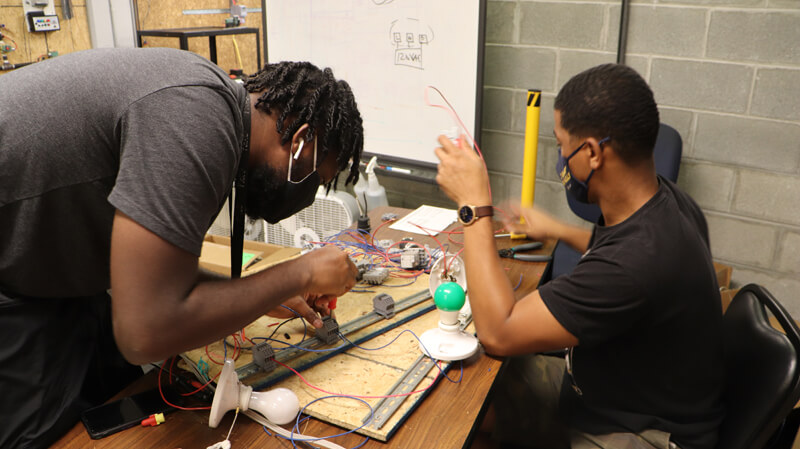
Manufacturing and automation jobs in Philadelphia are driven by industries that produce goods people use every day and that increasingly rely on automated systems. Because these sectors serve constant demand, they offer more stability than many office or retail roles. Understanding the industries helps you target your training and your job search.
The Philadelphia region’s manufacturing base is diversified, which is one of its biggest strengths. When one sector slows, others keep hiring, so a trained technician can move between industries as opportunities shift.
Greater Philadelphia is a national life-sciences hub, and pharmaceutical and biotech manufacturers run highly automated, tightly regulated production lines. These employers need technicians who can maintain precision equipment and follow strict quality and safety standards, often at competitive pay.
Food and beverage plants across the city and suburbs run packaging lines, conveyors, and processing systems around the clock. This sector is a dependable entry point because it consistently hires production operators and maintenance technicians and offers clear paths to advancement.
The region has a deep history in chemicals, coatings, and specialty materials manufacturing. These plants depend on instrumentation, process controls, and well-maintained machinery, creating steady demand for industrial maintenance and controls technicians.
Modern fulfillment centers near the airport, the port, and South Jersey now run heavy automation, including conveyors, sorters, and robotics. This has created a fast-growing category of automation technician jobs in Philadelphia and South Jersey, focused on keeping material-handling systems online.
Aerospace, defense, and heavy fabrication employers, including shipbuilding and metal-structure producers, round out the regional base. These roles often value welding and fabrication skills alongside maintenance ability, which is why some students pair manufacturing technician training in Philadelphia with welding technology coursework.
The industries hiring most actively in the region include:
The manufacturing and automation careers most in demand near Philadelphia center on installing, maintaining, and troubleshooting automated equipment. Employers consistently look for technicians who combine mechanical ability, electrical knowledge, and comfort with control systems. These roles form the backbone of every modern plant in the region.
A common misconception is that factory work means repetitive assembly. In reality, the best-paid and most secure jobs belong to the technicians who keep the machines and automation running. These are skilled, problem-solving roles.

Industrial machinery mechanics and maintenance technicians keep production equipment operating, diagnosing breakdowns and performing preventive maintenance. This is one of the strongest categories in the entire field. Nationally, the U.S. Bureau of Labor Statistics projects employment of industrial machinery mechanics, machinery maintenance workers, and millwrights to grow about 13% from 2024 to 2034, much faster than the average for all occupations, with roughly 54,200 openings projected each year. That demand sustains a steady flow of industrial maintenance jobs in Pennsylvania, including throughout the Philadelphia metro.
Automation and mechatronics technicians work where mechanical, electrical, and computer-controlled systems meet. They maintain robotics, programmable controls, and automated assemblies. The BLS reports a median annual wage of about $70,760 for electro-mechanical and mechatronics technicians as of May 2024, reflecting the technical value of these skills. This is a strong target for anyone mapping an automation technician career path.
CNC machinists and production technicians operate computer-controlled machine tools and run automated production lines. Employers across the region list CNC programming, blueprint reading, and quality inspection among their most requested skills, making these competencies valuable to learn early.
Controls and robotics technicians specialize in the electrical and programming side of automation, supporting PLCs, sensors, and robotic cells. As plants and warehouses add automation, this specialization continues to grow and often commands premium pay.
| Role | What They Do | Why It’s in Demand |
| Industrial machinery mechanic | Maintain & repair production equipment | 13% projected national growth through 2034 |
| Automation / mechatronics technician | Service robotics & control systems | High pay; core to modern plants |
| CNC machinist / production technician | Run computer-controlled machining & lines | Consistently requested by employers |
| Controls / robotics technician | Support PLCs, sensors, robotic cells | Grows with warehouse & plant automation |
For a deeper look at how these roles work day to day, the related read on the industrial automation technician career is a useful next step.
Manufacturing and automation jobs in Philadelphia typically pay entry-level technicians in the low-to-mid $40,000s, with experienced maintenance and automation technicians often earning $60,000 to $75,000 or more. Specialized controls and robotics technicians can earn beyond that, especially with certifications, overtime, and shift premiums.
Pay varies by role, employer, industry, and experience, but the trend is clear: technical, automation-related skills command higher wages than general labor. For context, the BLS reported a national median wage of $49,500 for all occupations in May 2024, while skilled maintenance and mechatronics roles sit meaningfully above that. In practice, automation technician jobs in Philadelphia and industrial maintenance jobs in Pennsylvania consistently pay well above the all-occupation median.
New technicians often start in production or maintenance-helper roles and move up quickly as they prove their skills. Industrial machinery mechanics earned a national median of about $63,510 in May 2024, and that figure rises with experience, certifications, and specialization. Overtime is common in manufacturing, which can add significantly to annual earnings.
The fastest way to raise your earning potential is to add verifiable, employer-recognized skills. Safety credentials, controls knowledge, and CNC or robotics specialization all push pay higher. Training that builds these competencies, like the applied coursework at PTTI’s manufacturing and automation program, is designed to make new technicians valuable on day one.
| Career Stage | Approximate Annual Range (Region) |
| Entry-level production / maintenance helper | $40,000 – $48,000 |
| Skilled maintenance / industrial machinery mechanic | $55,000 – $68,000 |
| Automation / mechatronics technician | $65,000 – $78,000+ |
| Specialized controls / robotics technician | $75,000 – $90,000+ |
Ranges are regional estimates and vary by employer, shift, overtime, and certification.
The job outlook for manufacturing and automation near Philadelphia is strong heading into 2026, driven by automation investment, an aging workforce, and steady regional demand, with industrial maintenance jobs in Pennsylvania among the most reliable openings. The clearest signal comes from maintenance and machinery roles, where national growth is projected to outpace most occupations and replacement demand stays high.
This durability is what makes the field attractive for career planning. Even when the economy softens, plants still need to run and equipment still needs upkeep, so skilled technicians remain employed.
Pennsylvania is among the largest states for industrial machinery and maintenance employment, so industrial maintenance jobs in Pennsylvania remain plentiful, supported by a deep base in chemicals, machinery, food production, and materials. Nationally, the BLS projects about 54,200 openings each year for industrial machinery mechanics, machinery maintenance workers, and millwrights through 2034, with strong replacement needs as experienced workers retire. That retirement wave is opening doors for newly trained technicians filling manufacturing jobs near Philadelphia and automation technician jobs in Philadelphia alike.
It is natural to wonder whether automation threatens these careers. The opposite is happening in practice: every robot, conveyor, and control system installed in a Philadelphia plant or warehouse needs technicians to maintain it. Automation shifts the work from manual labor toward skilled upkeep and troubleshooting, which raises both demand and pay for trained people.
Callout — Why this field is hard to automate away: Automated systems break, drift, and need calibration. The judgment to diagnose a fault on a live production line is exactly the kind of hands-on, site-specific skill machines cannot replace. For more on this, see the related discussion on why AI can’t replace skilled trades jobs.
You train for manufacturing and automation jobs in Philadelphia through a focused, hands-on technician program that teaches mechanical, electrical, and automation skills on industry-standard equipment. Unlike a four-year degree, this path concentrates on what employers actually test for, so you become job-ready in months.
The goal of good training is not to sit through theory; it is to build the practical ability to keep machines and automation systems running. That is best learned by doing, in a real lab environment that mirrors a working plant, which is exactly how strong manufacturing technician training in Philadelphia is structured.
For most students aiming at the trades, hands-on training is not a lesser option; it is the correct one. Manufacturing employers hire on demonstrated ability, and that ability is built at the bench, not behind a screen.
A focused program gets you into the workforce far faster than a four-year degree, which means you start earning, and stacking real experience, sooner. For career changers, veterans, and adult learners, that speed matters.
Hands-on programs teach the exact competencies plants request: equipment maintenance, electrical fundamentals, controls, blueprint reading, and safety. Online-only courses and self-study rarely build the muscle memory and troubleshooting instinct that employers need, and generic programs often miss local industry expectations. This is where graduates of an applied program tend to be ahead of their college peers for technician roles. Effective manufacturing technician training in Philadelphia is what builds that troubleshooting instinct.
A strong program builds layered skills, moving from fundamentals to applied automation. At PTTI, students train on real equipment in an environment designed to match modern manufacturing settings. Quality manufacturing technician training in Philadelphia mirrors a real plant floor, which is what makes graduates job-ready.
The progression matters because employers want technicians who understand how mechanical, electrical, and control systems work together, not in isolation. Students who want to go deeper can explore the top automation technologies to master and current smart manufacturing trends.
Certifications signal verified skill and raise both employability and pay. Safety credentials such as OSHA, along with controls, CNC, and equipment-specific certifications, all strengthen a résumé. A program built around certification readiness, like PTTI’s manufacturing technician training in Philadelphia, helps students prepare for the credentials regional employers value.
| Path | Time to Workforce | Hands-On Training | Employer Alignment |
| Manufacturing & automation trade program | Months | Core of the program | Directly aligned |
| Four-year college | About four years | Often limited | Broad, less applied |
| Online-only course | Varies | Minimal | Weak for plant roles |
| Self-study | Open-ended | None structured | Inconsistent |
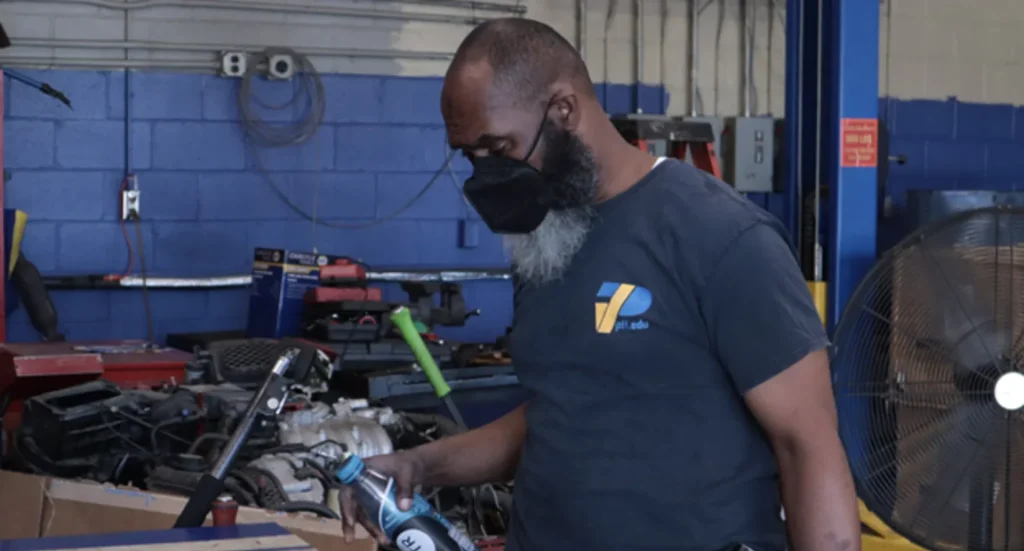
This field fits a wide range of people, which is part of its appeal. It rewards curiosity, mechanical interest, and a willingness to solve problems more than it rewards any particular background.
If you like working with your hands, want to understand how machines and automation work, and prefer a career with real stability, manufacturing and automation deserves serious consideration. You can explore PTTI’s full program lineup to see how it fits your goals.
The Philadelphia region offers one of the clearest, most stable paths into a skilled technical career, and the highest-employment areas for manufacturing and automation jobs are within reach of nearly every neighborhood and nearby community. From industrial maintenance jobs in Pennsylvania to automation technician jobs in Philadelphia, the openings are real and local. Demand is durable, pay is competitive, and automation is expanding the need for trained technicians rather than shrinking it. What stands between you and that career is focused, hands-on training built around what regional employers actually need.
That is exactly what a quality program delivers: real equipment, applied skills, certification readiness, and support moving into the workforce. If you are ready to take the next step, explore the manufacturing and automation program, schedule a campus tour, or contact admissions to ask questions. You can also review financial aid options and, if you have served, veterans education benefits to plan your path. Your career in manufacturing and automation can start this year.
The most manufacturing jobs near Philadelphia are found in the city’s industrial corridors and the Navy Yard, in Montgomery and Bucks County plants, across South Jersey from Camden to Swedesboro, and in Delaware County. These zones concentrate pharmaceutical, food, chemical, packaging, and warehouse-automation employers that hire trained technicians.
The highest-paying manufacturing and automation jobs in Philadelphia tend to be specialized controls, robotics, and mechatronics technician roles, which can reach $75,000 to $90,000 or more with experience and certifications. Industrial machinery mechanics also earn well, with a national median around $63,510 as of May 2024.
To become an automation technician in Philadelphia, complete a hands-on manufacturing and automation program that teaches mechanical, electrical, and controls skills, earn relevant safety and technical certifications, and apply for maintenance or technician roles. A focused program can prepare you in months rather than years. From there, automation technician jobs in Philadelphia are within reach across local plants and warehouses.
No. Most manufacturing and automation jobs in Philadelphia require demonstrated technical skill, not a four-year degree. Employers prioritize hands-on ability, safety knowledge, and certifications. A high school diploma or GED plus applied manufacturing technician training in Philadelphia is the standard entry point.
Automation is shifting work rather than eliminating it. Every automated system in a Philadelphia plant or warehouse needs technicians to install, maintain, and troubleshoot it. This raises demand for skilled automation and maintenance technicians, which is why manufacturing jobs near Philadelphia stay in steady demand through 2026 and beyond.
A focused, hands-on program can prepare you for entry-level manufacturing and automation jobs in Philadelphia in months. Because the field is skills-based, employers hire on what you can do, so concentrated training on real equipment is the fastest reliable route into the workforce.
Philadelphia Technician Training Institute (PTTI) offers hands-on manufacturing and automation training on industry-standard equipment, serving students across Philadelphia, surrounding Pennsylvania counties, and South Jersey. It is built for beginners and career changers who want job-ready skills without a traditional college path.