
Let’s talk about the part nobody wants to say out loud. That is Finances . You want a real career, but you don’t want loans following you for the next 20 years. Fair. Finding an affordable trade school in Philadelphia is less about chasing the lowest price and more about getting the best return on your investment. Here’s how to compare costs honestly, find financial aid, and start a skilled career without drowning in debt.
Cheapest isn’t always best. A low price on a program that doesn’t lead anywhere is still a waste. Additionally, a higher price can be worth it if you graduate with solid skills and certifications.
So “affordable” should mean three things:
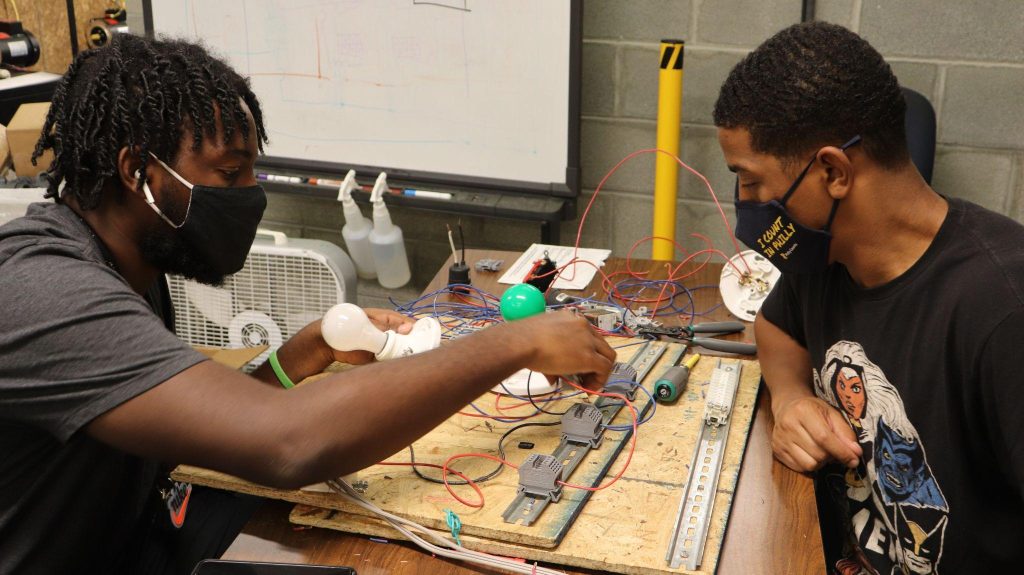
Alt Text: Students learning industrial automation skills using workshop equipment.
Alt Description: Automation students practise operating technical equipment while developing their understanding of modern manufacturing processes.
That’s the whole equation. Cost, time, and payoff.
Course duration plays an important role in education, especially compared to a four-year degree, which means four years of tuition, housing, and lost income. Trade programs run months instead. So you spend less time in class and start working sooner.
Here’s a quick comparison:
| Factor | Trade School Program | Four-Year College |
| Typical Length | Months to about a year | 4+ years |
| Learning Style | Mostly hands-on | Mostly classroom |
| Time Out of the Workforce | Shorter | Longer |
| Debt Risk | Often lower | Often higher |
For example, several PTTI programs run 26 weeks and 900 hours. That’s a much shorter commitment than a degree. Confirm current program lengths with admissions.
Tuition isn’t the only number. Some schools hide extra costs until later. Those add-ons can quickly change your total.
Ask every school about:
Get the full breakdown in writing. If a school won’t give you one, that’s a red flag.
Most people don’t pay the full bill out of pocket. There is financial help available. Financial aid exists, and it’s worth chasing. You can also combine several sources.
Moreover, Students cover trade school costs: roughly 35% federal aid, 25% savings or family help, 20% payment plans, 10% employer or workforce funding, and 10% scholarships or other support. Everyone’s mix looks different, but aid often covers a big chunk.
| Funding Source | What It Is | Where to Start |
| Federal Aid | Grants and loans through FAFSA | Complete the FAFSA |
| State and Workforce Funding | Programs for in-demand training | Ask your local PA CareerLink office |
| Payment Plans | Spreads tuition over time | Ask the school’s admissions team |
| Employer Support | Some employers help pay for training | Ask your current or future employer |
| Scholarships | Awards from schools or groups | Ask admissions and search local groups |
Program names, eligibility, and funding amounts change often. Confirm current details with the source before you apply.

The FAFSA is the main doorway to federal aid. You fill out one form, and schools use it to figure out what you may qualify for. Therefore, apply even if you’re unsure you’ll qualify. You don’t lose anything by trying.
PTTI accepts FAFSA applications under school code 042213. That’s a motivation for students who want to build a career in a skilled trade . An admissions advisor can walk you through the next steps, including what the aid package might look like.
Quick tips:
Sometimes loans are part of the plan. That’s okay. Still, borrow carefully. Moreover, remember that grants don’t need repayment, but loans do.
A few ground rules:
Debt isn’t automatically bad. Debt you didn’t plan for is the problem.
Here’s the part people skip. Training costs money, but it also changes your earning power. Therefore, think about what the trade could pay after you finish.
Check real pay data for your trade. The U.S. Bureau of Labor Statistics publishes wage and job outlook information for HVAC, welding, automotive repair, and many other trades. According to the BLS, employment across these trades is projected to grow steadily over the next decade. Steady demand helps your odds of finding work, though no one can promise a specific paycheck.
If the program costs a certain amount and the starting wage is a certain amount, how long until you’re ahead? That’s your payoff timeline.
You can trim costs without cutting corners. Additionally, small moves add up.
Ask about current day and evening schedule options. Availability depends on the program.
Before you sign anything, ask:so that there will be no confusion .
Trust your gut. If the answers are clear, that’s a good sign. If they’re fuzzy, keep looking.
Philadelphia Technician Training Institute (PTTI) offers short, hands-on programs in HVAC, welding, automotive technology, sterile processing, manufacturing and automation, concrete and framing, steam/sprinkler/pipefitting, and drywall. Additionally, some programs include free OSHA 30 certification, and programs build in career coursework like Job Application Skills, plus externship experience.
Here’s how to get started:
PTTI reports a placement rate near 92% across its trade programs. Ask how it’s calculated. A good school will explain. And no school can guarantee a job, so choose one that builds real skills and support.
Finding an affordable trade school in Philadelphia means looking past the sticker price. it is important to find affordable education to lower student debt. Compare total costs, ask about financial aid, and think about your payoff timeline.
Never skip the hands-on training and certifications, because those are what help you earn after graduation. They will also help you get hired faster . Open your chances of getting selected . FAFSA helps skilled trade students to build career . Between shorter programs and smart funding choices, you can start a skilled career without much debt. Overall, do your homework, ask direct questions, and pick the path that fits your budget and your goals.
Ready to see your options? Call PTTI at 215-381-9403 or email info@ptt.edu to talk with an advisor.
Often, yes, since programs run months instead of years. Costs vary, so compare real numbers from each school.
Many students do. Start with the FAFSA, and ask each school about other options. PTTI’s school code is 042213.
Ask about tools, uniforms, certification fees, books, and lab fees. Get the full breakdown in writing.
Somehow yes .Many students do, especially with evening options. Ask admissions about current schedule availability.
No school can guarantee a job. PTTI offers career coursework, externships, and employer connections, and reports a placement rate near 92%.
Read More: