
American cities didn’t grow because someone drew plans in a quiet office. Rather, they rose because black people in trades used tools, bent metal, cut wood, laid bricks, and worked with such precision that they turned raw terrain into cities. Their narrative is not just a footnote; it is the basis and the foundation of the U.S. However, even though their fingerprints are all over every skyline, this history has been put into the shadows for years.
Long before, their job was good, they had a lot of knowledge, and they made sure to make a difference. And now, we’re finally giving them the credit they’ve always earned.
Moreover, the guide will also look at how today’s skilled black workers are still inventing, leading, and coming up with new ideas in the 21st century and beyond 2025–26.
Let’s get started on it right away!
There are two stories about every place: the one that is told in books and the one that is built by people who are not often talked about. Black people in trades who worked made up the second story, which is generally the one that gets ignored.
During the time of slavery, which was incredibly unfair, it also showed how good black people were. It is more powerful to recognise their greatness than to focus on their pain. Then, the competent black builders were the quiet backbone of construction. Especially, they were carpenters who could shape whole buildings, masons who could read stone like poetry, and metalworkers who could bend iron like musicians bend notes.
Back then, they didn’t merely construct things; they set the bar. The way porches wrapped around southern homes, the way early American cities were built along rivers, and the way colonial brick foundations were strong all showed the hidden art of black workers.
And even after emancipation, black workmanship didn’t go away; instead, it really got stronger. They put down train links between states, erected schools for new villages, put in water pipelines in developing towns, and wired buildings long before electricity was common.
Their efforts were like a calm pulse that kept the country growing and steady.
After slavery ended, the jobs of black people changed, and they were still as important. As the country moved into the late 1800s and early 1900s, it needed a lot of new factories, and black people in trades were once again in the front.
In fact, we assume, there is a nice link between hands-on work and new ideas: the individuals who do the work typically come up with the best ideas. That’s precisely why so many famous African American inventors’ approach also worked for trades.
We would claim that these innovators were not isolated from the trades; rather, they were part of the same creative ecosystem that helped black skilled workers rise that came after them.
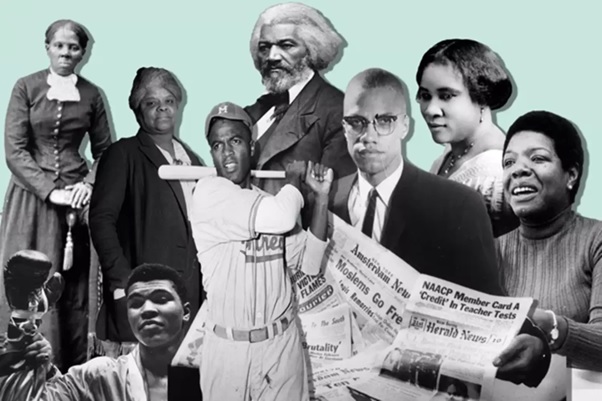
As cities changed from calm neighbourhoods to loud factories, black people became very important for uniting the country. They built the railway links and industrial complexes that distinguished them from their time.
As cities became more sophisticated, the need for people with specialised skills grew significantly.
But as we know, even if they needed their skills, black people had to deal with systematic racism all the time, like low pay, open discrimination in the workplace, and being left out of powerful trade unions. However, still, workers of color were so determined. They started their own networks and businesses, making sure that their important abilities still had an effect on progress.
But, even today, the gap in skilled trades remains clear. As per a survey, 85% of U.S. contractors cannot find enough qualified skilled workers, yet black Americans continue to be significantly underrepresented in these high-demand fields.
Therefore, for people who are inspired by this history of mastery, mastering a craft is a way to gain power. PTTI’s trade programs, for example, teach students all they need to know about electrical work and welding. Ultimately, this gives them the abilities that are always in high demand and connected to black skilled workers.

The thing is, the broader Civil Rights Movement was intricately linked to the struggle for Black people in trades to be acknowledged and treated equitably on the job. Therefore, the primary objective of the movement was to combat discrimination in the areas of hiring and union membership. By demanding fair wages and more equitable access to skilled jobs, activists aimed to undermine the economic mechanisms that maintained inequality.
The fight for justice didn’t last merely because of rhetoric; it lasted because of stability. Ānd a lot of the stability came from black skilled labourers who had steady jobs and steady incomes.
Their employment paid for the activities.
Their skills made communities stronger.
Their skills made the places where people planned, organised, and got together.
Furthermore, new black architects built liberation schools and community centres at that time. People who built things made churches into places where people could assemble. Plumbers, welders, carpenters, and masons all did more than just work. They gave strength. Consequently, not only did the trades build cities, but they also built movements.
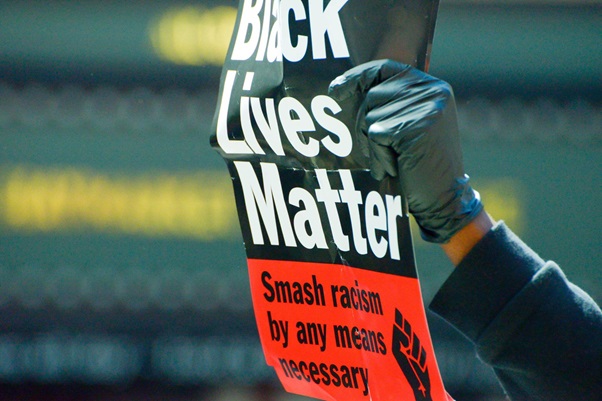
It’s not enough to just fix the historical record; we must also understand how our communities grow and thrive now.
And unfortunately, the legacy is still going strong today. In fact, modern black skilled workers and professionals are creating the future with the same drive that their forebears had.
For example, black electricians link solar grids, black welders connect beams in skyscrapers, and black carpenters build new homes. The effect goes on and on. The base may be old, but the movement is still going on.
Nevertheless, access to training is still not equal, which is why institutions that are based in the community are important.
It is important to recall the foundation as we look ahead. We also honour the legacy of the black skilled workers who built this country by making it easier for people to get training and work in the trades. And PTTI (Philadelphia Technician Training Institute) is proud of supporting this. We understand that this way, leadership and innovation may flourish when people from all walks of life are given equal opportunities.
With PTTI, you get:
It is evident that black people in trades have contributed to the physical and cultural development of America throughout its history, from the early colonies to the steel towers of today.
Again, from master artisans enslaved to the modern day, African American inventors who transformed technology, talented Black workers who supported the Civil Rights Movement, and modern black labourers who are now reshaping cities, their story moves fluidly across time.
At last, the tradition will continue to flourish as long as institutions like PTTI exist to educate Black architects, masons, welders, and carpenters for the future.
Read more: